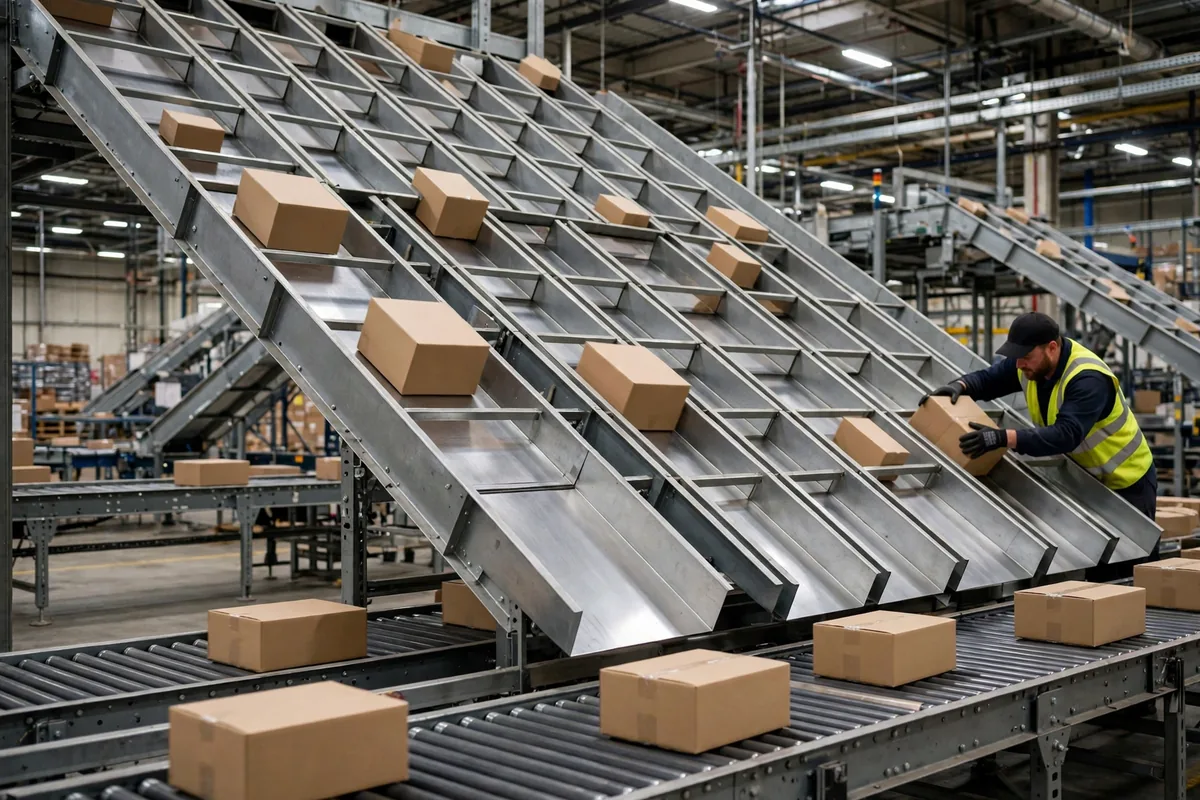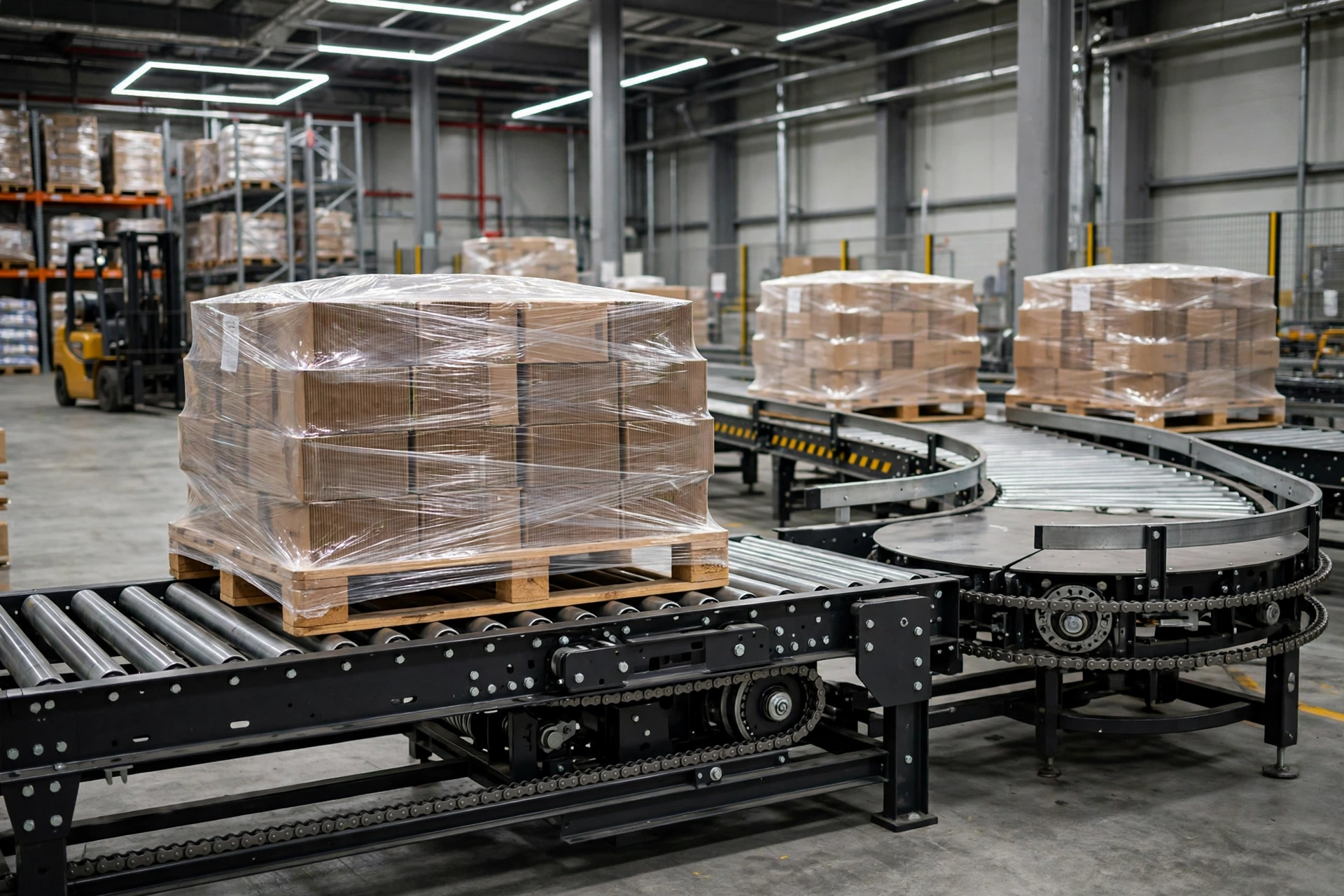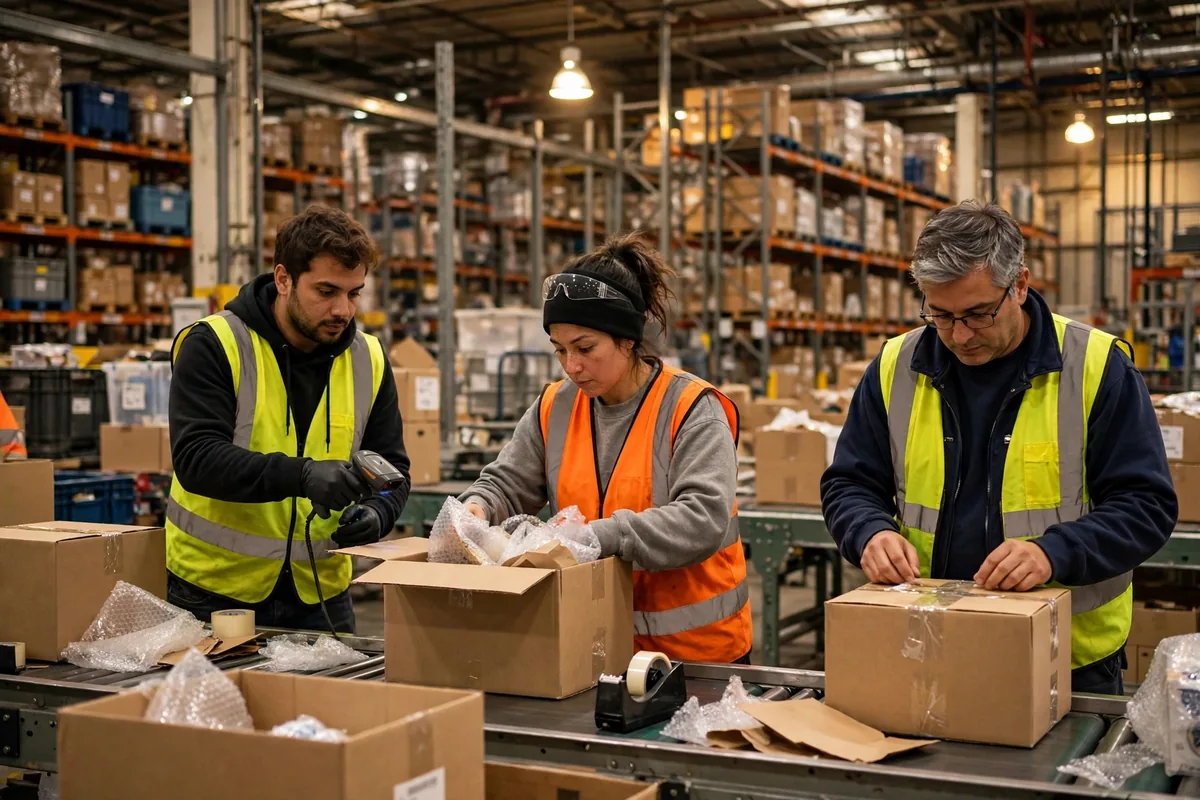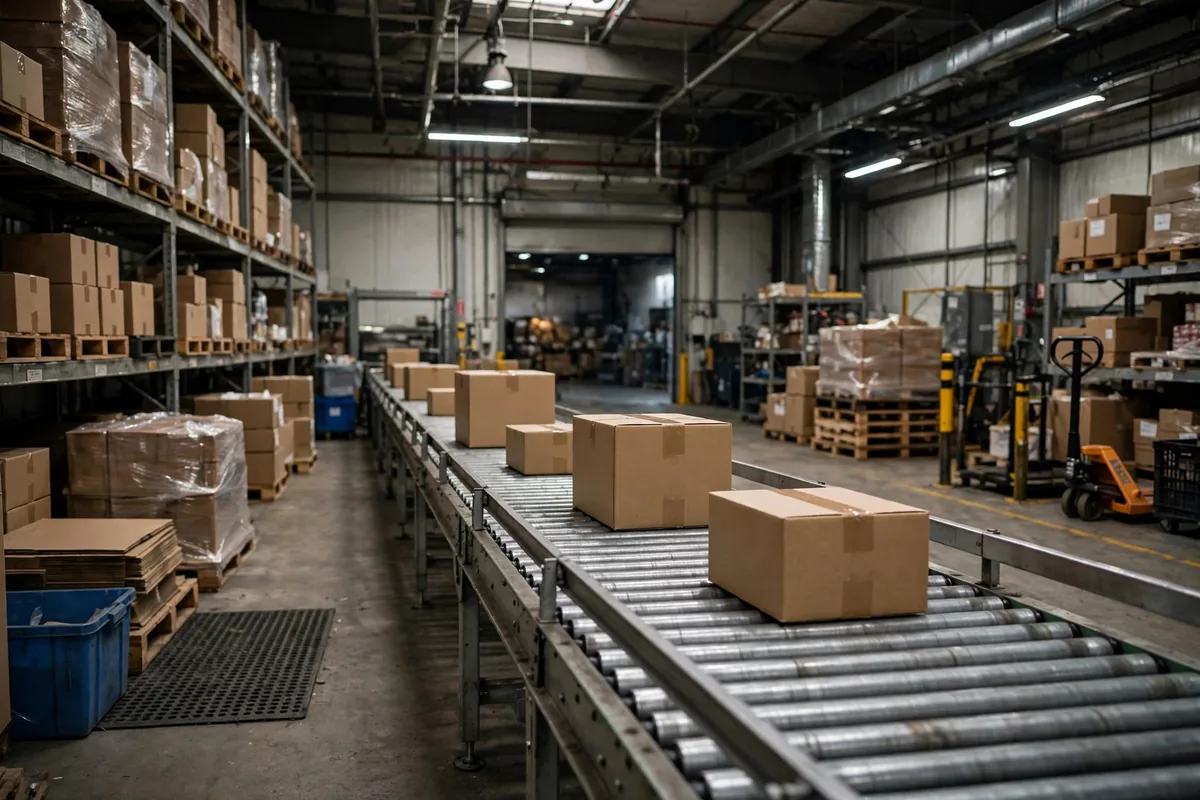
Let me tell you, after all these years on the road, the worst scene I've seen isn't a traffic jam. It's a warehouse where the sortation chutes have run out, and temporary warehouse sortation chute expansion is the only thing that saves the day.
Two years ago, just before the big November sale, I drove a load down to a warehouse in Guangdong. Before I even got through the gate I saw a dozen trucks parked outside, drivers standing around smoking, waiting. Inside, all 48 chutes on the sortation line were full, and two big piles of parcels sat on the floor with nowhere to go. The warehouse manager was sweating through his shirt. "Shifu Zhao," he said, "this load has to go out today, or the fleet has no trucks to send tomorrow."
They worked until two in the morning that night to clear it. I asked around later. That warehouse normally shipped 8,000 orders a day. On the peak day it hit 20,000. The chutes simply couldn't keep up. Parcels went around the conveyor three times, and in the end workers just dumped them into bins on the floor by hand.
When it comes to warehouse sortation chute expansion, temporary fixes are what save you on days like that — not a new machine you can't buy in time anyway.
Chutes running out? Find out where it's stuck first
When the chutes run out, most people's first reaction is to buy more equipment. Slow down. Spend ten minutes figuring out where the jam really is. It's worth more than spending money in a panic.
I talked with that warehouse manager and found out a third of his chutes were blocked by multi-item orders — one order sitting in a chute for half the day. Another dozen chutes were all full of the same bestselling item, flowing in like water, with nowhere for it to go.
So step one: pull the bestsellers and the multi-item orders off the main line. Give the bestseller its own lane, or pack it upstream before it ever reaches the sorter. Move that aside and you free up 20 to 30 percent of your chutes right away. I've seen plenty of warehouses fix a chute shortage this way without spending a cent.
Step two: count how many chutes you are actually short. Short by 10 is a different problem from short by 50. Short a few, a quick fix will do. Short by dozens, you need rented equipment and re-planned shifts, and no last-minute scramble will save you.
Three ways to expand chutes temporarily
There are three kinds of temporary warehouse sortation chute expansion that actually work in a live warehouse, and I've watched all three save a peak season. Here they are, one by one.
The first way is floor lines and tote bins. The cheapest, and the fastest.
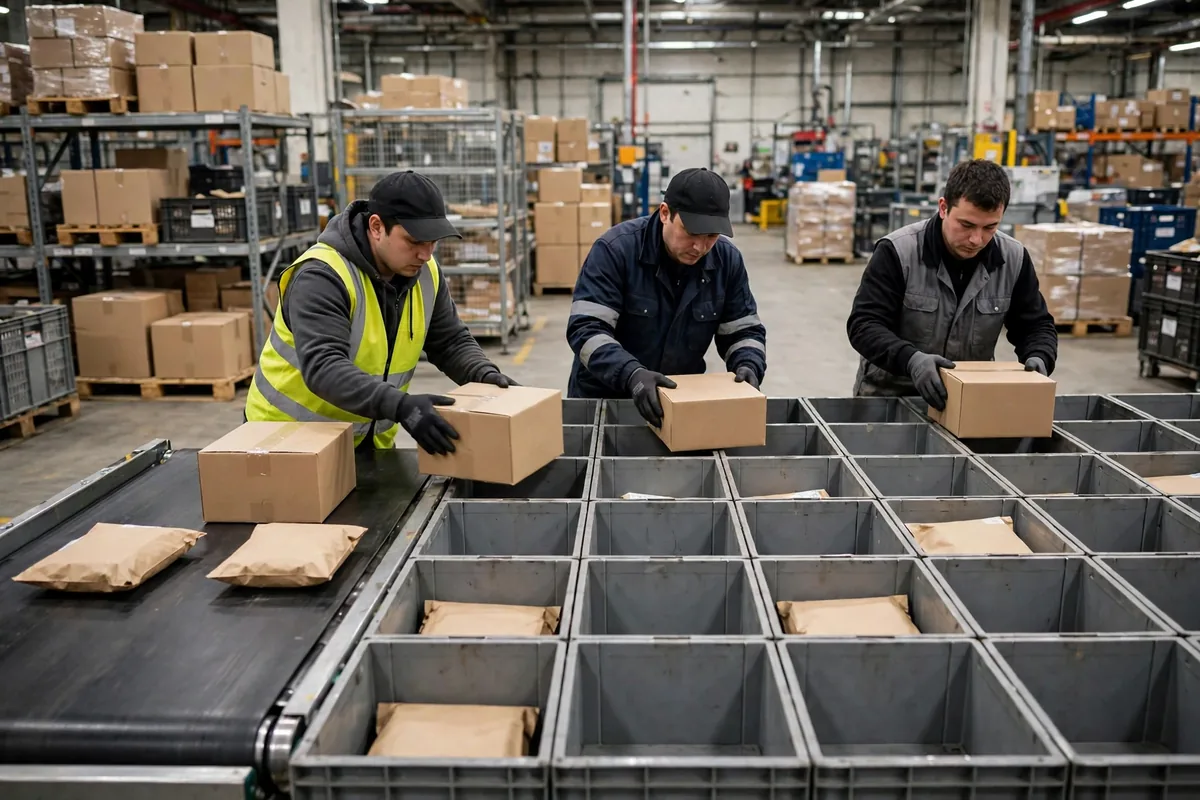
Tape out chute lanes on the empty floor at the end of the sortation line. Put two tote bins in each lane, stick a big label on each bin showing the destination, and have workers toss parcels off the belt into the right bin by label. When a bin is full, wheel it away. You can set this up in one afternoon. The cost is a few rolls of tape and a few dozen bins — a few hundred yuan at most. The downside is speed: it handles maybe 2,000 to 3,000 extra parcels a day. Good when you're only short a little.
The second way is renting a mobile sortation rack or a set of portable chutes for a month or two.
There are rental companies that do this now. A mobile rack with 12 chutes rents for a few thousand yuan a month, delivered and ready to use the same day. When peak season ends, you send it back and it takes up no floor space. A warehouse I know rented two sets — 24 chutes — for last year's peak season and spent less than 10,000 yuan for two months, a fraction of what buying fixed equipment would cost. Before you sign, ask three things: does the price include setup, is there a deposit, and do you have to restore the floor when it goes back. Don't sign a contract without knowing those answers.
The third way is time-sharing the chutes you already have. One chute, two jobs.
This one costs nothing — you just split each chute by time of day. From 9 in the morning to noon, these 20 chutes sort route A. From 1 to 4 in the afternoon, the same chutes sort route B. It sounds simple, but it takes two people working together: one keeps the sorting pace, the other manages the switch, and the labels and the board have to change at the same moment, or parcels go to the wrong place. I saw one warehouse run 48 chutes like they were 90 and survive the whole peak season on this method alone.
| Method | Cost | Ready in | Extra parcels a day |
|---|---|---|---|
| Floor lines and tote bins | A few hundred yuan | Half a day | 2,000 to 3,000 |
| Rent mobile racks | A few thousand yuan a month | Same day | 5,000 to 6,000 |
| Time-share the chutes | Nothing | Right away | 3,000 to 5,000, depends on shifts |
My advice: try the third way first, then the first, and only rent if you still come up short. The way that costs money is always the last choice, never the first.
After your temporary chute expansion, don't forget this one small thing
Once the extra chutes are in place, there's one small thing that gets forgotten more than anything else: labels and boards have to keep up.
Temporary chutes fail most often on unclear labels. The label on a bin is too small, or the board for a time-shared chute doesn't get flipped on time, and a sorter tosses a parcel into the wrong bin out of habit. One wrong bin costs half an hour to find and fix. That's worse than not expanding at all.
So before any temporary chute goes live, put the label on first — big letters, full destination. For time-shared chutes, every switch needs someone to call it out loud, or flip the board where everyone can see it, so the whole team knows which route this chute is sorting right now.
And here's the counterintuitive part: when chutes run short, don't only think about adding chutes. Think about sorting less. Plenty of parcels can be combined upstream — two orders from the same customer merged into one before they ever reach the sorter — and the pressure on the chutes drops right away. One less sort beats ten extra chutes. That is the part of temporary warehouse sortation chute expansion most people miss: the best extra chute is the parcel that never needs one.
There's an old saying in my line of work: a good craftsman sharpens his tools before the job. But when the tools aren't enough, your head has to do the work first. Running out of chutes isn't the scary part. The scary part is only knowing how to buy equipment and not knowing how to think your way out. Pull the bestsellers off the line, try these three ways one by one, and even the fiercest peak season can be handled.
By Shifu Zhao, Trucking Veteran (15 yrs)