Let me tell you something about conveyor speed adjustment. After all these years on the road, the one thing I believe is this: it is not about being fast, it is about being on time. That is true for a truck, and it is true for the conveyor line inside a warehouse. A lot of people hear "conveyor" and think one thing: faster is better, crank the speed up, ship more orders. I am telling you, that is not how it works. Get conveyor speed adjustment energy throughput warehouse wrong, and you pay for it twice — in peak season you speed up too far and the line jams, and in the slow season you run full speed with almost nothing on the belt while the meter spins.
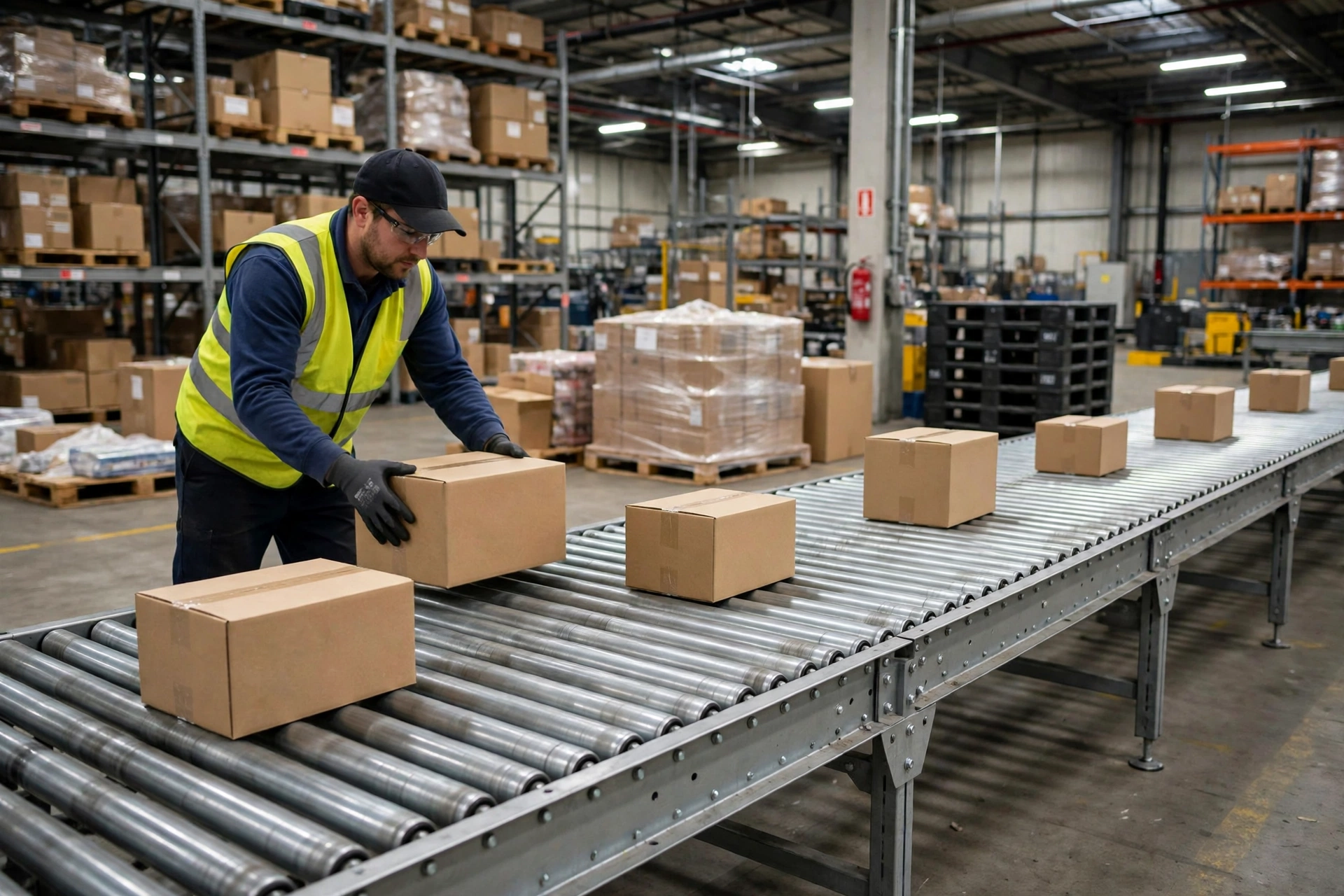
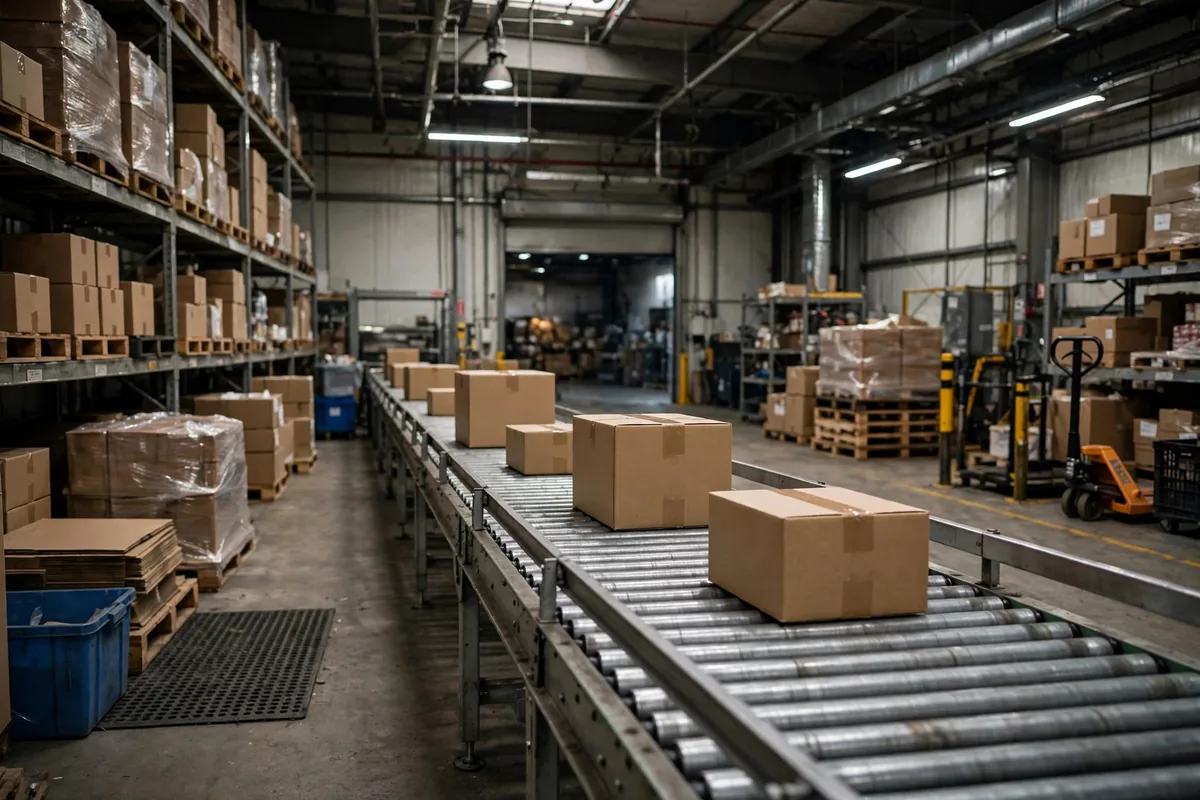
Here is something I saw on the road. Fall of 2023, I was delivering to a sortation center, got there at two in the morning, unloaded, and sat in the yard waiting for my paperwork. It was the slow season. The main conveyor was still running full speed, one parcel coming along every few seconds, clanking away, loud enough to hear across the whole building. I asked the shift lead on duty how much electricity that cost in a night. He just waved it off — said it had always run that way, nobody ever adjusted it. That is the problem right there. It is not that nobody understands it. It is that nobody owns it. The speed was set the day the line was installed, and nobody touched it again, peak season or slow season, same speed.
Three ways to vary speed — and it is not just one knob
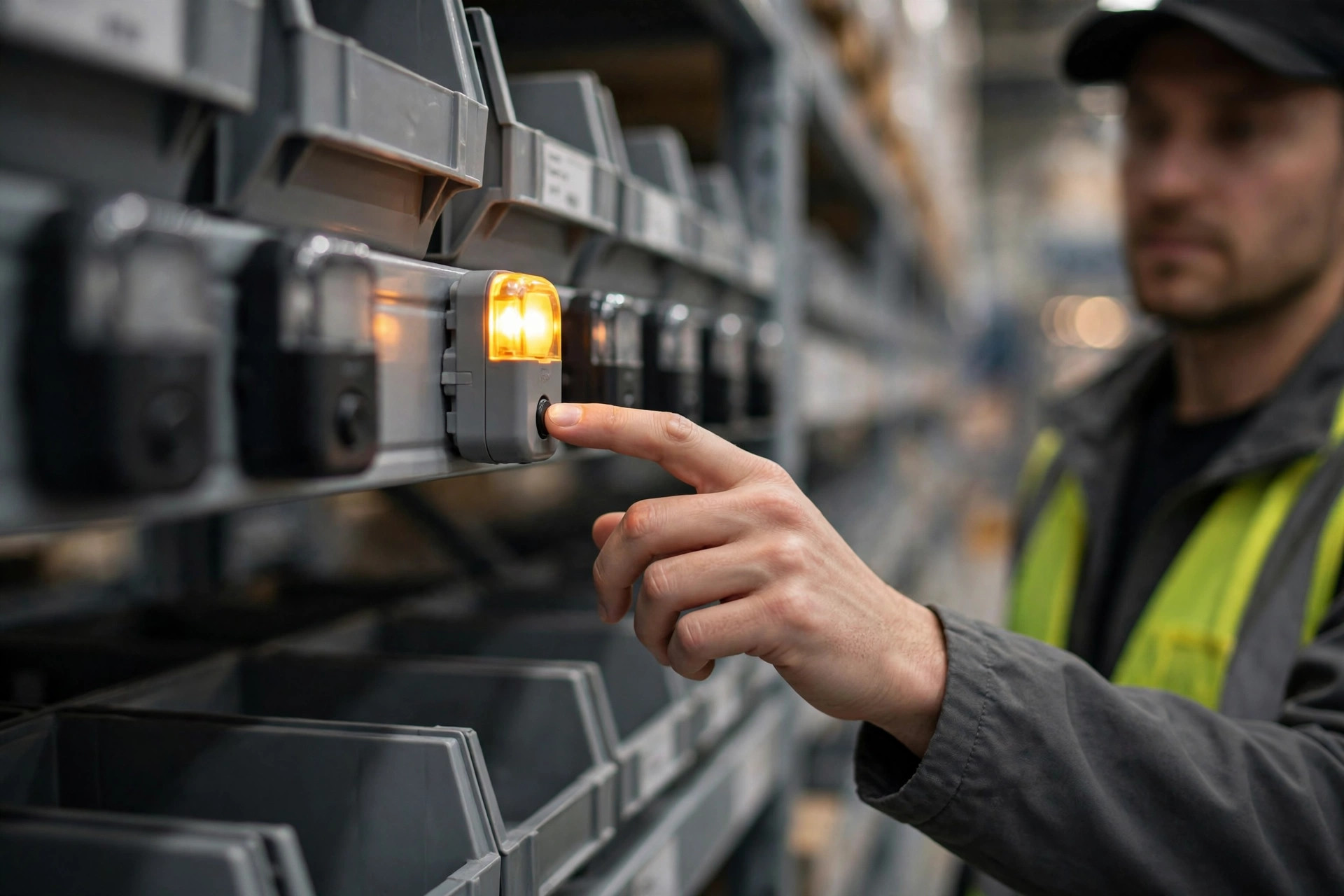
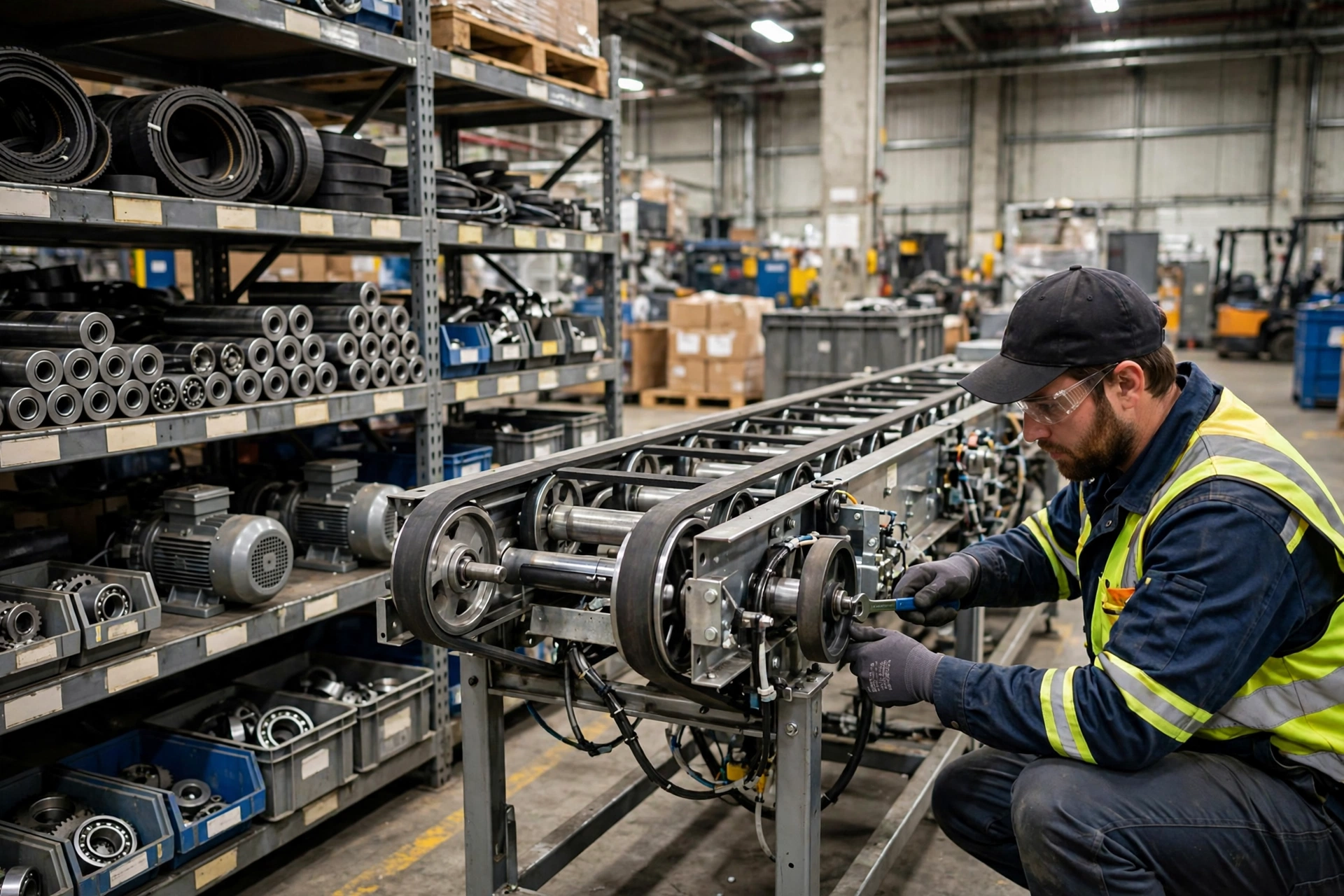
The first way is a variable-frequency drive. You put a drive on the motor, and the speed goes up or down as needed, like pressing the gas pedal. This is the most flexible approach, and the retrofit cost is reasonable — a drive for one line runs a few thousand to around ten thousand dollars (illustrative scenario). The catch is that somebody has to manage it. A drive nobody adjusts is just decoration on the wall.
The second way is sectional start-stop. The line is split into sections, and a section with no freight on it stops, then starts again when freight arrives. Like a motion-sensor light at home — nobody there, light off. It is simple, and the savings show up right away, especially in a warehouse where freight comes in waves. But there is a catch: starting and stopping too often wears out motors and belt joints, and the repair bill can cost more than the electricity you saved. So this fits warehouses with clear peaks and valleys in freight flow, not places where freight dribbles in and out all day.
The third way is rhythm-linked speed. The conveyor follows the pace of the upstream work: sorters go fast, the line goes fast; upstream runs dry, the line slows down and waits. This is the most elegant approach, and once it is tuned it mostly runs itself. But it needs a steady upstream rhythm. If upstream speeds up and slows down all day, the line jerks along with it, and jams actually get worse.
None of the three is a cure-all. My take is this: a small warehouse should start with a variable-frequency drive — spend a little money and solve the "can we adjust it at all" problem first. A warehouse with clear freight waves adds sectional start-stop next. A big warehouse with a steady rhythm can look at rhythm-linked speed. Do not try to do everything at once. Big steps trip people up.
What speeding up costs, and what slowing down saves
Speeding up cuts both ways. In peak season the benefit is obvious: the same line pushes through a few hundred more parcels an hour (illustrative example), orders ship on time, customers do not complain. But the cost is just as obvious: faster speed means faster wear, and belts, rollers, and bearings all live shorter lives; jams go up, because small and odd-shaped parcels love to get stuck at curves and transfer points, and one jam stops the line; noise goes up too, and people working a full shift in high noise slow down themselves.
Slowing down has the opposite shape. The electricity bill comes down, equipment lasts longer, jams get rarer. The risk is one thing: if volume suddenly jumps and the speed has not caught up, shipping queues up. So slowing down is not a one-time decision — you have to keep the headroom to speed back up.
Let me run the numbers for you (illustrative example). Take a main conveyor line with a 15-kilowatt motor, running 16 hours a day. In the slow season at full speed, the load is under 30%, and say the electricity runs about 30,000 yuan a month (illustrative scenario). Drop the speed by 30%, and the electricity bill falls by roughly 20% — about 6,000 yuan a month saved (illustrative example), more than 70,000 a year. That is before you count the repair money saved by longer equipment life. Now, those are illustrative numbers — every warehouse has its own power price, line length, and load. Run it against your own meter. But the direction is not wrong: running full speed on an empty belt in the slow season is burning money for fun.
| Method | Energy saving | The catch | Best for |
|---|---|---|---|
| Variable-frequency drive | Medium, adjusts on demand | Needs someone to manage and tune it | Almost every warehouse — start here |
| Sectional start-stop | Biggest, stops when empty | Frequent starts wear equipment out | Freight with clear peaks and valleys |
| Rhythm-linked speed | Best once stable | Unsteady upstream makes it worse | Big warehouses with steady rhythm |
One sortation center, two speed schedules
Here is a real story. In 2024, an e-commerce parcel sortation center (illustrative scenario) handled 80,000 parcels a day in peak season and 20,000 a day in the slow season — four times the difference. They used to run one speed all year. In peak season the speed was not enough, shipping queued up, and drivers sat in the yard waiting to load, cursing the delay. In the slow season the speed was too much, the line ran empty, and the electricity bill kept climbing.
Then they built two speed schedules, set by hourly volume. Peak-season schedule: 8 a.m. to noon is the inbound rush, speed at full; 2 p.m. to 6 p.m. is the outbound rush, speed at 80%; overnight, one slow line handles the tail orders. Slow-season schedule: daytime speed down 30%, and at night sections stop and start on sensor. When they looked back afterward, on-time shipping in peak season was up, slow-season electricity was down by more than 20% a month (illustrative example), and — this mattered most — line jams from stuck parcels dropped. It used to jam two or three times a week in peak season; now it is once or twice a month (illustrative scenario). Speed is not about being fastest. It is about being right for the hour.
How to build a speed schedule: split it by hourly volume
Building a conveyor speed adjustment schedule is not complicated. Three steps. First, pull the last three months of hourly volume and look at what the peaks and valleys actually look like. Do not go by feel — feel lies to you. Second, split the day into three bands: peak, medium, and low, each with its own speed. Peak runs full, medium runs at seventy or eighty percent, low runs at about half, plus sectional start-stop. Third, test it for two weeks before peak season, and watch two numbers: on-time shipping and jam count. On-time rate drops, bump the speed up a band. Jams go up, drop the speed a band. Two rounds of tuning and the schedule holds.
And there is an old saying worth remembering: the line should always run a little faster than the slowest step in the chain, but not much faster. Too fast and freight piles up at the handover points; too slow and everything upstream waits. It is like a convoy on a long haul — if the lead truck runs too fast, the tail trucks fall behind and the whole formation breaks apart.
A conveyor line is like driving a truck: flooring the gas pedal is not skill. Knowing when to speed up and when to slow down — that is what makes an old driver. Go back and look at your warehouse's conveyor speed adjustment settings. If nobody has touched them since the day the line was installed, tonight is a good night to start.
By Shifu Zhao, Trucking Veteran (15 yrs)