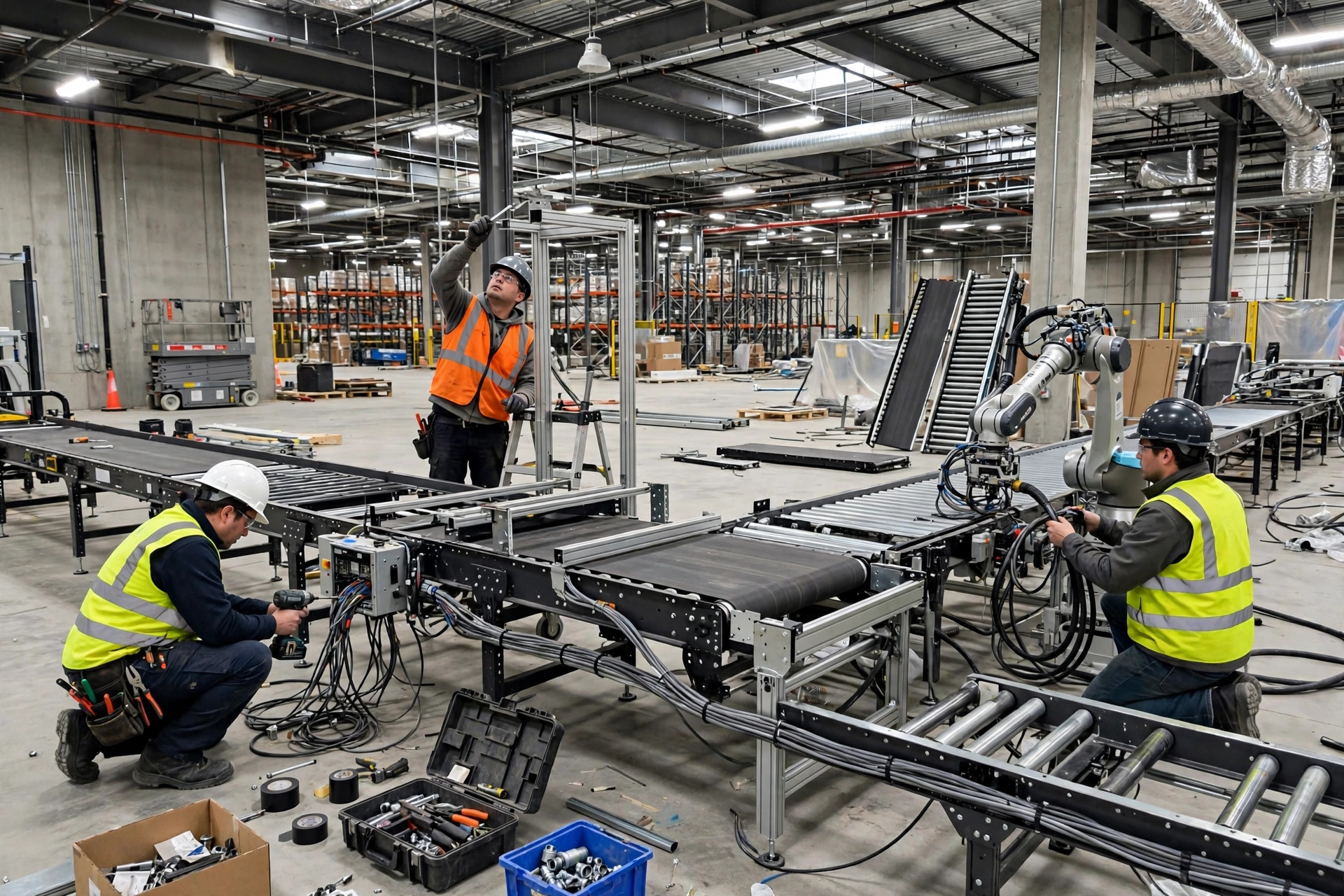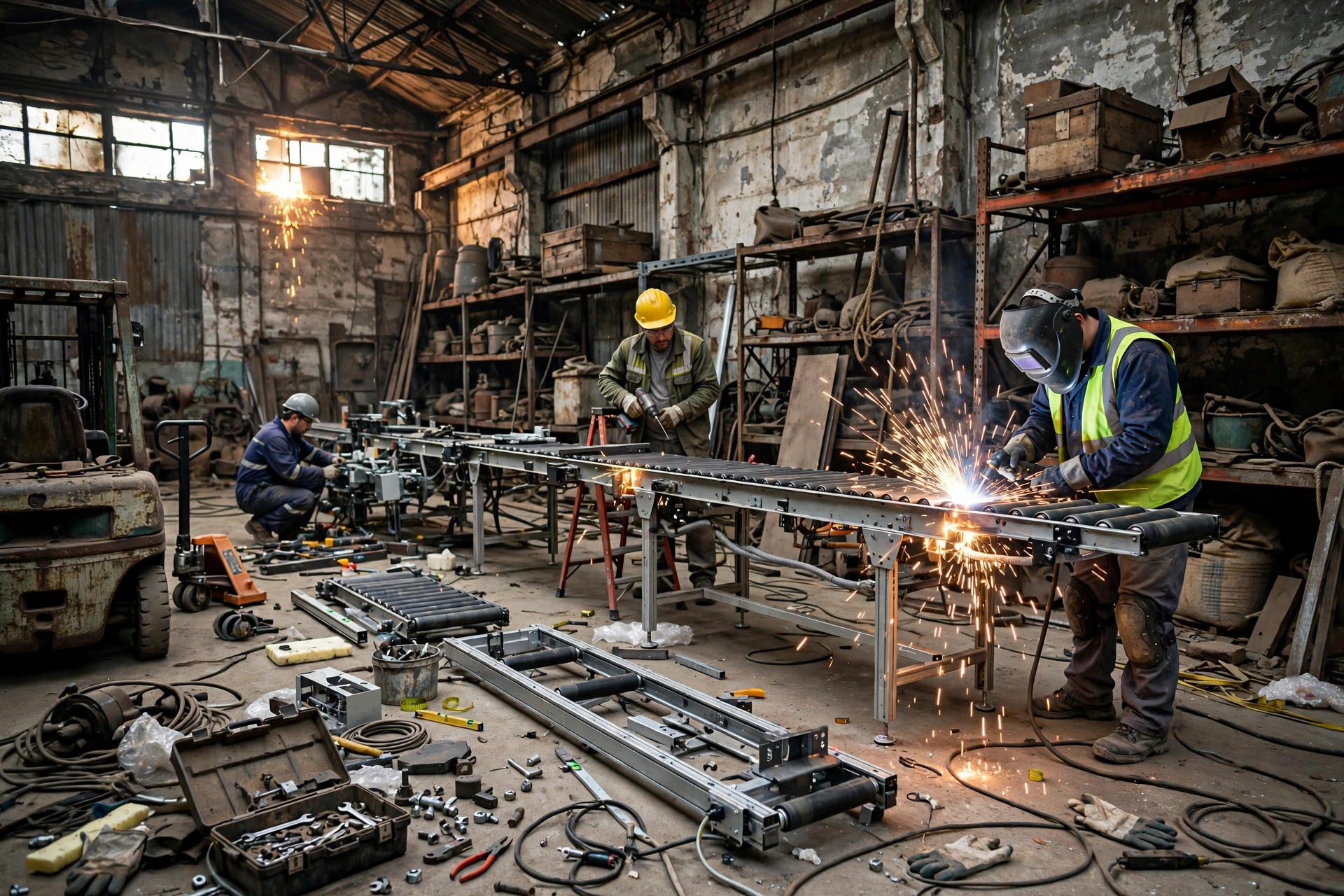
Last peak season, our little 3,000-square-meter warehouse nearly drowned in orders — and that's when I started seriously thinking about a brownfield warehouse automation retrofit.
Daily volume exploded from 4,000 to 7,000 orders. We went from 12 pickers to 20 and still worked past midnight every day. Our mis-ship rate climbed to 0.8%, the customer service phone rang off the hook, and two long-time clients gave us an ultimatum: fix it or we're gone.
So I called an integrator. The proposal looked beautiful — until the last line of fine print: "installation and commissioning require approximately two weeks of downtime."
Two weeks of zero shipments? For a small warehouse like ours, two weeks of silence means clients walk out the door. Big companies can afford to pause. We can't. That's the cruelest part of retrofitting automation into a live warehouse: it's not that we can't afford the equipment — it's that we can't afford to stop.
Three Pitfalls, Each Paid for in Blood
Pitfall 1: Measure the Building Before You Shop for Equipment
In September 2024, a friend in Foshan with an 8,000-square-meter warehouse got excited at a trade show and ordered a 40-meter conveyor line plus two scanners — over 600,000 RMB. When the equipment arrived, they discovered their old building had columns every 6 meters, while the conveyor modules were designed for the 12-meter column spacing of new builds. The turntable section physically couldn't clear a column. They ended up ripping out a section and selling it second-hand, losing well over 100,000 RMB in the process.
The lesson, paid for in cash: in a brownfield warehouse automation retrofit, step one is never shopping for equipment — it's measuring the building. Column spacing, clear height, floor flatness, electrical capacity, fire lanes — tape measure in hand, one by one. New warehouses are built around the equipment; old warehouses force the equipment to fit the building. Get the order backwards and you pay tuition.
Pitfall 2: The "Short Pain" Fantasy of a Full Shutdown
In early 2025, I watched an apparel-returns warehouse — a bit over 3,000 square meters — shut down for 12 days to do a full retrofit in one go. The old concrete floor wasn't level; leveling the equipment ate an extra week. Twelve days became seventeen. Seventeen days of zero shipments, and two major clients moved to a competitor.
The math of a shutdown retrofit is brutally simple: downtime days × daily gross margin + lost clients. A small warehouse's daily margin looks modest, but client loss is irreversible. Big companies survive shutdowns because their clients can't leave. Our clients? The warehouse next door just waves and they're gone.
And there's a hidden cost nobody mentions: the crew. During a shutdown your people either sit idle on payroll or go home — and "go home" sometimes means they don't come back. Small warehouses can't afford idle hands.
Pitfall 3: The Most Expensive Part Isn't the Equipment
Here's the counterintuitive one, and it cost me real money to learn: in a brownfield warehouse automation retrofit, the priciest line item is the compromises you make for the old building.
Six-meter ceilings? Forget automated storage and retrieval — don't even dream about it. Twenty-year-old concrete, pitted and uneven? An AGV rides it like a tractor on a dirt road; either pay for floor remediation or give up on AGVs and go with conveyors. Not enough electrical capacity? The upgrade application alone takes two months. One new conveyor accidentally blocking a sprinkler head? Enjoy redoing your fire inspection.
So step one of any retrofit is subtraction: admit what this building cannot do, then decide what it can. Copying the flagship setup from some big company's greenfield site is the fastest way to die trying. It's not sour grapes — the building simply won't allow it.
The Math: Shutdown Retrofit vs. Phased Retrofit
The numbers below are modeled on my own warehouse — 3,000 sqm, 4,000 orders a day. An example, not an industry benchmark. Plug in your own numbers.
| Plan A: One Big Shutdown | Plan B: Three Phases, Zero Downtime | |
|---|---|---|
| Equipment + installation | 800,000 RMB | 880,000 RMB (~10% premium for phased work) |
| Downtime loss | 15 days × 30,000 RMB/day margin = 450,000 RMB | 0 (night shifts + zoned work areas) |
| Client-loss risk | High | Low |
| Total cost | 1,250,000+ RMB | 880,000 RMB |
Plan A looks faster on paper. But once clients walk, that 1.25 million may never pay back. Plan B is slower, but each phase starts generating returns the moment it goes live — and cash flow never stops. For a small warehouse, that's everything.
The Retrofit Sequence for a Live Warehouse: Software First, Hardware Later
Here's the order that worked for us, tested without a single disaster:
Step one: the "no construction" stuff — barcode scanners, handheld terminals, process fixes. Small money, zero downtime, and it attacks the mis-ship rate first. We spent under 20,000 RMB just upgrading scanners and switching verification from eyeballing it to scan-to-verify; our mis-ship rate halved within a week. Best money we ever spent.
Step two: conveyors — specifically the stretch from packing to outbound, the shortest run with the fastest payoff. Night-shift installation, normal shipping by day.
Step three: sorting — put walls and sort cubbies, humans plus simple equipment. Don't fantasize about cross-belt sorters on day one; those are big-warehouse toys, and we small warehouses can't burn money like that.
Step four: AS/RS and AGVs — maybe. Probably never in an old building. Know your limits; there's no shame in it.
The principle in short: software before steel, short runs before long ones. Periphery before core, quick wins before perfection.
Money-Saving Hacks From the Trenches
Second-hand conveyors. Trade-show teardowns, bankrupt e-commerce sellers — you can get them for half price. My 30-meter line is second-hand; I checked the motors and roller wear carefully, and two years later it hasn't hiccupped once. Buying used isn't embarrassing; overpaying is what hurts.
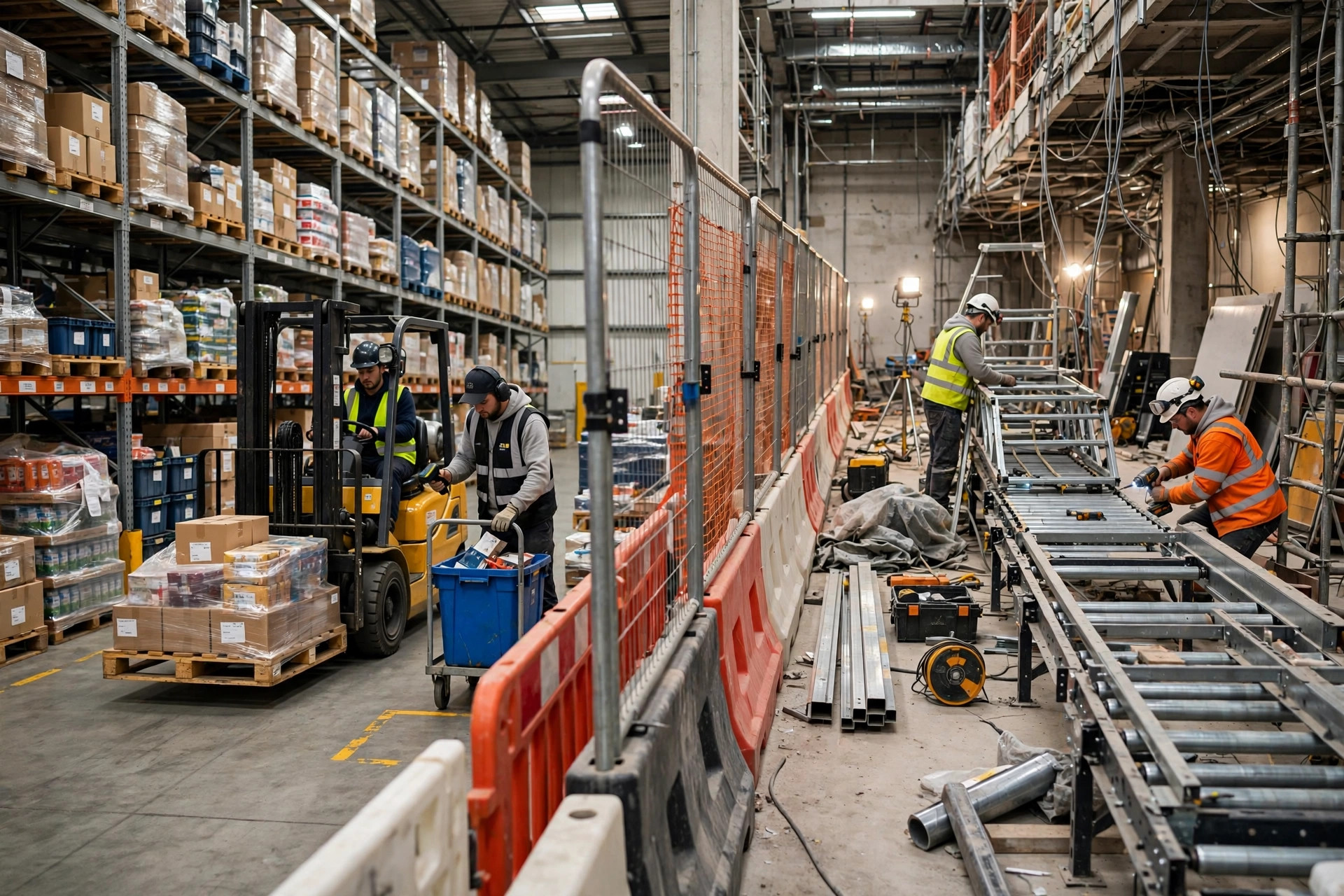
Night-shift construction. Ship normally by day, build from 8 PM to 4 AM. Yes, night-shift labor costs 30% more. Sounds painful — until you compare it with one day of lost shipments. Then it's pocket change. Learn to do this math.
Zoned barriers. Steel barricades and caution tape, physically separating the construction zone from the working zone, forklifts detouring around it. Safety first — don't cheap out here; one accident wipes out everything.
Be your own project manager. Small warehouses shouldn't worship turnkey contracts. Manage the schedule and coordinate the trades yourself and you'll save 15–20% on integration fees. It's exhausting, but the savings are real money.
The Results: Our Actual Numbers
Thirty meters of second-hand conveyor plus scan verification: pickers down from 20 to 14, mis-ship rate from 0.8% to 0.2%, and peak season hasn't overwhelmed us since. Total investment under 400,000 RMB, paid back in 14 months.
Three Hard Truths for Fellow Small Warehouses
First: measure before you shop. Walk in with a tape measure, not a quotation.
Second: downtime is a small warehouse's jugular. Any plan demanding more than three days of shutdown gets an instant no.
Third: automation isn't about buying equipment — it's about buying the ability to keep making money while you upgrade. Equipment depreciates; cash flow doesn't lie.
Small warehouses have their own way of surviving. The big players can tear down and rebuild; we're changing the engine mid-flight. Slower is fine. No shutdowns, no disasters — that's victory.
By Xiao Ma, Small Warehouse Owner