Start with a number: a conveyor line rated for 6,000 parcels an hour, with a badly designed junction, can choke down to barely 3,000 an hour at peak — the other half piling up in front of the junction waiting for someone to go in and unjam it by hand. That is not a story I made up. Two years ago, an e-commerce warehouse in East China lived it on Singles' Day: the merge jammed four times, every stop 20 minutes or more, 400 people standing around waiting on one line (figures are illustrative). Think of it this way: you can build the widest highway in the world, but if the on-ramp rules are wrong, it still turns into a parking lot.
Conveyor merge and divert design in a warehouse suffers from one stubborn illusion: that a faster line and a wider belt will fix the problem. Call it merge-and-divert work if you like; the label matters less than the rhythm. Combining and splitting flows are not about speed. They are about rhythm.
When a Merge Jams, Nine Times Out of Ten the Line Is Not Too Slow
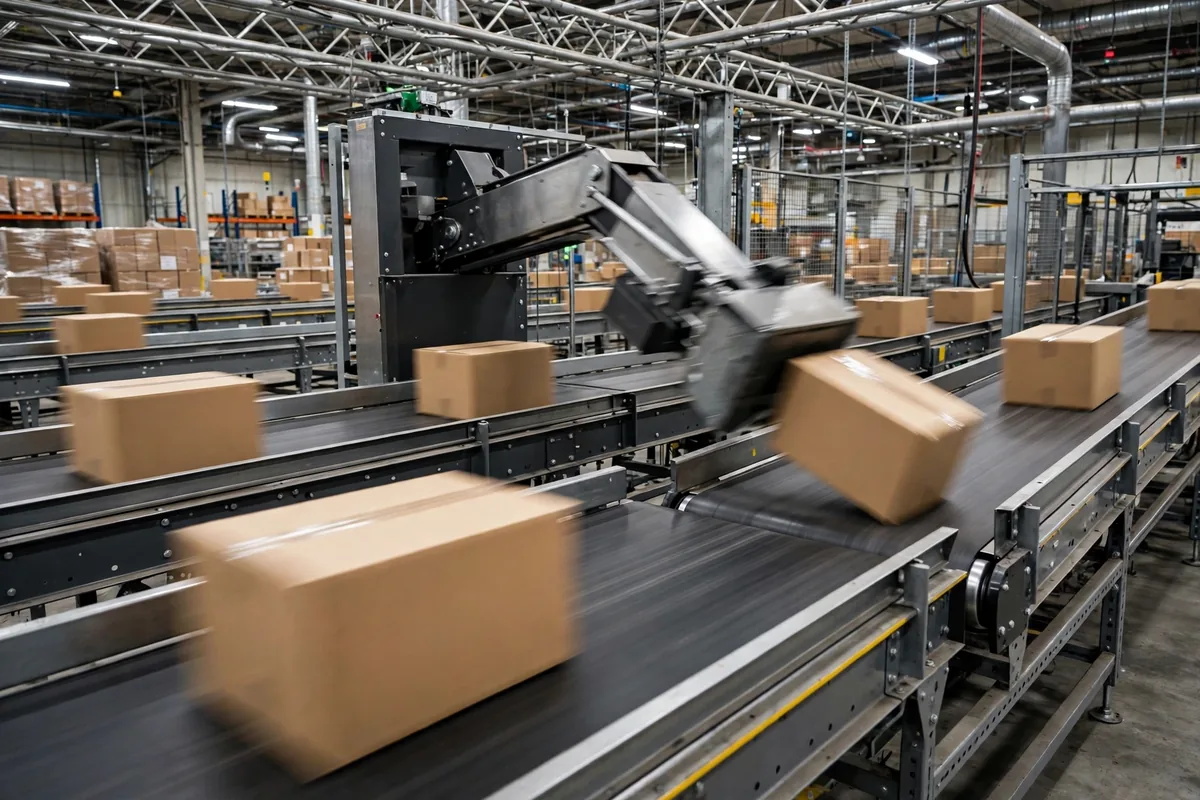
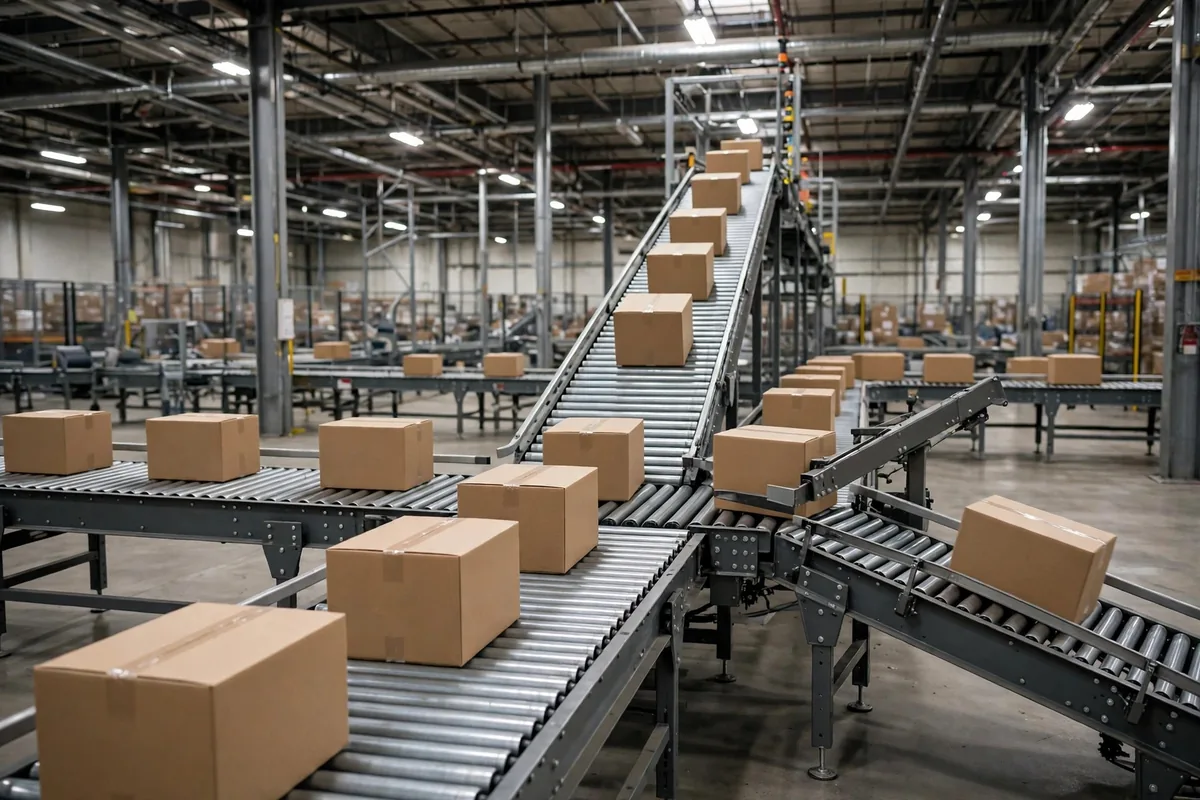
The principle first. A junction takes two or three feed lines and pushes their parcels into one main line. The core conflict is simple: only one parcel can pass a point at a time, but two lines are feeding at once. Someone has to go first, and someone has to wait. Without a rule, two parcels meet nose to nose at the junction, one goes sideways, the line emergency-stops, and everything behind piles up like a rear-end collision.
The most common fake requirement I hear is a client demanding "no slowdown at the junction." Sounds bold. It is amateur talk. A junction has to have room to open up gaps — an accumulation zone upstream that spaces parcels out, the main line holding open slots, the feed line watching for a slot before inserting. It is exactly like getting onto a highway: you get up to the speed of traffic on the ramp first, then find a gap and slide in. You do not floor it at the junction and force your way across.
That East China warehouse had the classic failure: three feed lines driving straight into the main line at close to 90 degrees, no accumulation section, no photoelectric sequencing, parcels left to "squeeze" their way in. On a quiet day, squeezing works. On a peak day, with zero gaps between parcels, they collided, tipped over, and jammed — the same three failures on rotation. The fix sounds almost insulting: slow the main line by 10 percent, add a 6-meter accumulation zone, change the junction angle to around 30 degrees. Jams dropped to zero. The line ran 10 percent slower and throughput doubled. That is the trade-off: the fastest local segment does not make the fastest system.
The selection dividing line sits right here. Under 5,000 parcels a day, manual merging is fine — do not buy an automated feed system. Over 20,000 a day, the merge needs accumulation plus sequencing control, no debate. In between, look at your peak multiple: if peak volume runs more than three times your normal day, do not skip junction control. Skipping it is betting the whole warehouse's uptime on one junction.
Merge and Divert: A Diverter Is Only as Good as the Gap in Front of It
Diverting is the merge in reverse: parcels on one line get sorted into different lanes by destination. The hardware comes in flavors, each with its own temper. Pivoting wheels are fast but unfriendly to odd shapes and light parcels. Pushers are steady but capped on speed. Pop-up transfers are the gentlest — and the most expensive.
A footwear and apparel client called me last year: their mis-sort rate would not come down, dozens of wrong-lane parcels a day, customer service apologizing nonstop. I walked the line and the problem was not the diverter at all. It was the stretch of belt in front of it: parcels arrived with no gaps, the next one crashing in before the last one had finished diverting. No diverter, however fast, can outrun two parcels arriving stuck together. The patch is to slow down. The cure is a gapping section upstream — pull the spacing wider than your longest parcel, so the diverter has time to identify, act, and reset.
Here is the counterintuitive part: most mis-sorts are not a diverter accuracy problem. They are a gapping problem upstream. Spending big money on a faster diverter often buys less than adding a cheap gapping belt. Plenty of integrators will not volunteer that, because selling you expensive hardware pays better than selling you a stretch of belt.
Merge and Divert Maintenance: The Three Spots Everyone Forgets
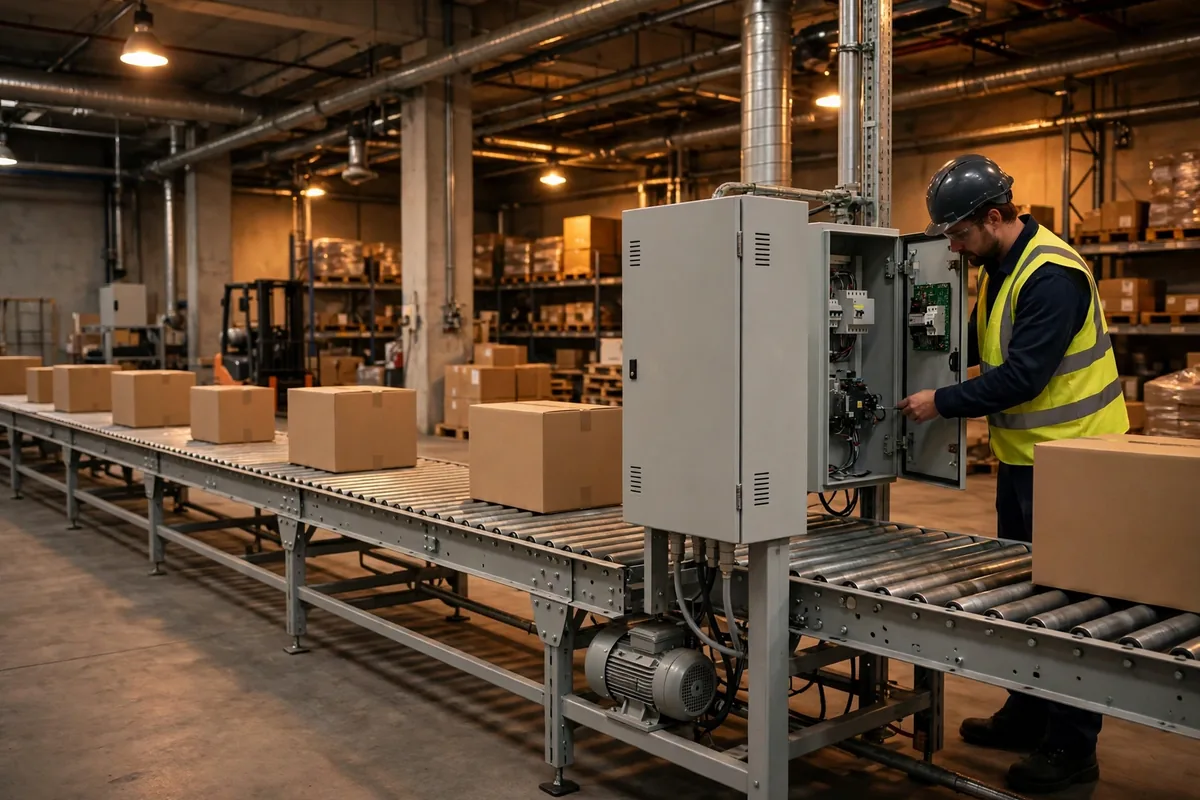
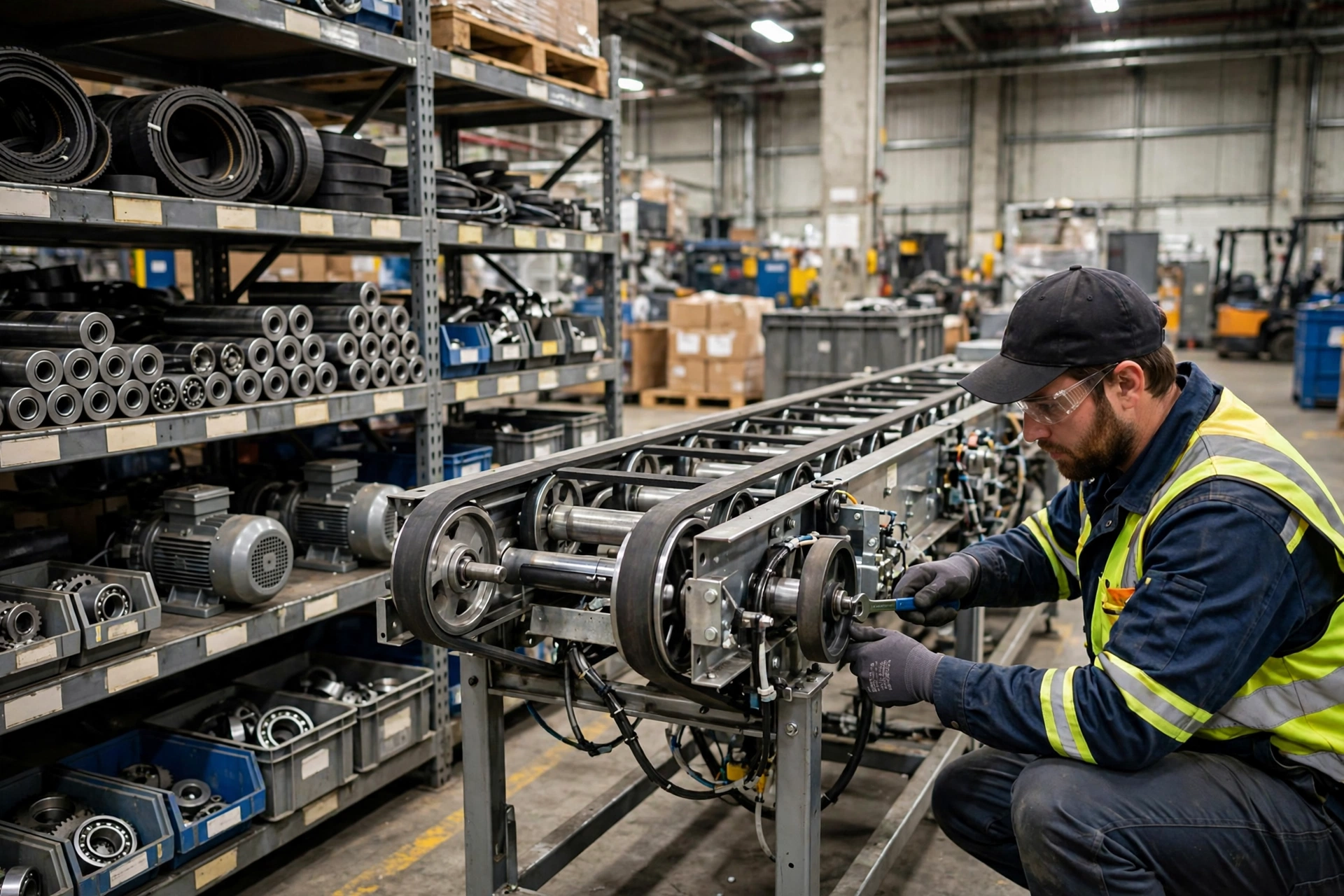
Three things get ignored most often at merge-and-divert sections. First, the photoelectric sensors at the junction. Dust builds up, alignment drifts, and the system stops "seeing" open slots — either refusing to release parcels or releasing them straight into a collision. Wipe and calibrate them monthly. Do not wait for a jam to go look. Second, the wear parts on wheels and pushers. A wheel face worn smooth cannot push a light parcel and overshoots a heavy one, and the mis-sort rate creeps up for a month before anyone notices. Third, the pneumatic valves and rollers in the accumulation zone. The accumulation section is silent until it fails, and when it fails the whole stretch is down — yet it is the least glamorous part of the line and often missing from the inspection sheet entirely.
All three share one trait: when they fail, nothing alarms. They just get quietly worse. By the time you notice, the loss has already happened. So my advice is to give the junction and divert section its own inspection sheet, separate from the main line.
Was the money worth it? Look at one number: the junction's actual throughput ratio. Take your real peak-day data — parcels actually passed, divided by the design rating. If that number sits below 85 percent for long, the design has a real defect. Below 70 percent, stop repairing it and rebuild it. Numbers do not lie. Sales pitches do.
By Da Liu, Automation Engineer