A swing arm sorter sounds wonderful in the sales meeting: thousands of pieces an hour, a mis-sort rate of one in a thousand, almost no maintenance. I've spent a dozen years on the integration side, and I've watched too many buyers sign the acceptance sheet beaming, then stare at a fault report three months later with a very different expression. Go-live day isn't the finish line. It's the day three bills start coming due.
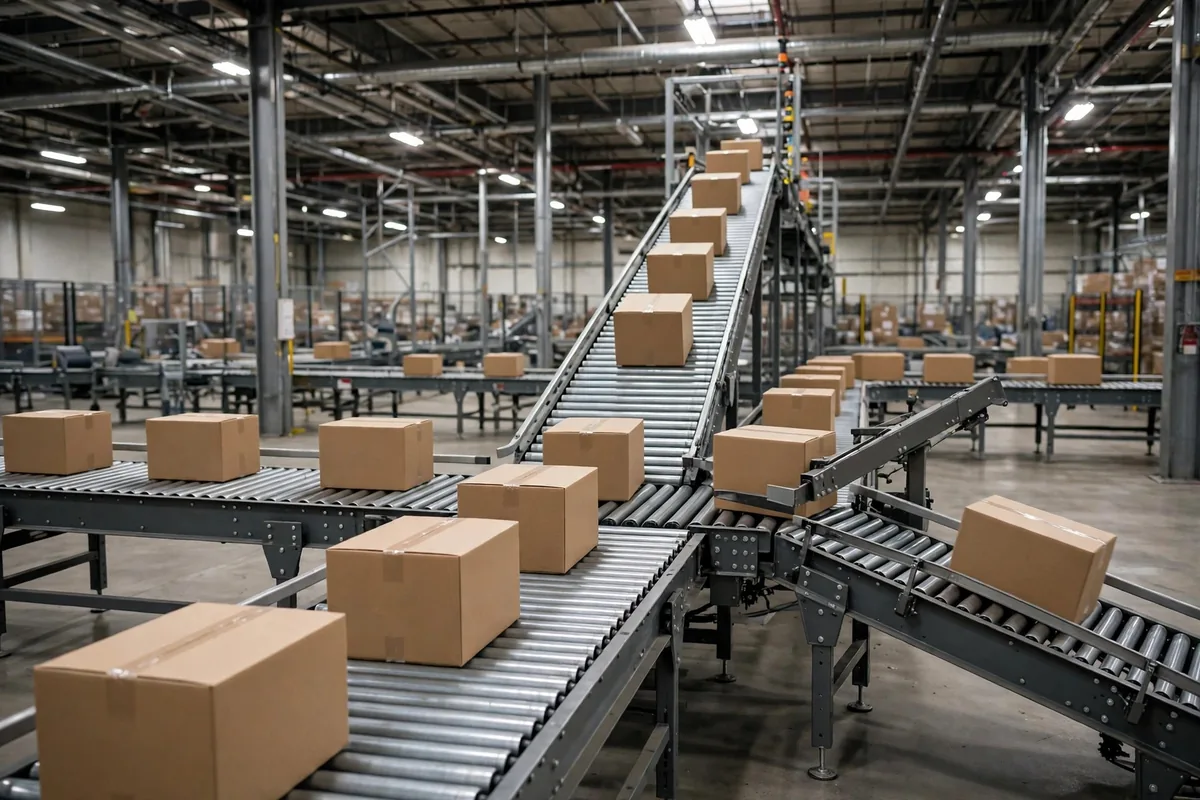
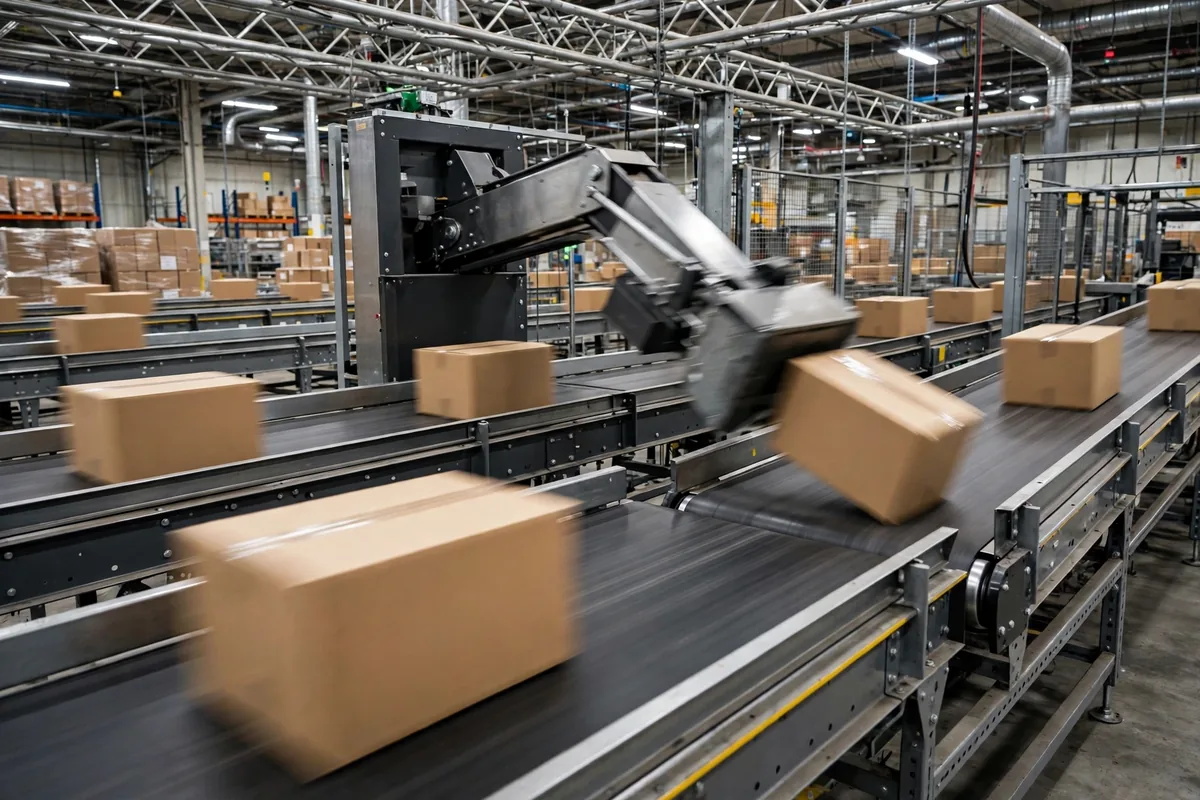
Start with how it works. A swing arm sorter is a row of pivoting arms mounted beside a conveyor. A parcel passes a scanner, the control system works out the timing, and a pneumatic cylinder or motor swings an arm to push the parcel into its chute or bin. Think of it like billiards: the cue ball strikes, the target ball drops into the pocket — angle, force, and timing, all three have to be right. Simple construction is its biggest strength, and also the reason people underestimate it. Simple doesn't mean trouble-free.
How a swing arm sorter works: one arm, one push
The whole machine is three links: identification, control, execution. Identification is a scan camera plus photoelectric sensors, control is the PLC, execution is the arm. If any link fails, the result is the same: a mis-sort. In September 2025, a courier hub in East China brought two swing-arm lines online. Acceptance ran at 2,500 parcels an hour, everyone celebrated. Then the first peak night hit and the mis-sort rate jumped from one in a thousand to two in a hundred, with parcels landing in the wrong chutes everywhere. Three days of digging found the root cause nowhere near the arm: dust on the glass in front of the scan camera. Peak-season carton dust was triple the normal level, read rates dropped, and the system pushed parcels into the wrong chutes. The arm took the blame; the real culprit was the cleaning schedule.
So the first bill is the throughput bill. The rated capacity on the brochure — typically 1,500 to 6,000 sorts per hour depending on the model — is a lab number. On the floor, three discounts apply. Irregular parcel sizes take one cut: with mixed sizes, the arm's cycle has to leave margin for the biggest item. Irregular infeed takes another: when parcels arrive in bursts, the idle gaps count against capacity. And full chutes take a third: the moment a chute fills, the whole line has to slow down and wait for someone to clear it. Multiply the three discounts and a line rated at 6,000 often runs 3,500 to 4,000 in daily operation. That's not a defective machine, that's physics.
The swing arm sorter throughput bill: what rated capacity really delivers
How do you win the throughput back? Three moves. First, even out the infeed — an automatic singulator or a worker evening out spacing can recover a tenth of capacity overnight. Second, manage the chutes dynamically: assign chutes by live volume and clear the hot ones before they fill instead of after. Third, run sections at different speeds: light parcels fast, heavy parcels slow, using variable-frequency drives to tune each section to exactly what it needs instead of forcing one speed on the whole line.
In April 2026 I tuned a swing-arm line at an e-commerce warehouse, rated 3,600 pieces an hour, actually running 2,200 long-term. The cause was two workers hand-feeding parcels at the infeed; the moment they sped up, parcels overlapped and the sensors misread. We switched to automatic infeed with manual verification, a modest investment, and within two weeks the line held steady at 3,100, with the mis-sort rate falling from three in a thousand to one in a thousand. The lesson of the throughput bill is one sentence: the bottleneck is almost never the arm itself, it's whatever sits before and after it.
One more thing people skip: a throughput review before peak season. A week before the 2025 Singles' Day rush, I reviewed a warehouse's swing-arm line that ran fine day to day. The review found two chutes still allocated by normal-day volumes — at peak volumes they'd fill in half an hour and force the line to slow down and wait for clearing. We reallocated chutes against the peak forecast on the spot. Peak night hit 3,400 pieces an hour and the line never stopped once. Half a day of review saved a peak night of downtime.
If you're still choosing between a swing-arm line and a cross-belt, read the swing-arm vs crossbelt selection guide first and draw the dividing line before you talk price. Swing arms fit mid-speed lines with many chutes and mixed parcel sizes; cross-belts fit high-speed lines with uniform parcels and very large chute counts. Pick the wrong type and all three bills become guesswork.
The maintenance bill and the failure bill: the expensive one isn't on the quote
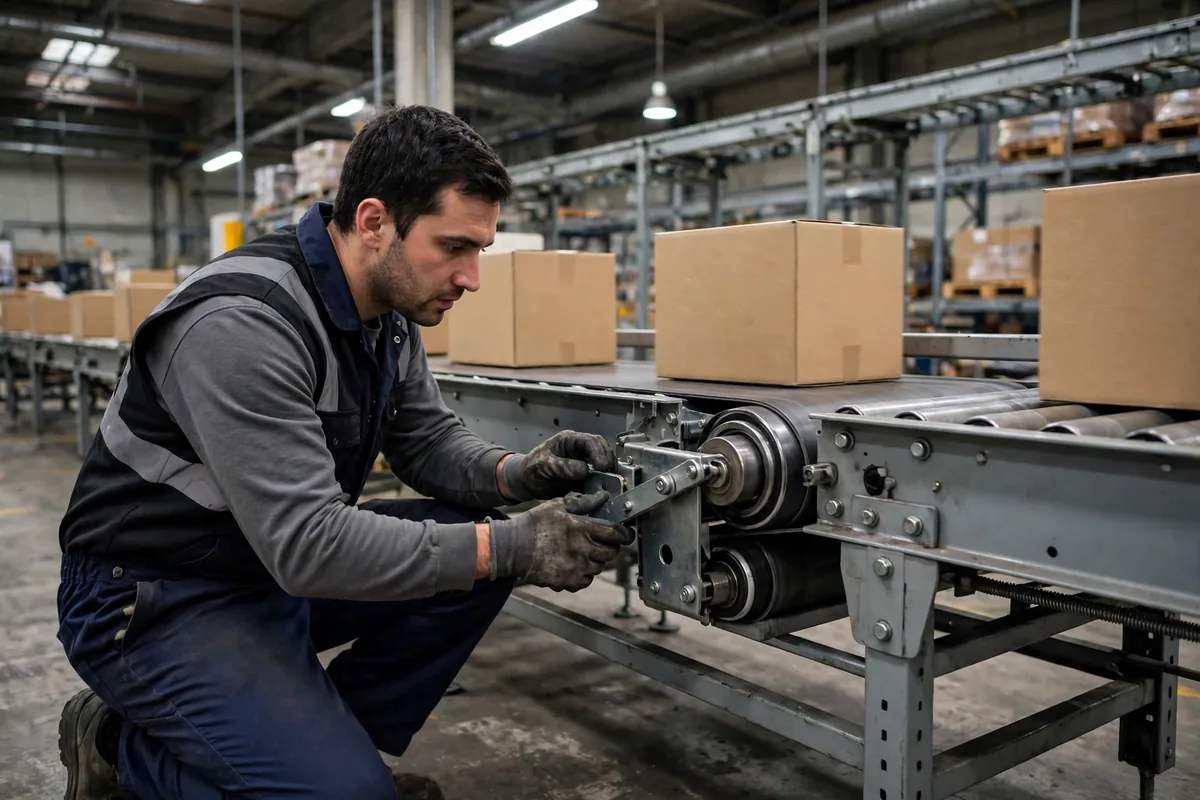
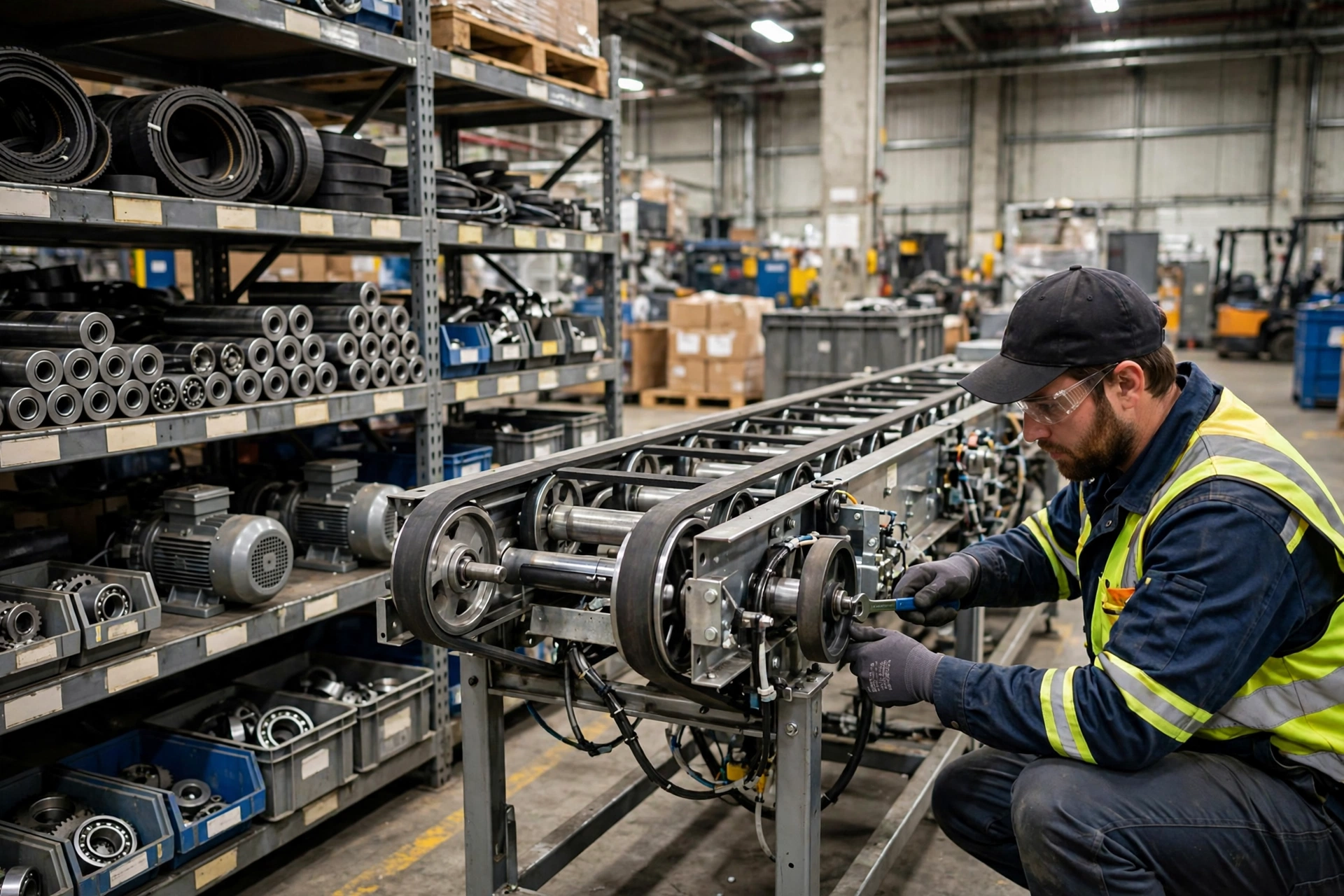
The second bill is maintenance. It looks simple: cylinders, bearings, belts, sensors — replace on schedule, wipe on schedule. The devil is in the frequency. A pneumatic arm's cylinder seals typically last 8 to 10 million cycles; at 16 hours a day and 3,000 cycles an hour, that's under a year. Belt drift is a slow disease: skip alignment for three months, tension changes, parcels slip on the belt, scan positions drift, and the mis-sort rate creeps upward. Sensor lenses need a weekly wipe; a layer of dust is enough to start false triggers.
The classic mistake I've seen: a warehouse cut monthly maintenance to quarterly to save money. Six months saved less than $3,000 in service cost. Then an undetected cylinder leak made an arm lag half a beat, and on a peak night more than 800 parcels went to the wrong chutes — rework and compensation cost over $8,000. Every dollar saved on maintenance gets collected by the failure bill, with interest.
Keep spares on the shelf too, and order them before you need them. Cylinder seals by cycle count, one spare belt per length, two photoelectric sensors of each model, a set of PLC fuses and relays. The whole kit costs under $1,500 and can cut a stoppage from four hours to half an hour. Spares aren't a cost, they're insurance: insurance feels like wasted money until the day you need it, and on that day it feels far too cheap.
The third bill is the failure bill, and it's the biggest. What does one hour of a stopped swing-arm line mean? At 3,000 pieces an hour, that's 3,000 parcels piling up — manual sorting, overtime, delayed shipments, and the customer-service phones ringing first. The math is simple: downtime hours times the cost of backlog per hour, plus rework and compensation. Here's the framework I use when I cost it out with clients. Figures are illustrative — plug in your own capacity:
| Bill | Typical contents | Illustrative (at 3,000 pieces/hour) |
|---|---|---|
| Throughput | Rated vs. actual capacity gap | Rated 6,000, actual 3,500 — a 42% gap |
| Maintenance | Cylinders, belts, sensors, service labor | ~$4,000–$7,000 per year |
| Failure | One hour of stoppage, backlog, rework | ~$1,700 per hour |
| Hidden | Mis-sort rework, complaint compensation | ~$1,100 per month |
Here's the counterintuitive part: a swing arm sorter doesn't fear running slow, it fears running fast. Push the cycle to its limit and the arm's margin disappears — one parcel slightly heavier or slightly off-center, and the push falls short, leaving the parcel stuck at the chute mouth. One jam is nothing; three jams and the whole line stops for clearing. The best operators don't tune speed to the maximum, they tune it to the point where the mis-sort rate is exactly zero, then keep 10% in reserve. The number on the speed display is for the sales brochure. The number that matters to the owner is the one the line holds all shift.
Whether the money was well spent comes down to one number: the fully loaded cost per sort. Fold in depreciation, maintenance, failure losses, and labor, and divide by every parcel sorted. If that number is at least 30% below manual sorting, the money was well spent. If it's only 10% below, fix the process first and buy the equipment later. Equipment is an amplifier: a smooth process gets more efficient, a messy process gets messier, faster. Lay the three bills out before you sign, and the numbers will tell you whether to buy, when to buy, and what to tune first.
By Da Liu, Automation Engineer