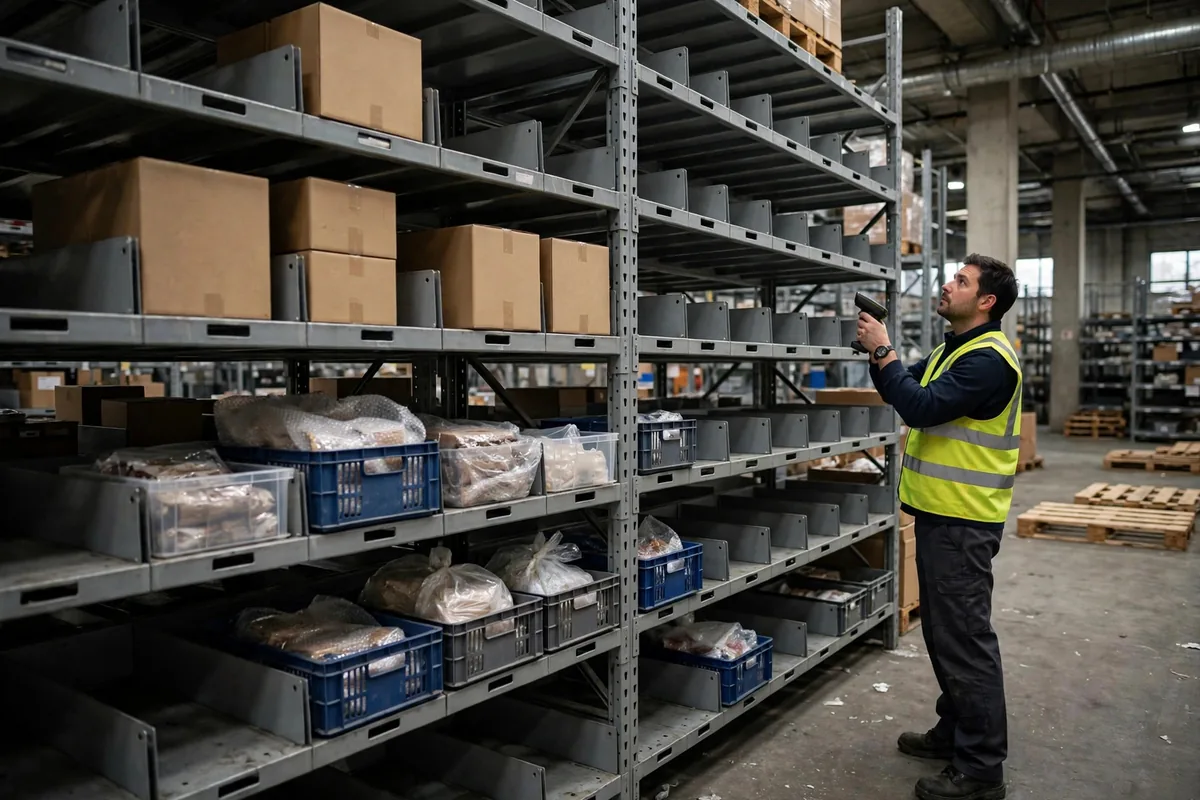
It was 5:30 on a Monday morning in peak season week three, and our warehouse incentive programs for temps were falling apart in front of me. I was standing at the entrance to the pick area counting heads. The roster said 62 temps. Forty-one showed up. Twenty-one never called, never texted, just didn't come. That day's volume was more than double a normal day, and our full-timers worked until ten at night with red eyes. The problem was our temp deal amounted to one sentence: you get paid for what you pick, and you leave when it's over. People showed up with no idea how much more they could earn by picking faster, and they left without a second thought, because another warehouse down the road would take them tomorrow.
Here's the honest truth: a temp incentive plan in peak season isn't won by offering two dollars more an hour than the warehouse next door. It's won by whether people can do the math, see the money, and keep going. Ours has four pieces: three piece-rate tiers, a separate attendance bonus, a quality deduction, and weekly pay plus a conversion bonus.
Piece-Rate Tiers: Sort Out Attendance Before You Talk About Speed
Most warehouses start with the piece rate. That's the wrong place to start. In a temp's first week, seven or eight out of ten people who quit don't quit because the rate is low. They quit because day one felt impossible, or day two just didn't feel worth coming back for.
We run three tiers, with real gaps between them, and the first tier has to be reachable on day one by a brand-new picker. The numbers below are an illustrative example, not our real pay stub — recalculate them against your own hourly rate and volume before you use them. Suppose the benchmark for a pick role is 60 lines an hour, and the hourly base works out to about 0.50 per line. Tier one: 40 to 60 lines an hour at 0.50 per line. Tier two: 61 to 80 lines, with everything above 60 lines paid at 0.80 per line. Tier three: above 80 lines, with everything above 80 paid at 1.10 per line. A new hire picking 50 lines an hour on day one still takes home the hourly base plus a little piece-rate money. A veteran hitting 90 lines gets the top rate on the extra 10 lines, which adds up to nearly three hundred dollars a day. They can see it.
This is the version we pin on the whiteboard in the pick area — illustrative numbers, rebuild them for your own warehouse:
| Tier | Lines per hour | Piece rate (on the excess) | Extra per 8-hour day (illustrative) |
|---|---|---|---|
| Tier 1 | 40–60 lines | 0.50 per line | About 0–80 |
| Tier 2 | 61–80 lines | 0.80 per line | About 80–210 |
| Tier 3 | Above 80 lines | 1.10 per line | 210-plus |
Why space the tiers out? If the gap is too small, nobody bothers pushing. If it's too big, new hires decide it's out of reach and stop trying. The 0.50, 0.80, 1.10 ladder is what survived two rounds of trial in our building. One more rule: only valid lines count. A mispick or a short pick doesn't count, and it hits your quality score too. That's the next section.
Picture this, as an illustrative scenario: a temp named Xiao Chen starts on a Tuesday night shift. In the morning he manages 38 lines an hour. The lead doesn't shout at him. He just says, at this speed you're still in tier one, you'll take home the base plus a bit of piece rate, and by the afternoon, once you know the locations, you'll hit 55, and by the evening 62, the edge of tier two. That day he takes home over ninety extra, shows up on time the next day — and brings a friend from his hometown. That's what tier one is for: a win on day one.
Here's the counterintuitive part: raising the piece rate doesn't always lower your total peak-season cost. Push the rate too high and veterans sprint, mispicks climb with them, and the rework and customer complaints eat every dollar you thought you saved. So tiers are there to give people something to chase, not something to kill themselves over. Cap them, and tie them to quality.
Attendance Bonuses and Quality Deductions: Where Temp Incentive Plans Usually Break
Attendance is the most underestimated piece of warehouse incentive programs for temps. A lot of managers treat it as pocket change, a few dozen tossed in as a gesture. Wrong. In peak season you don't lose one person, you lose a link in the line, and the whole line waits. Pay attendance on consecutive days, not on single days.
Our rule now: 100 for five straight days (illustrative figure), another 150 at ten straight days, and 300 more for completing the full peak cycle — say 30 days — all paid out with the weekly settlement. Miss a day and the streak resets to zero, but the day's pay is untouched. Nobody gets docked. Why not dock pay? Because temps fear deductions more than anything, and one deduction is often the last thing they hear before they quit. A reset streak makes them feel they lost something themselves. That feels very different from being punished, and it works better.
Quality works the other way around: don't frame it as "a mistake costs you this much." Frame it as "you only earn the full piece rate if quality holds." We calculate the error rate weekly. Below 0.5%, piece rate is paid in full. From 0.5% to 1%, piece rate pays at 90%. Above 1%, it pays at 80%, and the lead has a one-on-one chat with that person the same day to find out whether they don't know the job or don't care about it. Those thresholds are illustrative — set your own against your audit process. The point is that speed and accuracy get calculated together.
Another illustrative scenario: in week two of peak, a team of 12 temps has three people chasing tier three and mispicking constantly. The team error rate spikes to 1.2%, and that week's piece rate pays at 80%. The lead doesn't raise his voice. He just posts the numbers. The next week those three slow down slightly, the error rate falls back to 0.4%, and they take home more than the week before. That's what a quality deduction is really for: not punishment, but tying "fast" and "right" into the same calculation.
One thing worth saying here: the bonus structure can't be designed for temps alone. The bonus structure design for full-timers has to line up with the temp tiers, or full-timers will look at temps chasing tiers and feel they earn more for less commitment — and the team falls apart. In our building, full-timers are bonused monthly on team metrics and temps weekly on individual output. Two different books, but the lead has to be able to reconcile the totals on the whiteboard. We lined the two up following the thinking in that bonus structure guide.
Conversion Bonuses and Weekly Pay: Where Warehouse Incentive Programs Keep People
The last tier of a temp warehouse incentive program is the conversion bonus. Plenty of people say a few weeks of peak is too soon to talk about permanent jobs. It's the opposite. Peak is the best trial period you'll ever get: in three weeks you can see who can do the work, who shows up, and who can bring a new hire along.
Our rule: finish 30 days with an error rate below 0.5% for two straight weeks (illustrative standard), and you can apply for a permanent role. Conversion pays a one-off bonus of 800 (illustrative figure), split in half — half in the conversion month, half the following month if you're still on the job. Why split it? Because we've seen people take the whole bonus and walk more than once. Split it, and the retention effect is real.
Weekly pay is the other big one. Temp money has to settle weekly. Monthly pay cuts the incentive in half. We settle every Friday for the previous week's piece rate plus attendance bonus, it lands on Monday, and any error can be checked the same day and fixed fast. I've seen warehouses that pay monthly, where temps reach week three still not knowing what week one actually paid. At that point motivation depends entirely on the lead talking people up. How long does that last?
A last reminder for fellow managers: once the plan is set, watch three sheets every day in week one — attendance rate, lines per hour, and error rate. If any one of them moves the wrong way for two days running, don't rush to change the rate. Ask the lead three questions: did new-hire training keep up? Are locations and task assignments running smoothly? Does anyone not understand how the attendance bonus and piece rate are calculated? Nine times out of ten, the problem isn't the money. It's one of those three things.
By Chen Feng, Warehouse Operations Manager