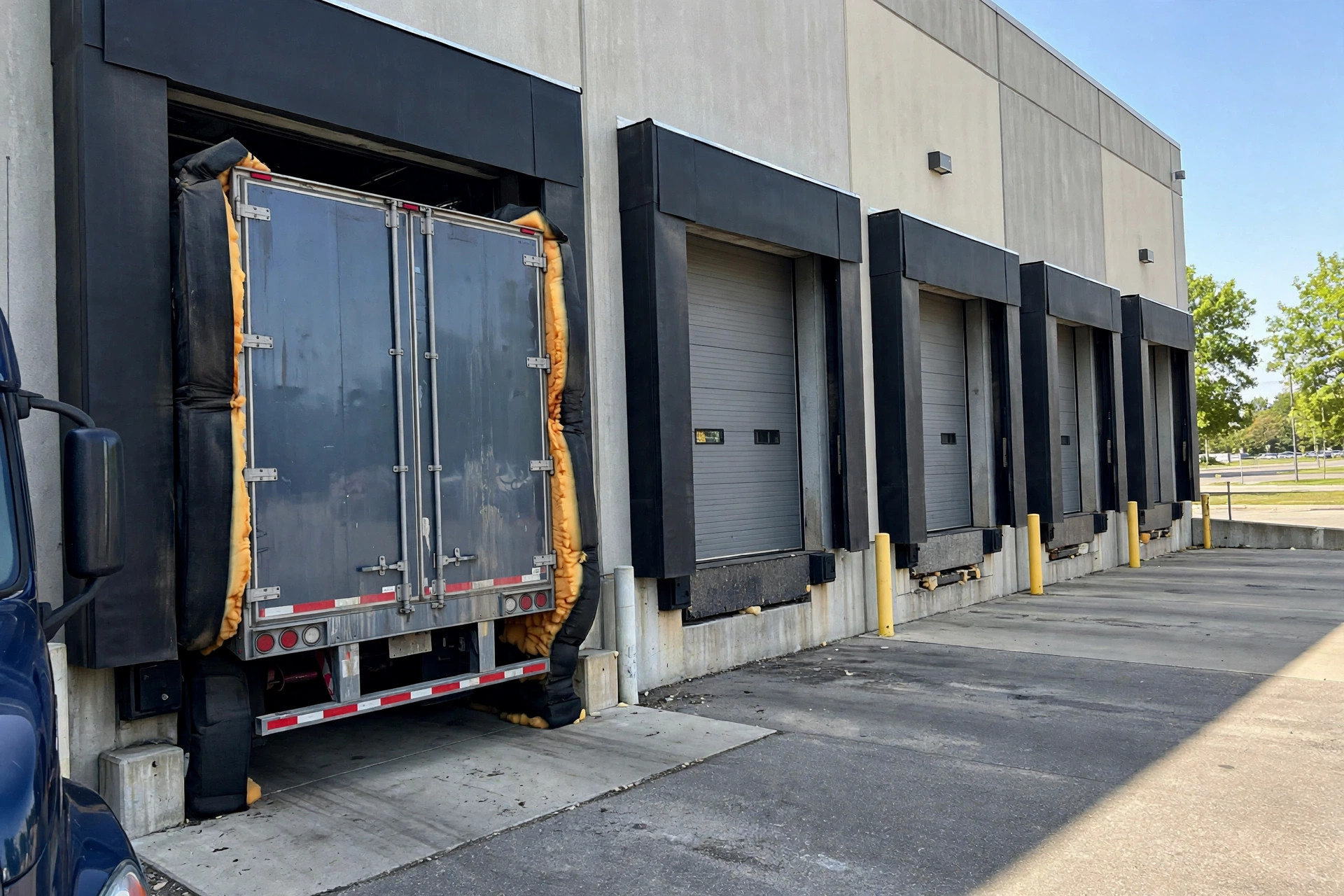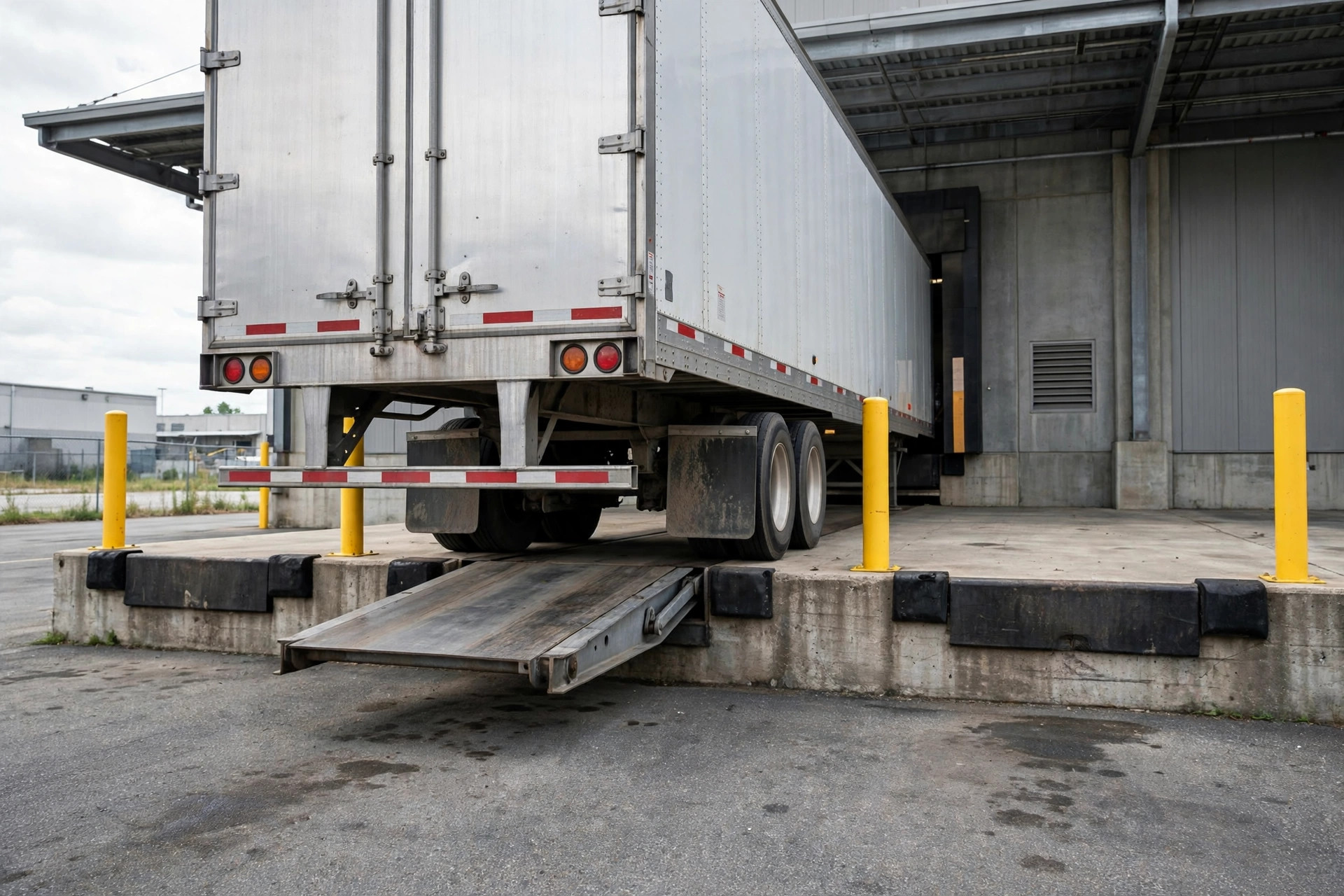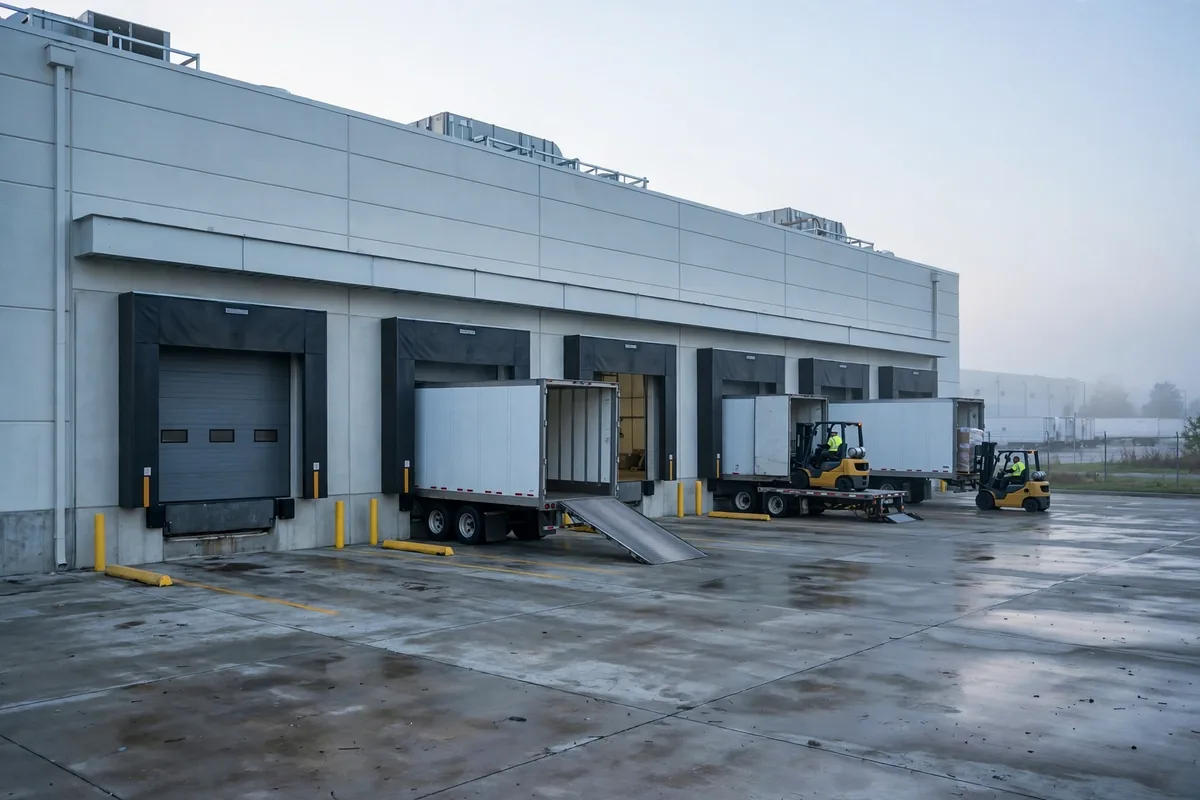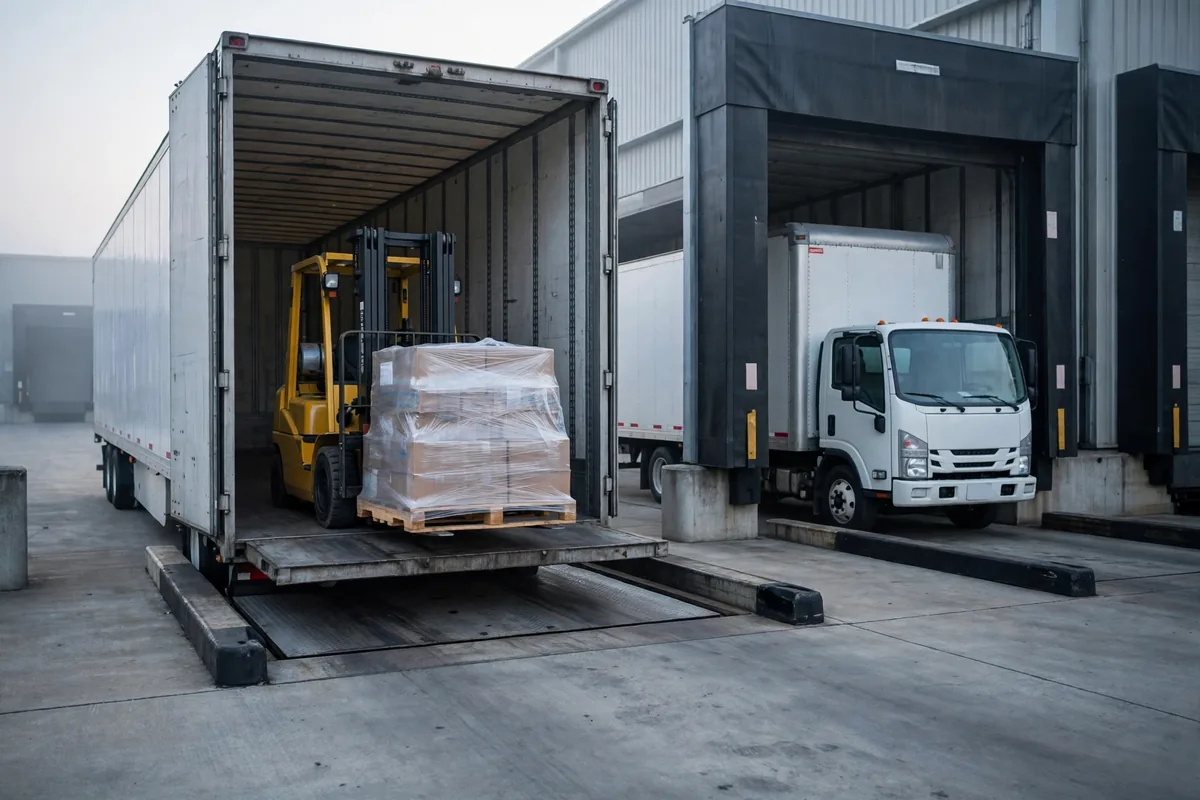
Let's start with the math on warehouse dock height. Your dock is 48 inches high. The box truck at your door has a bed height of 40 inches. That leaves an 8-inch gap, and every forklift trip in and out of that trailer climbs a slope. Pallets wobble on the slope, and product damage and tip-over risk live in those 8 inches. Warehouse dock height and truck trailer matching is, at heart, an arithmetic problem: how high is the dock, how high is the truck bed, and who covers the difference between them? Get the arithmetic wrong and the warehouse pays for those few inches every single day.
The standard dock height in North America runs 48 to 52 inches, and that number was not picked out of thin air. It was set against the floor of a 53-foot semi-trailer, which sits at about 48 inches. Dock and trailer floor flush, forklifts roll straight in and straight out — that is the cheapest possible move. A new warehouse built with a 48-inch dock is rarely wrong. The problem is that not every truck coming to your warehouse is a semi-trailer, and dock height matching has to cover the whole fleet that actually shows up, not just the one the building was designed for.
Dock Height Is Not a Case of Higher Being Better
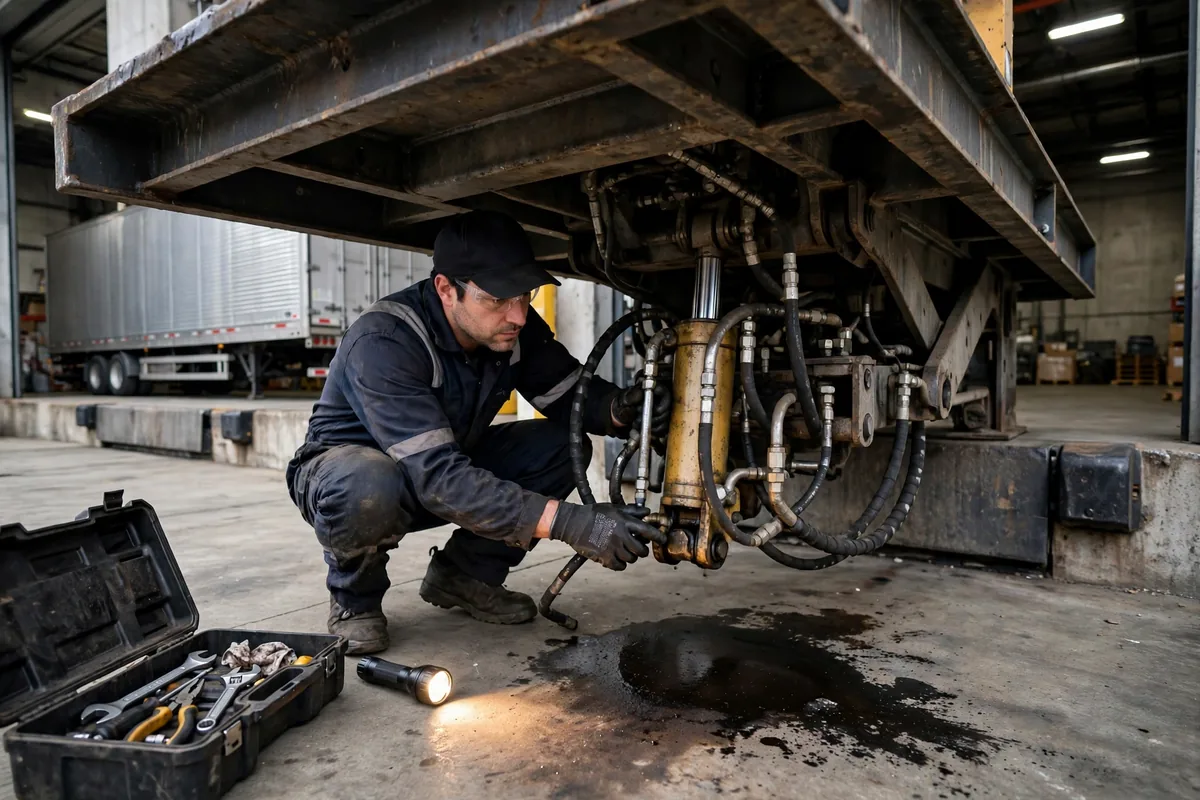
I have seen a warehouse built with a 52-inch dock because the operator wanted a flush fit with containers — a container floor sits at about 52 inches, so loading a container from that dock is genuinely smooth. But the trucks that came through every day were mostly box trucks with bed heights around 40 inches. Every single one of them needed the dock leveler cranked up a full 12 inches, running at maximum extension all day. Within two years the levelers were leaking oil and rattling, and the repair invoices kept coming. That money was wasted: whatever time the 52-inch dock saved on container loads got paid straight back in leveler repairs. A taller dock does not mean a faster warehouse. What matters is which truck shows up most often.
Another warehouse did the opposite. Its dock is 48 inches, fitted with a standard leveler that adjusts about 12 inches up and down, so one door covers truck beds from about 36 to 60 inches. Semis, box trucks, and containers all work through the same door, and the small delivery trucks use a ground-level door with a liftgate. That warehouse's levelers are the least troublesome equipment on site, because most trucks land inside their comfort zone and the leveler only makes small adjustments. Same money spent, completely different result — the difference is all in the fit.
Truck Beds Can Differ by Two Feet at the Same Door
A box truck bed sits somewhere between 40 and 50 inches. A small delivery truck is lower still, just 24 to 36 inches. Take one dock door: a semi-trailer pulls in flush in the morning, and in the afternoon a small truck arrives with a gap of up to 24 inches between dock and bed — nearly two feet. A forklift cannot get down there at all, and hand-loading over a ramp takes far longer per truck. A lot of warehouses that think they are short of labor are actually short of dock-to-truck fit: the people are fine, the inches are wrong.
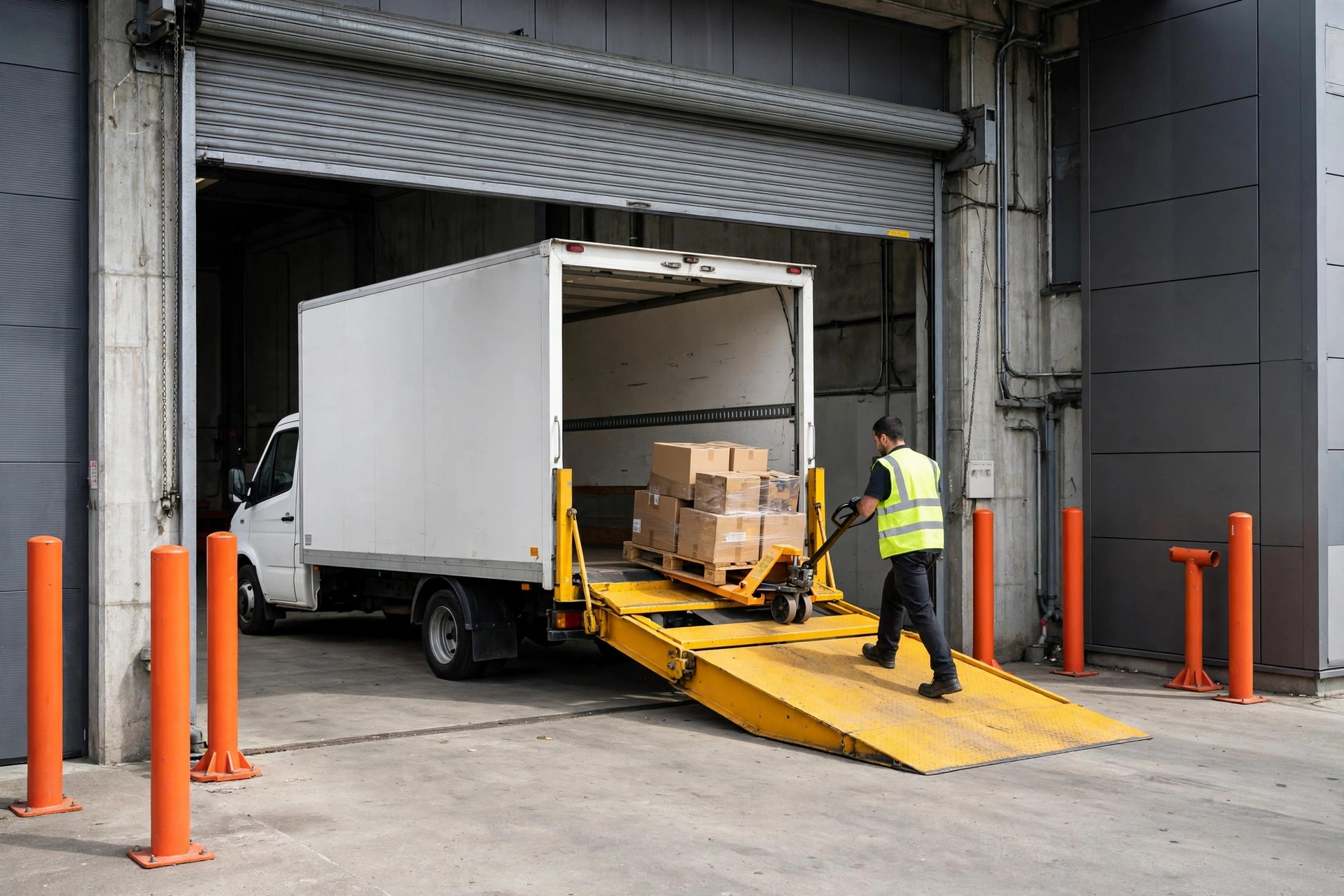
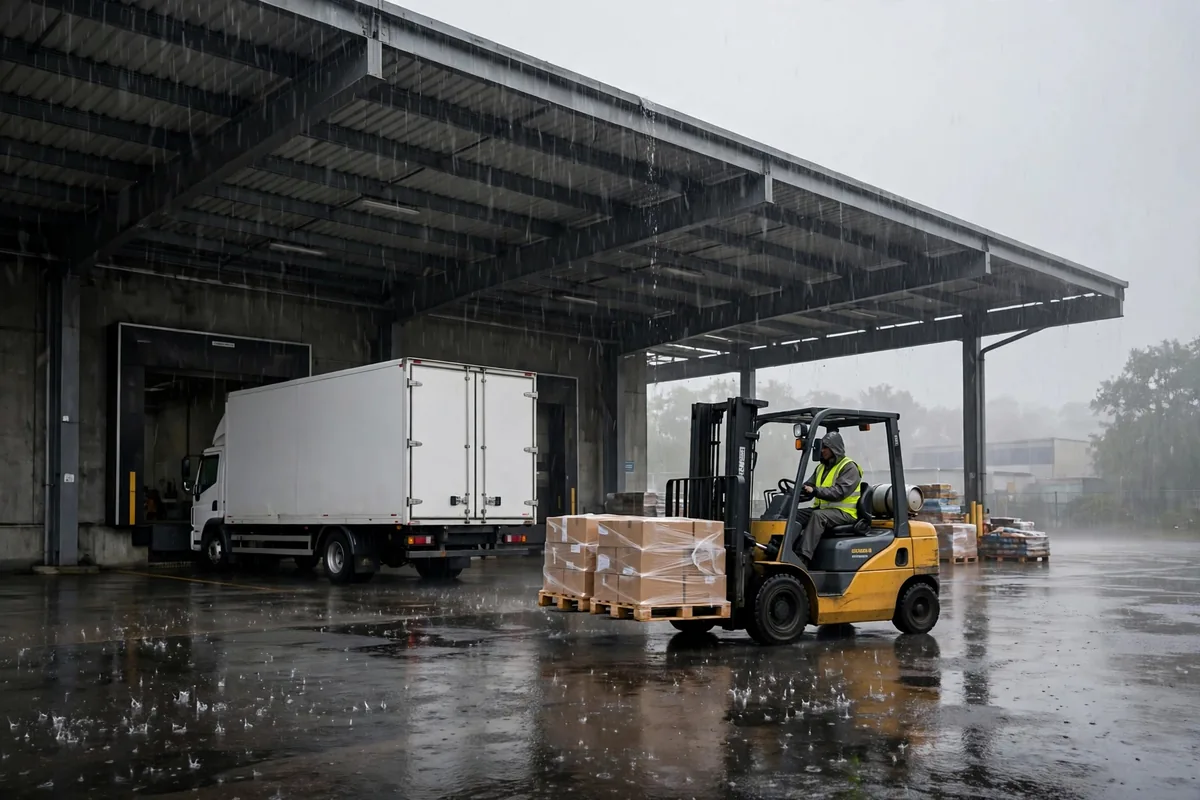
Small trucks are the ones most often overlooked. Warehouses handling e-commerce parcels and city deliveries see small trucks more than anything else, yet their docks were built for semis. A small truck with a 24-inch bed against a 48-inch dock leaves a 24-inch drop, and a standard leveler with about 12 inches of travel cannot reach it. The right answer is not to force it — it is to keep a ground-level door on the other side of the building, served by liftgate trucks, and send the small trucks there. A ground-level door costs little. What costs real money is letting small trucks queue at the semi-trailer dock.
| Incoming truck | Bed height | Gap vs. a 48-inch dock | Can a standard leveler serve it? |
|---|---|---|---|
| 53-foot semi-trailer | About 48 inches | Flush | Yes, straight in and out |
| Container truck | About 52 inches | 4 inches above dock | Yes, small downward adjustment |
| Box truck | 40 to 50 inches | 0 to 8 inches below dock | Yes, normal range |
| Small delivery truck | 24 to 36 inches | 12 to 24 inches below dock | A 36-inch bed yes; a 24-inch bed no — use a ground-level door |
That table is the whole of warehouse dock height and truck trailer matching. A 48-inch dock plus a leveler with about 12 inches of travel covers bed heights from about 36 to 60 inches, and the large majority of trucks on the road fall inside that band. A truck outside the band should not be forced through the dock — give it a different door. A separate door is far cheaper than a replacement leveler.
Before You Spend Money on Dock Height, Count the Trucks That Actually Come
When loading feels slow, the first instinct in many warehouses is to rebuild the dock or buy a bigger leveler — a major project. My advice is to do nothing of the kind until you have kept a log for a week: how many trucks a day, what type, how high their beds are, which door they used. Once the numbers are written down, the answer writes itself. If nine out of ten trucks are semis and box trucks, a 48-inch dock with a standard leveler is already enough and there is nothing to spend. If small trucks dominate, a ground-level door fixes more than a dock rebuild ever will.
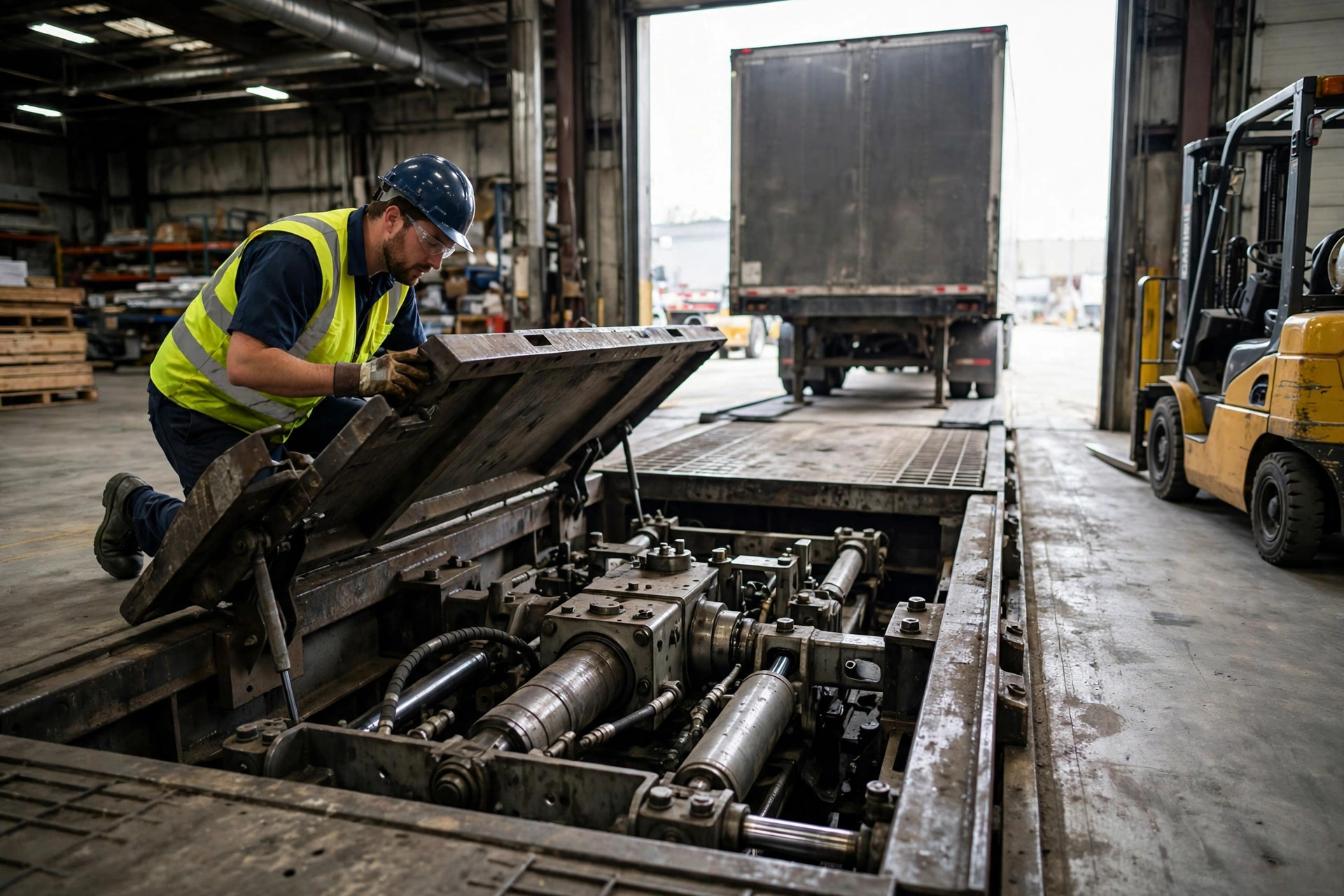
Here is a counterintuitive point: a leveler with a bigger travel range is not necessarily better. About 12 inches of travel is the most common specification in the industry, which means parts are easy to find, repairs are cheap, and breakdowns are rare. A long-travel leveler costs more to buy, more to repair, and more in downtime while you wait for parts. Dock height matching is not a contest over who has the most advanced equipment — it is about whether your dock, your leveler, and the trucks that arrive every day all sit inside the same band.
If the Warehouse Is Leased, Change the Doors, Not the Dock
Many small and mid-size warehouses are leased, and the dock height is whatever the landlord built. Do not fight the dock — change the way the doors are used instead. Sort the doors by what they can serve: trucks with beds from 36 to 60 inches go through the standard dock doors with standard levelers, and small trucks with beds from 24 to 36 inches are routed to one or two ground-level doors served by liftgate trucks. Once traffic is split, each door only serves trucks inside its own band, the levelers stop working at full extension all day, and they last longer.
There is one more common case: a warehouse that takes both semi-trailers and containers. A container floor at about 52 inches sits 4 inches above a 48-inch dock, and that gap is comfortably inside a standard leveler's range — no dock work needed. The dangerous direction is the reverse: a 52-inch dock whose daily traffic is mostly box trucks with 40-inch beds, forcing the leveler to drop a full 12 inches on every truck and live at the edge of its travel. When you are choosing or leasing a warehouse, ask two questions before signing: how high is the dock, and what trucks come every day? Those two answers are cheaper than any retrofit after the lease is signed.
And measure the dock yourself. Take a tape measure to three places: the dock surface to the ground, the leveler lip against the dock surface when it is parked, and the slope of the apron outside the door. The 48 inches on the drawing is not the whole story — ground settlement, ice at the door in winter, and a leveler that has sagged with age all change the real gap. Run the numbers on what you measured, not on what the drawing says.
Measure the bed heights of the three truck types that visit you most, and check them against the 36 to 60 inch band. The more of your traffic falls inside that band, the more your dock is worth. Trucks that fall outside it get their own ground-level door. Run that calculation first, spend money only where the calculation says to, and not a cent anywhere else.
By Lao Zhou, Logistics Cost Analyst