We have a client who almost walked away from us last year — over a ring of black foam pads around a dock door.
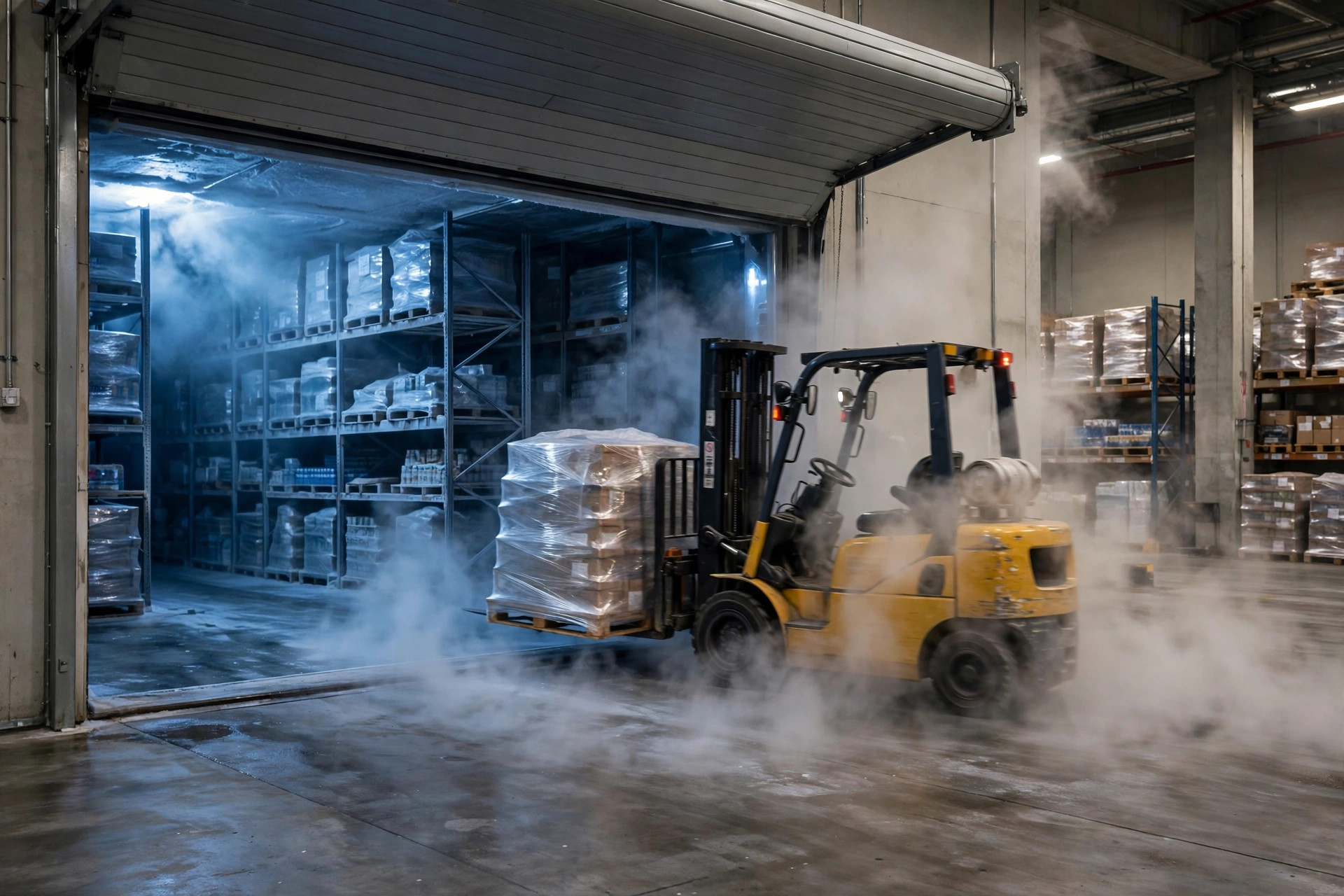
Mr. Chen runs a frozen-food distribution business out of Wenzhou. In the spring of 2024 he signed a three-year lease for half of our cold storage facility. On inspection day, he didn't bring a lawyer. He brought an infrared thermometer. While the forklifts were still bringing in the first pallets, he was already standing at the dock doors, sweeping the thermometer around the door frames. Then he held the gun up in front of me: "Susan, your dock seals leave a two-finger gap when a trailer backs in. Cold air pours out during loading. Whose problem is that?"
My stomach dropped. In our business, the scariest thing isn't a rent negotiation falling apart — it's a client writing the word "temperature" into the SLA section of the contract. Rent is negotiated. Temperature is measured. And when the measurement fails, the penalties are real money.
So let's talk about it: dock seals vs dock shelters, the two ways to seal a loading dock. It looks like a minor detail — some foam pads, some fabric — but pick the wrong one and you'll get hit from both sides: the electricity bill and the client's penalty clause.
Dock Seals vs Dock Shelters: The Two Approaches, Plainly Stated
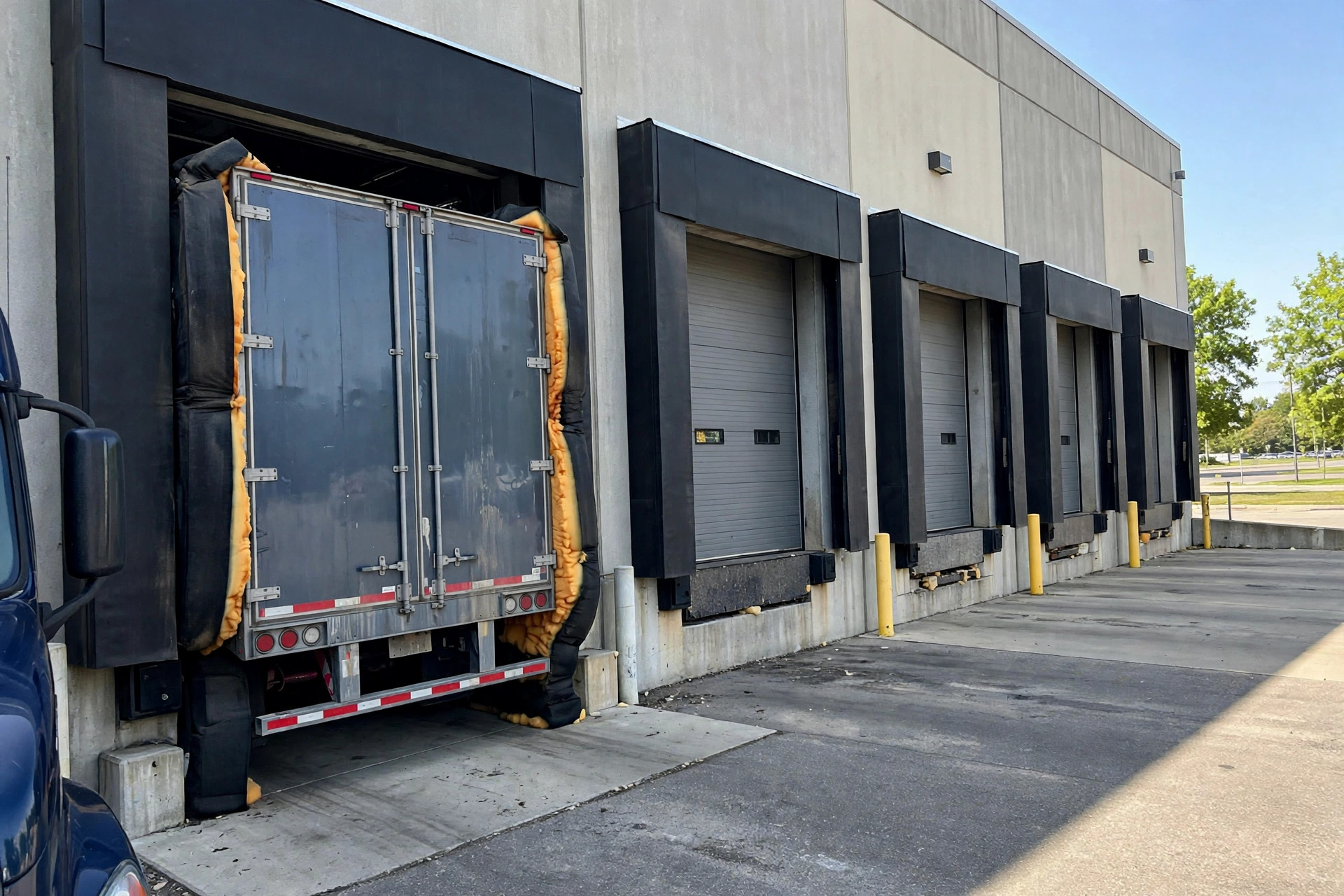
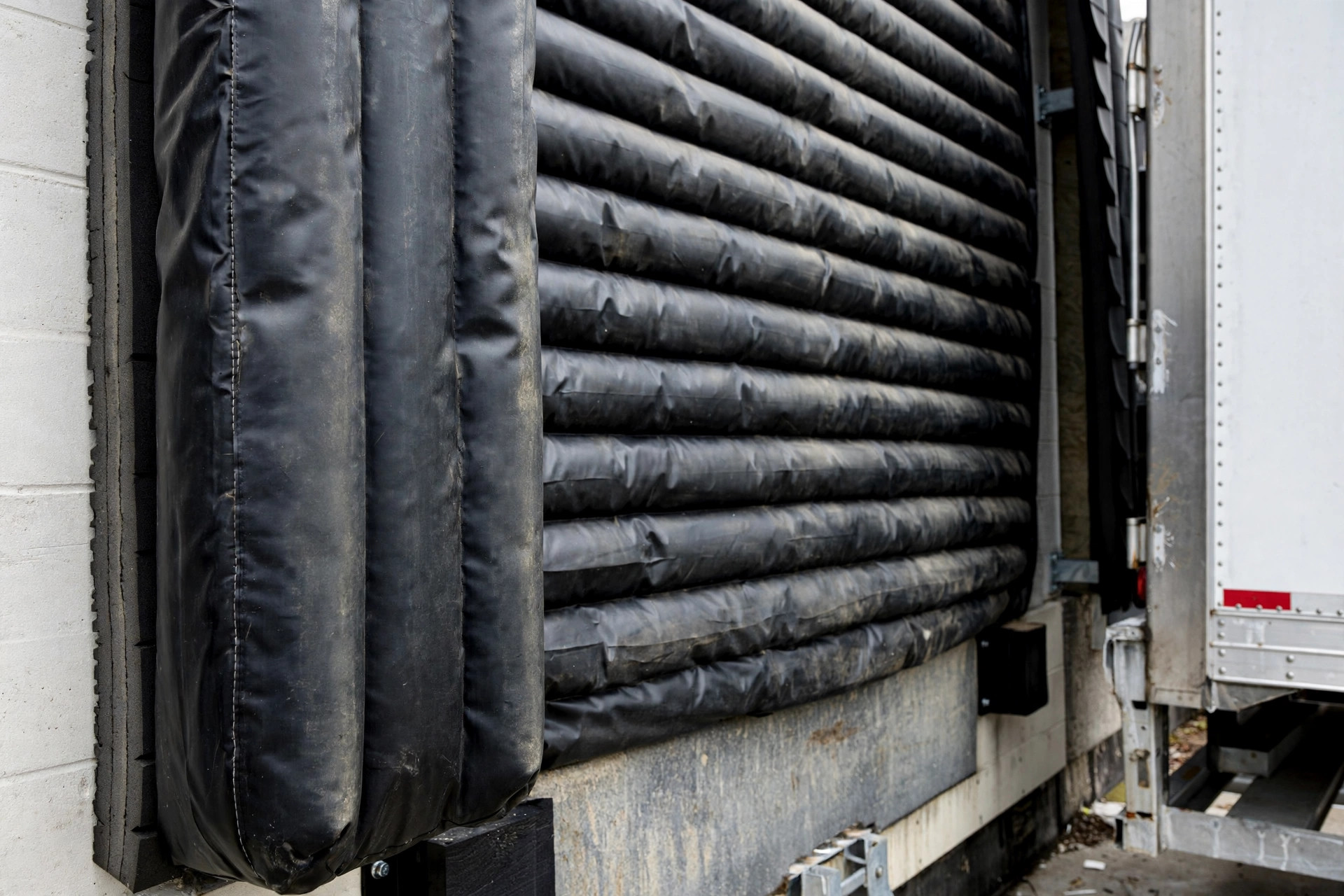
Dock seals are essentially a ring of foam pads mounted around the door opening. A trailer backs in, the trailer's rear compresses the pads, and the compression plugs the gap. The upside is straightforward: excellent sealing, minimal cold air loss. The downside is equally straightforward: they only fit standard trailers. A trailer that's too short, too narrow, or backed in crooked won't compress the pads evenly — and the gap comes right back.
Dock shelters are a "hood": a fiberglass frame holding up a fabric curtain, like an awning draped over the trailer's rear. There's no compression involved — it shields rather than seals — so it handles a wide range of trailer heights and widths. The price: it was never airtight. There's always a gap between the curtain and the trailer. Wind gets in. Cold air gets out.
One line to remember: seals are tailored clothing — a great fit, but picky about who wears them. Shelters are a one-size rain poncho — anyone can wear one, but don't expect it to keep you dry.
Chen's facility had 18 dock doors, all fitted with shelters. The previous tenant did ambient general merchandise with a mixed fleet, and shelters worked fine for them. Chen runs reefer trucks, all the same size. He took one look and shook his head: "My fleet is uniform. I need sealing, not compatibility."
Pick Wrong in a Cold Store and You're Burning Your Own Electricity
Here's what we ended up doing: all 18 doors converted to dock seals, plus an inflatable inner curtain as a second line of defense. The retrofit cost a serious six-figure sum in local currency — and Chen didn't pay a cent. We did. Why? Because he added a clause to the contract: if dock-area temperature drifts outside the agreed band during loading operations, each breach knocks a percentage off that month's storage fee.
That's the ruthless genius of a good client: he doesn't argue about whether seals or shelters are "better" technology. He writes the outcome into money. Breach the band, lose the fee. Simple, brutal, inarguable.
We ran the numbers internally. In cold storage, electricity is baked into the warehousing rate — every extra kilowatt-hour the refrigeration units burn is our cost, not the client's. A poorly sealed dock door is a hole leaking money during every loading peak. Converting all 18 doors to seals cost real money up front, but the reduced compressor load paid it back through monthly energy savings within a couple of years. More importantly, Chen renewed — a three-year contract on stable frozen-food volume is worth far more than the retrofit.
Here's the counterintuitive part: most people think seals are the expensive option and shelters the cheap one, so shelters must be "better value." In a temperature-controlled facility, the math runs the other way. Shelters are cheap at purchase and expensive forever after — in energy bills and spoilage risk. One quality claim on thawed product during dock exposure can cost you several sets of seals. Anyone who prices 3PL contracts knows: the margin in temperature-controlled warehousing hides inside energy cost, and energy cost hides inside that ring of foam around the door.
What About Ambient Warehouses? Look at Your Fleet Mix
We have another client, an e-commerce fulfillment operator in Hangzhou, whose fleet is a glorious mess: small box trucks, mid-size rigids, 9.6-meter box trucks, and the occasional 17.5-meter flatbed. His 24 doors are all shelters, every one of them.
I visited during a loading shift once. The dock workers found the curtains annoying, so they'd tied both sides back to the door frame with rope — the shelter might as well not have existed. I asked him: "How often do you replace the curtains?" He said: "About once a year. Sun and wind eat the fabric. A few thousand per door each time."
That's the honest reality of shelters in an ambient warehouse: the sealing was mediocre to begin with, the workers don't bother using them properly, and the maintenance bill shows up every year anyway. But should he switch to seals? With that fleet mix, seals would never compress evenly — the money would be wasted. So his choice is correct: for ambient, non-temperature-controlled operations, shelters are the best value answer — as long as you don't expect them to seal anything, and don't present them in a quote as a temperature-control investment.
Here's an insider truth from the 3PL side: plenty of sales reps fudge the "dock sealing" line in their quotes. Client asks "how do you handle temperature control," the rep gestures at the doors and says "we have shelter sealing," the client nods, the contract gets signed. Then a temperature dispute blows up and the rep discovers: the "sealing" in the contract and the "sealing" in the client's head were never the same thing. A shelter counts as sealing? The client doesn't think so.
Dock Seals vs Dock Shelters, Side by Side: The Comparison
| Dock Seals | Dock Shelters | |
|---|---|---|
| How it seals | Foam compression plugs the gap | Fabric curtain shields, never airtight |
| Sealing performance | Strong, minimal cold loss | Mediocre, persistent gaps |
| Fleet fit | Standard trailers only | Handles mixed heights and widths |
| Maintenance | Pads replaced as a set, longer cycle | Curtains wear out, roughly annual replacement |
| Best for | Cold stores, temp-controlled, uniform fleets | Ambient warehouses, mixed fleets, tight budgets |
| Contract language | "Compression sealing — temperature SLA committable" | "Weather hood — no temperature SLA promised" |
The dock seals vs dock shelters decision is really three questions:
- Is temperature controlled? If yes — frozen, chilled, pharma, chocolate, anything fussy — seals are the starting point, non-negotiable. A shelter in a cold store is a placebo.
- Is the fleet uniform? Company-owned, standardized trailers — seals perform at their best. Spot-market trucks of every size — seals won't compress properly, shelters are the honest choice.
- Who pays for it? If you're the 3PL and the temperature SLA is in your contract, seals are your own insurance policy. If the client just rents the space and owns the temperature risk, lay out the trade-offs and let them choose — it saves you the argument later.
One trade-off most people miss: seals demand decent backing-up skills. One crooked approach and the pad takes the load on one side, wearing out twice as fast. We had a site where half the seals were crushed within two years — turns out those doors were always served by rookie drivers. Choose seals, and add a line to your SOP: if the trailer isn't square to the door, the dock team can require a re-approach. Equipment selection is never just about buying equipment — it's about buying a way of working.
Next Time You're Negotiating a Contract, Ask These Three Questions
First: "Is the temperature target in the contract, and what's the penalty for missing it?" If the answer is yes, seals are mandatory — budget for them up front, not after the client shows up with a thermometer.
Second: "Is the fleet standardized?" Standardized means seals. Mixed means shelters. Don't spend money fighting physics.
Third: "Who carries the sealing maintenance cost?" Shelter curtains every year, seal pads every few years — put it as its own line in the quote. Clients hate surprise expenses; itemize it up front and they read it as professionalism instead.
Nobody looks twice at the foam ring around a dock door. But in our business, clients are lost exactly in the places nobody looks twice at. Sealing selection was never the facilities team's decision — it's a sales decision. Because in the end, the contract pays for it.
By Susan, 3PL Sales Director