A dock leveler is the kind of equipment nobody looks at twice — until it leaks. One leveler down means one dock door sealed shut, trucks queueing outside, forklifts rerouting, and the whole receiving schedule thrown off. Think of it this way: it is like the kneecap of the loading dock. Small, unremarkable, and the entire leg stops working when it goes wrong.
My first oil leak call was at a food distribution warehouse, six in the morning in winter. The night-shift lead called to say the leveler at Dock 3 would not rise, and there was a puddle of oil on the floor. When I got there, the cylinder rod was beaded with oil, and the platform had dropped and would not come back up. Nine trucks were scheduled at that door that day, the first one arriving at 7 a.m. We moved the freight to the next dock over, forklifts made two extra trips, and receiving ran 40 minutes late. The cause, once we found it: an aged cylinder seal that had shrunk in the cold and opened a gap. The seal itself cost almost nothing. Nobody ever calculated what that morning's chaos cost.
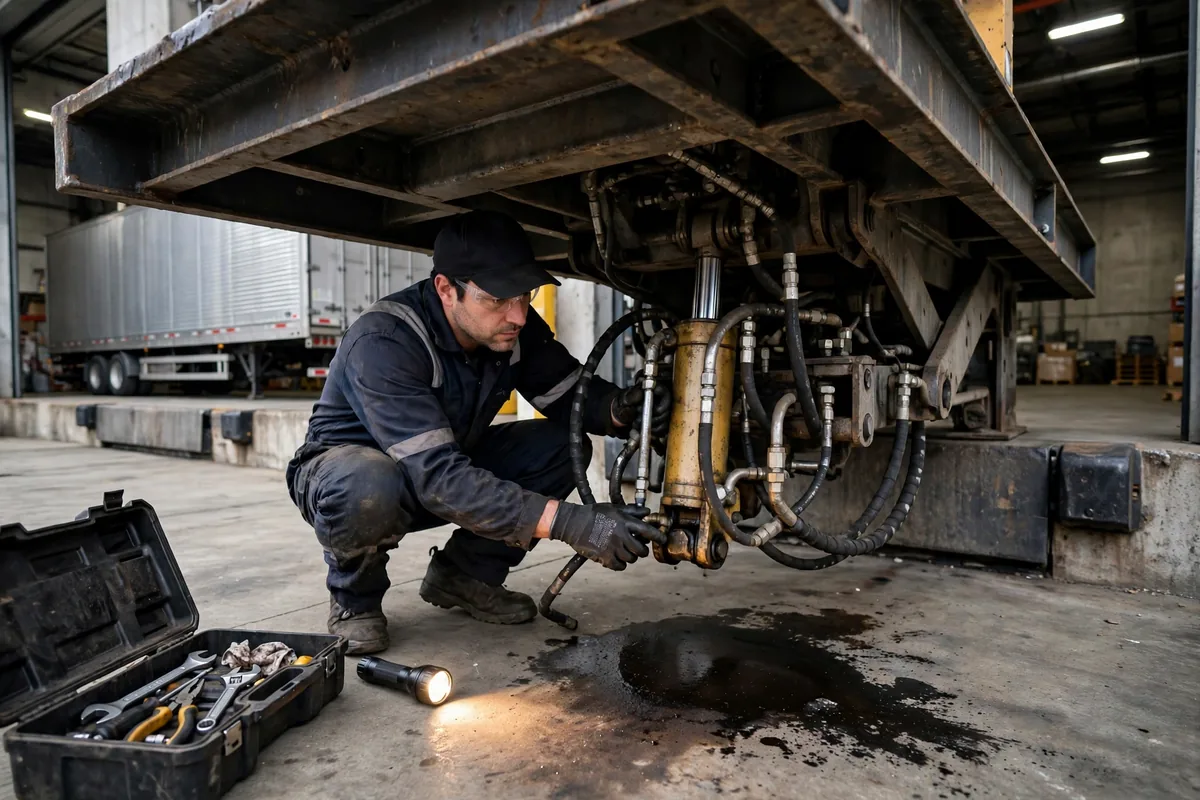
The second leak was sneakier. There was no oil on the floor, but the reservoir level dropped a little every day. It took three days to find: a hairline crack in a high-pressure hose fitting, spraying oil as a fine mist onto the steel structure under the platform, where it ran along a beam and pooled in a corner. That kind of leak gets misread as "we must have underfilled it." Workers topped up the oil every few days for two months, spent real money on oil, and fixed nothing.
Both stories make the same point: a leak is not scary. Not knowing where it comes from, how fast it is losing oil, and how long the leveler can keep running — that is scary. Troubleshooting has an order to it. Follow the sequence instead of tearing things apart on a hunch — that is what good dock leveler repair looks like.
Dock Leveler Repair: Finding the Leak, Outside In
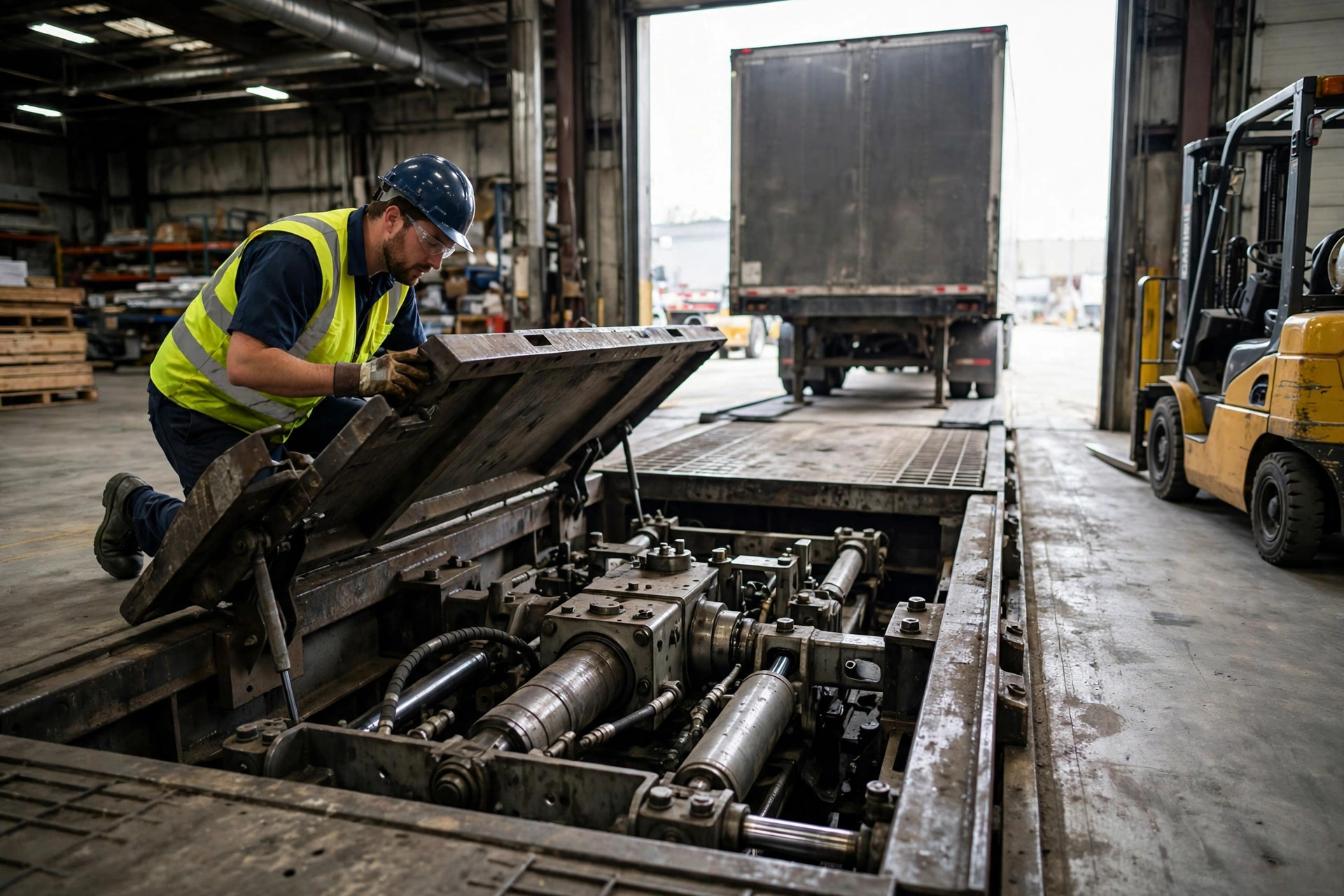
In a hydraulic system, nine times out of ten the oil is coming from one of three places: the cylinder seals, the hose fittings, or the valve block. Work from the outside in, from the visible places toward the hidden ones.
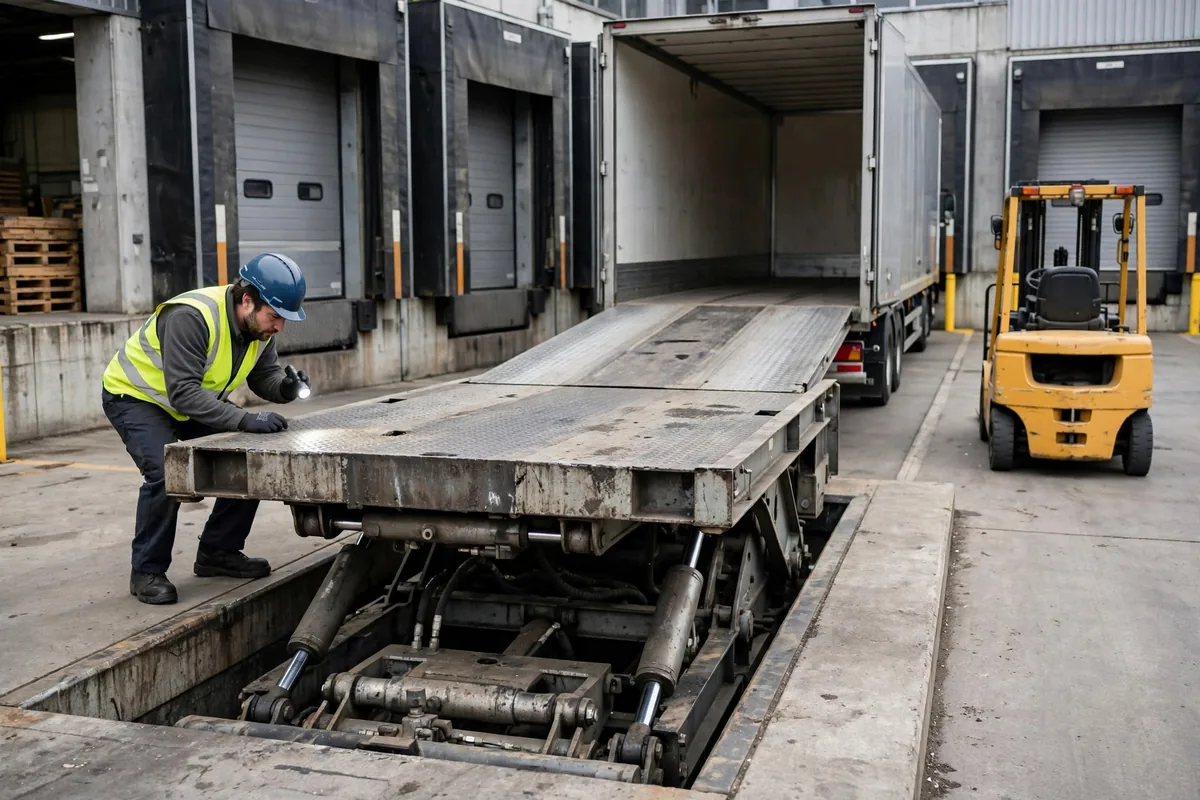
Start with the floor and the space under the platform. Lower the leveler to its lowest position and shine a flashlight underneath. Oil flows downhill, so the source is usually at the highest point of the stain. Is there an oil film on the piston rod? Is the cylinder end-cap seam weeping? Are any hose fittings wet along the run? This step needs no disassembly, takes ten minutes, and locates more than half of all leaks.
Next, check the reservoir level. Note the level, run the leveler through several full raise-and-lower cycles, and check the level again. If it drops fast, the leak is serious and goes to the top of the list. If it drops only a little over days, it is a slow seep — schedule the repair, but record the level every day so a slow seep does not quietly become a major leak. I recommend writing the level straight onto the dock inspection sheet. When the numbers are recorded daily, the leak rate is obvious.
Finally, check the valve block and fittings. The valve block sits under the platform, with several solenoid valves and a relief valve and plenty of fittings, and any aged seal there will weep. The method: wipe the fittings clean, cycle the leveler a few times, and see which fitting gets wet first. A cracked high-pressure fitting is almost invisible to the eye, so hold a sheet of white paper near the suspect fitting and cycle the leveler — oil spots on the paper tell the truth. I have used that low-tech trick for years, and it beats staring at the fitting.
| Leak location | Typical symptom | Fix | Downtime (illustrative) |
|---|---|---|---|
| Cylinder seal | Oil beads on the piston rod; platform slowly sinks after rising | Replace seals | Half a day |
| Hose fitting | Seepage at the fitting, or a fine oil mist | Tighten or replace the hose | 1–2 hours |
| Valve block seal | Oily valve block surface; reservoir level falling slowly | Replace seals, clean the valve block | Half a day |
| Scored cylinder bore | Still leaks after new seals; scratches on the rod | Replace the whole cylinder | 1 day |
The downtime figures in that table are illustrative — the real number depends on site conditions and parts availability. But the logic holds: seals and fittings are small repairs, a scored bore is a big one. Know which tier you are in before you start, so you do not tear down a big job for a small leak, or drag a big job out as if it were small.
Dock Leveler Repair or Replace: It Comes Down to One Number
My rule, and the way I usually end these things: it comes down to one number. For an oil leak, that number is "how long will this repair hold?" A new seal set should last years, so replacing seals is worth it. But if the cylinder bore is already scored, new seals will leak again in three months, and you are better off replacing the whole cylinder. The test is the piston rod: smooth surface, no scratches or rust, replace the seals; visible scratches, rough to the touch, seals will not hold — replace the assembly.
The other number to watch is downtime cost. Half a day with one dock door closed costs more than the mechanic's hours. Count all of it: how many dock doors are affected, how many trucks are delayed, the extra labor and forklift shifts. Once you add those up, you will find that "let's fix it next month" often costs several times more than "fix it today." I have seen a warehouse drag a leak out for three weeks: the oil, the top-up labor, and finally a cylinder ruined beyond repair and replaced as a whole assembly added up to several times the cost of fixing it early.
Hydraulic fluid type and system pressure vary by brand and model, so check the equipment nameplate and the manufacturer's manual before adding oil. The wrong fluid type can attack the seals and make the leak worse. That is not a scare story — I have seen a full set of seals harden within a week after the wrong oil went in.
Here is the counterintuitive part: the leak to fear is not the big one, it is the small one. A big leak leaves a puddle on the floor that everyone can see, and it gets fixed the same day. A slow seep drops the level a little each day, workers top it up without thinking, oil creeps into the steel structure and the floor, and eventually the cylinder runs dry and scores itself. Slow seeps cost more than obvious leaks. So my recommendation is simple: add one line to the dock inspection sheet — reservoir level, recorded daily. Three consecutive days trending down, no matter how slowly, means investigate.
On leveler maintenance in general, many people only remember "hydraulic is effortless, mechanical is worry-free." The trade-offs between the two designs are covered in detail in our hydraulic vs. mechanical dock leveler maintenance guide. But whichever design you have, the logic of a leak is the same: find it early, locate it precisely, fix it at the leak point, and never buy time by topping up oil.
Next time you walk the dock on inspection, glance at the floor, then at the reservoir level. Those two glances take 30 seconds, and they can save you a shutdown and a cylinder replacement.
By Da Liu, Automation Engineer