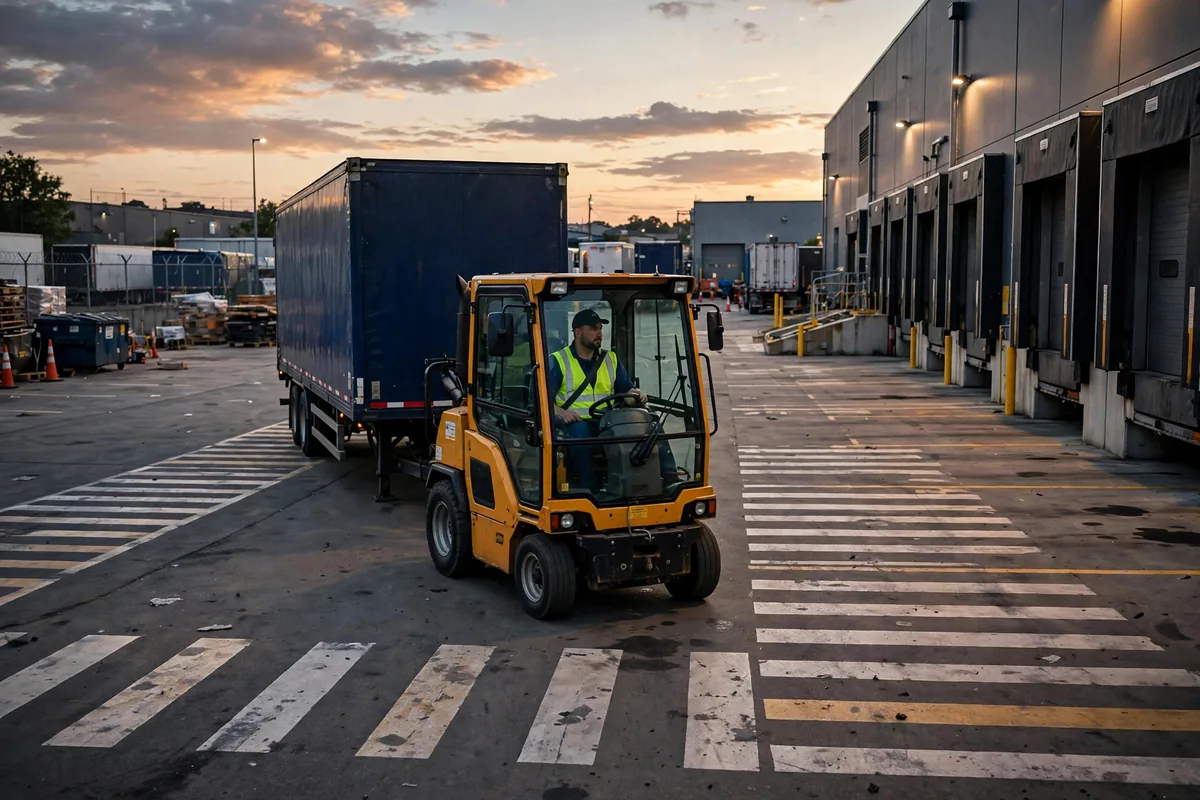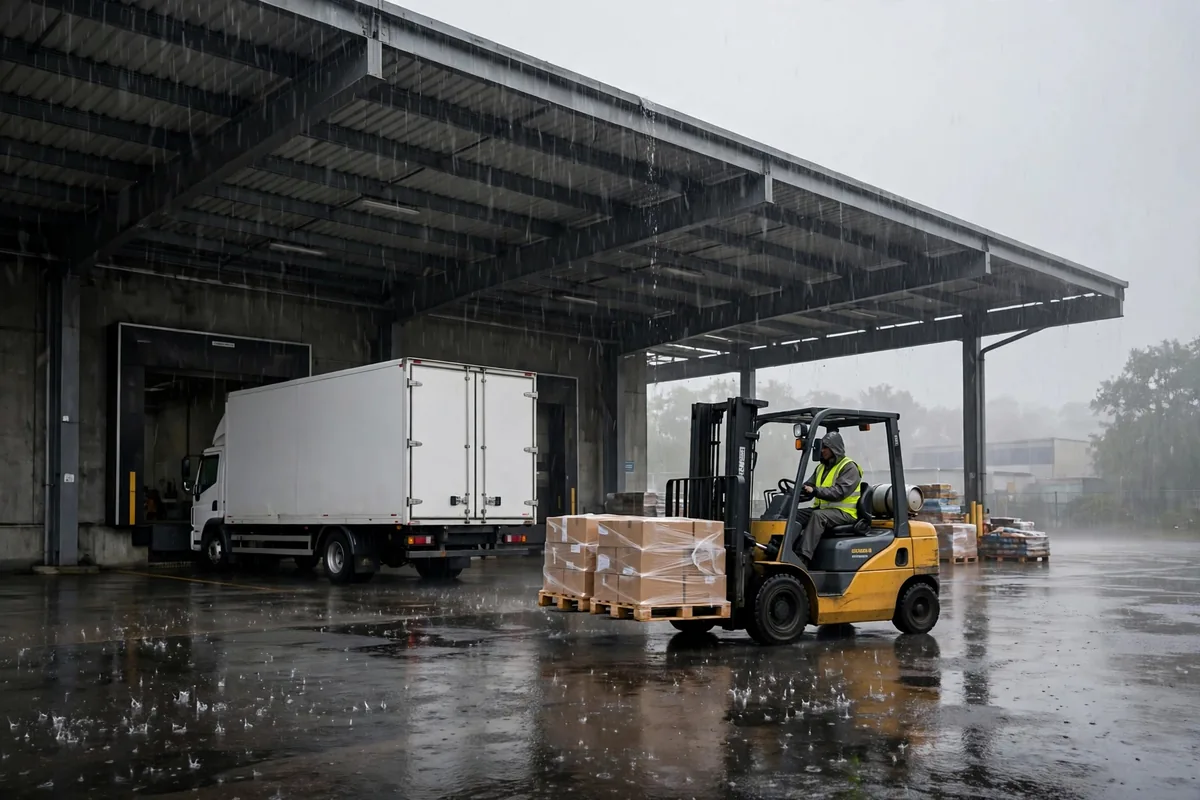
It was 2:30 in the morning on a night shift last September. The dock had no canopy, and the rain was coming down hard. A 53-foot dry van had backed into door seven, which has no canopy. The forklift was loading the last pallet of cartons. The driver shouted from inside the trailer. Rain was running off the door header and dripping onto the top layer of cartons. The shift lead ran over and took one look. The corners were already soaked. That load was headed to a grocery chain with zero tolerance for water damage. We pulled the whole pallet back down, opened it up, swapped out more than 40 cartons, repacked, and the truck left two hours late. I stood on that dock that night with one thought: we should have put up a canopy years ago.
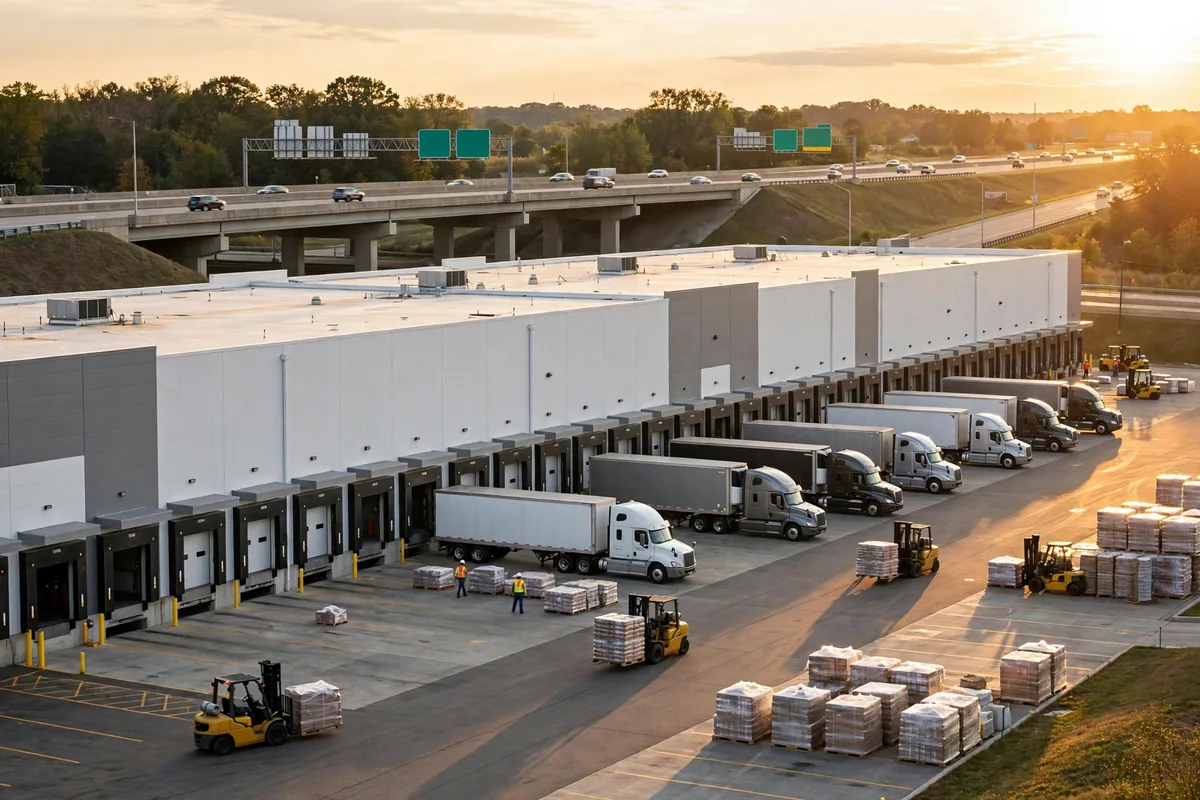
Here is the honest truth. The dock is the most overlooked spot in a warehouse. Racking, equipment, and systems all have someone watching them. The dock is usually just a row of doors and an empty apron. On a sunny day nothing goes wrong. When it rains, everything goes wrong at once. Goods get wet. Labels smear. Cartons go soft. Forklift tires slip on wet concrete. People work in the rain and hate every minute of it. Plenty of warehouses know all this and still put the canopy off, treating it like decoration. Then one water-damage claim arrives, and the payout would have paid for several canopies.
We counted what the rain actually cost us without a canopy
The day after that night, I asked the shift lead to list every rain-related problem from the past year. The list was short. Every line on it stung. Besides the soaked cartons, labels had been rained on twice until the barcodes would not scan, and loading stopped for half an hour while we reprinted. Once, rain seeped through the dock joints into the building, and the bottom of a row of pallets near the doors went damp. We only found the moldy outer packaging when we opened them. The worst one was a forklift sliding while braking on the wet dock apron. It nearly hit the door frame. Nobody got hurt. A pallet of goods went over.
Then there is the speed problem. Loading in the rain runs at least 20 percent slower. Workers wait for the rain to ease. They cover loads with tarps. Forklifts slow down. In peak season, a stretch of rainy days means two or three fewer trucks loaded per day. Those trucks do not disappear. They come back as overtime or as trailers sitting overnight, and overtime and detention both cost real money. Add the repacking, the replacement cartons, and the late-delivery penalty from that one night, and the total covered a good chunk of a canopy. I am not inflating these numbers. Anyone who has run a dock knows them by heart.
A canopy protects three things: the goods, the pace, and the people. The goods are the easiest to price. The pace is the most underestimated. The people are the most ignored. Plenty of owners only count damaged goods, figure it does not rain that often, and decide the money is not worth it. Once you add pace and safety to the calculation, the answer changes.
What a canopy actually costs
We asked around, and the 2026 open-market picture looks like this: a steel cover, fully installed, runs roughly 130 to 260 dollars per square meter, depending on steel prices, steel weight, wind-load class, and local labor. Get a local quote before budgeting, because those variables move. A cantilever the shelter is economical at a projection of 3 to 6 meters, which covers the dock working area. Go longer and you need a portal frame, and the price climbs. Give the roof at least a 2 percent fall, and 5 percent or more where lapped sheets carry water, or the roof ponds and you are worse off than before.
Here is our warehouse's math. Ten dock doors, each 4 meters wide, with a 5-meter projection gives 200 square meters of coverage. At 130 to 260 dollars per square meter installed, that is 26,000 to 52,000 dollars. Compare that against one water-damage claim plus a late penalty. Compare it against a month of peak-season overtime. Compare it against one forklift sliding into a door frame. At that point the cover stops being decoration. It is cheap money to take weather out of the loading plan.
Three common options, side by side, so you can match one to your own dock:
| Option | Rough cost | Rain protection | Weakness |
|---|---|---|---|
| Fixed steel the shelter | 130–260 dollars per sq m installed | Blocks direct rain, lasts for years | Wind-driven rain still blows in, highest cost of the three |
| Retractable awning | A few thousand dollars per unit | Flexible, folds away | Poor wind resistance, must retract in storms |
| Enclosed dock shelter with door seal | Priced per door, above a cover | Best rain and wind protection | Highest price, needs the right trailer dimensions |
Here is the counterintuitive part: bigger is not better. A longer projection raises the wind load, which means thicker columns and heavier foundations, and the cost climbs far faster than the protection does. What actually works is getting three details right together: a projection that covers the forklift working zone, a slope that moves water off the roof, and gutters and downspouts that are not skipped to save money. Skip the drainage and the rain pours straight onto the dock apron, which defeats the whole purpose. And remember, a the shelter stops vertical rain only. Wind-driven rain still gets in. If you want a watertight seal, that is an enclosed shelter, a different price bracket. Do not expect one cover to solve every problem.
How we run it now
Once the the shelter went up, we set a few rules that are still in place today. First, the loading process does not change in the rain. Forklifts keep working. But standing water on the apron gets cleared, because slip prevention is non-negotiable. Second, gutters get checked every month, and every two weeks in autumn when leaves pile up. A blocked gutter is the same as no cover. Third, no long-term storage under the the shelter. Someone always tries to park pallets there as overflow space, and before long the cover becomes a second storage area and the loading lane is blocked. Fourth, welds and bolts get inspected once a year before the rainy season. Steel looks solid. Rust starts where you cannot see it.
The result? In the first rainy season after installation, loading never stopped because of rain. Not once. Soaked cartons stopped happening. Label reprints dropped sharply. The most visible change was the crew's mood. Loading in the rain used to mean frowns all around. Now working under the the shelter feels almost like a dry day, and the pace holds steady. That one change is enough to tell me the money was well spent.
One reminder for fellow operators: do not wait until the goods are wet to think about a cover. The dock looks fine on a sunny day. Every problem hides in the rain. Next time it rains, stand on your dock for ten minutes. Watch where the water runs, where the goods hide, and where the forklifts slide. After that, you will know whether the money is worth spending.
By Chen Feng, Warehouse Operations Manager