Here's my verdict up front: if your dock height doesn't line up with the trailer floors your carriers actually run, you're bleeding loading efficiency every single day — and a dock leveler won't save you. Every fix has two sides. A small height gap means your forklifts crawl up a ramp all day; a big one means the leveler can't even engage. This is a problem decided the day you sign the lease.
Dock height sounds like a footnote in site selection. It isn't. The industry standard dock sits around 48 inches — about 1.2 meters — but trailer floor heights are all over the map. Dry vans ride higher or lower depending on load and suspension; reefers sit lower; air-ride trailers literally change height as you unload them. The gap between "standard dock height" and the actual trailer in your door is where the money leaks out.
I've Seen Too Many Warehouses Die on a Few Inches
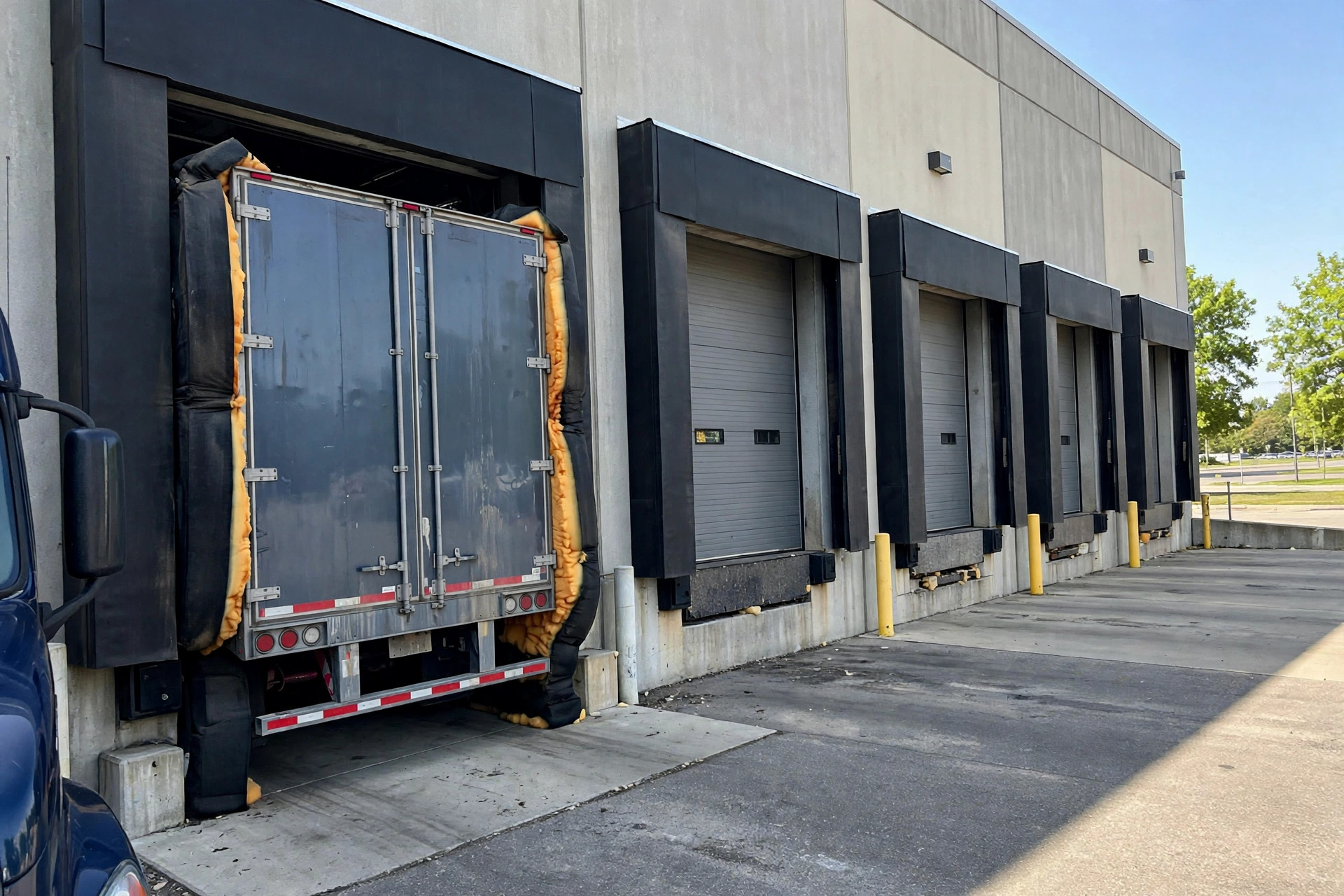
Fall 2023, I was doing an operational diagnostic for a 3PL outside Los Angeles. Nice building — 40-foot clear height, ESFR sprinklers, 40 minutes from the port. The problem showed up the moment I put a tape measure on the dock: 44 inches. Their primary carrier's dry vans rode at 51 inches or so, loaded.
Seven inches. The warehouse manager shrugged: "The leveler adjusts, it's fine."
It was not fine.
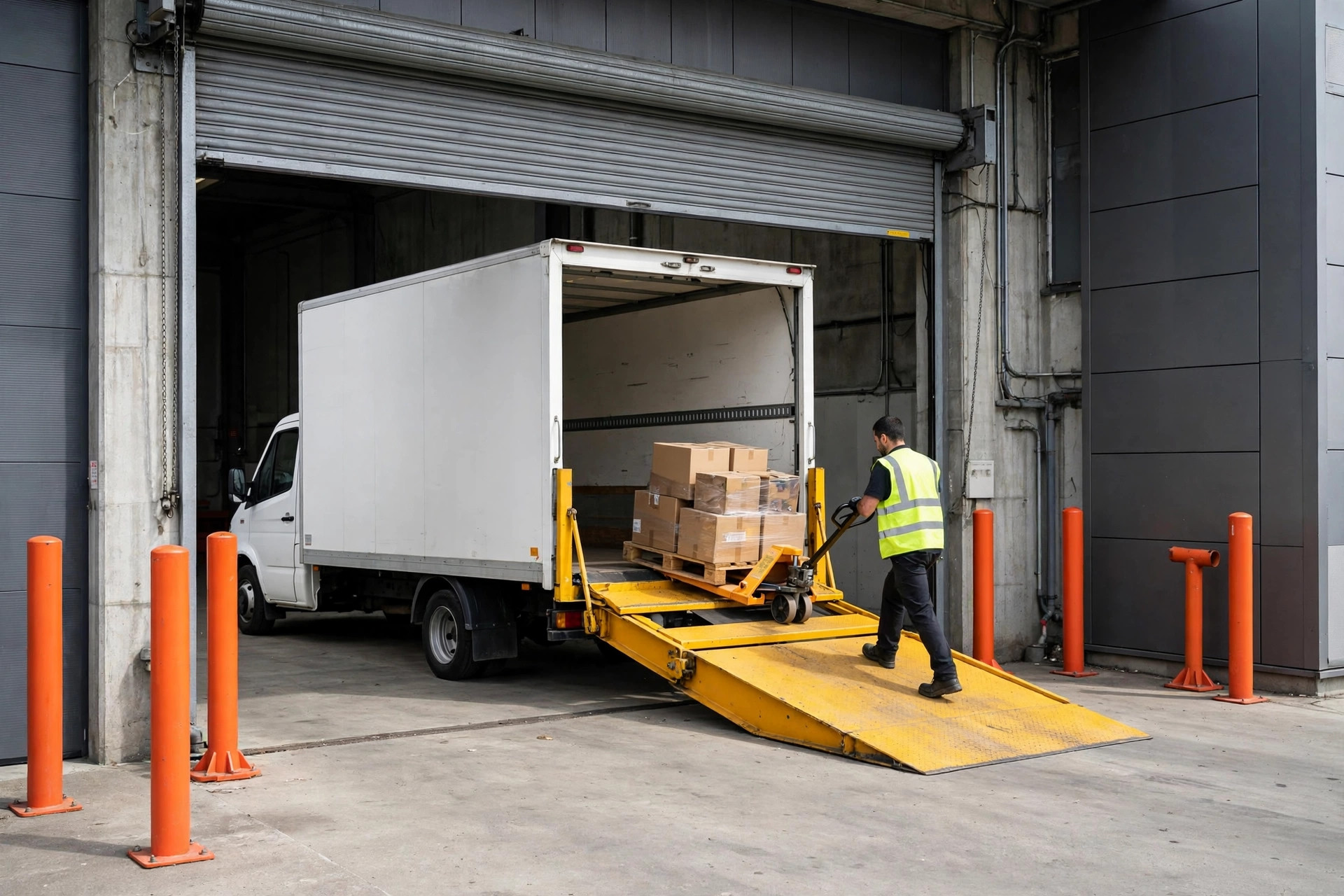
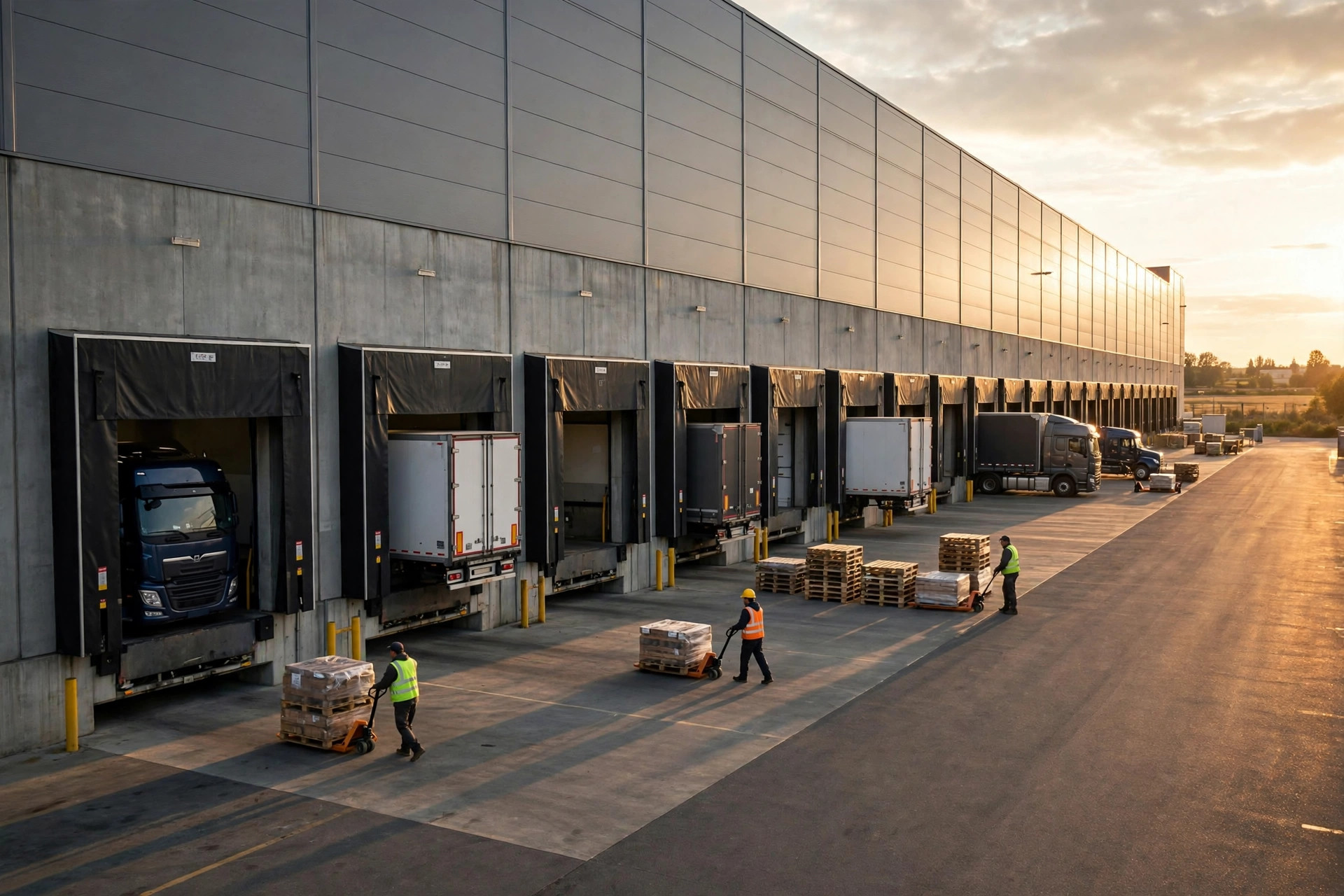
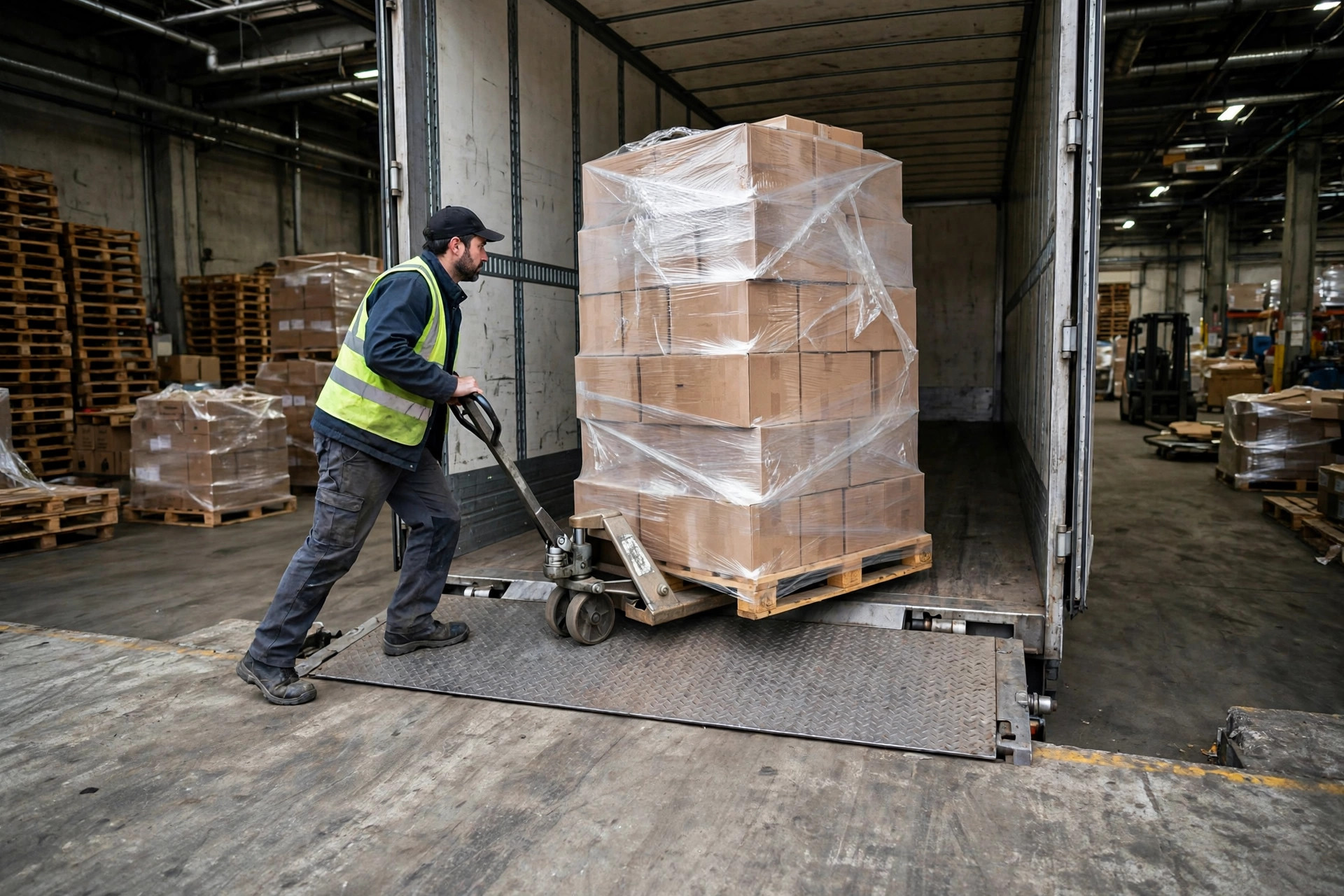
With the leveler cranked to its top position, the deck became a visible little uphill. Every forklift run into the trailer needed extra throttle, slower speed, careful alignment; coming back down, drivers crept to keep pallets from tipping forward. A stopwatch said 15–20 seconds extra per trip. At 200-plus trips a day, that's nearly an hour of pure waste per shift — every shift, for the life of the lease.
The second story is worse. Early 2024, a food cold-chain warehouse in Texas called me about a creeping damage rate. Their dock was 49 inches; the reefer floors sat lower — so loading ran downhill. In a hurry, crews sometimes drove in before the leveler lip fully seated. One pallet of bottled drinks caught the lip seam and went over sideways. A few thousand dollars of product gone, plus a service-level penalty from the customer. The camera footage showed near-misses like that happening several times a month. They'd just been lucky.
Here's the thing: the gap itself doesn't kill you. The chronic, every-trip, every-day grind does. Twenty seconds feels like nothing. Over a year, it's tens of thousands in labor and equipment hours — plus damage claims and driver resentment.
What Does a Few Inches Actually Cost? Let's Do the Math
Conservative numbers, and I'll flag every assumption — this is about order of magnitude, not precision:
Say each trip loses 15 seconds to the height gap (reality is often worse). A mid-size warehouse runs 200 trips a day:
| Extra sec/trip | Trips/day | Hours lost/day | Annual cost (300 days, ~$60/hr loaded cost*) |
|---|---|---|---|
| 15 | 200 | ~0.8 | ~$15,000 per forklift crew |
| 30 | 200 | ~1.7 | ~$30,000 |
| 30 | 400 | ~3.3 | ~$60,000 |
*Assumes roughly $60/hour fully-loaded operator + equipment cost. Your number will differ — rerun it with your own.
That excludes damage, extra equipment wear from constant ramp climbing, and safety exposure. Now the counterintuitive part: the most dangerous gap is the small one. A huge mismatch forces you to fix it. A small one? You live with it — for a five-year lease. Multiply that table by five. That's your tuition for a few inches.
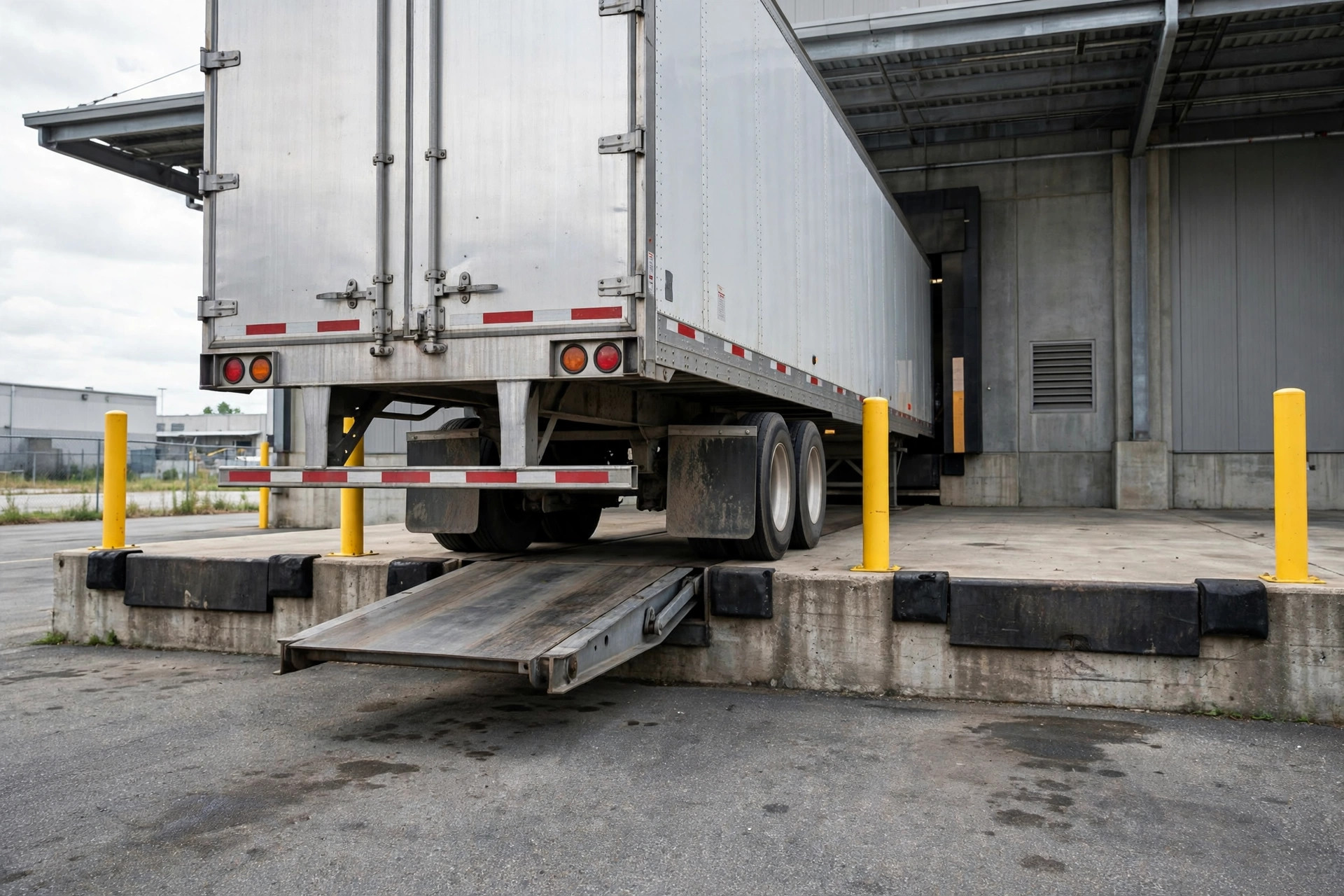
And here's the sneakier problem: trailer height moves. Empty versus loaded can differ by inches; air-ride suspensions rise as freight comes off. The leveler angle you dialed in at 8 a.m. isn't the angle at 10 a.m. A dock leveler is a compensator, not a magician — at the extremes of its travel, the lip engagement is shortest and the geometry is worst, which is exactly where slips and failures cluster. Check the manufacturer's nameplate for the real working range; don't take the sales rep's word for it.
There's a safety dimension too. Steeper ramps raise tip-over risk, especially with tall or top-heavy pallets, and they punish operators' backs and knees across a full shift. The crews feel it long before the P&L does.
Leasing or Building: A Dock Height Checklist
After getting burned, I made dock height a mandatory check on every site visit:
- Measure it yourself — don't trust the drawings. Old slabs settle unevenly; I've seen ten doors vary by over an inch. Standard is around 48 inches, but "standard" is doing a lot of work in that sentence. Measure.
- Read the leveler nameplate. Get the actual up/down working range from the manufacturer specs. Mechanical levelers are cheap with limited travel; hydraulic ones cost more but cover a wider range and can hold any position.
- Get your carriers' real numbers. What equipment do they actually run — dry van, reefer, flatbed, and in what mix? Floor height empty versus loaded? Subtract from your dock height and you have your answer.
- Check door count at peak. If only two or three doors line up well, peak-season queues will force drivers onto the bad ones anyway.
- Negotiate it into the lease. If the landlord promises dock work or new levelers, put it in an exhibit. Handshakes don't survive budget season.
Retrofit Options: Cost First, Benefit Second
Already signed and stuck with a mismatch? Three paths — each with two sides, cost first:
Option 1: Upgrade to hydraulic levelers. The cost: real money per door, plus pit work and downtime for installation. The benefit: the widest compensation range, covering nearly every trailer type, with less impact shock and longer equipment life. Best for owned buildings or long leases (five-plus years) — amortized, it costs far less than the efficiency table above.
Option 2: Dock plates or risers. The cost: cheap, but it's a patch — limited adjustment, and raising the dock can mess with canopy and door clearances. The benefit: fast, no major construction. A reasonable bridge when the gap is small (a couple of inches) and you only have a year or two left on the lease.
Option 3: Negotiate equipment with your carriers. The cost: commercial effort, and small carriers may not play ball — it can affect rates. The benefit: zero capex. Worth trying first when the mismatch traces to one carrier's odd equipment.
My order of operations: negotiate equipment first (it's free), then run the math to decide whether and how to retrofit. The one option I'd never pick is "live with it" — it's the most expensive choice on the list; the bill just arrives in installments you never notice.
One piece of advice: next time you tour a warehouse, don't just ask about rent and clear height. Bring a tape measure and check the dock height. It might be the cheapest due diligence you ever do.
By Lao Mi, Supply Chain Veteran (20 yrs)