Here is the answer up front: dock door count = peak-day truck arrivals × average turnaround per truck ÷ usable hours per door per day, plus one or two buffer doors for overlapping waves. Whatever number comes out of that formula is your number. When a landlord says "take two extra doors, just in case," ask who pays the rent on them. I have seen this mistake three times, and every time it played out the same way: extra doors signed at lease time, and still a queue at the gate in peak season — because the bottleneck was never the doors. It was the people and forklifts behind them.
Why Dock Door Count Cannot Be Guessed
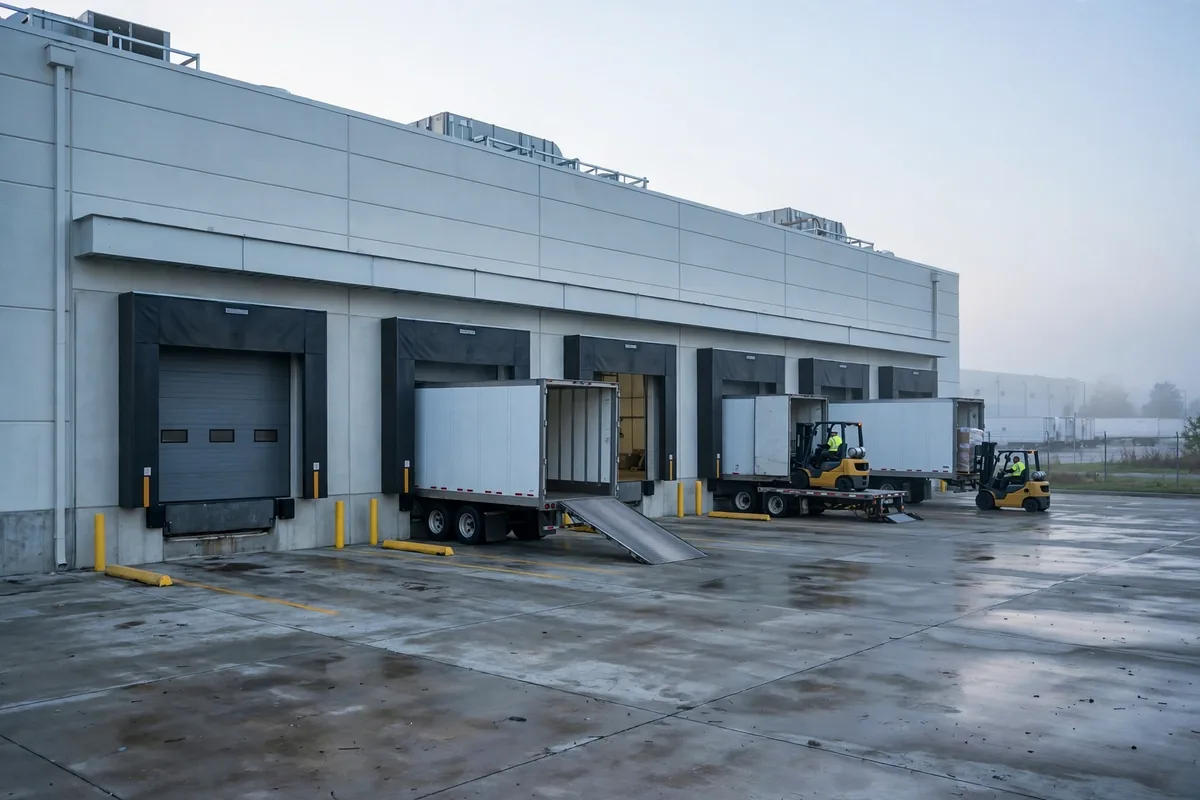
A dock door is one of the most expensive holes in a warehouse. Behind each door sits a dock leveler, a door seal, a door control system, a forklift lane, and a truck court outside. Too many doors, and you pay rent, construction cost, heating and cooling loss, and maintenance on openings you never use. Too few doors, and trucks queue outside the gate while detention charges, missed appointments, and night-shift overtime pile up. Both mistakes cost real money. One just bills you quietly all year, and the other bills you loudly in peak season.
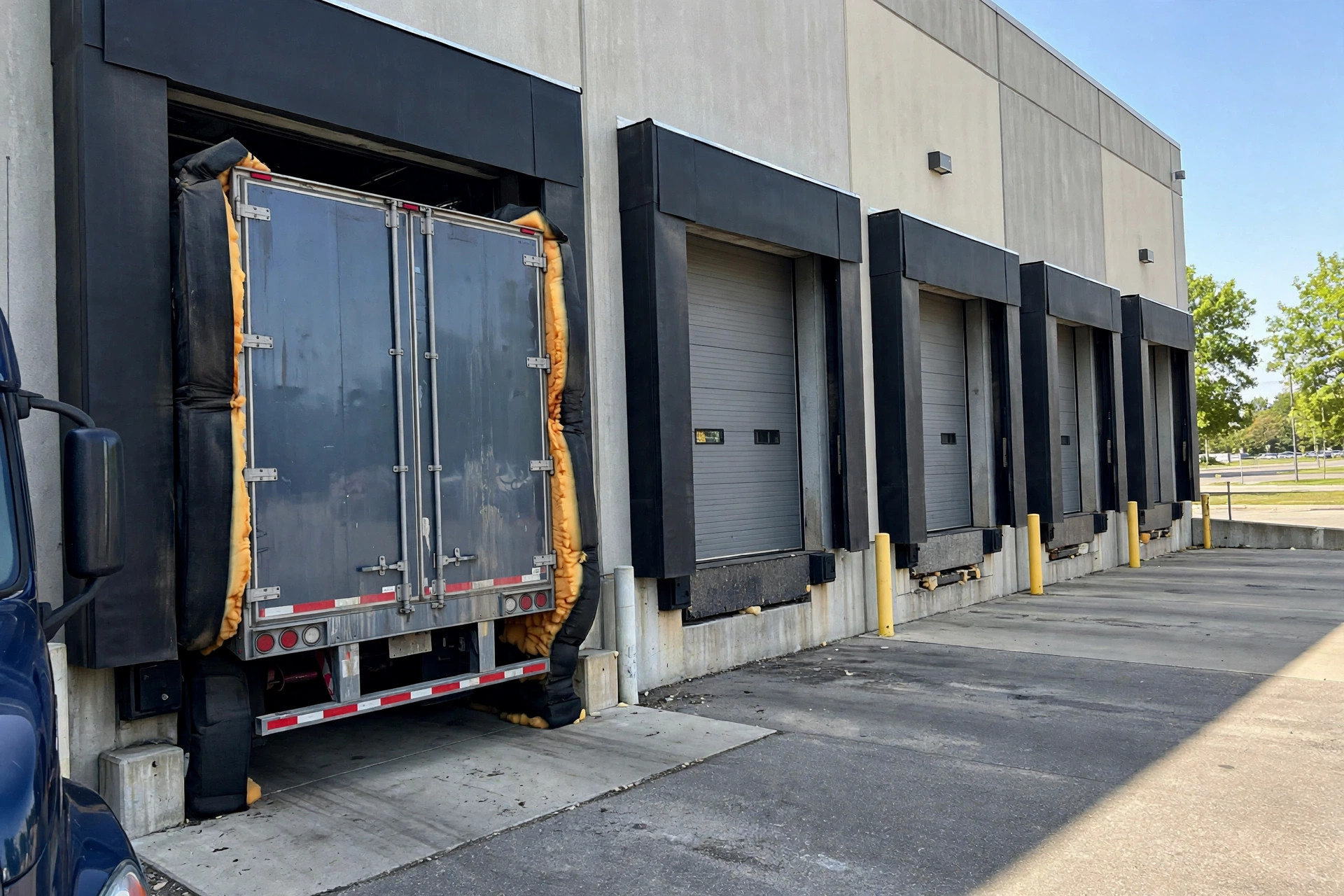
Size the door before you count the doors. The common industry figures are: the most common dock door is 8 feet wide by 9 feet high, modern new builds often use 9 feet wide by 9 or 10 feet high, dock height runs 48 to 52 inches, and doors sit on 12-foot centers (figures found across multiple dock equipment makers' planning guides). A door too narrow forces forklifts to angle in and out, which stretches turnaround time per truck. A door too wide bleeds conditioned air and costs more to build and maintain. Getting the size wrong is harder to fix than getting the count wrong, because changing a door opening means changing the structure.
Consider an illustrative example: a third-party warehouse outside Los Angeles serving home-goods e-commerce, November 2024. Peak-day arrivals hit 38 trucks, and the building had 6 doors. Between 8 and 11 in the morning, 14 trucks showed up in the same wave. The queue outside stretched past 1 a.m., and five outbound orders missed their ship day because inbound freight was blocking the staging lanes. The lesson was not the door count itself. Nobody had ever drawn an arrival-wave chart. Management believed six doors were enough, because in the slow season they were.
Dock Door Count in Three Steps
Step one: pull twelve months of arrival records and chart them by the hour. Daily totals are not enough. What matters is how many trucks arrive at the same time. Plenty of warehouses see 30 trucks a day and think they are fine, until they notice 20 of them land inside a three-hour morning window. The wave chart makes the peak visible.
Step two: measure real turnaround per truck. Put someone on the dock for three days and time the four pieces: positioning, loading or unloading, paperwork, and departure. Use the 80th percentile value, not the average. Averages get dragged down by quick drop-offs. The trucks that jam you are always the slow ones. Never guess this number. A guessed input into the formula produces a wrong door count with total confidence.
Step three: run the formula, then add the buffer. Dock door count = peak-day arrivals × average turnaround per truck ÷ usable hours per door per day. Worked example (illustrative example): peak day brings 32 trucks, turnaround averages 1.5 hours, each door is usable 10 hours a day. 32 × 1.5 ÷ 10 = 4.8, round up to 5 doors. The 8-to-11 a.m. wave puts up to 12 trucks on site at once, so add 2 buffer doors. Total: 7 doors. In the slow season, 14 trucks a day need only 3 doors. The other 4 are insurance you pay for all year, and that cost belongs in the proposal, written down, so whoever signs it knows what they are buying.
Run the formula again every quarter. Arrival patterns change. One large client moves in and the whole wave chart shifts. A carrier changes its appointment system and arrival times drift with it. Re-running the formula on last quarter's actual arrivals takes an afternoon. If the new number differs from your current door count by two or more, it is time to re-plan shifts or renegotiate the lease. Door count is a living number. Right on signing day does not mean right three years later.
The counterintuitive part: past a certain point, more doors stop making things faster. Going from 5 doors to 8 might cut truck waiting time by only ten minutes, because the bottleneck has moved to forklifts and receiving staff. A door with nobody behind it is a hole in the wall. In the other direction, adding one door when you have too few pays off the most — queue time can drop by half. The real question is not "how many doors can we afford" but "where do doors, labor, and forklifts all top out at the same time."
Two Decision Tables: Too Many Doors vs Too Few
| Situation | Door count call | What to do |
|---|---|---|
| Steady arrivals, waves do not overlap | Formula number, no buffer | Spend the money on forklifts and labor |
| Waves overlap heavily, peak is 2× slow season | Formula number + 1–2 buffer doors | Buffer doors double as outbound doors off-peak |
| Peak lasts 6–8 weeks, doors sit empty the rest of the year | Formula number, no permanent extra doors | Rent temporary dock capacity or stagger appointments |
| Cold storage or temperature-controlled | Calculate separately, fewer doors is better | Prioritize staggered appointments over new openings |
| Cost of one extra door (illustrative example) | Cost of one door too few (illustrative example) |
|---|---|
| A year of rent and maintenance on one door, roughly equal to three months of one receiver's wages | One peak-season month of detention and overtime that exceeds a full year of one door's rent |
| Heating and cooling loss plus door wear, compounding every year | Missed appointments rise, and carriers start prioritizing other warehouses |
| Empty doors sit idle while management assumes capacity is fine | Queues run past midnight, and night-shift labor cost and injury risk climb together |
Both tables double as negotiation tools. When a landlord pushes extra doors, show them the cost-of-one-extra-door table and ask whether rent can be tiered to actual use. When a landlord insists you have enough doors, show them the cost-of-one-door-too-few table and ask whether appointment windows can be staggered. The tables are not decoration. They are how you argue with numbers instead of opinions.
Here is the mirror-image case, also an illustrative example: a new warehouse in Dallas, Texas, in 2023, leased 12 doors on day one for "three years of growth" and used 7 of them long-term. The 5 empty doors collected rent every month and leaked conditioned air through their seals. A review in year three found that the extra doors had cost enough to pay two receivers for three full years. Doors are borrowed capacity. People are your own capacity. That line belongs on the first page of the proposal, ahead of any formula.
Go-Live Night Checklist: Eight Items Before You Sign
- Is the arrival-wave chart drawn by the hour, with the peak window marked?
- Was turnaround per truck measured over three real days, and did you use the 80th percentile?
- Does the peak-day truck count come from last year's actual peak or this year's forecast, and is the basis written down?
- Are buffer doors marked separately, with their off-peak job written into the shift plan?
- Do forklift count and receiving headcount match the door count — a door with nobody behind it is no door at all?
- Are carrier appointment slots staggered across waves, with a cap on trucks per slot?
- Were cold-storage doors calculated separately from ambient doors, with their energy cost listed on its own line?
- Can surplus doors be returned or sublet under the lease, and is that clause negotiated?
If any item is unchecked, do not sign the door-count plan. Get the dock door count right and peak season is busy. Get it wrong and peak season is firefighting every night. Pin the formula, the wave chart, and this checklist to the wall. The next time someone says "add two more doors, just to be safe," hand them the checklist.
By Lin Xiao, WMS Implementation Consultant