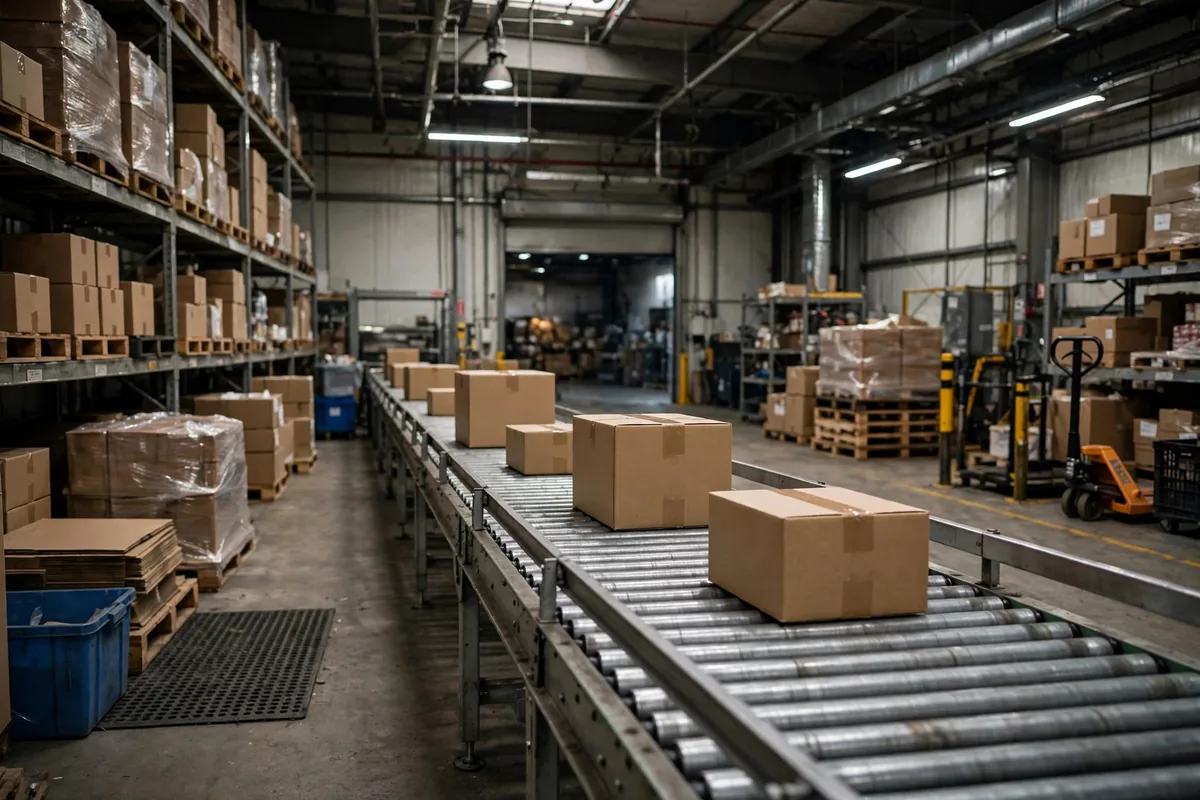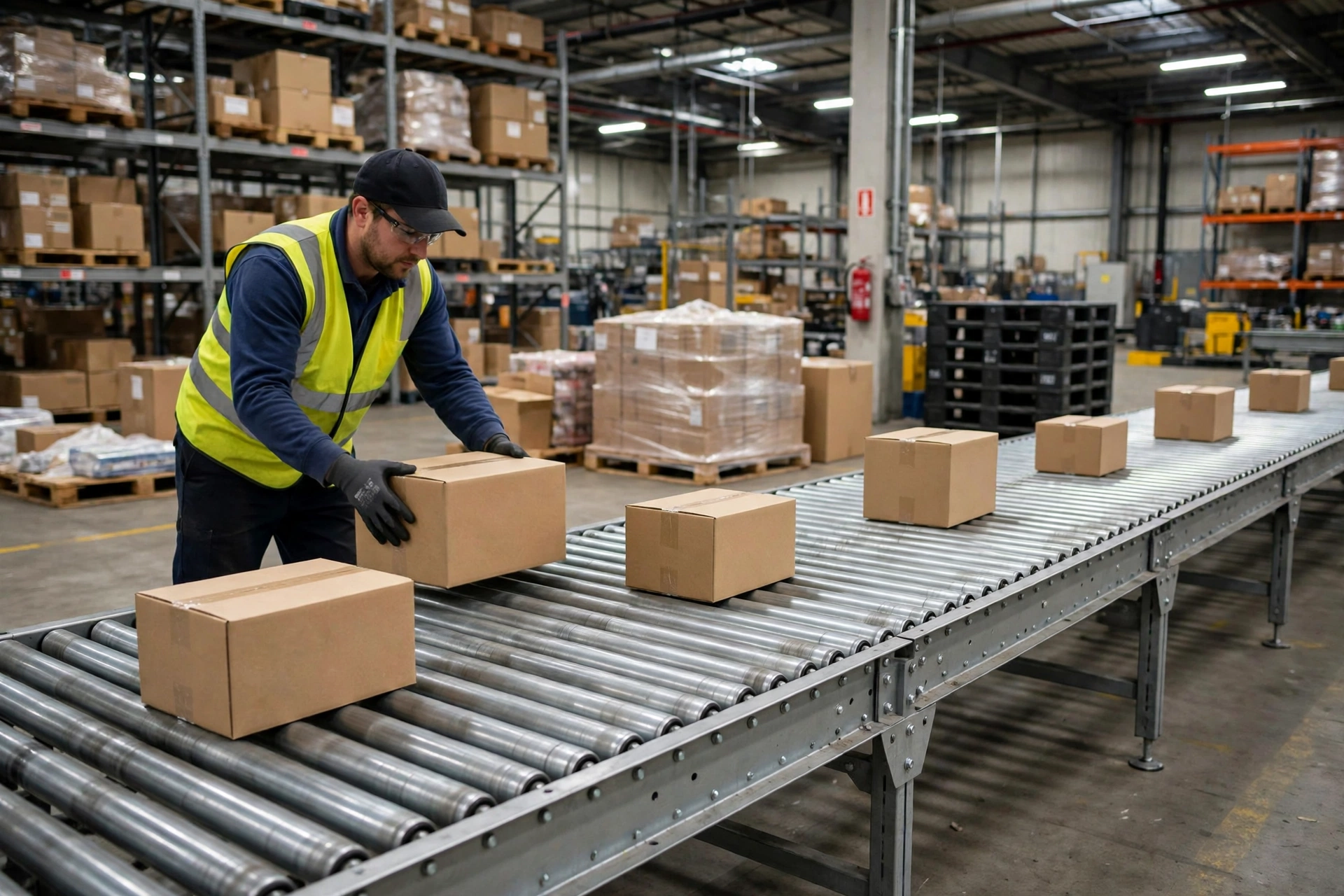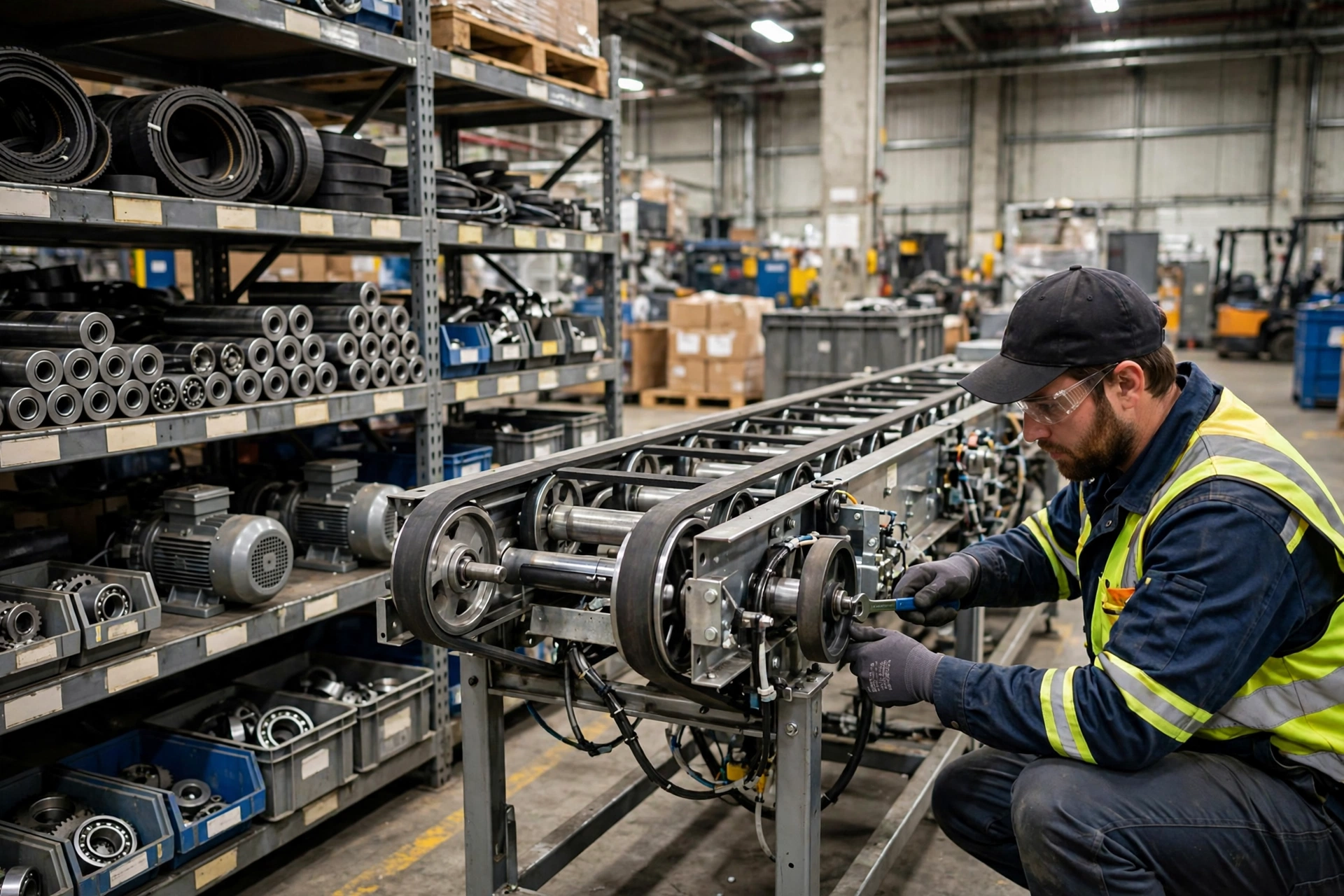
Warehouse sorter spare parts sit at two bad extremes in most buildings I visit. One warehouse stuffs the cabinet until old parts gather dust and finance complains about tied-up cash. Another keeps the cabinet nearly empty, then loses days waiting for a belt while the line sits idle. Both stocked by gut feeling instead of by numbers. This is like carrying a spare tire in a car. You do not carry four spares, and you do not carry none. You carry one because the chance of a flat, the time to change it, and the cost of having no spare are all plain numbers. Do the math first, then set the stock.
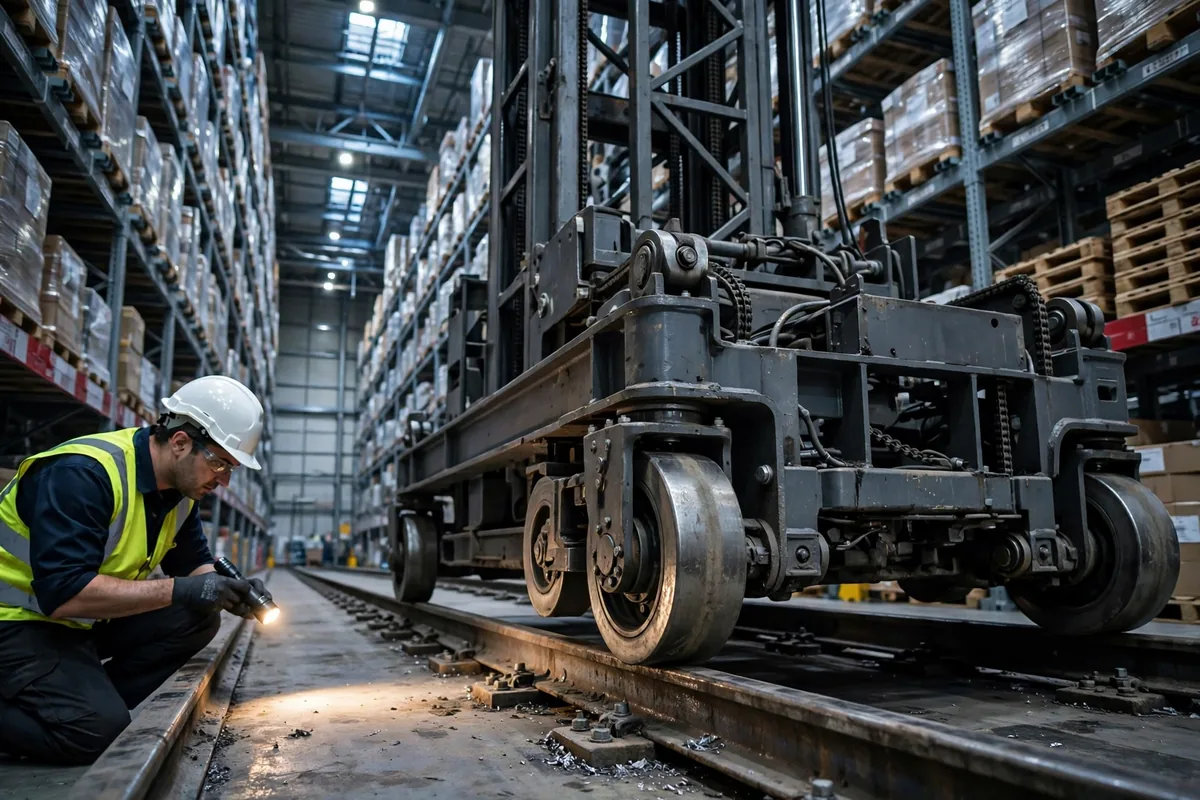
Start with how the machine wears out. A sorter, whether cross-belt, swing-wheel, or sliding shoe, is thousands of repeated motion units on one main line. Cross-belt carriers fire a short belt sideways at discharge. Swing-wheel units steer rollers to push parcels aside. Sliding shoes push blocks along a slat conveyor. The structures differ, but the wear logic is identical: anything that rubs all day, starts and stops constantly, and lives in dust and impact will wear. Belts flex without pause, swing mechanisms steer tens of thousands of times a day, motors dump start-stop shock into bearings, and camera lenses and photoelectric sensors hate dust and vibration drift. Wear is not a mystery. It is a motion count.
First scenario, a hypothetical example for illustration: before peak season in 2024, an e-commerce warehouse in eastern China found its cross-belt sorter main drive belt fraying at the edge. The maintenance lead judged it good for another month. On the third night of peak, the tear opened and the line stopped for over four hours while the team borrowed a used belt from a sister site. That lesson became the first line of their grading table: a main drive belt that stops the whole line is stocked, always, as a complete ready-to-fit part, never as repair material.
Second scenario, also hypothetical: a garment warehouse in southern China heard grinding from one swing-wheel unit, traced to a worn bearing. One dead unit means one blocked chute and reduced speed, not a full stop. But the cabinet held loose bearings, not a complete spare unit. Replacing a bearing meant teardown, pressing, and alignment, and the job ate most of a day. A complete unit would have swapped in about twenty minutes, with the old unit rebuilt offline. This is like a leaking faucet at home: a spare cartridge and a roll of tape are not the same repair speed. For modular machines, stock assemblies, not just components.
Grading sorter spare parts: A stops the line, B degrades, C stays out
I grade every part with three numbers: failure rate, replenishment lead time, and downtime cost. The more often a part fails, the slower it is to replace, and the more expensive a stop becomes, the deeper it belongs on your shelf. By that logic, sorter spare parts fall into three grades.
Grade A parts stop the line and must always be in stock: the main drive belt and critical transmission belts, the main drive motor and gearbox, carrier belts, the barcode reading camera, photoelectric sensors at key positions, common bearing sizes, and critical power supplies and fuses. Quantity follows a simple rule: expected consumption during the lead time, plus a safety margin. Pull twelve months of replacement records, compute monthly average consumption, multiply by lead time in months, then add redundancy for one major failure. The formula is not elegant, but it beats guessing.
Grade B parts degrade the operation instead of stopping it, so stock fewer, or only critical variants: a swing-wheel unit, a sliding shoe pusher, actuators at non-critical chutes, a backup scanner. The rule is assemblies over components, and common variants over the full catalog. A failed rare variant can be covered by rerouting its chute.
Grade C parts should not be stocked at all. Large frames, custom rails, and whole conveyor sections almost never fail, and when they do, a shelf part is not the fix. For Grade C, stock information instead of metal: drawings, supplier contacts, fabrication lead times, and a bypass plan.
Here is the counterintuitive judgment I give every site: the most expensive waste is rarely overstocking. It is stocking the wrong structure. Teams spread the budget evenly, one of everything, and end up with a single unit of a critical part that fails twice during peak, while half a wall holds steel that will never move. Structure should follow risk, not price. Grade A covers few types, but each needs depth. Grade C covers many types, but depth must be zero. When I audit a warehouse, I ask for the Grade A fill rate first. This is like judging a fire crew: not by the size of the station, but by whether the hose reaches the fire.
The sorter spare parts maintenance account: one hour down versus cash on the shelf
The following is a hypothetical example with self-consistent arithmetic for illustration: assume a sorter line processes six thousand parcels per hour at peak, at two dollars of fulfillment margin per parcel. One hour down costs twelve thousand dollars in direct margin alone, before delay penalties and overtime. Now assume a Grade A kit, one main drive belt plus one main motor plus one reading camera, ties up thirty thousand dollars. At five percent annual cost of capital, holding it costs fifteen hundred dollars a year. One four-hour stop costs forty-eight thousand dollars, enough to hold that kit for decades. If the kit prevents one stop in three years, it has paid for itself many times over. Grade A parts should never be negotiated against interest rates. Their opponent is downtime.
The same account must not be abused in reverse. A part that has not failed in five years, replenishes in two days, and allows degraded running may look cheap alone, but multiplied across dozens of variants the sunk total becomes serious money. My dividing line runs on expected loss: failure probability multiplied by stop duration multiplied by loss per hour. Above three times the annual holding cost, the part earns Grade A shelf space. Between one and three times, it sits in Grade B with light stock. Below holding cost, it stays off the shelf, with documentation and a contingency plan. One ruler beats whoever argues loudest.
Domestic alternatives versus original parts belong on the same ruler. Belts, bearings, and photoelectric sensors are highly standardized, and reputable domestic brands match specifications, deliver faster, and cost less, so they are reasonable in non-critical positions, with Grade B a good trial ground. But carrier belt consistency, camera decoding stability, and motor torque curves decide sorting accuracy directly, and originals hold tighter batch consistency there, so I favor originals in core positions. The trade-off is explicit: domestic parts save purchase price and bet on batch stability; originals cost more and buy predictability. If losing that bet means a stopped line, the bet is priced wrong. The compromise is position-based: originals in critical spots, domestic parts in auxiliary ones, failure records tracked separately, and one year of data deciding on wider substitution.
Three maintenance pitfalls close the topic. First, records that disagree with the shelf, caused by unlogged withdrawals and emergency pulls never backfilled. The fix is dull and effective: count Grade A monthly, clear discrepancies within the month, and require a scan for every withdrawal. Second, spares drifting away from the machine: an upgrade swaps in a new motor model, old spares stay, and the new motor has zero cover. Every equipment change must trigger a spare parts list review. Third, stocking without caring for condition. Belts age and need storage away from light and oil, cameras dislike humidity and static, and bearing grease dries in storage. Hardened belts get scrapped before they fail on the line, not after.
One habit ties it together: treat every replacement as data collection. Tag each removed part with date, position, and symptom, and review a batch quarterly. This is like a doctor reading a chart history. One visit shows little; a year of records shows the trend.
Back to the two warehouses at the start. The stuffed cabinet missed grading; the empty cabinet missed the downtime account. One method fixes both: pull replacement records, compute the three numbers, set the three grades, count Grade A monthly, and review failures quarterly. Whether this money is well spent comes down to one number: the Grade A fill rate multiplied by the downtime it has actually avoided, settled in the ledger where everyone can see it.
By Da Liu, Automation Engineer