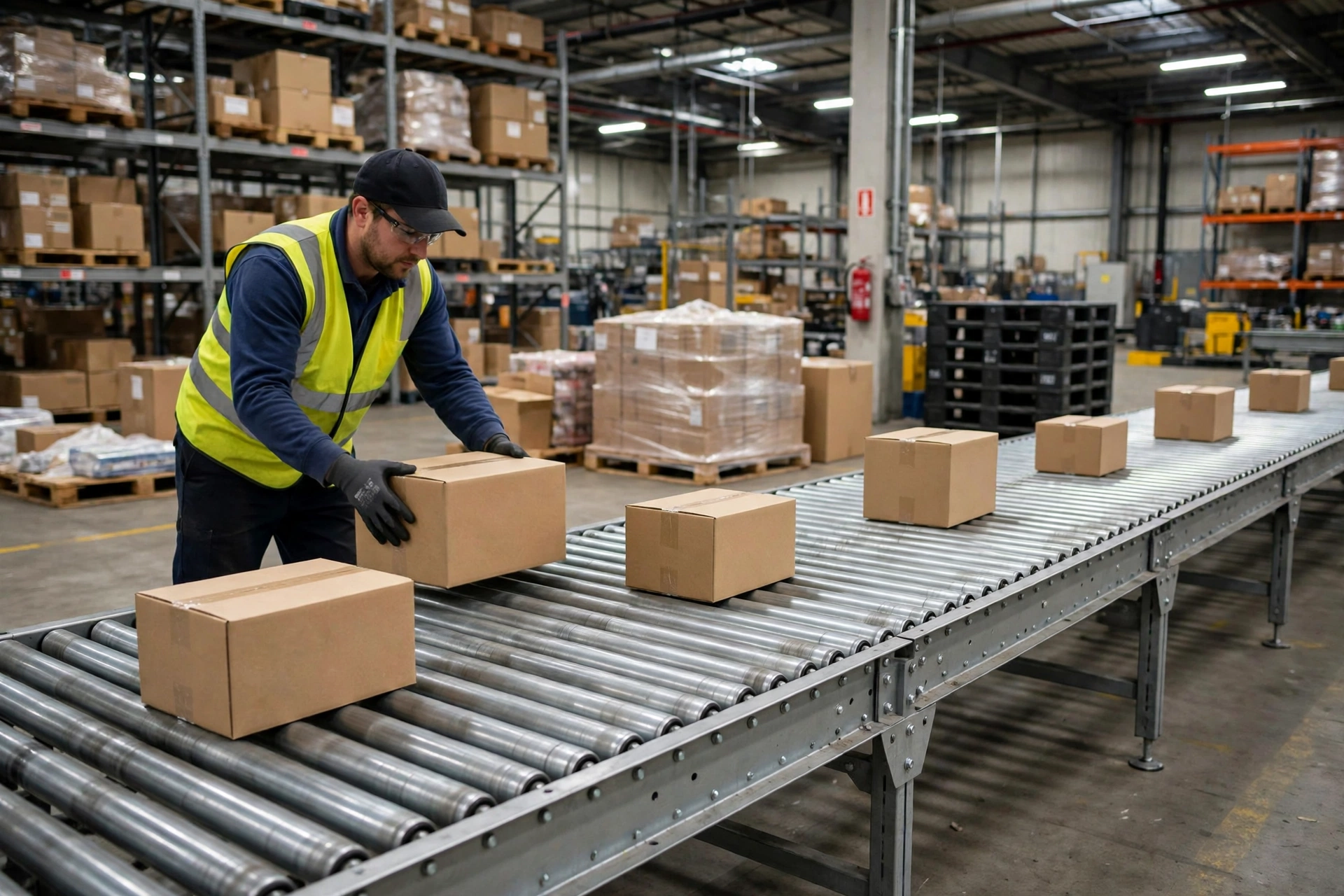
Let me tell you something. Fifteen years driving trucks, and the breakdown I have seen most often from a warehouse dock is not a truck dying on the road. It is conveyor belt misalignment. The belt drifts to one side, cartons pile up on the edge, and in a bad case the skirt wears through and the whole line stops. I once sat at a warehouse gate for most of an afternoon waiting to load, and it turned out the belt had drifted so far it wore through the side skirt. Changing that part took the rest of the day.
Drift looks scary, but the causes are few. After all the docks I have waited at, I would put it down to three usual suspects: tension that is off, a roller with a problem, and a loading point that sits crooked. Check those three before you call maintenance. Most drift shows its cause on the spot, and walking through the three checks can save hours of downtime.
Illustrative scenario: one autumn day in 2023 I was delivering to a parcel hub, and the belt kept drifting right while a worker propped it with a stick. They told me it had been drifting for two weeks and everyone had got used to the stick. The belt edge was already frayed all around. A stick buys you an afternoon, not a season, and a frayed edge is a new belt waiting to happen.
Conveyor Belt Misalignment Starts With Tension, Not the Roller
Tension is the prime suspect when a belt drifts. When the two sides of a belt are pulled unevenly, one side tight and one side loose, the belt walks toward the loose side on its own. The check is crude but it works: stop the line, press both edges of the belt by hand, and feel whether one side is clearly looser than the other. Then look at the tension screws on both sides and see whether their marks line up. Plenty of warehouses adjust one side and forget the other, and that is exactly how drift starts.
Here is the counterintuitive part: tighter is not better. A belt pulled too tight drifts worse, not better, and it punishes the bearings and the splice at the same time. The right tension is just enough: no slipping, the idlers turning freely, and then stop turning the screw. I watched a man crank the tension to the end to cure drift, and the splice split the next day. The splice repair cost him more than the downtime he was trying to avoid.
A new belt is most likely to drift in its first two weeks. The belt and the rollers have not worn in together yet, and the splice is still finding its place, so do not rush to blame the quality of the belt. Run light loads for a few days, let the belt find its center, then work through the checks in order: tension, rollers, loading point. Most new-belt drift in the break-in period is normal, and a small adjustment fixes it.
Illustrative scenario: one spring morning in 2024, a small warehouse fitted a new belt and it drifted left from the first run. The maintenance tech measured the tension first, found the two sides several marks apart, levelled them, and the belt walked back to center in under twenty minutes. If he had started by pulling rollers, half a day would have gone. My rule now is simple: tension first, rollers second.
Conveyor Belt Misalignment at the Loading Point Hurts More Than It Looks
The loading point is the second cause people overlook. Cartons drop from above, and when the drop lands off the center of the belt, the impact pushes harder on one side than the other. Day after day of that one-sided push, and the belt has no choice but to drift. You can check it without stopping the line: stand beside it for a few minutes and watch whether the cartons land in the middle, and whether the guide chute is worn evenly on both sides. Both tell you the story at a glance.
Guide chute skirts wear unevenly too. One side wears more, the cartons slide toward the worn opening, and over time the belt follows them sideways. My crude trick is a chalk line: mark the belt edge with chalk, run the line for a few minutes, and see which way the mark moves, then compare that with where the load lands. Moving a guide chute or adding a deflector plate takes minutes and often fixes the whole thing. The skirts themselves are wear parts, so replace the worn side when it wears, not both sides on a schedule. Replacing one side is cheap. Replacing the whole chute costs far more.
Field Fixes That Work, and the Lines You Don't Cross
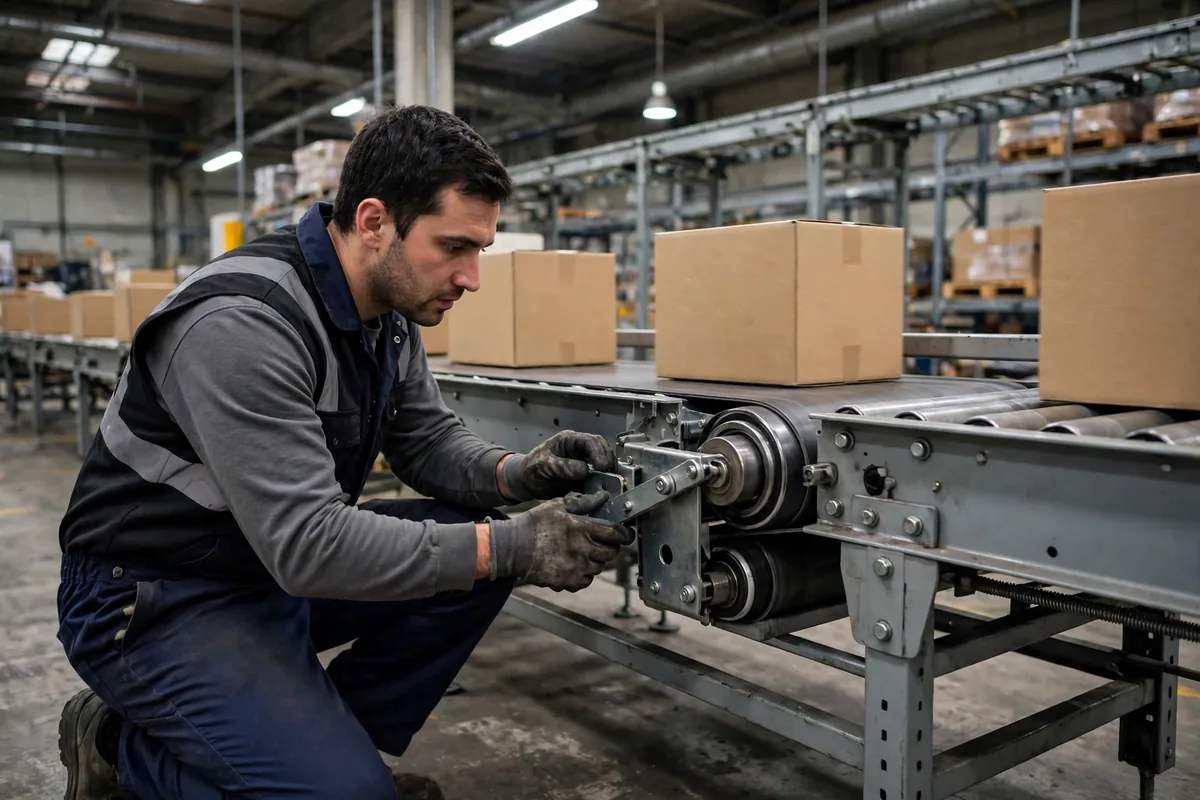
Rollers are the third place to look. A roller surface caked with material, lagging worn off in one patch, or a roller that was never square to begin with will all make a belt climb to one side. Check it with the line stopped and your hand on the roller: feel for build-up, a worn patch of lagging, or wear that is heavier at one end than the other. Clean off the build-up, and replace a badly worn roller instead of living with it.
Tracking idlers are the field fix everyone reaches for: nudge the idler on the drifting side slightly toward the direction the belt travels, and the belt slowly walks back. Move in small steps, adjust a little, run for a few minutes, and look again. Get the direction backwards and the drift gets worse, so confirm which way the belt travels before you touch anything. The worst mistake is adjusting both sides at once until you cannot remember which way it was drifting in the first place. And one rule I never break: never reach in to push or prop a running belt. Fingers are worth more than a belt.
A daily walkaround is the cheapest habit in the whole warehouse. Five minutes at the start of the shift: walk the line, look at whether the belt edge runs straight, whether the idlers are turning, whether any roller has build-up on it, and press both belt edges to feel the tension. Five minutes catches most big failures before they happen. Drift is cheapest when you catch it early, and it gets expensive once it starts making noise and smell. Keep the checklist to one sheet with three ticks. A complicated sheet never gets filled in.
The table below is a hypothetical example showing what conveyor belt misalignment costs when it is left alone. It does not represent real prices:
| How long it is left | Hypothetical example: downtime | Hypothetical example: knock-on damage | Hypothetical example: extra spend | | Fixed the same day | Short | Slight edge wear | Low | | Lived with for a week | Longer | Skirt worn out, idlers noisy | Medium | | Ignored for a month | Longest | Belt scrapped, roller lagging worn through | Highest |
Left alone, conveyor belt misalignment snowballs. It starts as a frayed edge, a week later the skirt needs replacing, and a month later the whole belt can be scrap. One afternoon changing a belt stops every truck at the dock: drivers waiting, shippers calling, overtime in the warehouse. Add it all up and it costs far more than an early adjustment ever would.
Drift is not hard to fix. The hard part is not letting it drag. Five minutes at the start of the shift, checking whether the belt runs straight, whether the tension is even on both sides, and whether the load lands in the middle, beats any emergency repair. I drive a truck for a living, and nothing wastes my day like waiting at a dock while a line sits dead. When the warehouse crew treats the belt seriously, trucks leave on time and shippers get their goods on time. That is a bill everyone on both sides of the dock can understand.
By Shifu Zhao, Trucking Veteran (15 yrs)