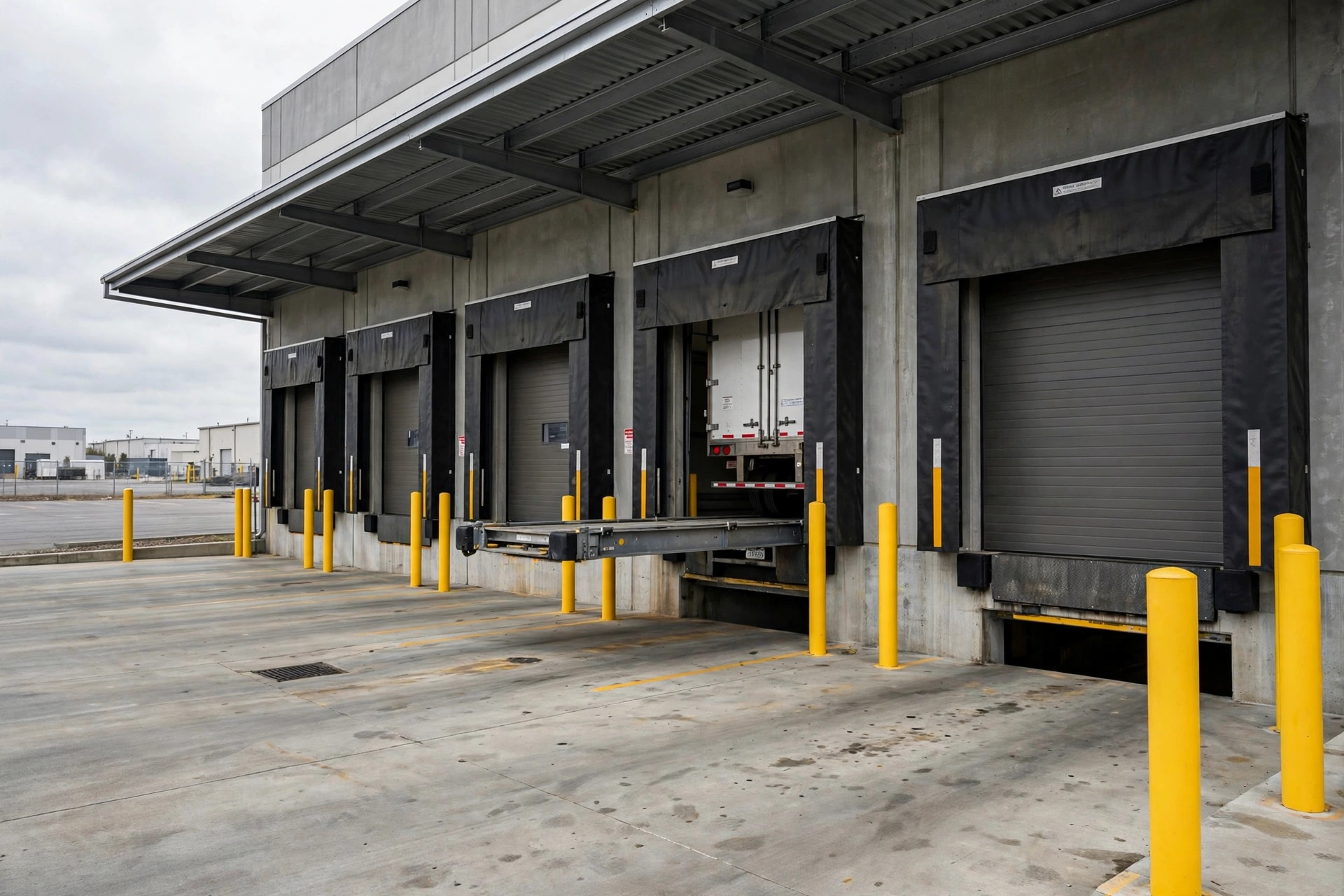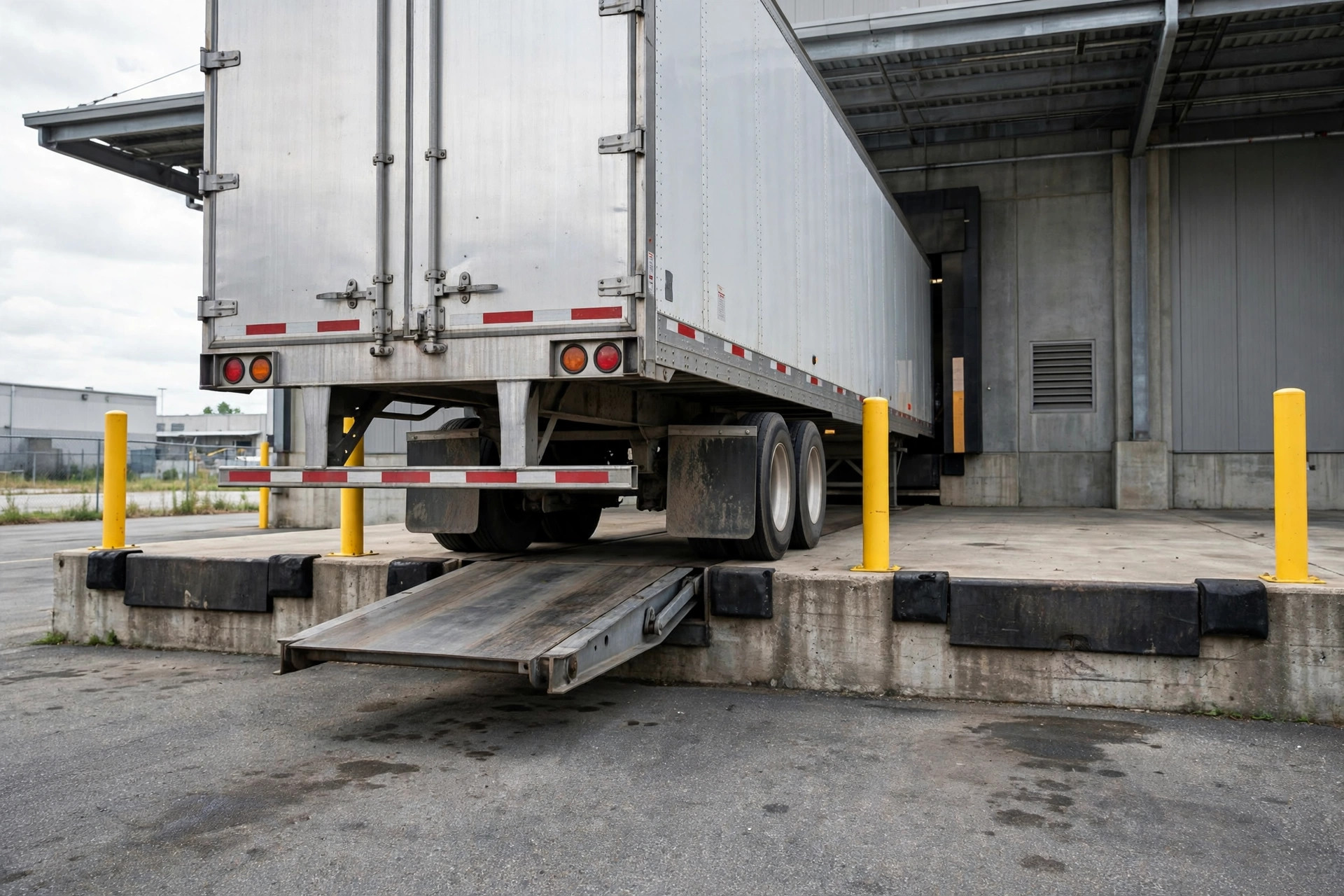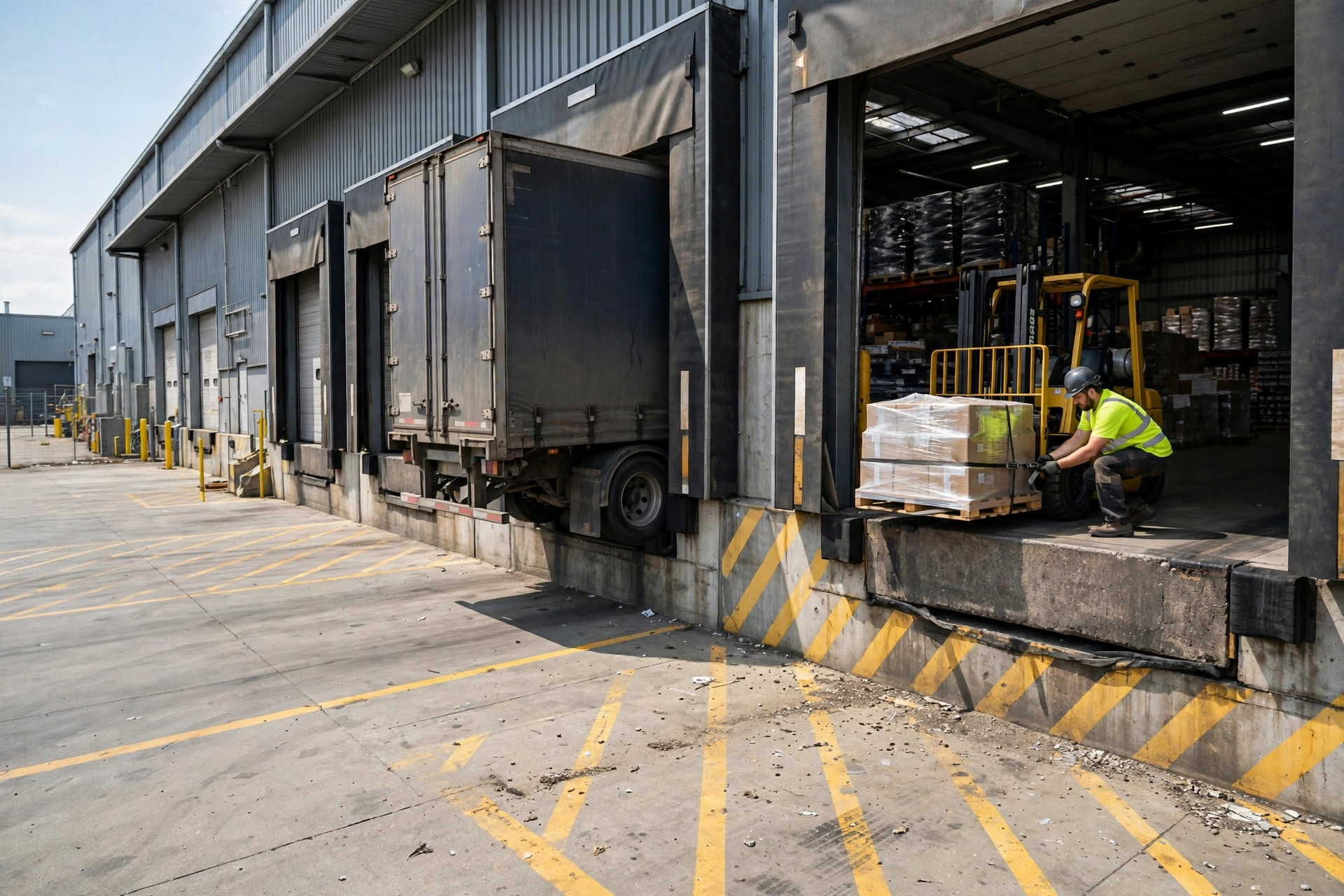
Let me tell you something. Last winter I rolled into a small warehouse in a Hebei county town to pick up a load. Got there at 8 in the morning — the place had maybe four or five dock doors total. The minute I backed in, the radios started screaming: the receiving supervisor yelling "don't unload that truck yet!", the shipping lead yelling "my truck leaves at three, those pallets need to roll NOW!" Forklifts were doing U-turns on the dock like it was a street fair. I sat there nearly two hours. The shipper called asking why I wasn't moving. I told him: guess what — I'm standing in line at somebody's dock.
Same story, different ending, this spring in northern Jiangsu. Same size warehouse, same shared receiving-and-shipping dock with four or five doors. But that day everything was clean: mornings were all inbound deliveries, afternoons were all outbound pickups. I showed up at 2 PM, pallets already staged in neat rows, loaded and gone in fifteen minutes. Fifteen years on the road teaches you to read a place fast — it wasn't that they had more doors. They just had their clock figured out.
When Docks Jam, Don't Add Doors
Most warehouses hit a jam and think "add doors." Doors are expensive — construction, dock seals, levelers, tens of thousands a pop, easy. But here's the honest truth from the driver's seat: nine times out of ten, a jammed dock isn't short on doors. It's short on scheduling.
A dock isn't a door to me. It's a road. And there's an old road saying: a narrow road is fine, a messy road is death. Look at highway ramps — when do they jam? When inbound and outbound traffic fight over the same opening. Widest road in the world still locks up when entry and exit get tangled. Same with a dock: inbound trucks and outbound trucks fighting over the same door, forklifts loading and unloading on the same platform, nobody can turn around — one mess and everything stops.
Now the counterintuitive part: the same dock, mixing receiving and shipping, chokes after a dozen or so trucks a day. Stagger the schedule, and twenty or thirty trucks flow fine. Same doors. Double the throughput. The only difference is four words: separate the time.
Time-Slot Scheduling: Give Receiving and Shipping Their Own "Meal Times"
A big family eats in shifts — why should a small dock be any different? The cheapest, fastest fix is time slots:
- Mornings for receiving, afternoons for shipping. Early trucks arrive early anyway. Give suppliers the 8-to-noon window; clear the dock at 1 PM for outbound only, pickup trucks arrive in the afternoon.
- Night receiving in peak season. On the heavy weeks, move receiving to 7–11 PM. The dock stays 100% outbound during the day, and the day's loaded trucks roll out at night instead of sitting on the dock overnight.
- A standing exception window. There are always rush orders, always late trucks. Keep a daily flex slot — say 10 to 11 AM — for the odd stuff, so it doesn't hijack the main flow.
Do the math with me: one door, mixed receiving and shipping, forklifts constantly switching between loading and unloading — each truck burns the better part of an hour. Separate the slots, and a truck gets pure loading or pure unloading: fifteen, twenty minutes, done. Same five doors, same eight hours, twice the trucks. You don't even need a calculator. Drivers can see it — at a well-scheduled dock I roll in and start loading; at a messy one I know the second I arrive that half my day is gone.
Traffic Separation: Paint Lane Lines on the Dock, Too
Time slots separate the clock; separation divides the space. Some small warehouses say "we're too small to stagger." Fine — then separate physically. A dock needs lane lines just like a road:
- Split receiving and shipping zones on the dock itself. Even with one row of doors, divide the platform down the middle: inbound pallets on one side, outbound on the other, a main forklift lane between them. No crossing.
- Split the drive lanes. Paint "IN" and "OUT" lanes on the apron. Receiving trucks take one side, outbound trucks the other — no nose-to-nose standoffs at the gate.
- Don't mix the staging areas:
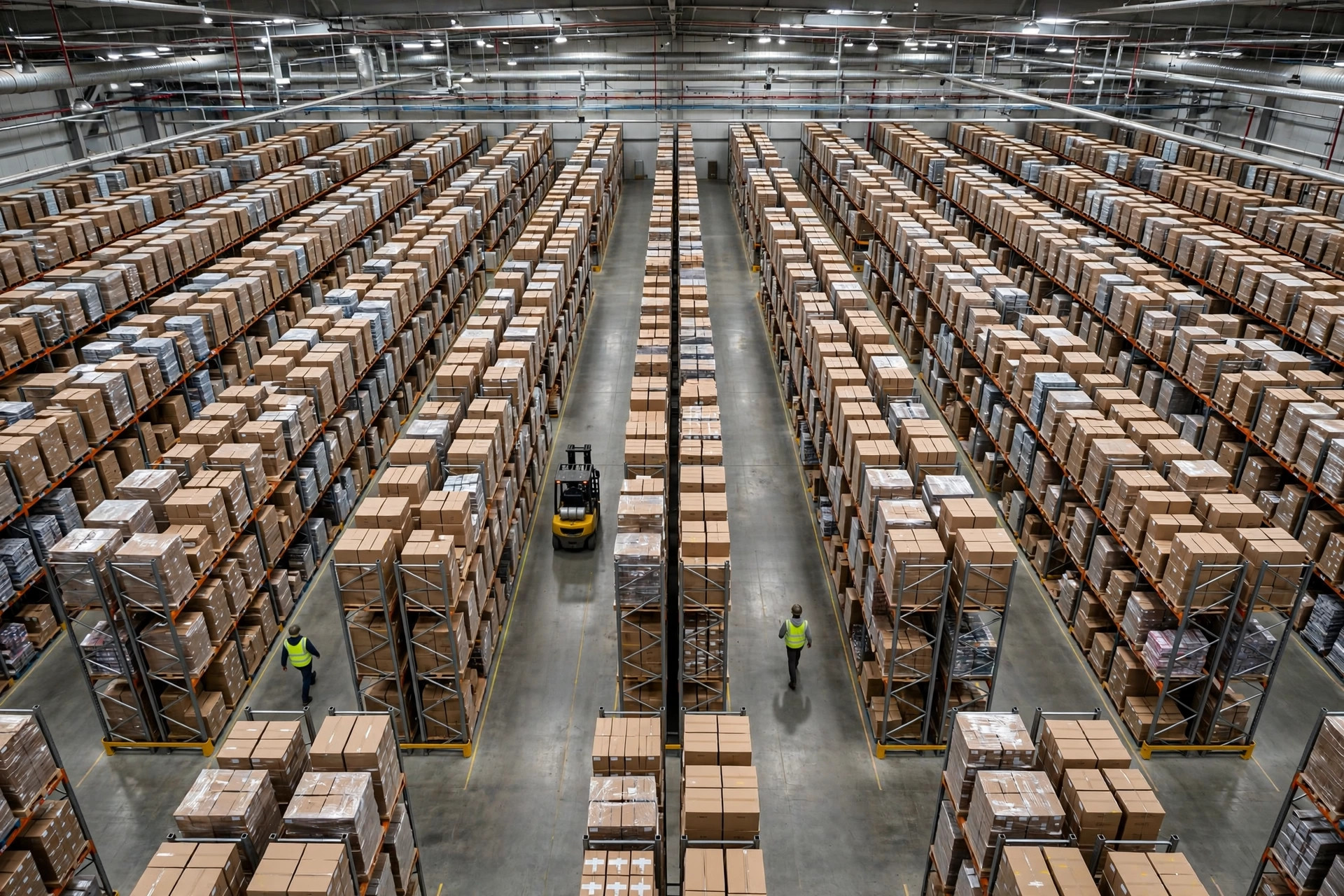
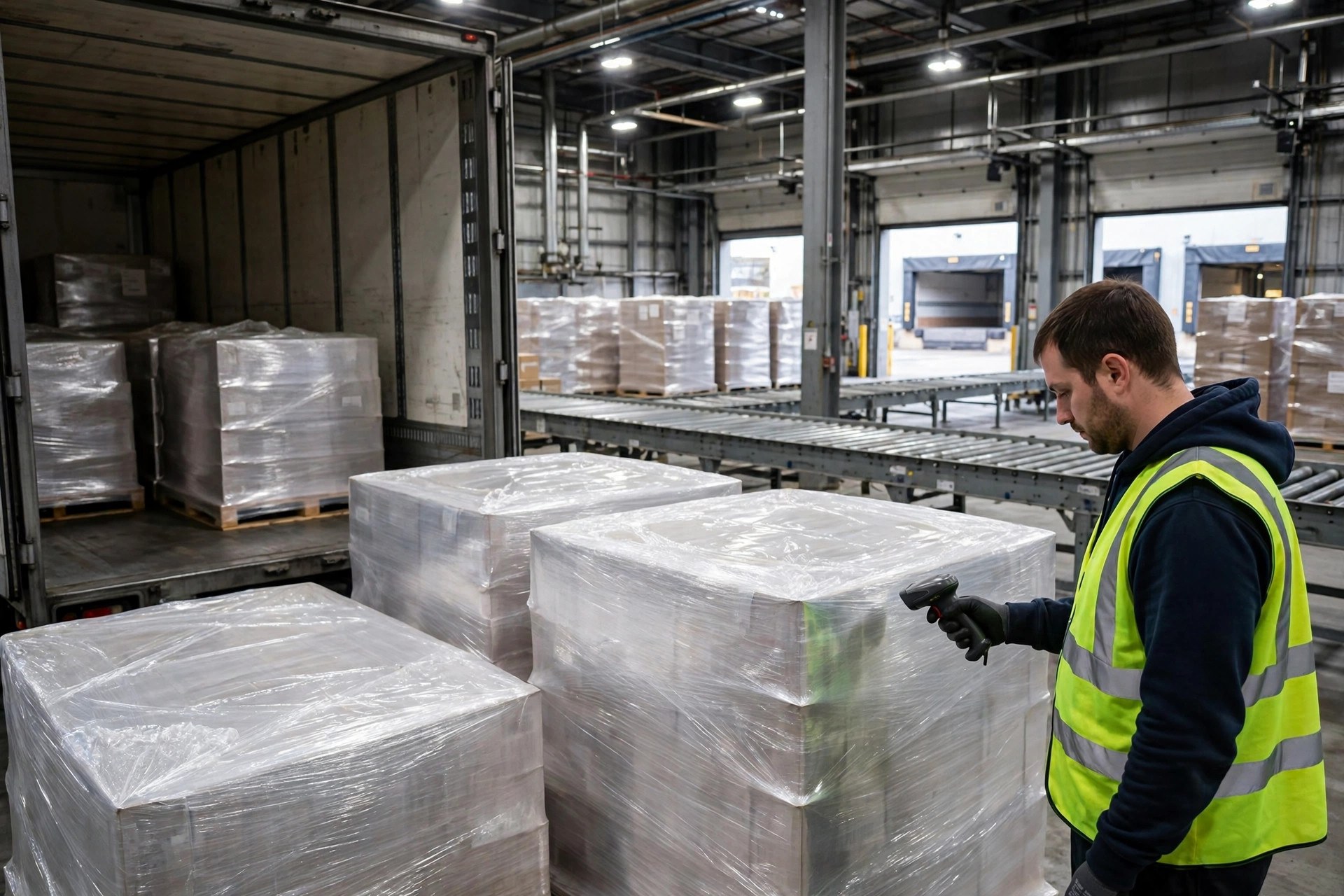
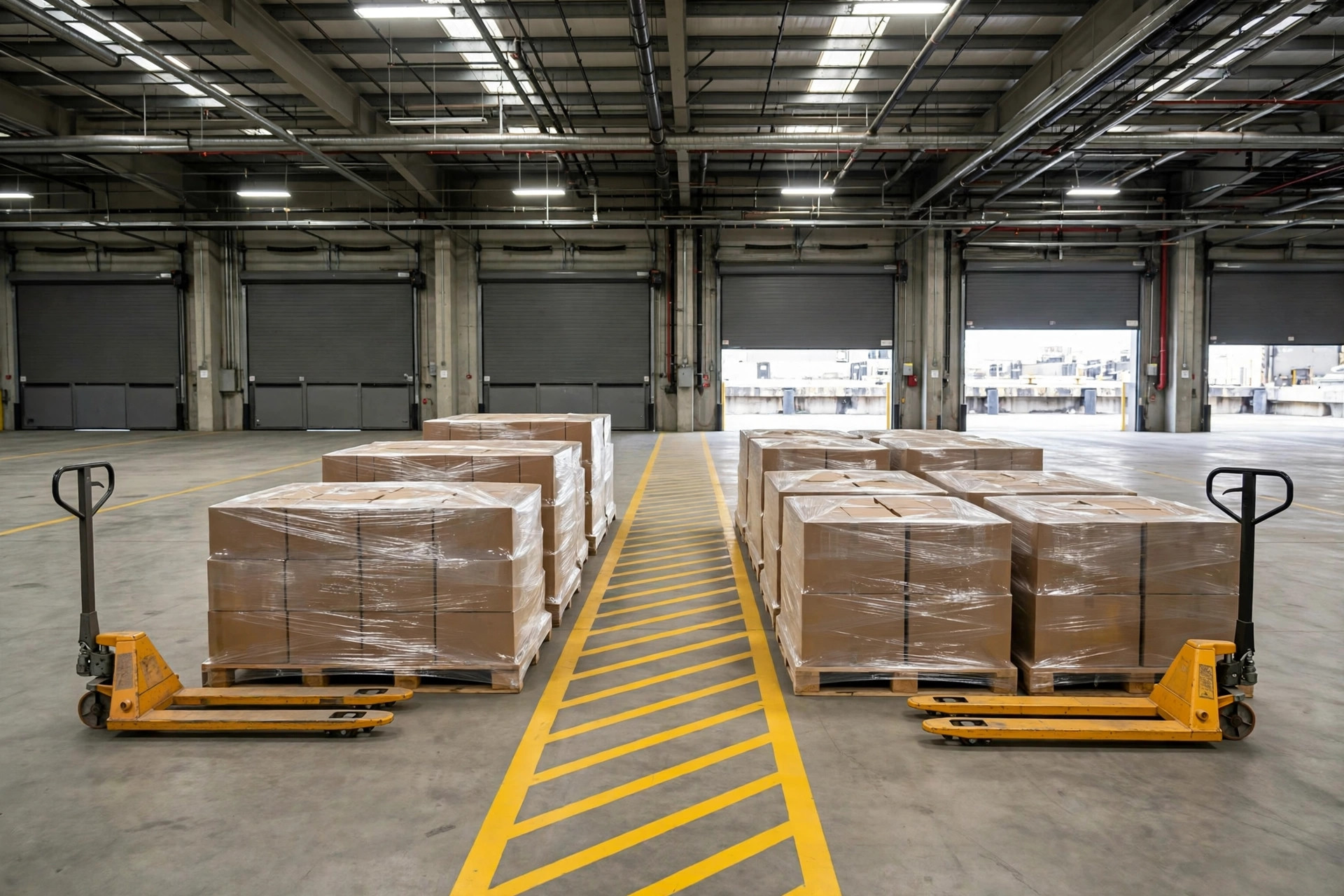 That photo shows what good looks like: pallets staged in separated patches in front of the doors, receiving over here, shipping over there. Forklifts don't hunt across the whole floor, and a driver can see at a glance where his freight is sitting.
What I dread most is the "everything stew" dock: inbound pallets not yet counted, outbound pallets already going onto the truck, wrong freight loaded, and guess who catches the blame — the driver. Separate the zones and misloads visibly drop. The warehouse saves headaches, drivers save headaches.
Peak-Season Staggering: Run the Dock in Shifts When It Counts
Staggering works in normal times. In peak season, when truck counts double, you need one more move: stagger harder. Here's what I've seen work on the road:
- Appointment scheduling. The week before peak, the warehouse books every door into a time table, and suppliers and carriers arrive on appointment. More than half an hour late, you drop to the next open slot. Sounds harsh, but think about it: no appointments in peak season means a three-hour line at the gate; appointments mean fifteen minutes tops. Drivers will happily play by the rules.
- Shave the peaks, fill the valleys. Push some shipping earlier — pre-stage and pre-load part of the volume two or three days before the big sale. Push non-urgent receiving later — peak week takes urgent inbound only, bulk replenishment waits until the wave passes.
- Day-night shifts. When it's really slammed, ship by day, receive by night, two crews rotating. Bonus of night receiving: the roads are empty, suppliers' trucks actually like running at night, and you might even negotiate the freight rate down a notch.
Three Pieces of Advice for Shippers and Warehouse Managers
That's the playbook. Now, from a trucker to the people who run warehouses, three things:
First, when it comes to whether a dock works, the driver knows best. Your schedule can look beautiful on paper, but a driver knows within a minute of arriving whether it flows. Before you draw up the slots, ask the drivers who come every week — they know exactly where it jams.
Second, schedule first, build later. Adding doors costs money; scheduling costs thinking. Do the thinking first, exhaust it, and only then spend. Don't lead with the wallet.
Third, a smooth peak season is rehearsed in the off season. Time slots, separation, appointments — these have to be habits in quiet months, so peak season just means turning up the volume. A warehouse that's messy all year can't invent discipline the week of the big sale. Nobody can save that.
Fifteen years on the road, and my biggest takeaway is this: the warehouse and the driver are in the same boat. A smooth dock means less waiting for drivers, less chaos for the warehouse, fewer angry calls for the shipper. Everybody wins. There's an old saying back home: sharpening the axe never slows the woodcutting — get the dock, this axe, sharp first, and everything else follows.
By Shifu Zhao, Trucking Veteran (15 yrs)