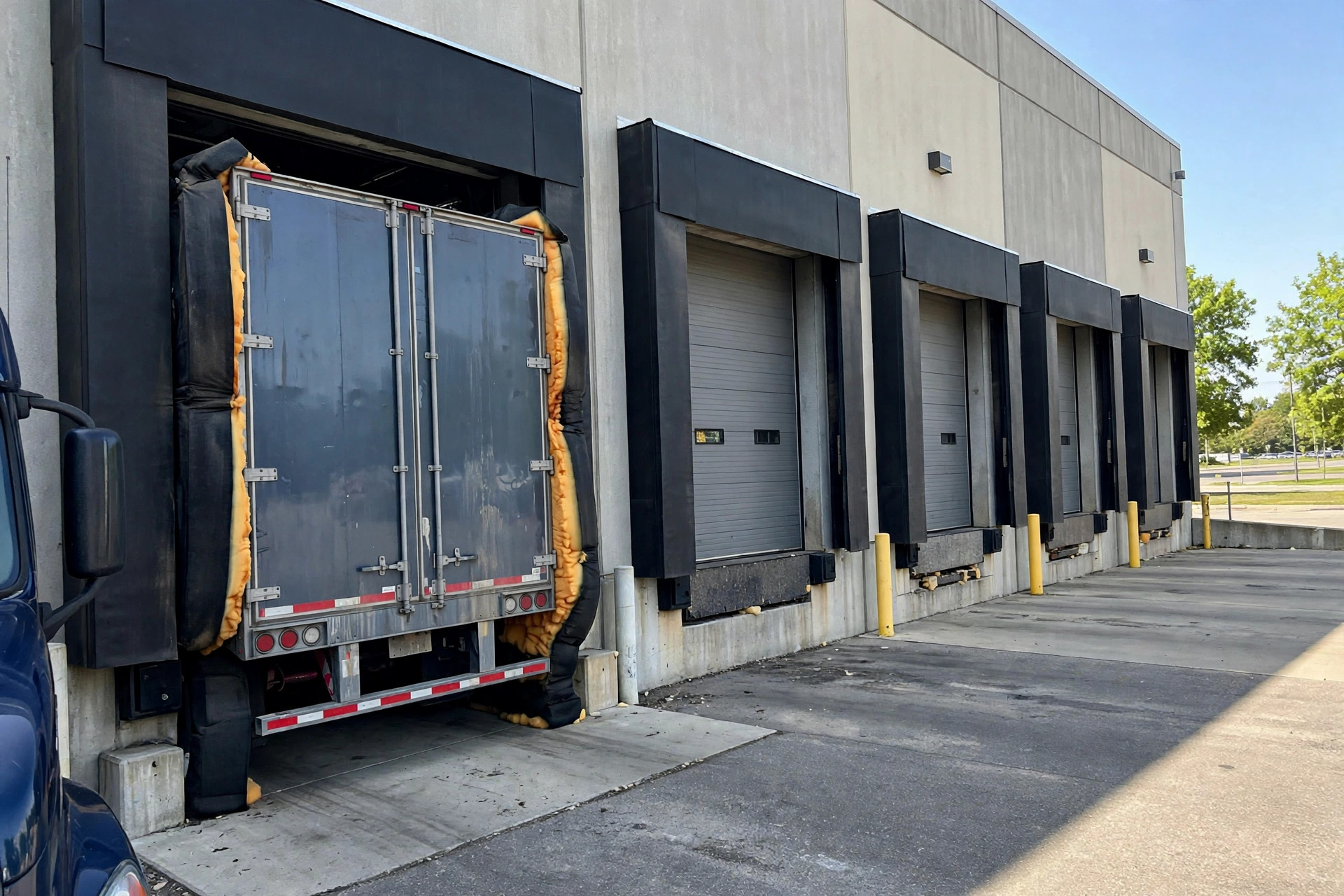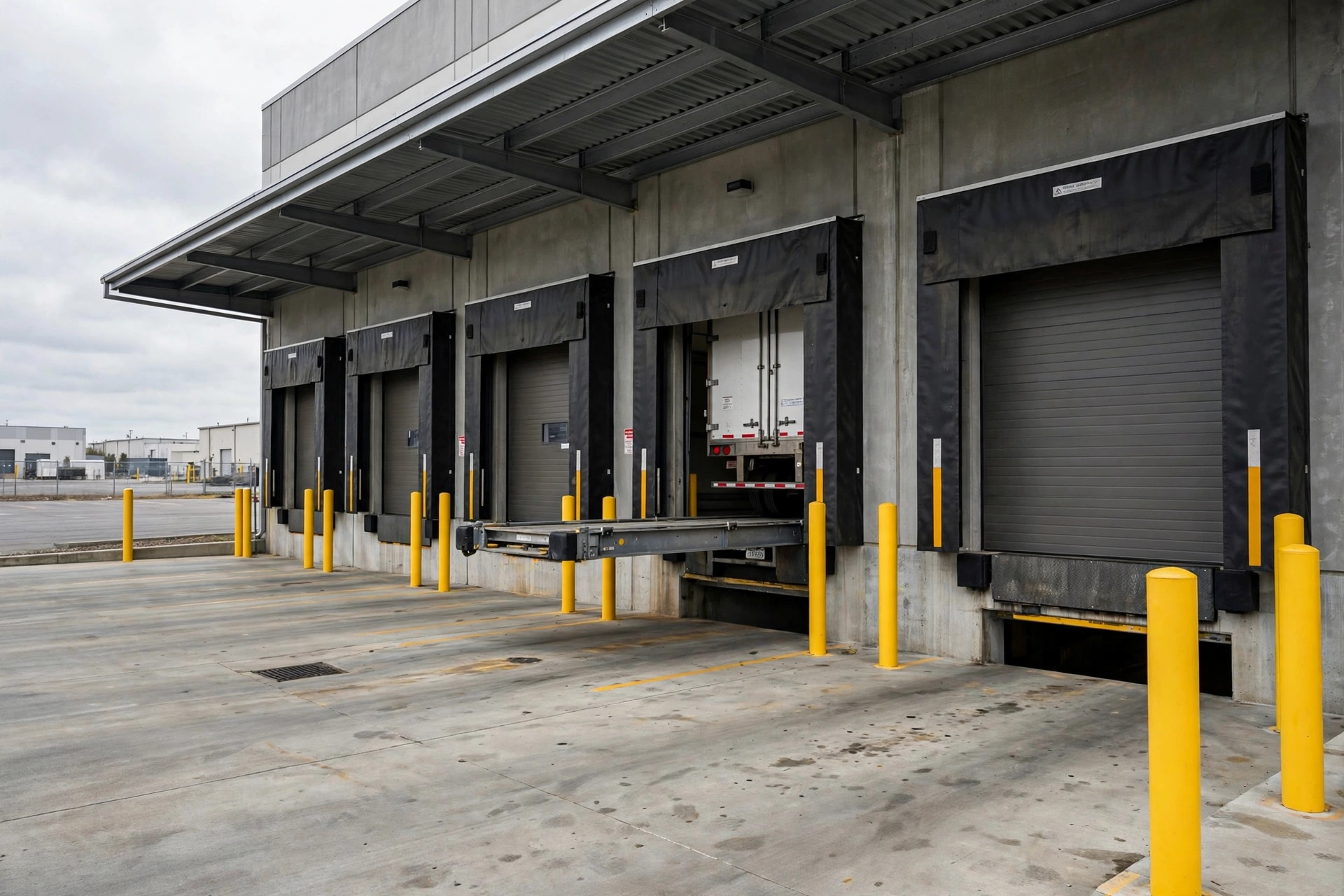
Before I get into loading dock design, full disclosure on where I'm coming from: I run a 3,000-square-meter warehouse outside Dongguan with five people, in a rented factory building that's over twenty years old. On signing day the landlord slapped his chest and said, "The dock's great, any truck can unload here." I believed him. Then the first 9.6-meter box truck backed in, my forklift driver Lao Chen leaned out and said, "Boss, this dock sits way lower than the trailer bed — the forklift has to climb uphill." I grabbed a tape measure: the dock was 0.9 meters, the trailer bed 1.3 meters — a 40-centimeter gap. From that day on, our warehouse had its own tourist attraction. We called it "Hero Slope."
Loading Dock Height: Why 1.2 Meters Is the Magic Number
Here's some industry basics I wish someone had told me before I signed anything: the standard loading dock height in North America is 48 inches, about 1.22 meters, and most newly built warehouses in China also use 1.2 meters. That number wasn't picked out of a hat — it's aimed squarely at standard semi-trailers, whose bed heights typically fall between 1.12 and 1.32 meters. 1.2 meters splits the difference, close enough for both ends.
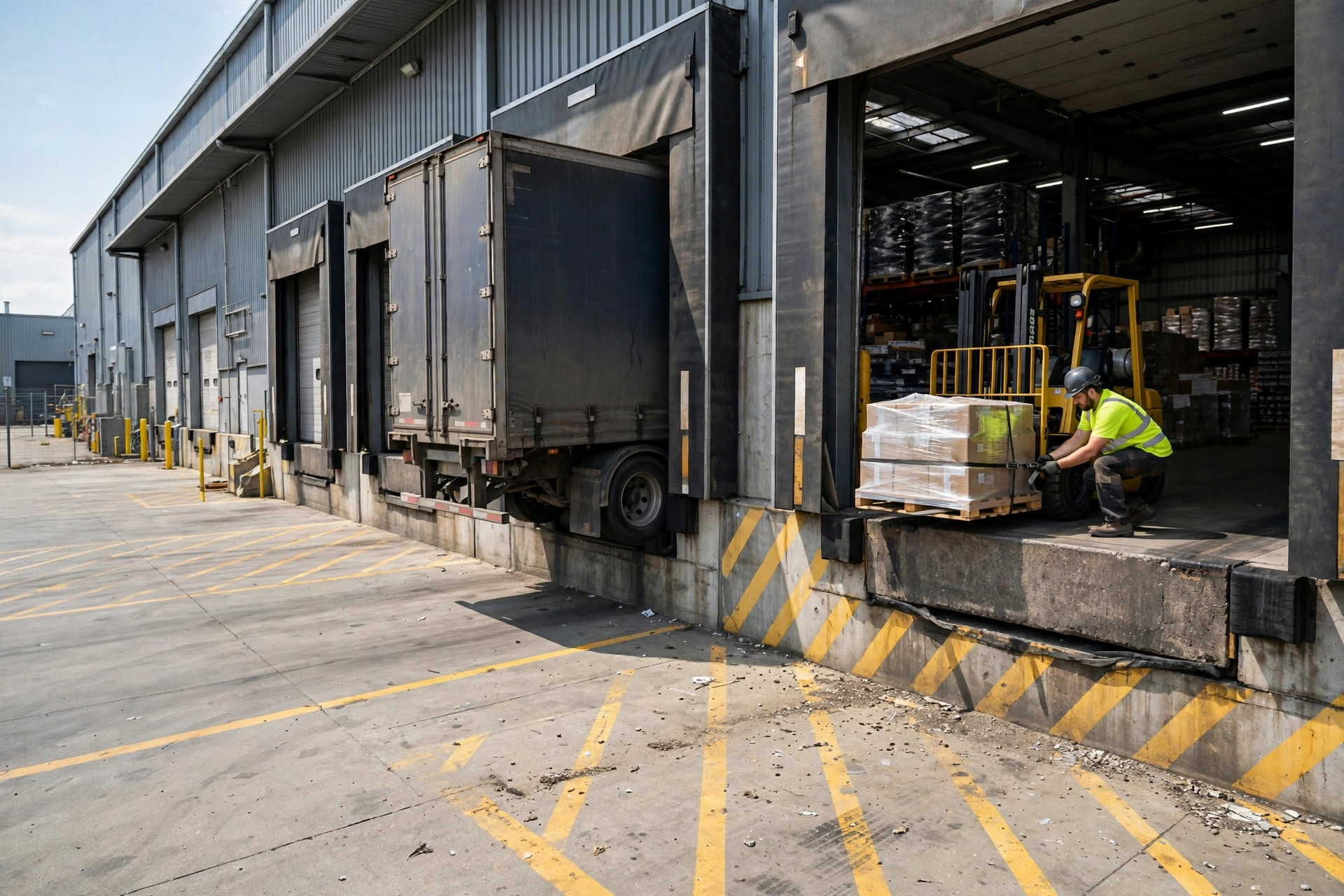
But "close enough for both ends" comes with a big condition: you have to know what trucks actually show up at your door. City delivery box trucks have bed heights of only 0.96 to 1.14 meters. Reefers sit higher because of the insulation. My daily reality: small 4.2-meter vans in the morning (beds just over a meter), 9.6-meter box trucks in the afternoon (beds around 1.3 meters), and a 13-meter semi a few times a month. Our old building's 0.9-meter dock matched none of them, so the forklift spent every day doing extreme sports on Hero Slope. My blood pressure was not having it.
The big-company answer is to tear it out and rebuild. We small warehouses can't burn money like that — I got a quote: raising the dock 30 centimeters, plus construction downtime, came to nearly a hundred thousand yuan. So we went with the cheap three-piece fix, total cost under ten thousand:
First, a secondhand hydraulic dock leveler. It's basically a movable steel plate bridging the dock and the trailer bed, and it flattens out any gap under 40 centimeters. One caution: watch the slope. Industry guidance says powered forklifts shouldn't climb more than about 15% grade, so match the leveler length to your gap — too steep is just as dangerous.
Second, two rubber dock bumpers bolted to the dock edge, a few hundred yuan. Drivers can back in without cracking the wall. We learned this one the hard way — a driver chipped a corner off the wall before we installed them, and patching it cost two thousand.
Third, a free rule: any gap over 30 centimeters means the leveler goes down, no exceptions, no forklift heroics on Hero Slope. Rules cost nothing and work best — a young driver once tried to muscle through to save time, the pallet tipped forward and nearly went over. He bought lunch for the whole crew as a fine. Nobody's skipped the leveler since.
The results? A 40-pallet truck used to take two and a half hours to unload, with two guys steadying pallets the whole time. Now it's ninety minutes, one driver on the forklift. We'd dropped 3 pallets in the year before the fix; zero since. Under ten thousand in, and what I got back was my crew's backs and my own sleep. That math works every way you run it.
Loading Dock Doors: More Is Not Better
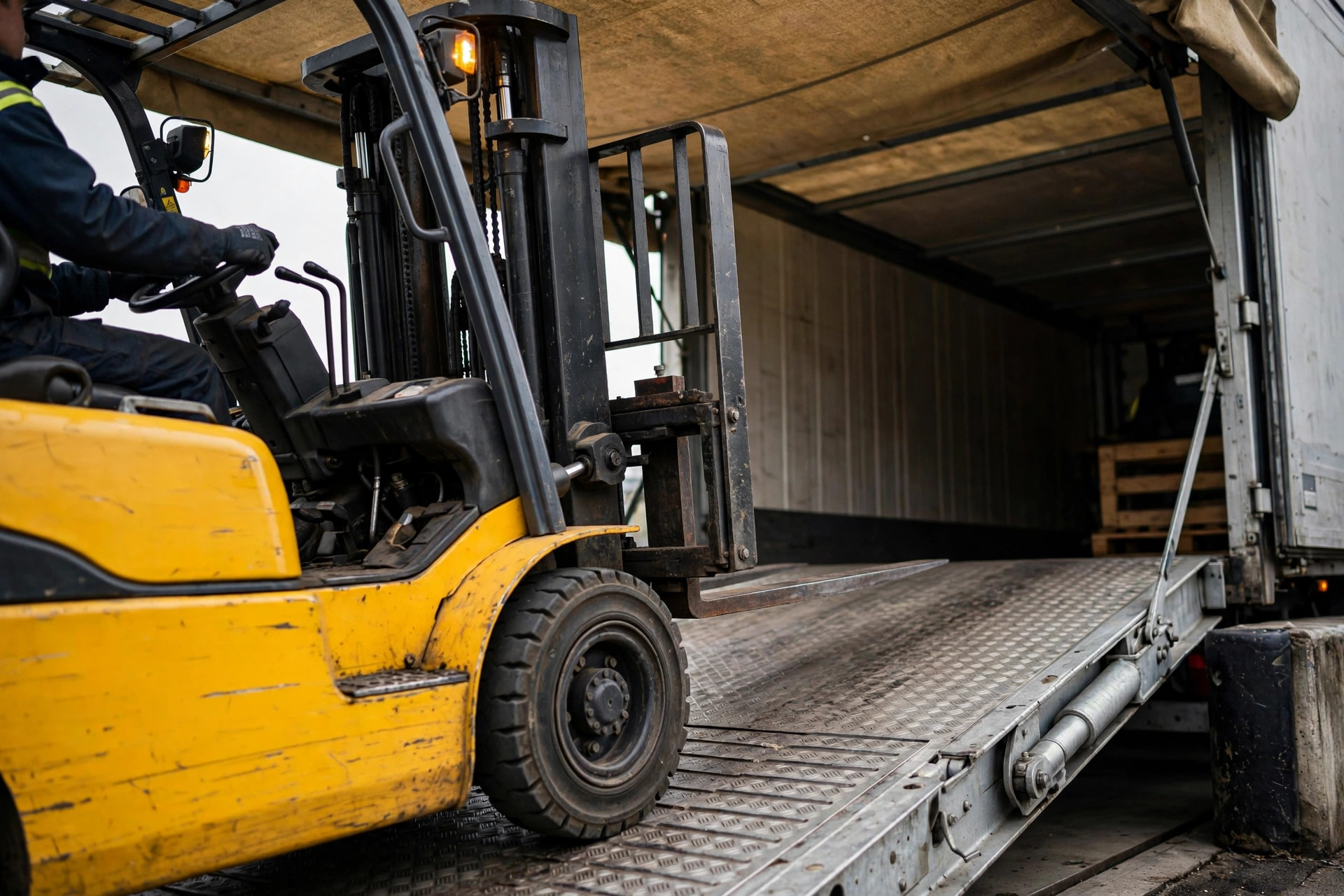
Here's the counterintuitive one: more dock doors are not better. An idle door is rent you're paying for nothing, plus it eats wall space. The big-company playbook — "reserve twenty doors for future growth" — is a luxury we can't afford. Each door opening with its door, seal, and leveler runs into the tens of thousands of yuan. Idle for a year, that's pure loss, and no landlord gives you a discount for having extra doors.
So how many do you actually need? Don't guess — do the math. The formula is simple: doors needed = peak-hour truck arrivals x average hours per truck / 0.8. That 0.8 is your target utilization; you never plan doors at 100% because arrivals bunch up.
Our warehouse: 12 trucks a day, concentrated between 9 AM and 1 PM — four hours. Each truck occupies a door about 1.5 hours from backing in to pulling out. So 12 x 1.5 / 4 = 4.5, divided by 0.8 gives roughly 6 doors. Our building has 4.
Knocking new door openings in the wall? I asked. Tens of thousands per door with the seal, and the landlord has to approve it. Our cheap fix: appointment time windows. Six trucks from 9 to 11, six from 11 to 1, the schedule taped up in the guard room and confirmed in the group chat every day. Four doors, running fine. Appointment scheduling sounds very "big corporation," but ours is just shouting in a WeChat group. Low-tech, works great.
One more thing people miss when touring a warehouse: the yard. A 53-foot trailer needs about 36 meters of depth in front of the dock to back in cleanly in one shot (industry guidance says 120 feet, roughly 36.6 meters). Plenty of old buildings have twenty-meter yards, so drivers saw back and forth to line up, and scrapes become routine. When you're touring a space, don't just look inside — walk out and look at the yard. That one glance saves a lot of grief.
The Canopy: Looks Like a Luxury, Actually Insurance
Most people doing loading dock design obsess over height and door count and treat the canopy as a "we'll get to it later" item. I thought exactly that — until I paid tuition.
Summer 2023, a rainstorm in Guangzhou. We had no canopy. A pallet of electronic components sat on the dock getting rained on for twenty minutes, every carton went soft, and the customer rejected the whole pallet. That one order cost me over twenty thousand yuan in compensation. I ached for half a month, and I learned something on the spot: a canopy isn't a vanity project. It's cargo insurance.
Run the numbers with me: one pallet of goods worth thirty thousand yuan, one soaking, and the loss pays for several canopies. We later put up a 6-by-8-meter steel canopy for a little over twenty thousand. In southern China it storms a dozen-plus times a year. I slept soundly through every rainy season after that.
Budget truly can't stretch? Cheap fix: start with a retractable canvas awning, a few thousand yuan, and survive this rainy season. Upgrade to steel when the money's there. The small-warehouse philosophy is always the same: solve "do we have one" first, "is it nice" later.
And one more counterintuitive point: some people say "our goods don't mind rain, skip the canopy." Even setting aside soggy cartons, a wet dock floor is slippery, and a forklift braking hard on it is an accident waiting to happen. That's no longer a cargo-damage question — it's a workplace-injury question. Never economize on safety. Saving pennies to risk a disaster is the worst trade in business.
5 Things to Check Before You Sign the Lease
For fellow small-warehouse owners: when you're touring a space, spend half a day and check these five things:
- Bring a tape measure for dock height. 1.2 meters is the standard line. Below 1.0 meter, think hard — either you only handle small vans, or budget for a dock leveler up front.
- Run the door formula: peak arrivals x hours per truck / 0.8. Don't trust "I feel like four doors is enough." Feelings are the most expensive consultant.
- Check for a canopy and dock seals. If there's no canopy, add the installation cost to the rent before you negotiate.
- Check the yard depth. Whether a big truck can back in on the first try decides your mood every single day.
- Ask the landlord what you're allowed to change. Some old buildings can't be structurally modified — new door openings are a non-starter. Get it clear before signing, ideally in writing.
Big companies do loading dock design around foresight and standardization. We small warehouses have one rule: don't rework. Rework is the most expensive line item there is — demolition, downtime, missed schedules, every one of them real money. Spend half a day checking these three details before you sign, and it beats spending ten times the money fixing them after you move in. Small warehouses have their own way of surviving: spend money where it counts, and where it counts is those three words — don't rework.
By Xiao Ma, Small Warehouse Owner