In recent years, RFID vendors have converged on a single pitch: the barcode is dead, whole pallets read in three seconds through a portal, and the receiving dock goes to zero labor. Keynotes and sales decks portray the barcode as a relic of the last century, as if the RFID vs barcode decision for warehouse receiving had only one correct answer. Yet on actual receiving docks, handheld scanners keep beeping all day long. Between the pitch and the floor lies a layer worth unpacking. This piece takes the operator's perspective and works through the selection math properly.
The phenomenon: how the "RFID does everything" story gets told
The narrative usually runs in three moves. First: a barcode reads one item at a time while RFID reads hundreds, so the efficiency gap is overwhelming. Second: tag prices have fallen to pennies, so cost is no longer a barrier. Third: Walmart mandates it, so resisting the tide means getting left behind by the supply chain. Each move rests on real facts — and together they smuggle in one unexamined premise: that your freight, your processes, and your trading partners look like the ones in the storyteller's assumptions. The differences between one warehouse and another are precisely the most expensive part of any selection decision — and the one page that never appears in a sales deck.
Two sets of numbers: RFID vs barcode on cost and read performance
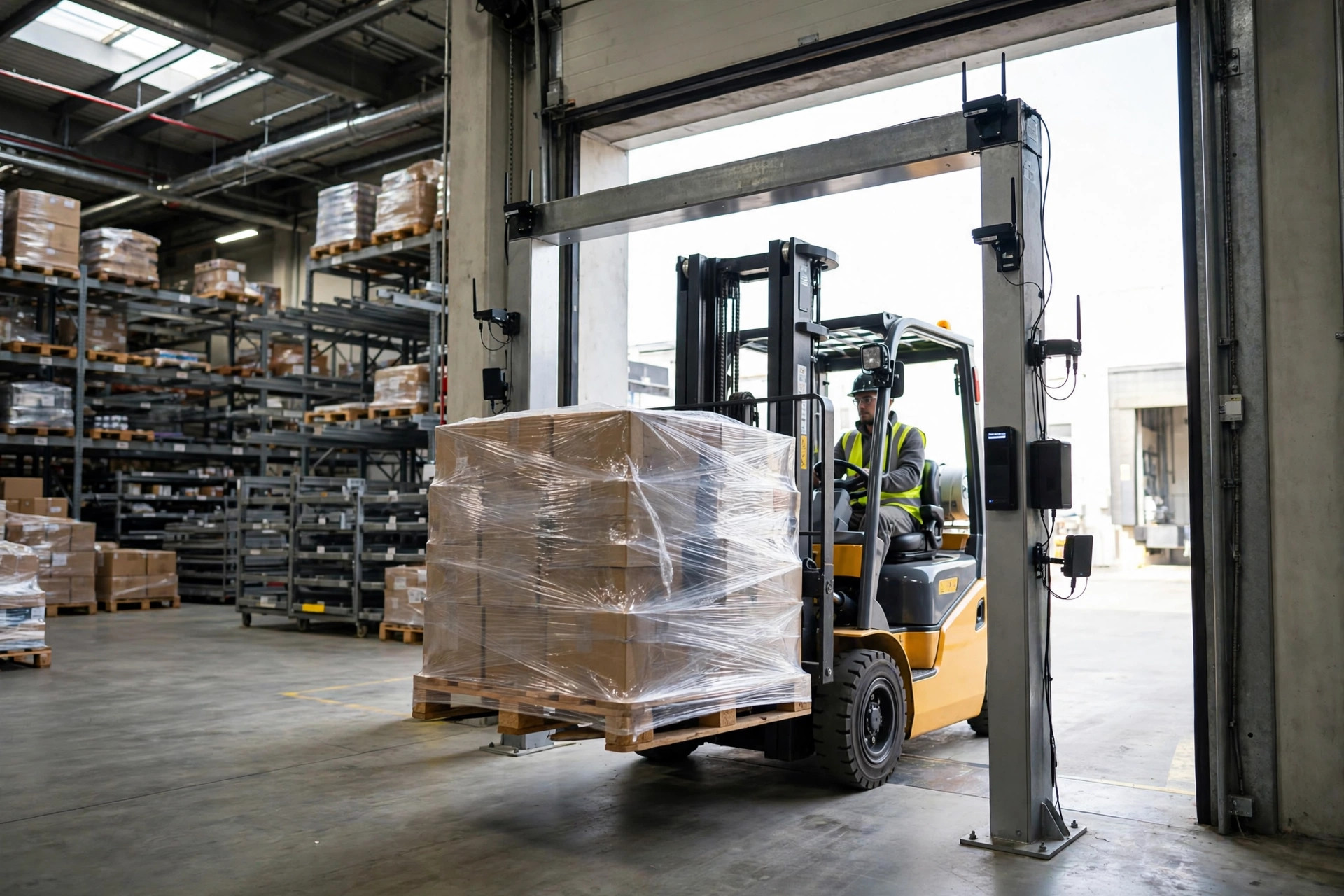
The first set is cost. According to publicly quoted ranges from tag manufacturers in recent years, UHF passive tags in volume have fallen below ten cents apiece, with very large orders negotiating down toward five cents; a barcode label costs under a cent. The equipment gap is wider: an industrial handheld scanner costs a few hundred dollars, a handheld RFID reader runs $2,000 to $4,000, and a fixed portal per dock door — installed — runs $3,000 to $8,000. And that is hardware only. System integration, tag encoding and commissioning, and process rework typically cost several times the hardware — the line vendors' decks usually omit. Incidentally, the most common budget overrun in RFID projects is not hardware at all but tag commissioning: printing, encoding, verifying, and applying tags gets planned as zero cost and discovered, mid-project, to need people, equipment, and workstations.
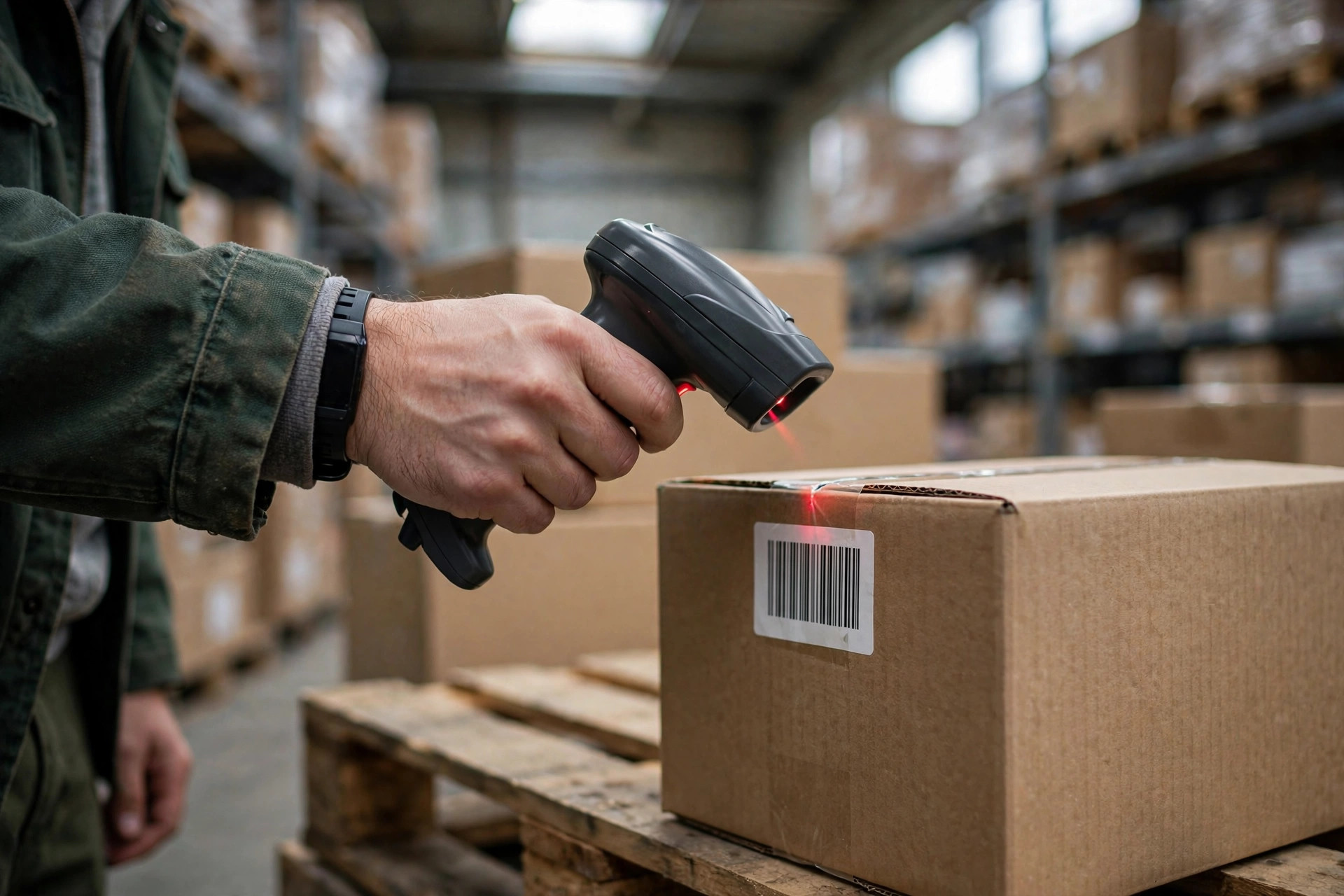
The second set is read performance. Under ideal conditions — standardized cartons, non-metallic freight, disciplined tag placement — whole-pallet RFID read rates can exceed 99%, confirmed by public testing from institutions including Auburn University's RFID Lab. But "ideal conditions" does the heavy lifting in that sentence: introduce metal components, liquids, or crushed and obscured tags, and read rates fall off noticeably, demanding anti-metal tags at several times the price, retuned portal power, or even restacking to suit the reader. Barcodes have no such problem: they read one thing at a time, but they work on virtually any freight, and every system across the global supply chain speaks barcode.
The receiving selection math: a 200-pallet-a-day warehouse
Take a mid-size operation receiving 200 pallets a day, roughly 50 cases per pallet, and run a five-year view:
| Cost item (five-year order of magnitude) | Barcode | RFID |
|---|---|---|
| Tag cost | Cents per pallet, negligible | 50 cases × ~$0.08 ≈ $4/pallet, ~$200k/year |
| Equipment | 10 scanners, a few thousand dollars | 4 portals + 4 handhelds, tens of thousands |
| Integration and process rework | Near zero (existing process) | Tens to low hundreds of thousands, plus rewriting exception flows |
| Receiving labor | Case-by-case scanning, X headcount | Portal auto-read, theoretically halved |
| Hidden cost | The scanning motion itself | Mislabeled tags, missed-read rechecks, trading-partner coordination |
The table exposes a structure that rarely gets stated: with RFID, the tag is the big line item — and it recurs every year for five years. With barcodes, labor is the big line item — and labor gets more expensive every year. So the decision is not really "advanced vs. backward technology." It is "do you spend the money on a running tag bill or on people" — and the answer turns on your product value, your labor cost, and your process complexity. High-value freight in high-wage markets makes RFID's math work; elsewhere, often not.
Attribution: why RFID wins in apparel and loses in auto parts
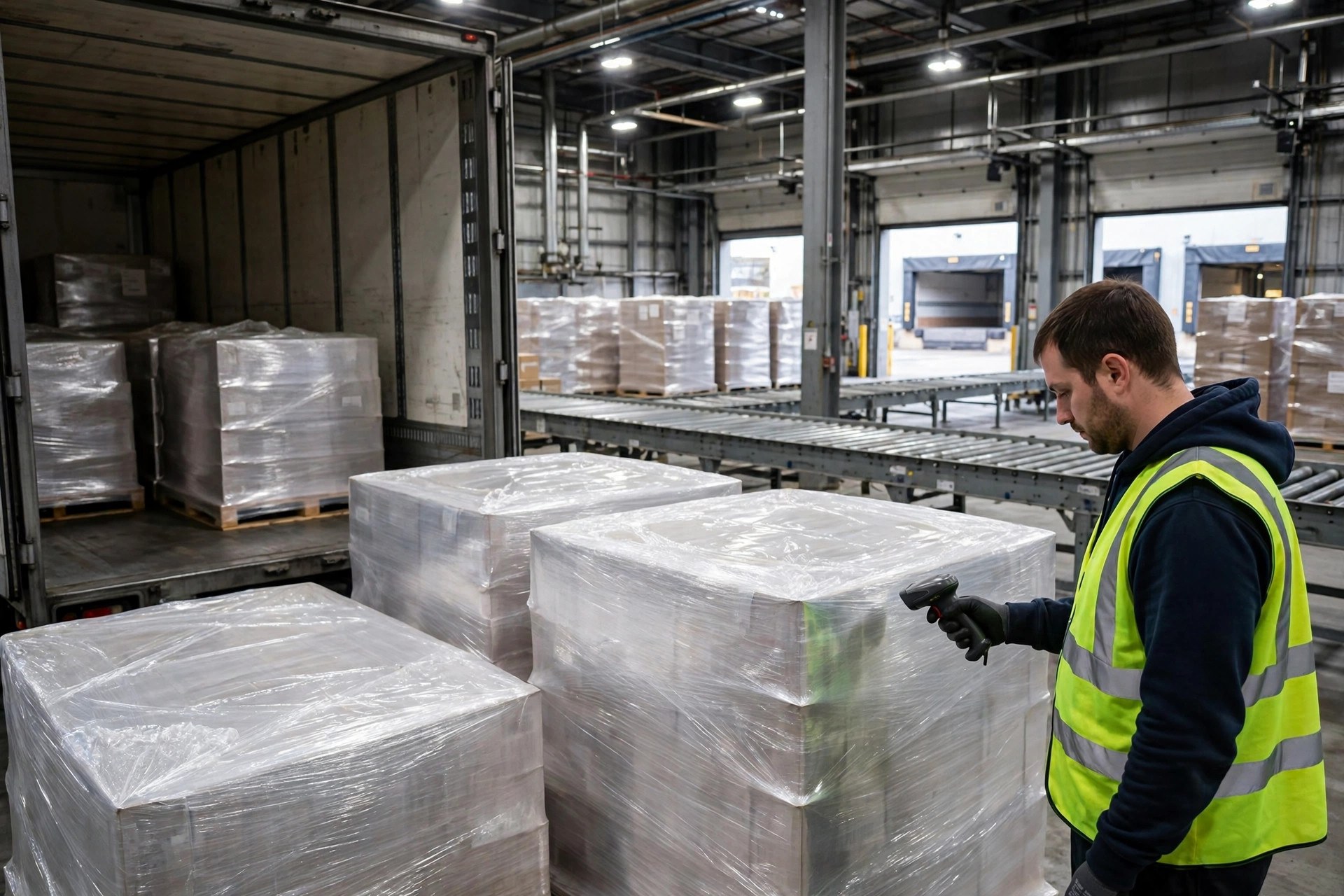
In 2021, an apparel 3PL in Vernon, outside Los Angeles. Standardized cartons, non-metallic, single category: a full pallet read through the portal in three minutes — 200 cases that used to take 40 minutes of case-by-case scanning. Receiving headcount went from four to two, and tag cost was absorbed by the brands under retailer RFID mandates. Right freight, externalized cost, simple process: RFID won without breaking a sweat.
In 2023, an auto parts warehouse, mostly metal components. UHF waves reflected and attenuated off metal surfaces; read rates wouldn't hold. Anti-metal tags at several times the unit price, retuned portal power, still missed reads — and finally restacking patterns were changed to accommodate the reader, the operation contorting itself to serve the technology. Six months in, the project was shelved and the site went back to barcodes plus mobile scanning. The lesson is blunt: physics sets the ceiling. Metal and liquid are RFID's natural boundaries, and selecting without read-testing your hardest freight is betting blind.
Attribution in one sentence: 70% of an RFID outcome is decided before selection — decided by what your freight is, who pays for the tags, and whether the process can bend for the read. The technology itself is rarely the bottleneck. The bottleneck is always the freight and the process. Most failed-project postmortems point to the same starting point: the team watched the vendor's demo video but never read-tested their own worst-case product. Demos always use standard cartons. Your warehouse might be half metal parts.
The counterintuitive point: RFID eliminates the scanning motion, but it cannot fix wrong freight — mislabel a batch and the faster it reads, the faster, neater, and more completely it confirms the error. In the barcode era, one mis-scanned case was one wrong case. In the RFID era, one mislabeled batch gets "efficiently" confirmed in three seconds. Technology amplifies throughput, and it amplifies mistakes with it. That is a layer the operator has to price in.
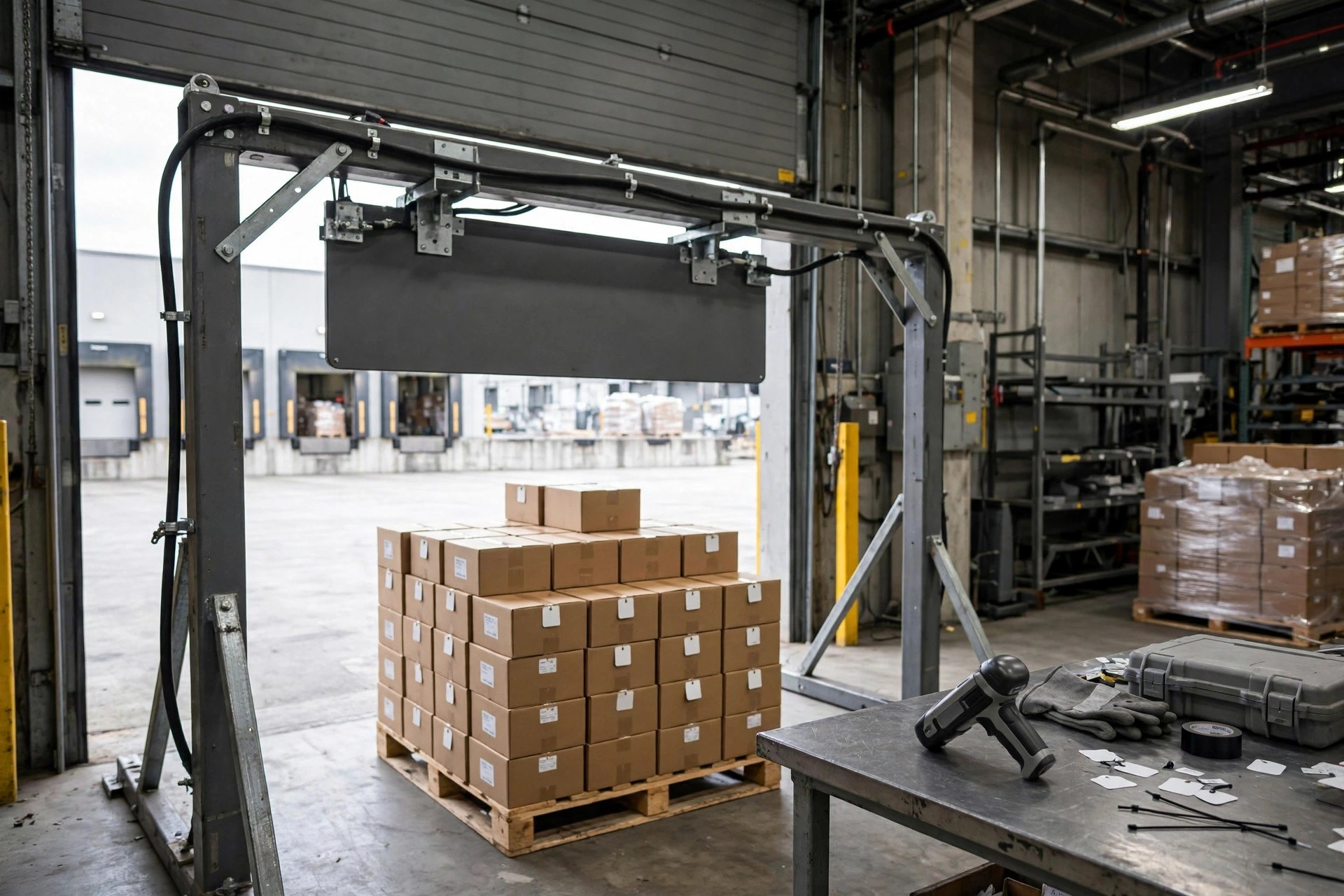
Trend outlook: barcodes aren't dying in the next five years
Three lines of evidence shape this call. First, tag prices have fallen an order of magnitude over the past decade and the curve is still sloping down, so the cost barrier keeps lowering. Second, Walmart's RFID mandates for suppliers across multiple categories since 2022 are the strongest adoption driver in consumer-goods supply chains, and mandated categories will only expand. Third, nothing can replace the barcode's global universality — suppliers, carriers, and customers all speak barcode, a network effect RFID cannot catch within a decade.
So the five-year picture is dual-mode: barcode as the base layer, the lingua franca of the whole chain; RFID layered onto high-value, high-velocity, physics-friendly categories as an in-building efficiency tool. On the timeline, Walmart's 2022 mandates were a watershed — apparel and consumer categories accelerated clearly afterward, while industrial, auto parts, and food and beverage, the "unfriendly" categories, will most likely stay barcode territory for the next five years, because physics doesn't negotiate. The operator's selection strategy should be dual-mode too: first ask "is my freight RFID-suitable," then "who pays for the tags," then "does the saved labor cover a five-year tag bill." If any of the three has no answer, get barcode to its absolute best first — scanning process, slotting discipline, and exception handling done to 95 points routinely beats a half-hearted RFID install.
One open question to close on: perhaps the question was never "RFID or barcode," but rather — in your receiving operation, what actually costs more: the few minutes of scanning, or the days of reconciliation after the scan turns out wrong? Answer that, and selection stops being a technology faith debate and becomes arithmetic. And the nice thing about arithmetic: the answer can be checked. Faith cannot.
By Dr. Chen, Supply Chain Researcher