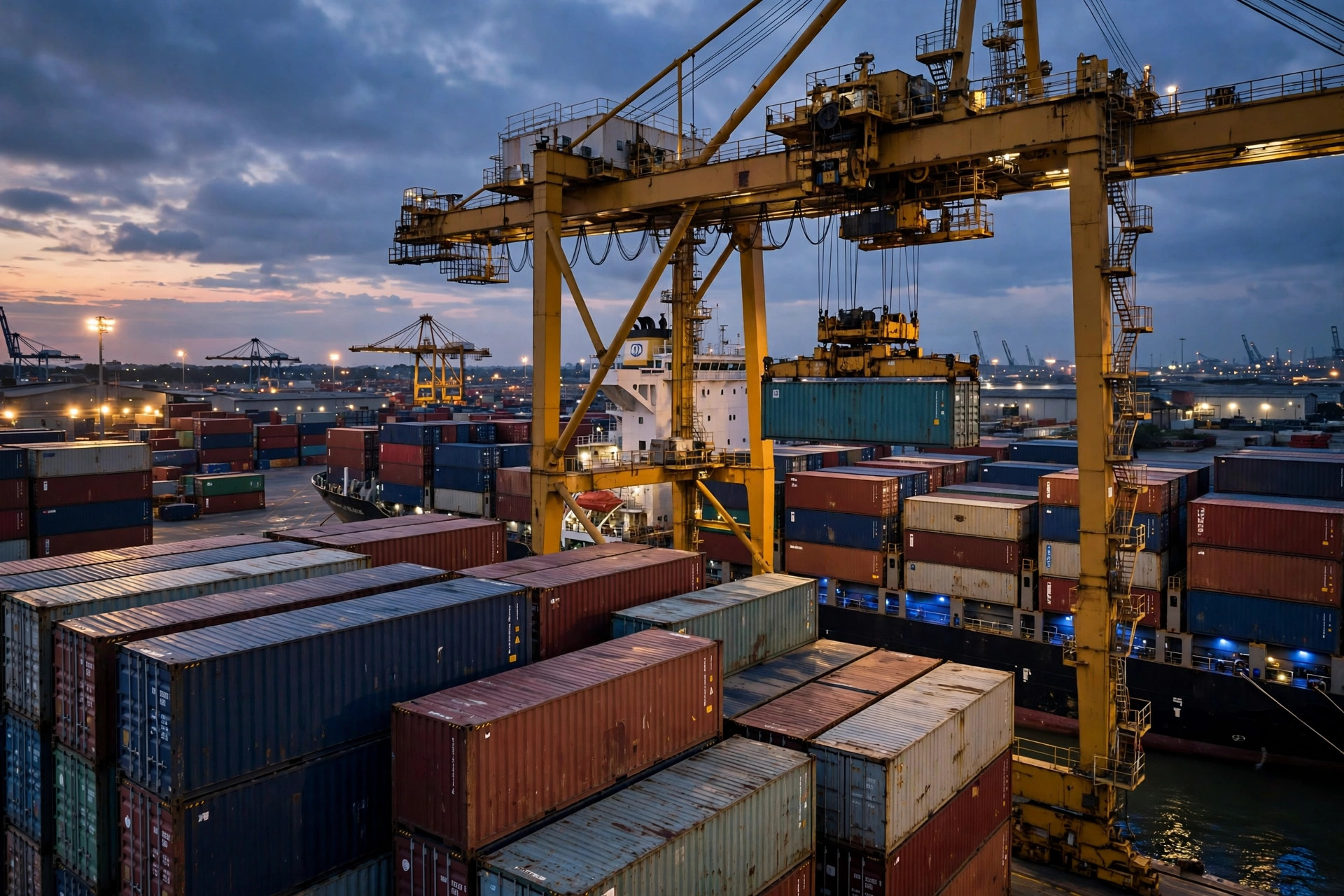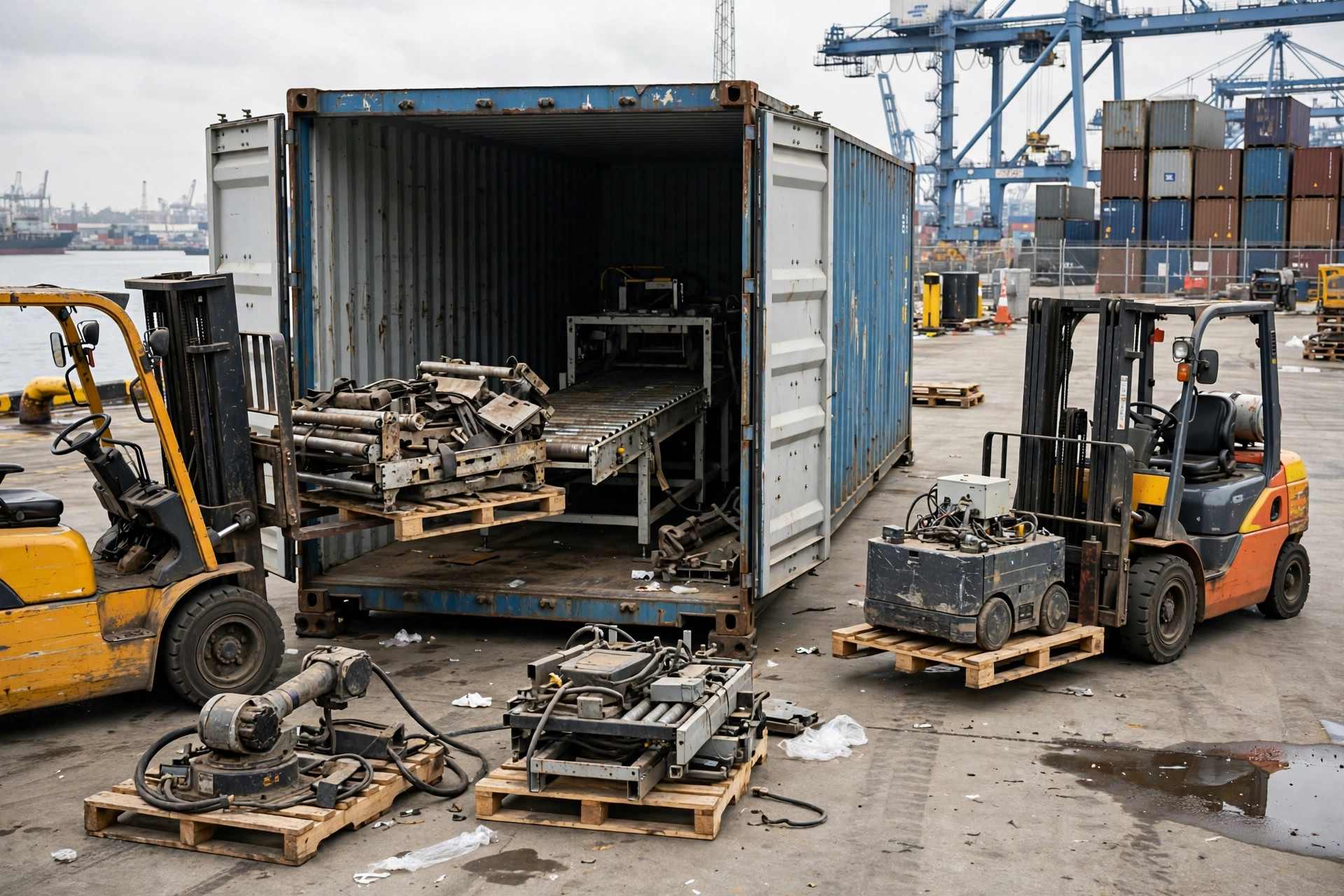
We had a client — a 3PL operator out of Atlanta — who ordered a full sortation line plus 30 AMRs from China in 2024. FOB price: $860,000. The European quote for equivalent kit was $1.4 million, so the boss signed off grinning. Then the goods landed at the Port of Savannah, and the customs bill wiped the grin right off his face: an additional 25% Section 301 tariff, more than $215,000 on top. Project payback stretched from 2.8 years to over four.
I'm not surprised. After signing hundreds of warehousing contracts, I've spotted a pattern: first-time US buyers of Chinese automation equipment scrutinize every line of the quote — and forget to put the Section 301 tariff in the total. Here's the full playbook: how to check the rate, how the exclusion process actually works, and how to absorb the tariff cost in your quote and contract.
Where the 25% Section 301 tariff actually lands: the landed-cost math
First, the basics: the Section 301 tariff sits on top of normal duty; it doesn't replace it. Warehouse automation — conveyors, sorters, AMRs, stacker cranes — mostly falls under HTS Chapters 84 and 85, and the bulk of it sits in Section 301 Lists 1 through 3 at an additional 25% (List 4A is 7.5%; always check the current USTR list). Normal MFN duty on this machinery is typically just 1–2.5% depending on the HTS code. In other words, normal duty is pocket change; the 301 tariff is the real money.
Here's the Atlanta client's real bill, broken down:
| Item | Amount (USD) | Notes |
|---|---|---|
| Equipment FOB value | 860,000 | Duty is assessed on this only |
| Ocean freight + insurance | about 42,000 | |
| Normal MFN duty | about 12,900 | Estimated at 1.5% |
| Section 301 additional duty | 215,000 | 860,000 × 25% |
| MPF, HMF, broker fees | A few thousand | Per current CBP rates |
| US-based installation | 95,000 | Services, not dutiable |
| Total landed cost | about 1,225,000 |
Even after the tariff, it still beat the $1.4 million European quote — but the savings shrank from 40% to the teens, and the whole ROI model changed. That's why I always say: don't compare equipment prices, compare landed cost.
Here's the insider bit most buyers miss: the Section 301 tariff is assessed on customs value — the goods, not the services. So unbundle the quote: equipment FOB, software license, installation, training — separate line items, ideally separate contracts. Installation performed in the US was never dutiable. But if you let the factory roll installation into the equipment price for convenience, CBP won't carve out the service portion for you. Everything gets taxed as goods. That one lazy line item can cost you tens of thousands.
One warning: never underdeclare the goods value to shrink the dutiable base. That's customs fraud, and the penalties dwarf the 25% you were trying to avoid. Every legitimate cost play is below — no gray areas.
The Section 301 exclusion process: worth filing, not worth banking on
Second client story. A Houston e-commerce fulfillment operator imported conveyor lines in 2023 and caught USTR's machinery exclusion window. His broker filed by 10-digit HTS code, the exclusion was granted a few months later, and he got a fat refund. He still brags about it.
The real-world playbook, in four steps — all above board:
- Nail the classification first. Have your broker confirm the 10-digit HTS code and check the USTR list for which list and rate applies. Everything downstream depends on getting this right.
- Check whether a window is open. Go to USTR's website and see if an exclusion application channel is currently open. Heads-up: the 2024 machinery exclusion round expired on May 31, 2025. These windows open and close — verify against USTR's latest published policy before acting.
- Build the file. Equipment description, why comparable equipment isn't available from US or third-country sources, evidence of economic harm from the tariff, and whether the equipment touches "Made in China 2025" industries. USTR reviews each request case by case; solid documentation matters.
- File and wait. Historically, several months from filing to decision is normal. Granted exclusions are typically retroactive, so overpaid duties can be refunded.
Now the cold water. The Congressional Research Service crunched the historical numbers: exclusion approval rates ran about 35% for Lists 1–2, but only around 5% for List 3 and 7% for List 4. Most warehouse automation sits in Lists 1–3 — meaning your odds are poor.
So my advice never changes: budget the full 25%, and treat a granted exclusion as a windfall, not a plan. Every client I've watched bet their budget on an exclusion ended up bleeding. Hope is not a strategy.
Negotiating the tariff into the contract: who pays, and how
The last piece is my home turf: the contract. Whether the tariff cost is absorbable is half policy, half paperwork. Four negotiation points:
First, unbundle the quote. Equipment FOB, software license, installation, training — separate quotes, separate contracts. Electronically delivered software licenses generally sit outside the dutiable base; US-based installation was never dutiable. The Houston client did exactly this and shaved six figures off the dutiable base. Fully legitimate, zero gray.
Second, skip DDP. DDP sounds convenient — the supplier handles customs and duty, you just receive the goods. But the supplier prices in the worst case plus margin, and you end up paying more than self-clearing. Go DAP and hire your own broker: transparent costs, and you keep control of HTS classification and any exclusion filing.
Third, write a tariff-adjustment clause. Something like: "If the Section 301 rate moves more than 5 percentage points, either party may renegotiate the equipment price or terminate without penalty." Rates moved in 2024–2025; contracts without this clause just absorbed the hit. Everyone who thought "we'll never need this" ended up needing it.
Fourth, be the importer of record yourself. Don't hand that role to your forwarder for convenience. Exclusion applications and duty refunds run through the importer of record. If someone else holds that title, they hold your leverage.
Now the counterintuitive take: even at plus 25%, Chinese equipment often still wins. Chinese ex-works prices typically run 35–40% below European equivalents — add 25% and the math still works. And Chinese vendors' spare-parts pricing and engineer response times are genuinely hard to beat. Don't compare sticker prices; compare total cost of ownership:
| Factor | China + 25% tariff | European-built | US-built |
|---|---|---|---|
| Equipment price | Low | High | Highest |
| Tariff | 25% | None | None |
| Installation | Chinese engineers + local support | Expensive | Expensive |
| Spares & response | Fast, cheap | Slow, expensive | Fast, expensive |
| Lead time | Typically 3–4 months | Typically 5–8 months | Typically 4–6 months |
One more thing I actively talk clients out of: routing through Southeast Asia to dodge the 25%. The substantial-transformation bar for origin is high, and CBP treats simple rerouting as evasion — back duties plus penalties. The compliant cost playbook is the one above. Walk the straight road.
Three questions to ask before you sign:
- Is the quote split — goods value vs. software license vs. installation? (Duty applies to the goods value only.)
- If the tariff goes up, who pays? Is it in the contract?
- Which HTS code is your broker using — and how confident are you? Worth getting a binding ruling first?
By Susan, 3PL Sales Director