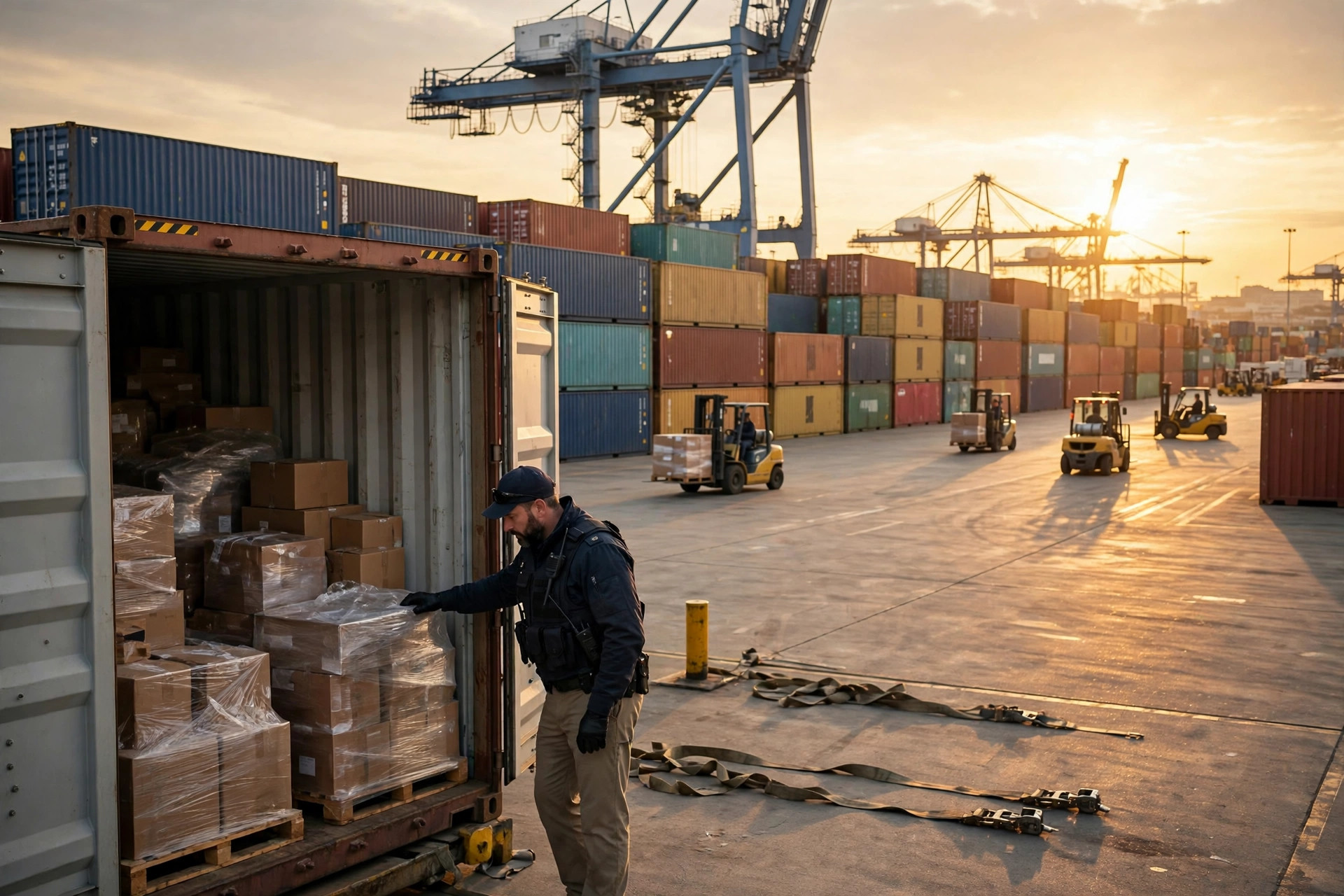
Something worth noticing has been happening over the past few years: Chinese-made warehouse automation equipment — sorters, AMRs, automated storage systems — is winning more and more projects in the United States. But at the same time, "flying our engineers over to install it" is getting harder and harder.
In 2023, an engineer from a Shenzhen AGV maker landed at Chicago on a B-1 visa. The CBP officer asked three questions: who do you work for, who pays your salary, and what exactly are you doing in the US this trip? The engineer answered honestly — "installing and commissioning equipment for our client." The result: secondary inspection, visa cancelled, removed on the spot. The project slipped two months, and the liquidated-damages clause in the contract kicked in immediately.
This was not an isolated case. According to public reporting and industry chatter — these incidents are almost never formally counted, so the picture has to be pieced together from fragments — cases of B-1 holders being stopped at the border while traveling to install equipment have risen markedly since 2022. The visa is becoming the most uncertain link in the delivery chain for Chinese automation equipment going abroad.
Data and Attribution: The B-1 Gray Zone
Start with the data. According to publicly available customs figures, machinery is among China's faster-growing export categories, and logistics automation equipment is one of the quicker growers inside it — different sources use different scopes, so I won't cite a precise number here, but the direction of the trend is unambiguous: the equipment is going abroad, the people are following, and the "people following" part is getting stuck.
A recurring figure I keep hearing in project post-mortems shared among equipment makers: the visa and compliance step routinely eats four to eight weeks of the delivery schedule. The B-1 application fee itself is trivial (around $185, subject to the latest official schedule). What costs money is uncertainty — you don't know whether your engineer gets in, or whether the project slips because of it.
Why is installing on a B-1 a gray zone? Under the working interpretation of US immigration practice, a B-1 business visitor doing installation or repair work must satisfy several demanding conditions at once: employed by a foreign company, receiving no remuneration from any US source, and the installation must be part of a foreign sales contract. The reality: the engineer lands and immediately starts tightening bolts and tuning parameters, staying three weeks. The officer's test is intuitive — you're doing on American soil the work an American worker does.
A few key facts need to be laid out plainly:
First, ESTA is worse. Visa-free entry explicitly prohibits work; showing up to install equipment on ESTA is a more serious matter than being turned away on a B-1.
Second, China is not a US E-2 treaty country. That path simply doesn't exist for Chinese passport holders — check the State Department's published treaty-country list. Many manufacturers are startled the first time they hear this: some "standard plays" were never available to them at all.
Third, the L-1 intracompany transfer is one of the few fully compliant channels, but the bar is high: it requires a qualifying US affiliate, and the transferee must have worked for the foreign company continuously for a prescribed period (confirm the exact duration against current official policy). In other words, to use L-1 you first have to build the US entity.
The attribution is fairly clear by now: the essence of the problem isn't "officers being difficult" — it's a mismatch between a business model built on "send people from home" cost structures and an immigration framework that demands local staffing for this kind of project.
Four Delivery Models, Compared
The industry has settled, in practice, on four responses to that mismatch, each with trade-offs:
| Model | Speed | Direct cost | Compliance risk | Control | Fits whom |
|---|---|---|---|---|---|
| Pure B-1 engineer dispatch | Fast (fly in 2–3 weeks) | Low | High (denied entry, project halted) | Strong | Small projects, rolling the dice — not recommended |
| Remote guidance + US local integrator | Medium (+4–8 weeks alignment) | Medium (integrator fees) | Low | Medium | Most small and mid-size makers |
| US subsidiary + L-1 resident team | Slow (months to set up) | High | Very low | Strong | Top makers with large annual US volume |
| Turnkey subcontract: installation to a local general contractor | Medium | Medium-high | Very low | Weak | Makers who just want to sell equipment |
A Hangzhou sorter maker took an approach worth studying in 2024: it subcontracted installation to a US local integrator and sent only one of its own engineers, entering on a B-1 for "after-sales training" to supervise on site — training being squarely within permitted B-1 business activity. The project delivered on schedule with zero compliance exposure. The integrator's fee had been baked into the project quote from the start.
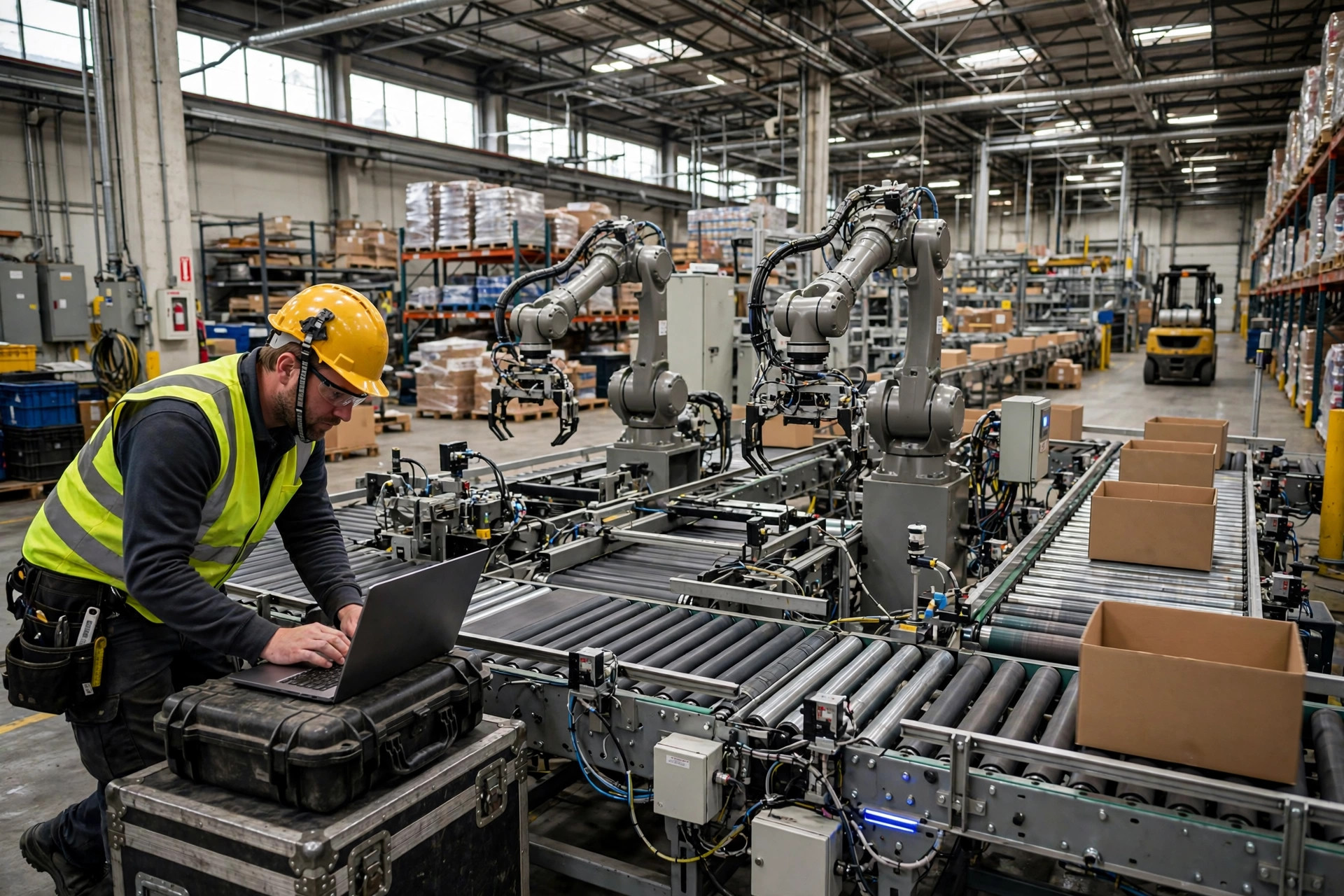
Here is the counterintuitive judgment: the most compliant route is often to carve "installation" out of the sales contract. Most makers' instinct is "nobody knows our equipment like our people — our people must install it." But from a compliance perspective, "who turns the wrench" and "who is responsible for the equipment" can be two different things. Contract architecture — localizing installation as a subcontracted service — matters an order of magnitude more than visa tactics. Put differently: this isn't a visa problem. It's a contract problem.
Trend: From Selling Equipment to Selling Localized Delivery
Based on that attribution, three trend judgments for the next three to five years, each with its basis:
First, leading makers will set up US subsidiaries and local service teams, using the L-1 channel. Basis: top players already began building US entities in 2024, and visa policy only tightens — early positioning is the rational move.
Second, small and mid-size makers will shift to the "remote plus local integrator" model. Inference: US integrators are about to see a wave of partnership demand from Chinese equipment makers, and local teams that understand Chinese equipment and can handle installation will become scarce — first movers lock in an advantage.
Third, the deeper trend: equipment export is shifting from "selling equipment" to "selling localized delivery capability." The visa is surface noise; the real barrier is the local service network. Five years from now, the exporters that survive won't win on equipment price — they'll win on whether someone can show up at the client's site at 2 a.m.
When "sending engineers abroad to install" changes from the default option to a high-risk one, does the business model of Chinese equipment export need rewriting? That question is left for every maker currently going abroad to answer for itself.
By Dr. Chen, Supply Chain Researcher