Let me put the bill up front, then explain the line items. All figures below are modeled on one mid-size warehouse: 8,000 m², 40 lithium-battery SKUs, roughly 200 pallets moving in and out per month, mostly fulfillment and transshipment for brands selling into Europe. With the EU Battery Regulation (Regulation (EU) 2023/1542, in force since 17 August 2023, replacing the old Batteries Directive), my estimate is that year-one compliance costs this warehouse an extra €25,000–€45,000.
Don't flinch at the number yet — and don't trust it blindly either. Read the breakdown first.
What the EU Battery Regulation actually asks of warehouses
One correction first: on paper, the regulation targets "producers" and whoever "places batteries on the EU market." A warehouse is not on that list. In practice, brands and importers protect themselves by pushing obligations down the chain through contracts. Those extra pages appended to your warehousing agreement are usually these five:
1. Supply-chain due diligence support. The regulation requires relevant companies to run battery supply-chain due diligence, focused on cobalt, lithium, nickel, and natural graphite. The warehouse's part: show where goods came from and where they went, keep batches traceable, keep the paperwork on file. Clause numbers and thresholds are still being refined — check the latest official EU text, not secondhand summaries.
2. Battery passport data. Starting February 2027 (per the latest official EU text), certain batteries placed on the EU market — LMT batteries, industrial batteries above 2 kWh, EV batteries — need a "battery passport," a digital cradle-to-grave record. The warehouse's job: scan in, scan out, keep the system matching the physical goods.
3. Carbon footprint data. Carbon footprint declarations for EV and industrial batteries are being phased in. Warehouses won't file much directly, but clients will come asking for your energy numbers: how much power, allocated per pallet. If your meters can't do sub-metering, you can't do this job.
4. Extended producer responsibility (EPR) support. Battery producers must register in each member state and fund collection and recycling. Warehouses don't register, but audits will check how you handle dead batteries: compliant recycler contracts, waste transfer notes in order.
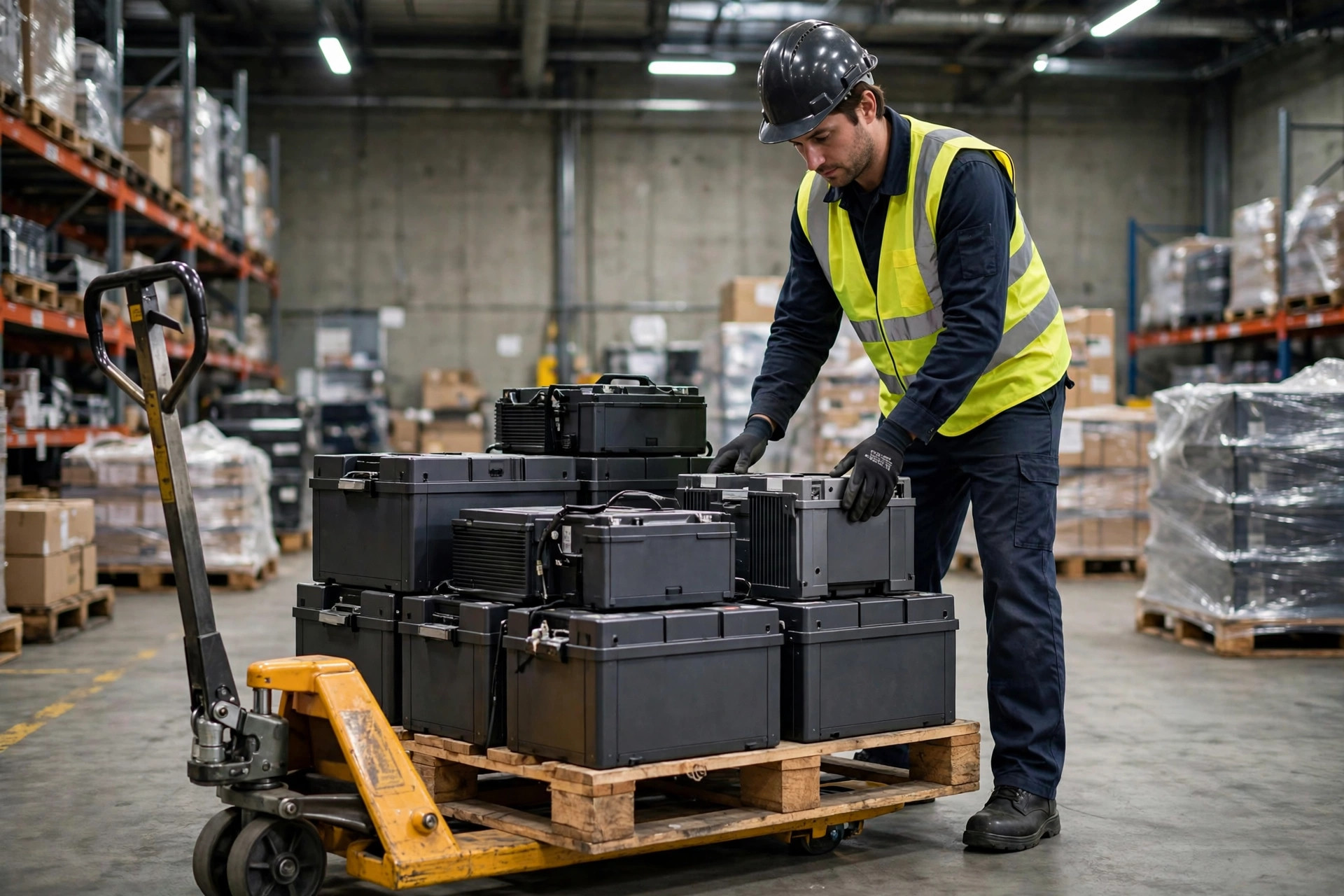
5. Storage safety upgrades. The most tangible one: lithium batteries are genuinely hazardous goods. Fire compartments, temperature and humidity monitoring, signage, emergency plans — fire inspectors and insurers both look at these. Skip it and your premium goes up first.
The money, line by line
Using the same modeled warehouse:
| Cost item | Type | Estimated range | Notes |
|---|---|---|---|
| Due diligence documentation (policy + SOPs + supplier files) | One-off | €6,000–€10,000 | That's the outside-consultant price; DIY runs €2,500–€4,000 but eats two months of staff time |
| Battery passport integration (WMS fields + scanning workflow) | One-off | €4,000–€8,000 | A "scan + spreadsheet ledger" interim version costs half |
| Labeling, zoning, fire upgrades (compartments, signage, monitoring) | One-off | €10,000–€19,000 | The big one — depends on what the building already has |
| Staff training (battery safety + drills) | Annual | €1,200–€2,500 | Every year; redo it whenever new people join |
| Annual upkeep (EPR filing agents, audit support, document updates) | Annual | €4,000–€6,500 | A local agent beats hiring in-house |
Total: €25,000–€45,000 in year one, then €5,000–€9,000 a year to maintain. Per SKU per month, at the €35,000 midpoint: €35,000 ÷ 40 SKUs ÷ 12 ≈ €73. Per pallet per month: €35,000 ÷ 12 ÷ 200 pallets ≈ €15.
Who pays? In practice it's a three-way split: the warehouse fronts it, passes part through as a "compliance surcharge" in the contract, and the brand absorbs part to protect its supply chain. Warehouses that can't negotiate eat the whole thing — which is why the next two stories matter.
Two stories: fines were never the expensive part
Story one: not a cent in fines, one client lost. In the second half of 2024, a 3PL near the Port of Rotterdam stored portable power stations for a consumer brand. The brand's annual supplier audit asked for battery due-diligence documentation and a battery-passport data plan. The warehouse had neither. The annual contract wasn't renewed — about €400,000 a year in business walked over to the warehouse next door that had its paperwork ready. At the post-mortem the owner said it plainly: we never paid a cent in fines in two years, but the one client we lost would cover ten years of fines.
Story two: compliance became a line item on the quote. A Shenzhen-based forwarder running its own warehouse for Europe lanes finished its fire compartments and battery-passport scanning in early 2025, then went back to two big clients at renewal: warehousing rates up €15 per pallet per month as a "battery compliance surcharge." The clients didn't push back — switching warehouses would cost them more in re-audits and re-documentation, plus shipment delays. Compliance moved from cost center to pricing leverage.
See the pattern? The regulation objectively raised the bar for lithium-battery warehousing: documentation, systems, fire safety — three gates that cost real money, and small fly-by-night warehouses are out. But those who clear the gates face fewer competitors and can charge a compliance premium with a straight face. That €25,000–€45,000 doesn't buy "not getting fined." It buys a seat at the table. Fines, by the way, are set by each member state — there is no EU-wide price list, and the amounts at the end of that road are modest. The expensive outcome was never the fine. It's failing the audit, losing the qualification, and watching the big client walk.
The verdict: one arithmetic problem
Four places to save first: don't build the documentation system from zero — big-brand clients already have supplier questionnaires and templates, ask for them and skip most of the consulting bill. Start the battery passport with a "scan + spreadsheet" interim version for a few thousand euros and upgrade before the 2027 deadline — installment payments, basically. When leasing, pick a building that already has fire compartments; retrofitting costs far more. And bundle training, consulting, and EPR filing across several warehouses — sharing cuts 30–40%.
Now the bottom line: €35,000 midpoint, roughly €15 per pallet per month. If that keeps one EU client worth €60,000+ in annual margin, the money is well spent — €15 per pallet-month buys uninterrupted supply and no forced warehouse switch. If you don't do EU lithium-battery business at all, don't spend a cent of it. That would be money down the drain.
One sentence: a compliance budget, calculated to the end, is never really about the regulation — it's about your customer mix. If your customers are in the EU, you spend. If they're not, every euro is wasted.
By Lao Zhou, Logistics Cost Analyst