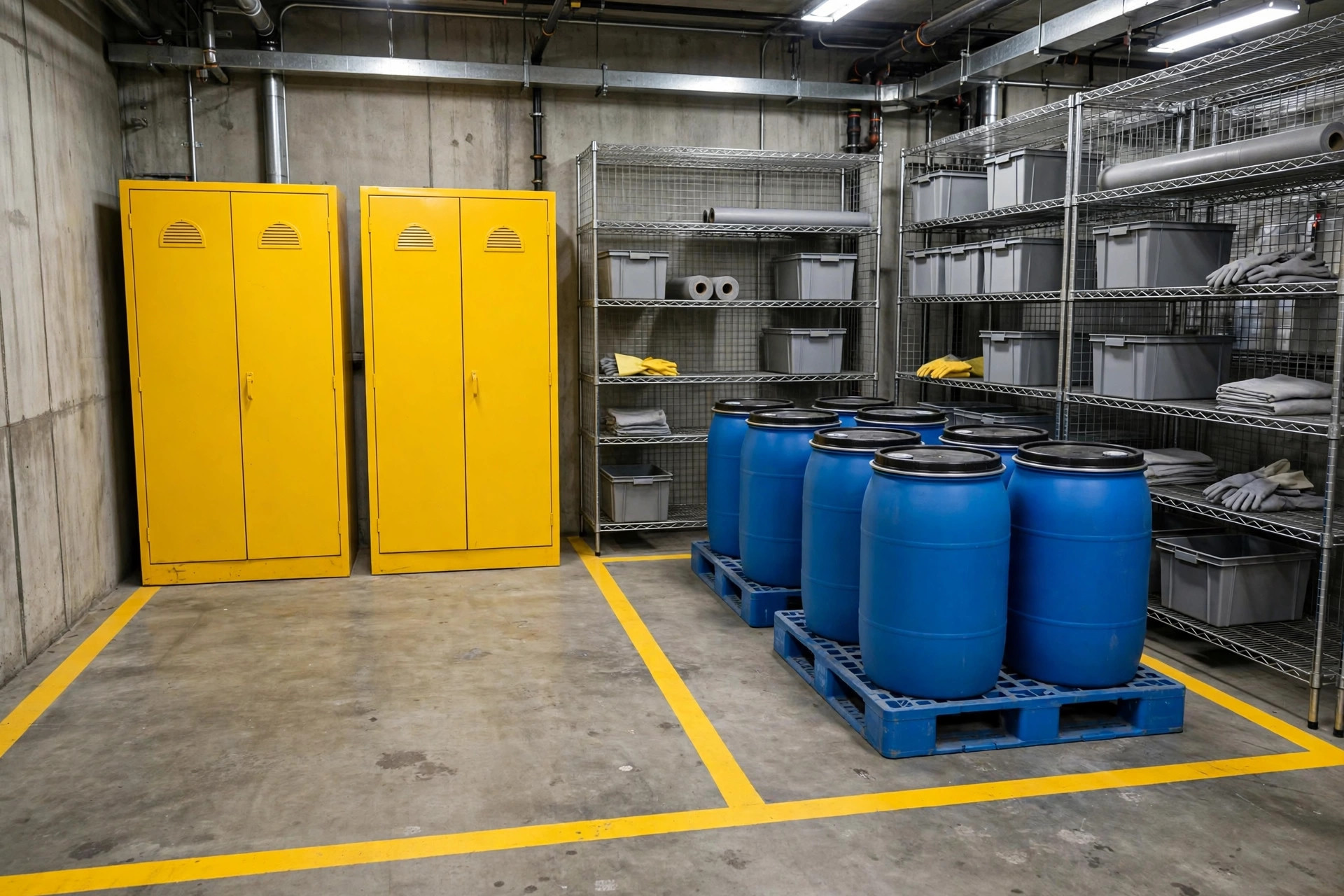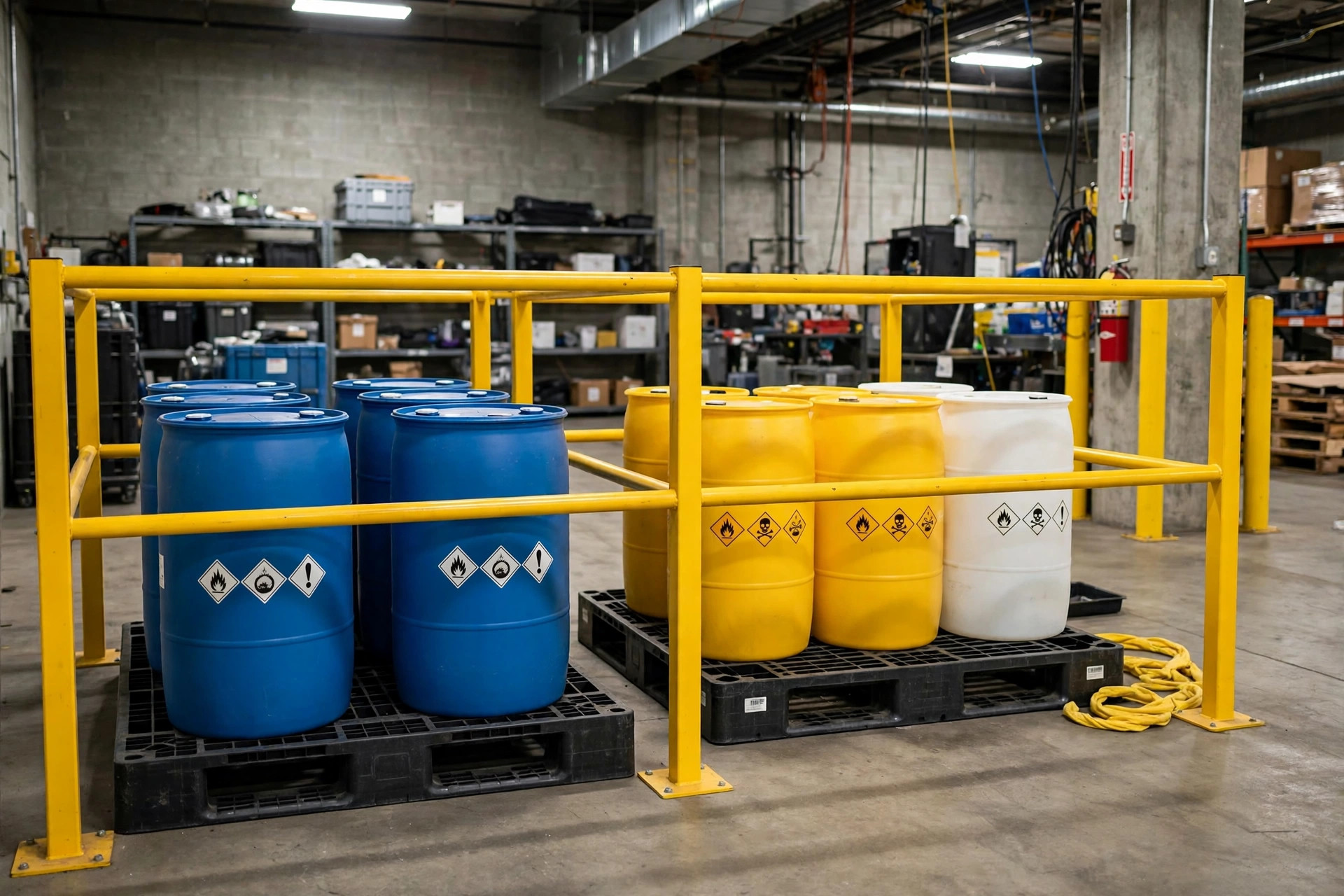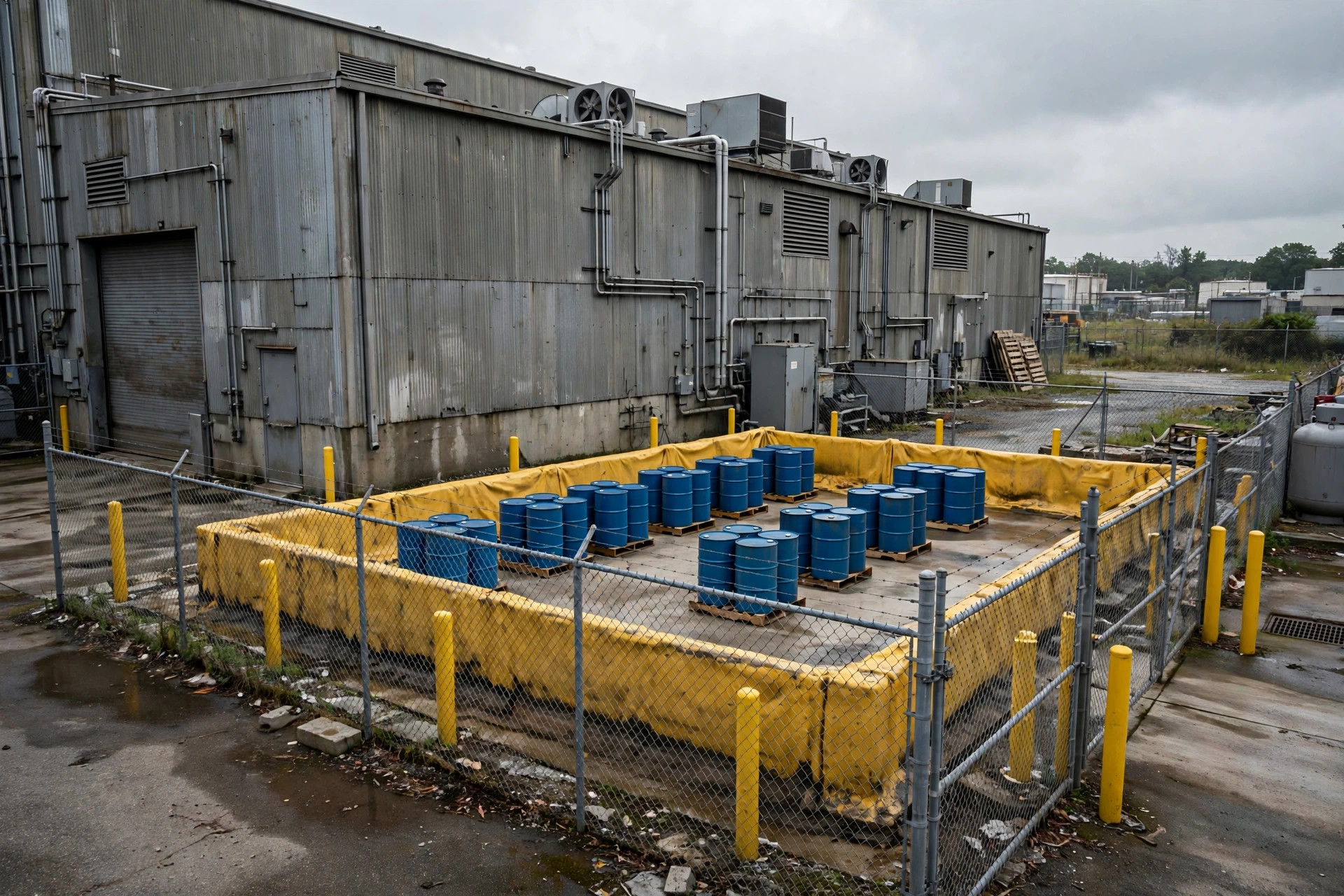
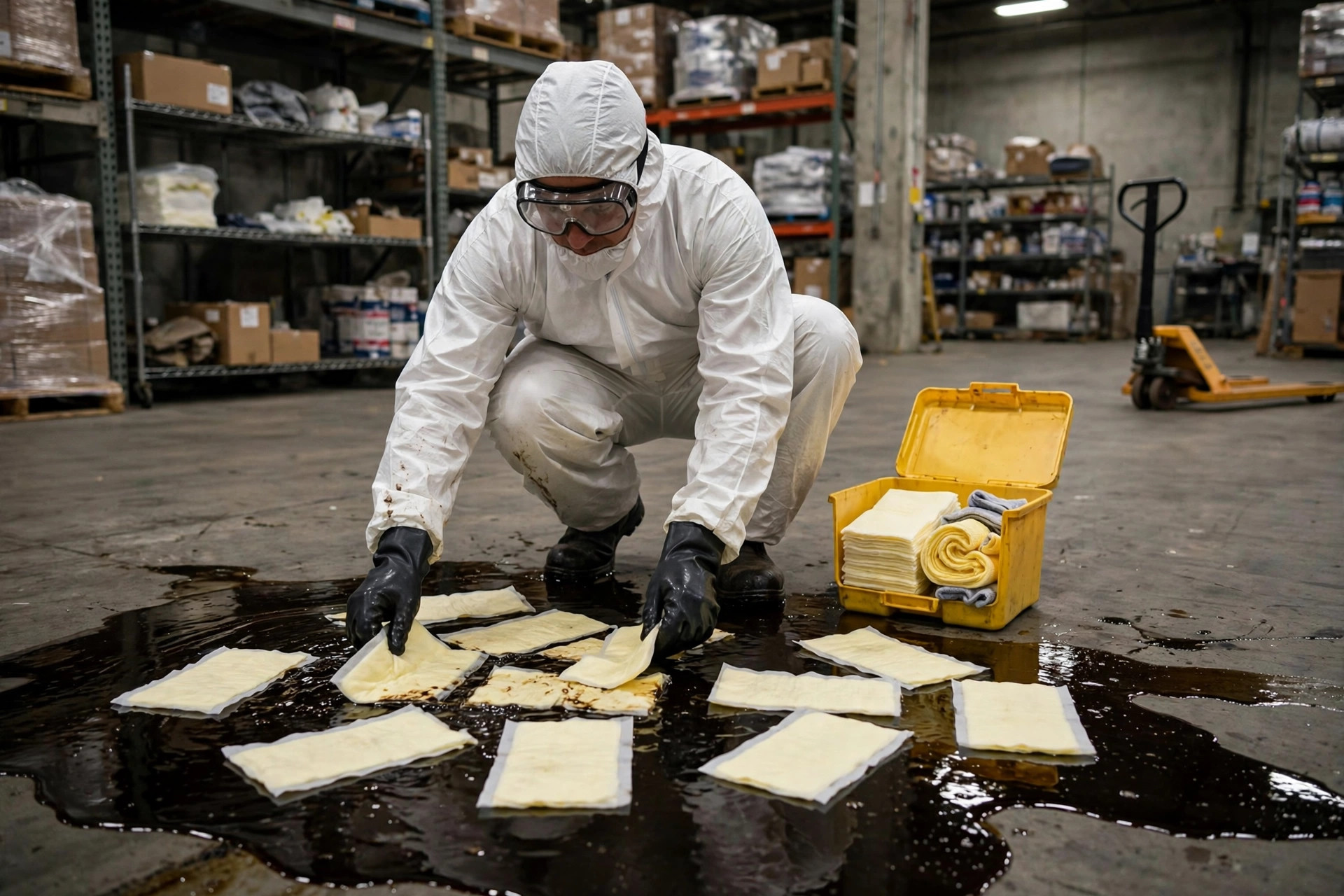
Let me start with the math. August 2024, a 40,000-square-foot 3PL warehouse in Houston, Texas: a forklift punctured a 55-gallon drum of hydraulic fluid, and the oil seeped through floor cracks into a storm drain. Eleven days of cleanup. The remediation contractor's invoice: $187,000. State environmental fine: $65,000. Four days of lost storage revenue on top. The owner later told me he had received a pollution liability insurance quote every year and thrown it away every year — $24,000 annual premium, "too expensive."
A $24,000 premium versus a $250,000 single incident. A child can do this math, yet plenty of warehouse operators still skip the coverage. Three misconceptions explain it. First, "we don't store hazmat, we don't need it." Second, "our general liability already covers it." Third, "the carrier will deny the claim anyway." The first one is the most expensive mistake.
On the first: pollution liability doesn't insure "hazmat warehouses." It insures the accidental release of pollutants. Hydraulic fluid, diesel, battery acid, refrigerants, even dry-chemical fire extinguisher powder — pull any three at random from your building and they are all on the policy's pollutant list. The EPA and state agencies care about the fact of a release into the environment, not your self-declared identity as a non-hazmat facility. In 2023, a California dry-goods warehouse had a rooftop AC refrigerant leak — refrigerants count as greenhouse gases — and spent over $90,000 on cleanup and compliance remediation. A dry-goods building. Never saw a drop of oil. Still got hit.
On the second: general liability often carries a limited pollution endorsement, typically $100,000 in limits with a high deductible, covering only sudden and accidental releases — not gradual seepage. And gradual seepage is the warehouse industry's most common pollution pattern: oil migrating underground for three years before anyone notices. When the claim lands, the GL endorsement usually isn't enough.
What Pollution Liability Covers — and Doesn't
| Item | Typically covered | Typically excluded |
|---|---|---|
| Sudden-spill cleanup | Third-party remediation invoices | Your own staff's overtime |
| Third-party injury/property | Downstream well contamination claims | Fines and penalties (excluded in most states) |
| Gradual seepage | With endorsement, ~15-25% premium uplift | Known pre-existing conditions |
| Legal defense | Attorney fees | Intentional illegal discharge |
| Business interruption | Not included — separate BI policy | — |
Read that table and you know where the negotiation happens. Brokers love pushing bundled high limits. The three real levers are:
First, the deductible. Moving it from $25,000 to $100,000 typically cuts the premium 30-40%. The warehouse logic: small spills are self-insured anyway (you already own spill kits and a response procedure); the policy exists for the kind you can't absorb. A deductible set too low is an expensive placebo.
Second, the gradual-pollution endorsement. Buy it. It is the best value on the entire policy — sudden spills you can see, gradual ones you can't, and invisible risk is exactly what insurance is for.
Third, the known-conditions exclusion. Commission a Phase I environmental assessment before binding (a few thousand dollars) to pin down the boundary of pre-existing contamination. Skip it and the carrier can deny with "this predates the policy" — and you'll have no evidence to fight back.
Is It Worth It: A Calculable Answer
The formula is simple: annual premium / (expected single-incident loss x annual probability). Use $150,000 as the expected loss (cleanup plus fines, conservative) and 3% annual probability for facilities storing oils or chemicals, 0.8% for pure dry goods.
For the chemical-storing warehouse: $24,000 / ($150,000 x 3%) = $24,000 / $4,500 = 5.3. Flip it and it looks bad — expected annual loss $4,500 against a $24,000 premium. Wrong framing. Insurance doesn't buy expected value; it buys tail risk. One $250,000 incident can kill a small operator's cash flow outright. The right question: can your cash reserves survive a surprise $250,000 hit? If not, $24,000 is cheap. If yes, then talk expected value.
Here's the counterintuitive judgment: the smaller the warehouse, the more it needs this policy. A big company has a legal department and a cash cushion — one incident is a line item. For a small warehouse it can be the end. Insurance is paying a little to buy "not dying," not paying a little to buy "a good deal." That sentence is worth $24,000.
Action list: (1) get two quotes from your broker — with and without the gradual-pollution endorsement — and look at the spread; (2) set the deductible at the maximum cash hit you can absorb, not the broker's default; (3) run a Phase I before binding to nail down the known-conditions boundary. Do those three and you've bought the policy properly.
By Lao Zhou, Logistics Cost Analyst