Insurers are the fastest hands in the business when it's time to collect your premium — and the toughest auditors alive when it's time for a warehouse insurance inspection. What they inspect isn't your goods. It's what you've spent protecting them — fall short on security requirements and a premium hike is the best-case outcome.
In 2024 I leased space in a 3PL warehouse in Ontario, California for consumer electronics accessories — about $2M in inventory value. Warehouse insurance ran me over $40K a year. Painful, but fine. Then the insurer sent an inspector with a checklist, and he went through it item by item. Three corrective actions on the spot: fix them or the premium goes up; bad enough and they walk away entirely. That day I finally got it. Here's the 7-item list, broken down the way I wish someone had broken it down for me. If you lease high-value warehouse space, save this.
Inspections usually come with one or two weeks' notice and take 2–3 hours. The inspector brings a camera and photographs everything. Don't try to cram — an expired sprinkler report is expired, no acting your way out of that.
Insurance Inspection Items 1–3: Fire — What Insurers Fear Most
1. Sprinklers. Always item number one. What do they check? Whether your sprinkler inspection report is current. That's exactly where we failed — ours had lapsed four months, and the inspector photographed it on the spot. NFPA 25 requires regular inspection, testing, and maintenance of water-based systems; check the latest NFPA edition and your insurer's requirements for exact intervals. For high-value goods (electronics, apparel), many insurers also want in-rack sprinklers — ceiling-only coverage doesn't cut it. System selection (ESFR vs. in-rack) follows NFPA 13 and your insurer's specs, not your gut.
2. Fire alarms. Whether detectors are installed matters less than where the signal goes. Is it monitored 24/7 by a central station? The seller next door had detectors installed — but they only sounded locally. A 2 a.m. fire and nobody would know. Instant corrective action. An alarm that isn't monitored is decoration.
3. Segregation. Is the high-value area physically separated? Is the lithium battery charging area isolated? This has been the strictest item since 2024. Insurers have paid out too many battery-fire claims — see a charging cabinet sitting next to regular racking and the inspector's pen stops moving. We moved charging into a dedicated room with a fire door and standalone smoke detection. Only then did the item pass. The retrofit cost about $8K, and the landlord covered half — how I negotiated that, below.
Insurance Inspection Items 4–7: Security Against People
4. Access control. Dock doors, personnel entrances — is there an access log? The inspector asked: who can enter after hours, and is it recorded? Our 3PL started with "just one guy on night duty." The inspector asked for the duty roster and entry logs. The 3PL went to print them on the spot. Every question you can't answer becomes a corrective action.
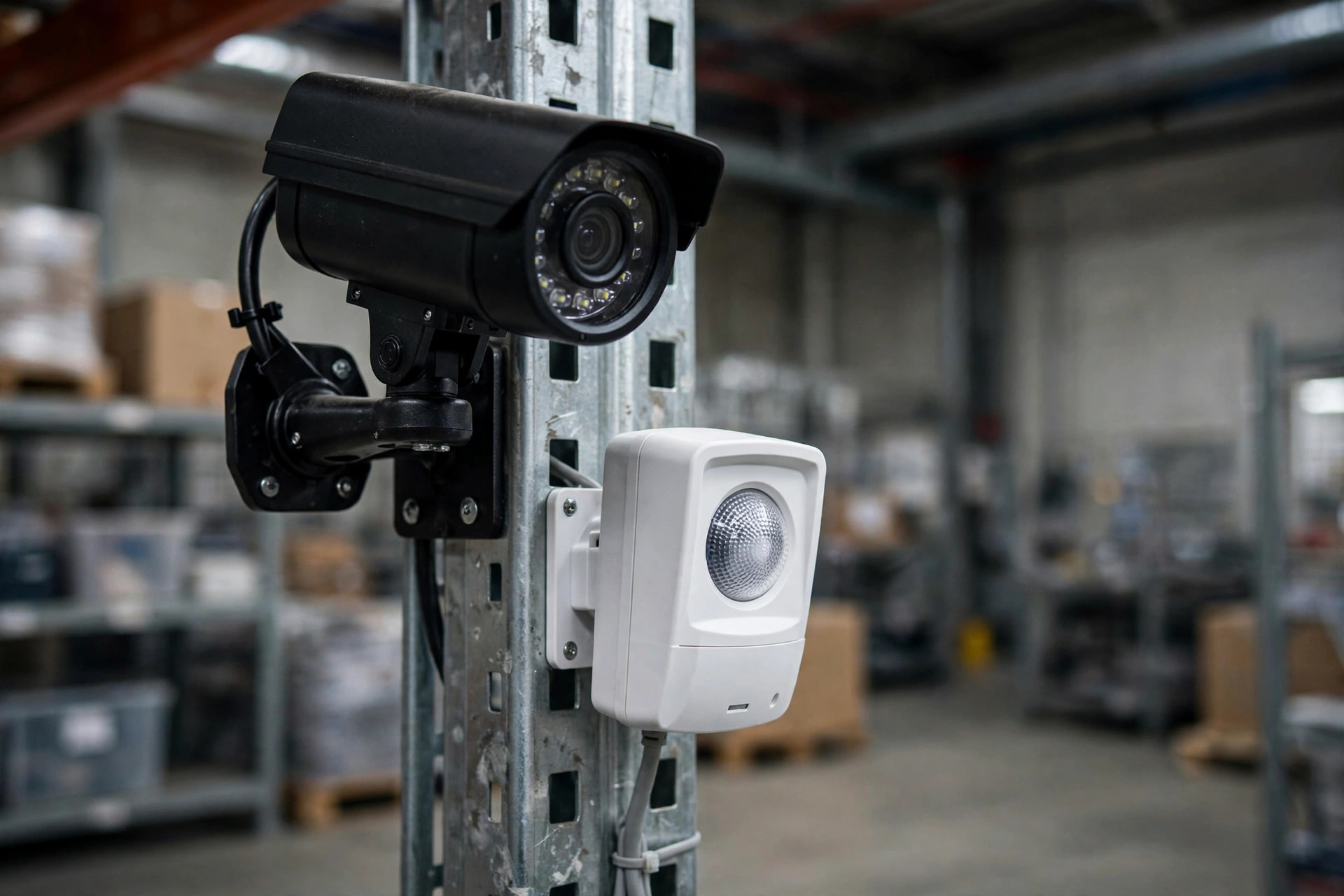
5. CCTV. Coverage plus retention. Full coverage of racking areas, docks, and entrances is table stakes; retention is where it gets negotiated. Insurers generally want 30 days minimum; high-value operations get asked for 60 or even 90 — check your policy wording. We had 30 days. The inspector said "60 recommended" — not mandatory, but I read between the lines: when something happens, 30 days of footage won't survive the claims argument. We bumped it to 60 days; the extra hard drives cost a few hundred bucks. Money well spent.
6. Guards and patrols. Staffed 24/7, night patrols, or alarm-only? This one moves the premium directly. Alarm-only with no human presence costs more. We settled on the 3PL's night patrol plus monitored alarms — meaningfully cheaper than the equipment-only option. Never underestimate the word "staffed." To an insurer, a person is the most expensive security device and the most effective one.
7. Emergency plan. Is there a written plan? Evacuation routes, emergency contacts, drill records. Inspectors genuinely ask "when was your last drill" — blank stares get written up. Our 3PL's site manager pulled out the drill sign-in sheet on the spot. Passed. Nobody reads this document on a normal day; when something happens, it's everything.
Which Failures Raise Your Warehouse Insurance Premium — and Which Get You Declined
Blunt truth: sprinklers and alarms are red lines. Hard failures there and the insurer can decline you outright — or quote a number you can't accept. Access control, CCTV, and guards are negotiable: fall short and the premium climbs; meet the bar and you can bargain it down. Segregation and the emergency plan are impression points — invisible day to day, but they're your entire evidence package when a claim gets disputed.
Numbers from my own renewal: before remediation, the renewal quote came in nearly 30% above the prior year. After we fixed the sprinkler inspection, isolated the charging area, and bumped footage retention to 60 days, we negotiated the increase down to under 10%. The swing was close to $10K. That's the ROI of security spending in one number — spend a little over $8K on remediation, save nearly $10K on premium, and sleep better.
Splitting Security Costs with Your Landlord or 3PL: My Actual Playbook
Who pays for security upgrades? The most painful question for any tenant. My rule, in three layers:
Layer one: building stuff = landlord pays. Sprinkler systems, fire separations, building alarms — that's the building. Before signing the lease, attach the insurer's inspection checklist as a lease exhibit stating the landlord is responsible for compliance. That clause got our landlord to cover half the charging-room retrofit — $4K. He pushed back at first; my one line was: whoever you lease this building to next for high-value storage will face the same inspection. Fix it now or fix it for the next tenant.
Layer two: operations stuff = you or your 3PL pays. Access control, CCTV, patrols, emergency plans — that's operations, the tenant's bill. Put it in the 3PL service contract in writing, not as a verbal promise.
Layer three: deadlock = convert to rent. If the landlord won't fund a retrofit, negotiate rent concessions and fund it yourself. Do the math across the lease term: our $8K retrofit spread over a 3-year lease is under $2,700 a year — cheaper than a 10% premium hike (over $4K a year). If the amortized cost beats the premium increase, do it.
One warning from experience: before signing anything, have your broker get the insurer's inspection checklist in advance and walk through it with the landlord and 3PL together. Don't discover an expired sprinkler report on inspection day — every dollar of remediation then is rush pricing. An $8K job in the off-season becomes a $12K quote in peak season.
This one I've personally tested and it works: walk the checklist yourself before the inspector arrives. Fix what needs fixing. Inspectors are human — the better prepared you are, the lighter their pen gets with corrective actions. Our second inspection passed all 7 items on the first try, and the inspector complimented the operation on his way out. In the next premium negotiation, that sentence was worth its weight in gold.
By Ah K, E-commerce Seller (5 yrs)