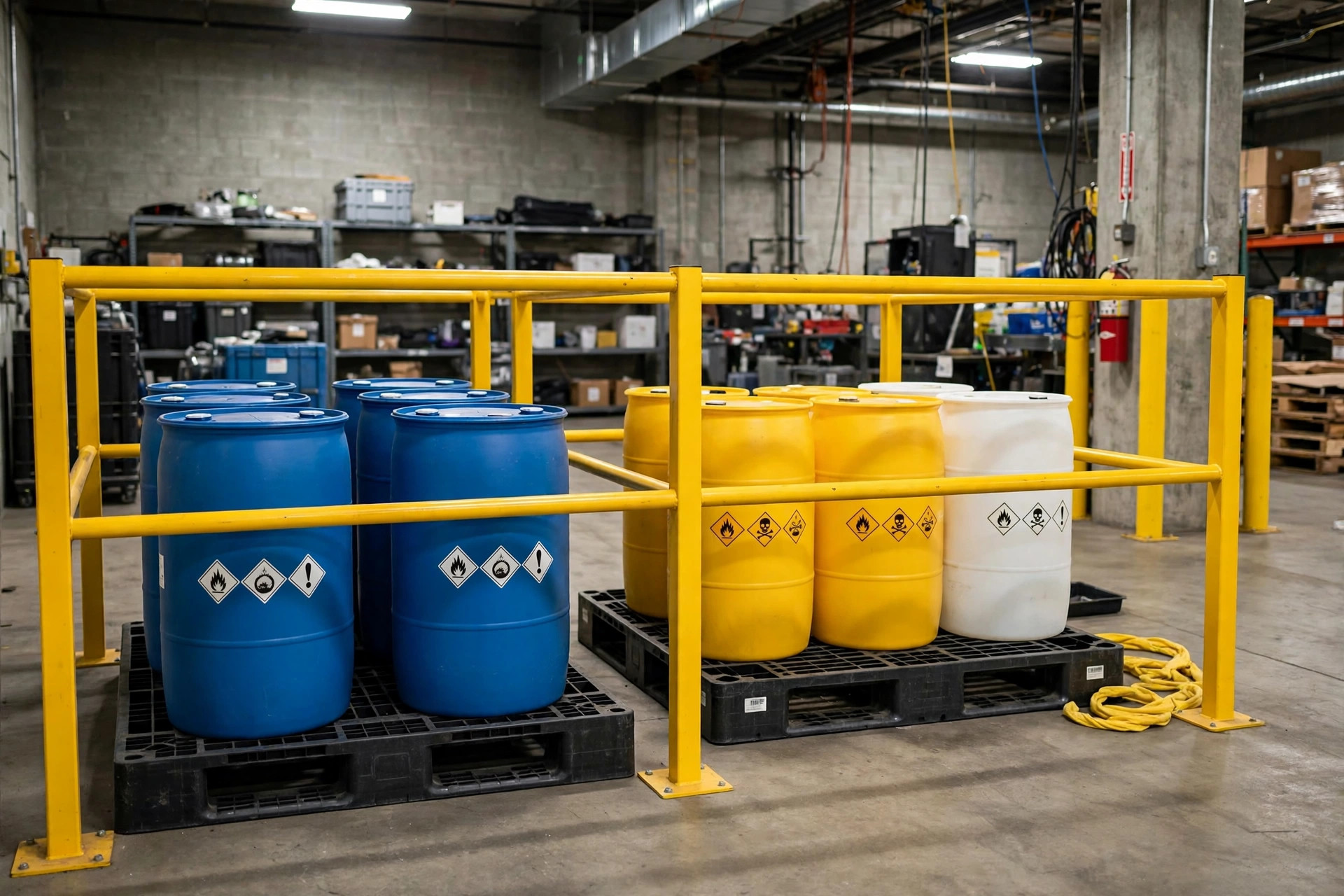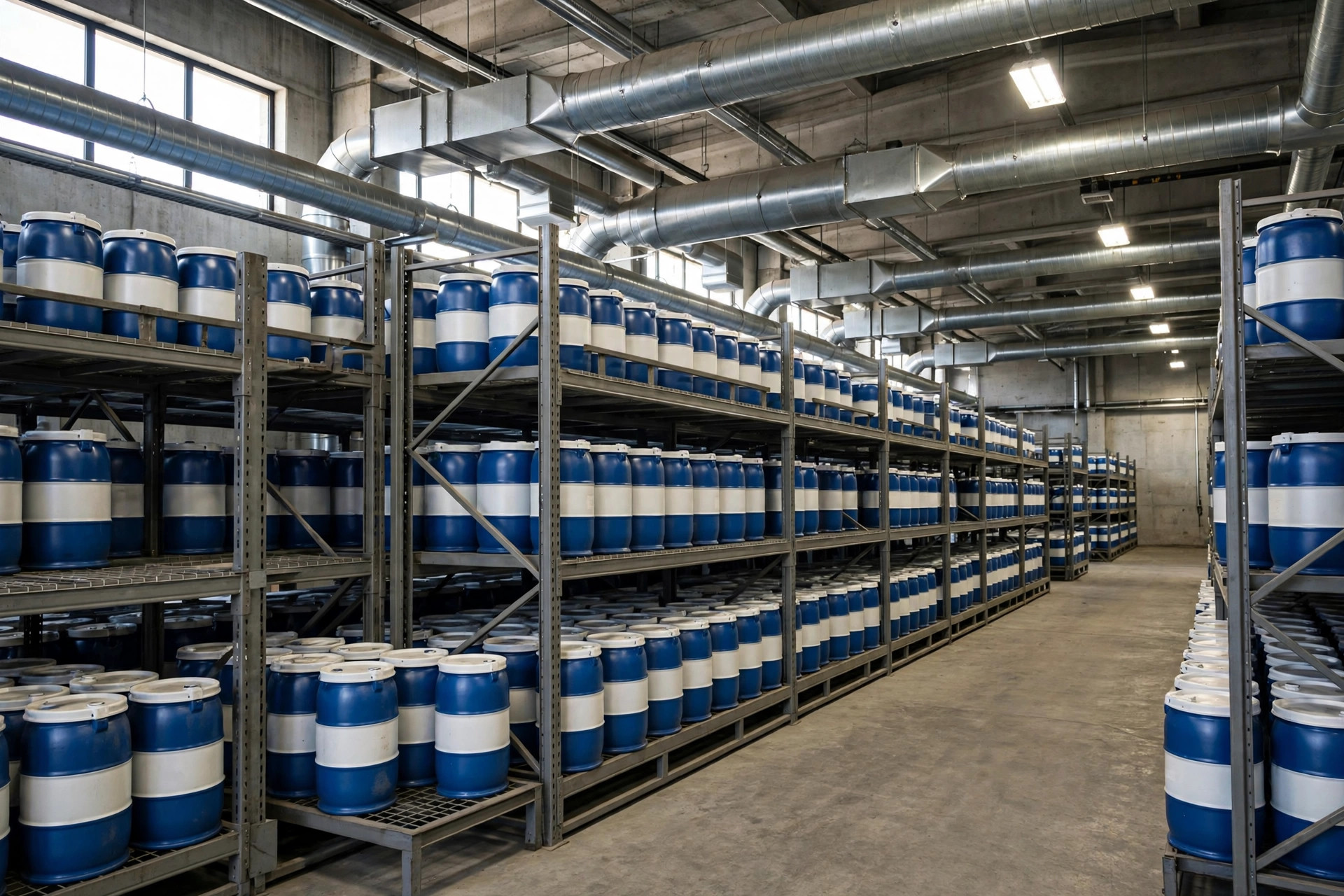
Getting oxidizer storage warehouse practices right is something our little 3,000-square-meter operation learned the scary way. In March 2025, a pool-supply customer dropped off two pallets of bleaching powder — about a ton of calcium hypochlorite — and our forklift driver casually stacked them less than two meters from a mountain of cardboard boxes. "They're all just drums, saves space this way." If I hadn't spotted the Class 5.1 diamond on the label during my rounds, that ton of oxidizer would have moved in next door to several thousand cardboard boxes. A warehouse our size cannot afford that kind of fire.
Oxidizer Storage 101: It Doesn't Burn — It Makes Everything Else Burn Harder
Here's the thing most small-warehouse folks get wrong: oxidizers (Class 5.1 — bleaching powder, nitrates, that family) don't burn by themselves. Instead, they release oxygen and make every combustible around them burn faster, hotter, and meaner. Contaminate some of them with oil, paper dust, or wood shavings, and they can even kick off a reaction on their own. This is a completely different animal from the old "keep acids and bases apart" rule — mix acid and base and you get corrosion and leaks; park an oxidizer next to combustibles and you've hired an accelerant for your next fire.
In our case, calcium hypochlorite sat beside cardboard. Cardboard is just pre-dried fuel. Had anything ignited, the oxidizer would have poured oxygen on it while the firefighters watched. And this isn't hypothetical: in April 2013, a fertilizer facility in West, Texas stored ammonium nitrate — also an oxidizer — alongside combustible material. The resulting explosion killed 15 people and injured more than 200. A whole town nearly wiped out, because "storing them together saves space."
Big companies have EHS teams babysitting this stuff around the clock. We don't — but that's no excuse to gamble. The fire code approach (NFPA 400 covers this) boils down to one plain sentence: between an oxidizer and any combustible, you need either distance, a fire barrier, or a dedicated safety cabinet — never let them touch combustible surfaces. The exact clauses get updated, so check the current NFPA edition for the letter of the law, but the "no bad neighbors" principle isn't changing.
One more thing — don't confuse this with the old "keep acids and bases apart" rule. Our warehouse made exactly that mistake at first. A buddy in e-commerce asked me: "Oxidizers — same deal as acids and bases, just store them separately, right?" And I said, sure, separate is separate. Turns out, totally different logic: you separate acids and bases to prevent corrosion, leaks, and fumes; you isolate oxidizers to stop them from feeding oxygen to a fire. Mix acid and base and you're mopping up liquid; mix oxidizer with cardboard and you're sweeping up ash. When we reviewed everything in April 2025, we redrew the hazmat map on our wall: the acid-base area is one thing, the oxidizer zone is another, different label colors and all. Sounds trivial — but it's the first thing an inspector looks at: do you actually understand the difference?
Segregating Oxidizers on a Small-Warehouse Budget
The corporate playbook — detached hazmat building, sprinklers everywhere, gas monitoring — is not for us, and frankly we can't burn that kind of money. Our down-and-dirty method took four steps:
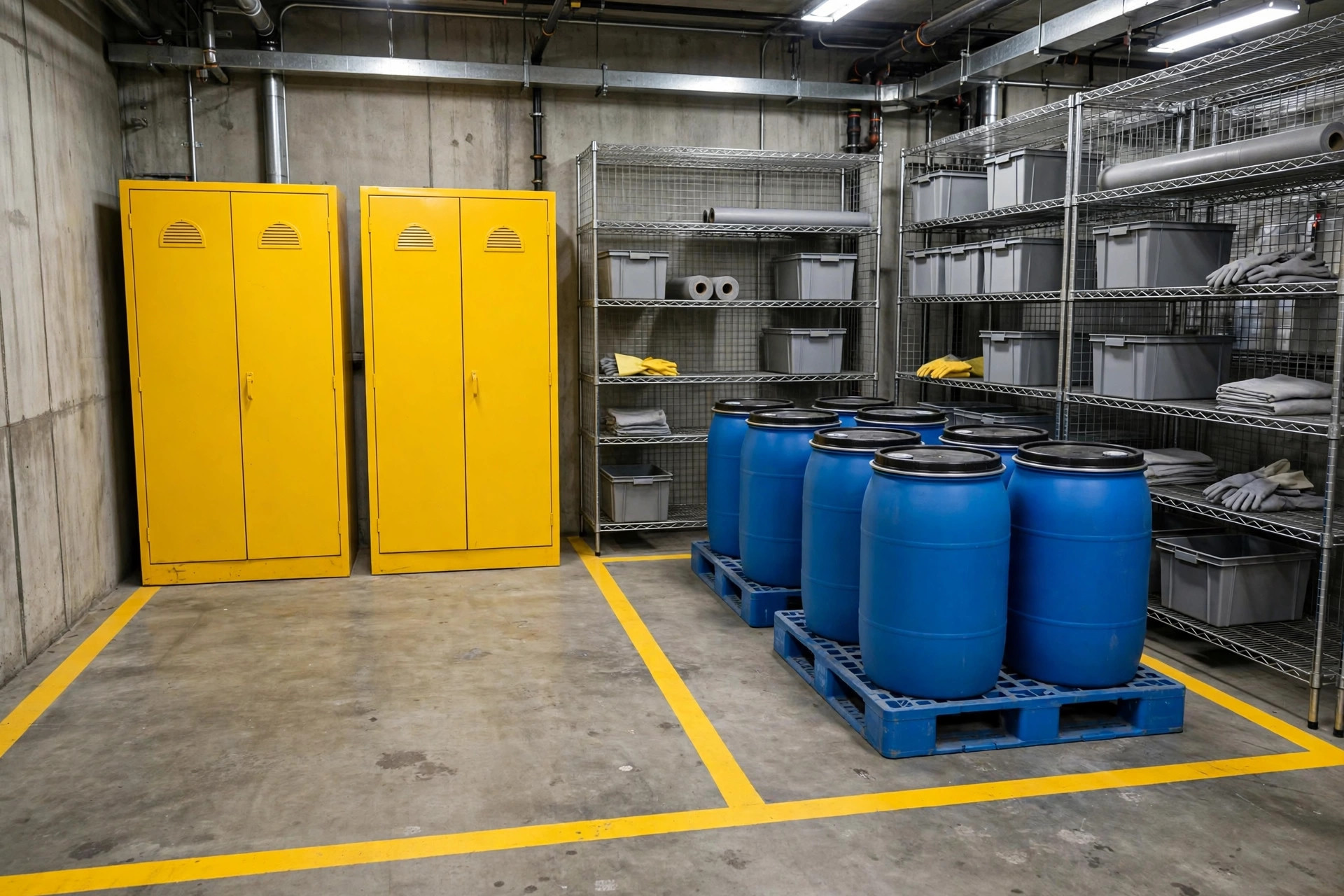
Step one: draw the line. Using existing columns and a corner of the building, we carved out a dedicated oxidizer zone, painted yellow floor lines, and hung a $15 sign that reads "Oxidizer Zone — No Combustibles." Our house rule: the zone's edge stays at least 6 meters from any cardboard, wooden pallet, or plastic wrap. That's our own standard, deliberately generous.
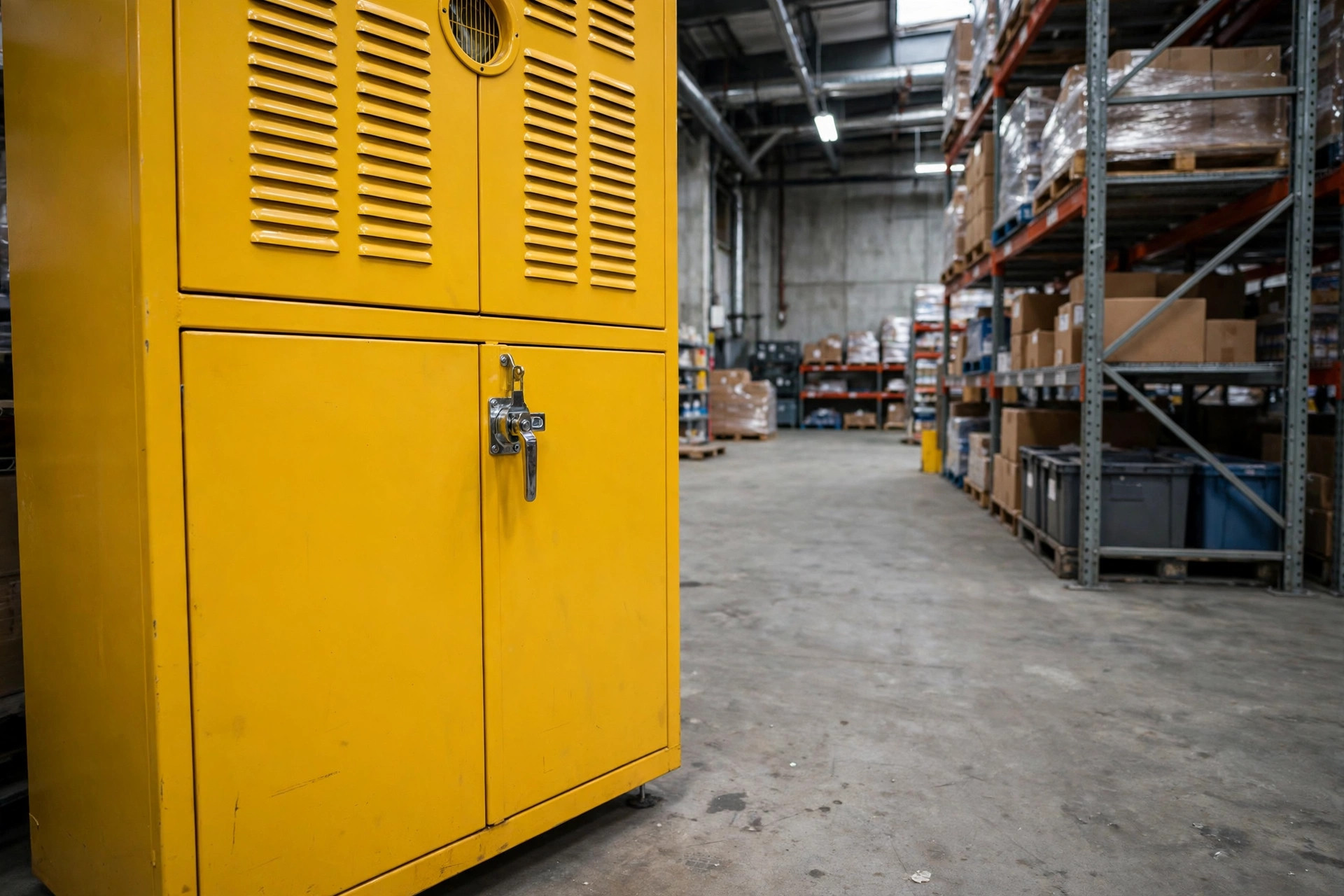
Step two: cabinet the small stuff. Samples and small packages of oxidizers all go into yellow hazmat safety cabinets. A used cabinet runs $300–$800 — half the price of new, same function.
Step three: evict the wood. No wooden pallets, no wooden racking inside the oxidizer zone — wood is itself a combustible, which is like inviting the bad neighbor to move in. We picked up a few used steel racks for a few hundred dollars, and hung secondhand fire-rated boards between the oxidizer zone and general storage.
Step four: read the label at receiving. Our receiving SOP got one new line: see the 5.1 diamond, start the oxidizer routine — no matter how small the quantity. The whole crew got a ten-minute training with exactly one takeaway: "If this drum meets oil or paper dust, we're in big trouble." We also invited the local fire marshal for a walkthrough — free expert advice, and now they know what's in our building, which speeds up response if anything ever happens.
All four steps took one weekend. The yellow line paint came from a home improvement store — two gallons. The cabinet was a secondhand find on a local marketplace, sold by an auto repair shop owner closing down: nine-tenths new, $500, done deal. The steel racks came from a used warehouse equipment dealer nearby. The fire marshal threw in one extra tip for free: keep a bucket of dry sand at the zone entrance — if anything spills, cover it with sand first; don't hose it down, and definitely don't sweep it toward the paper stacks. That tip cost nothing, and we genuinely didn't know it.
The Math: $1,000–$2,000 for Segregation vs. a Five-Figure Fine
| What we did | What it cost |
|---|---|
| Yellow floor lines + signage | About $50 |
| Used yellow safety cabinet | $300–$800 |
| Secondhand fire-rated partition boards | $200–$500 |
| Steel racks replacing wood pallets in the zone | A few hundred dollars |
| Ten-minute crew training | Half a day of labor |
| Total | $1,000–$2,000 |
Now the other side of the ledger: a single serious OSHA citation runs well into five figures (amounts adjust yearly — check OSHA's current penalty schedule). An actual fire means the building's gone, insurance doubles, and customers walk. Worst case, look at West, Texas — lives lost. One or two grand for peace of mind is arithmetic even a kid can do.
There's also a hidden line item: insurance. When we renewed, we mentioned to our broker that oxidizers were now in a dedicated zone with a safety cabinet, and the premium didn't budge — his exact words were "if you were mixing them, underwriting wouldn't clear you." And the pool-supply customer? Once they saw we had a proper oxidizer zone, they trusted us more, and added three more SKUs at renewal. Small warehouses don't land hazmat accounts easily — land one, run it right, and it becomes your moat.
The Counterintuitive Part: Small Quantity Does Not Mean Small Risk
Plenty of people — past me included — think: "It's just two pallets, what could happen?" Wrong. Oxidizer risk doesn't scale with quantity. Two pallets of bleaching powder contaminated with motor oil or paper dust can burn hot enough to take half the warehouse with them. Meanwhile the cost of segregation barely depends on quantity at all: whether you store 2 pallets or 20, the zone, the cabinet, and the steel racks cost the same. So "small quantity" is exactly when a small warehouse should act — lowest cost, undiminished risk.
Some folks ask: why not just refuse oxidizer business altogether? We ran those numbers too. That pool-supply customer ships 200+ orders a year with us, and the margin covers more than a month of our rent. Turning away a steady customer to save a thousand or two on compliance? That's losing math. Compliance isn't a cost — it's the ticket to the business. Small warehouses don't get many tickets to begin with; we can't afford to throw them away.
Five Tips for Fellow Small-Warehouse Owners
- Learn the label first. The 5.1 diamond means oxidizer — trigger the segregation routine regardless of quantity.
- Zone it off. Paint the lines, hang the sign, keep combustibles at a distance. Farther beats closer, every time.
- De-wood the zone. Wooden pallets, cardboard, plastic film — none of it enters the oxidizer area.
- Call the fire marshal. A walkthrough is free professional advice. Use it.
- Write it into the SOP. Receiving, floor rounds, training — don't let it live only in the owner's head.
Big companies run on systems; small warehouses run on self-discipline. Oxidizer storage doesn't take big money — it takes attention. Yellow lines, a cabinet, steel racks, ten minutes of training: about one or two thousand dollars, in exchange for sleeping well at night. Small warehouses have their own way of surviving.
By Xiao Ma, Small Warehouse Owner