Before pricing warehouse equipment insurance, do the forklift math first. A 5,000-lb electric counterbalance truck costs about $25,000 new — but that's only the first invoice. Run it 2,500 hours a year on two shifts: electricity runs $1,500–$2,000 a year, scheduled maintenance about $500. Switch to diesel and fuel alone costs $12,000–$15,000 a year, with maintenance starting at $1,500; propane sits in between at roughly $10,000–$12,500 in fuel. Those are published industry ownership-cost figures (dealer quotes vary) — and none of them include repairs, the murkiest line in the whole warehouse equipment insurance cost equation.
Where Forklift Repair Costs Actually Go
Break one electric truck's annual cost open before you decide anything:
| Cost line | USD / year | Notes |
|---|---|---|
| Energy | 1,500–2,000 | Two shifts; halve it for one |
| Planned maintenance | ~500 | Filters, fluids, safety checks |
| Wear parts (tires, chains, forks) | 1,000–2,000 | Rule of thumb; depends on duty cycle |
| Accidental damage repairs | 0–10,000+ | Collisions, drops, water — the volatile one |
| Downtime | Hard to quantify, usually the most expensive | One truck down slows the whole line |
The first three lines are predictable and budgetable. The last two are what wake finance up at night.
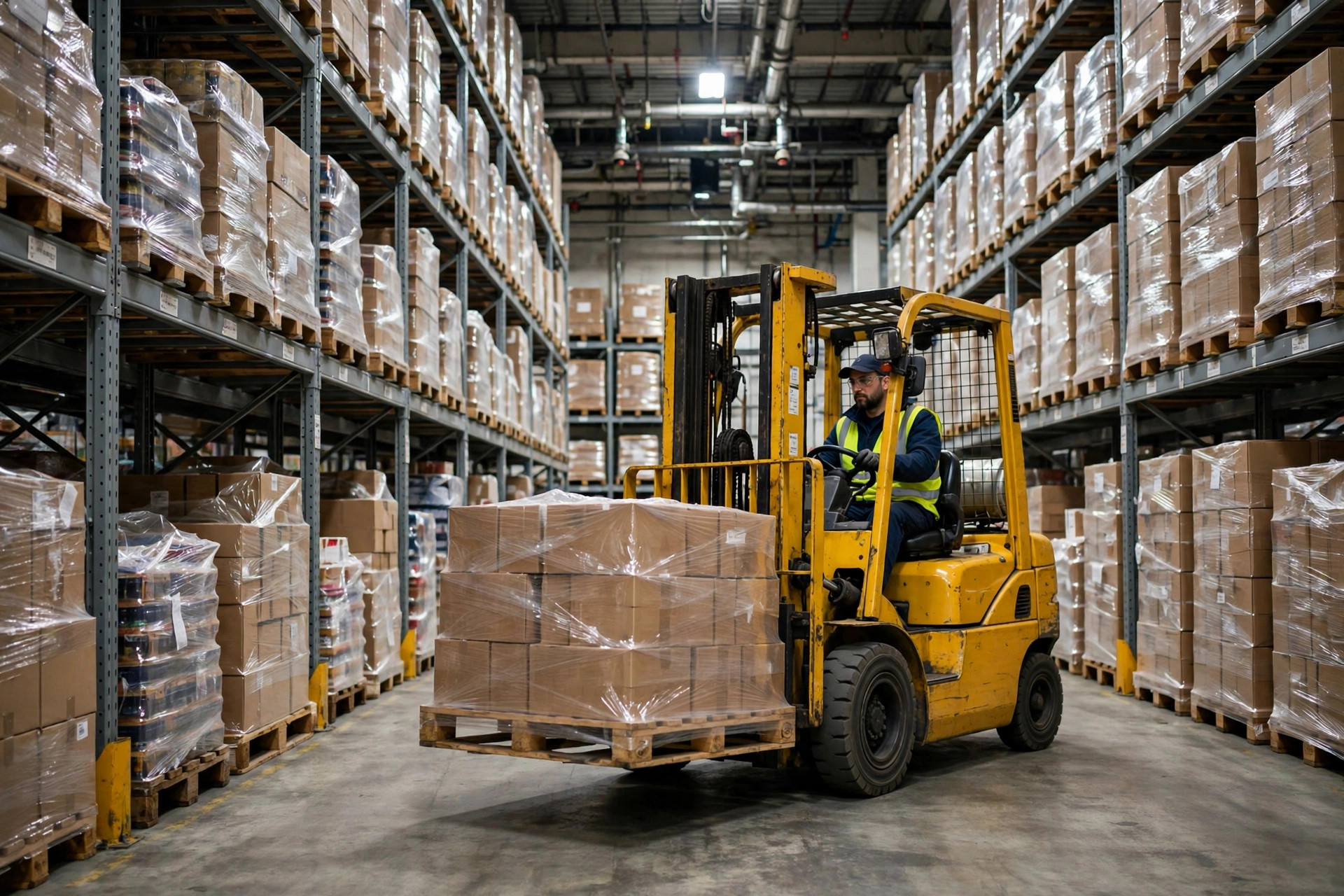
Last fall, a 3PL warehouse near Ontario, California, running eight electric forklifts: a rookie on night shift backed the mast into a rack upright. Bent mast, stretched chains. The repair quote: $8,000, and the truck sat in the shop for 11 days. Receiving unloaded six fewer pallets a day during those 11 days — nobody booked the downtime, but finance noticed overtime up by more than $3,000 that month. $8,000 was the number on the invoice. The real number was never calculated.
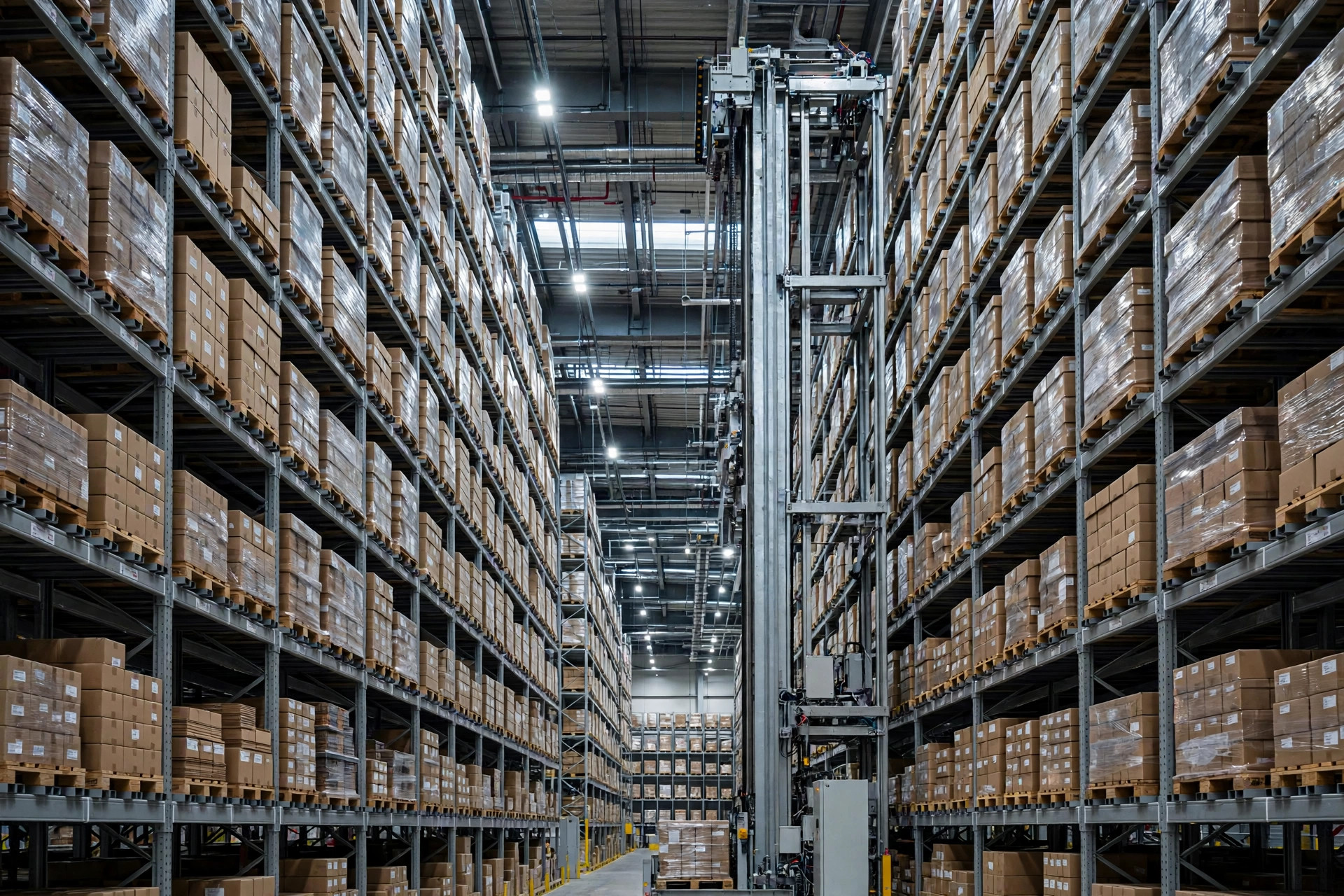
Same building, an aisle stacker crane in the ASRS: burned-out motor. The manufacturer's service contract had lapsed two months earlier. Replacement plus commissioning: $28,000, six-week lead time. Six weeks of manual picking in that aisle at 40% lower throughput. The owner told me later: "Should have renewed the service contract. Consider the $28,000 tuition."
Note the difference between the two cases: the forklift was an accident; the crane motor was a failure. Warehouse equipment insurance treats those two events completely differently — and that distinction is where most buyers go wrong.
What Warehouse Equipment Insurance Really Covers: Exclusions First
Warehouse equipment is typically insured under inland marine or contractor's equipment policies. What do they cover? Theft, vandalism, collision, overturn, fire and flood — the accidents. What don't they cover? Wear and tear, aging, mechanical breakdown, routine maintenance. The policy language is blunt: if equipment breaks down because it's old, insurance won't help; maintenance is your responsibility.
In plain terms: everything you spend each year on tires, chains, brake pads, batteries, and hydraulic seals — the largest and most predictable slice of repair cost — is not covered by a single cent. Insurance pays for the low-probability, high-severity slice: crashed, stolen, burned.
What does it cost? The industry rule of thumb is about 1% of insured value per year (one North American equipment broker publishes roughly $100/year per $10,000 of coverage; average U.S. inland marine business policies run about $2,500/year, though those usually bundle cargo). A $25,000 forklift insured for $25,000 costs roughly $250–$400 a year. Deductibles commonly run $500–$5,000 — higher deductible, lower premium.
The Math: Expected Loss vs. Premium
Whether insurance is worth it comes down to one comparison: expected loss against premium.
Expected annual payout ≈ average annual accident loss − deductible
Back to that 3PL: eight trucks, two accident-grade repairs in three years ($8,000 and $4,500) — average annual accident loss about $4,200. Eight trucks insured for $200,000 total, premium roughly $2,000–$3,000/year, $2,500 deductible. Expected payout ≈ $4,200 − $2,500 = $1,700 — below the premium. Verdict: for this fleet, equipment insurance loses money on pure math. Self-insure and spend the difference on prevention.
Change the fleet and the verdict flips: 20 trucks, high operator turnover, five collisions a year, $20,000 in average annual accident losses, $5,000 premium, $5,000 deductible — expected payout $15,000, far above premium. That money is well spent.
There is no universal answer to "is it worth it" — only a calculator. Here's a workable decision line:
| Your situation | Recommendation |
|---|---|
| Avg. annual accident loss < 0.7 × premium | Self-insure; skip it |
| Between 0.7× and 1.3× premium | Raise the deductible, buy the cheapest tier |
| Avg. annual accident loss > 1.3 × premium | Buy it, full limits |
One caveat: use at least three years of loss history. One collision a year and one every three years are completely different animals. Be allergic to "I feel our fleet is fine" — pull the repair invoices and let the numbers talk.
Four Levers That Actually Save Money
Here's the real trap with equipment insurance: it's not overpaying, it's misbuying — expecting insurance to cover repair costs. The levers that actually move the number:
First, do the $500 planned maintenance properly. That annual $500 on an electric truck prevents most five-figure surprises. One warehouse switched from "fix it when it breaks" to service every 250 hours and cut accidental repair spending by 40% the next year. A complete service history also adds 10–15% to resale value.
Second, train the operators. Human factors dominate forklift incidents; eight hours of onboarding training costs a fraction of one minor collision. It's the cheapest "insurance" no carrier sells — and it outperforms the policy.
Third, small fleets should lease with full maintenance included. Many lease programs bundle maintenance into the monthly payment, transferring repair volatility to the lessor. Under five trucks, keeping your own mechanic rarely pencils out.
Fourth, buy equipment breakdown coverage separately for mechanical failure. Standard equipment policies don't cover a burned-out motor or a fried controller — "it broke by itself" needs the equipment breakdown endorsement. For ASRS cranes and conveyors, where one failure runs into the tens of thousands, that endorsement deserves more negotiating time than the base policy. Get two quotes from a broker — with and without breakdown — and check current rates on the carrier's site.
The counterintuitive part, stated up front: the most expensive truck to maintain in a warehouse is rarely the oldest one — it's the one on the line with the roughest operators. Insurance doesn't cover "driven hard." Training does.
The Calculable Conclusion
Grab a calculator: total your fleet's accidental repair invoices over three years, divide by three, subtract the deductible you can stomach. That's your expected annual payout. Above the premium — buy. Below — self-insure. Can't do the math? Start by organizing the invoices. Without books, any insurance purchase is a gamble.
By Lao Zhou, Logistics Cost Analyst