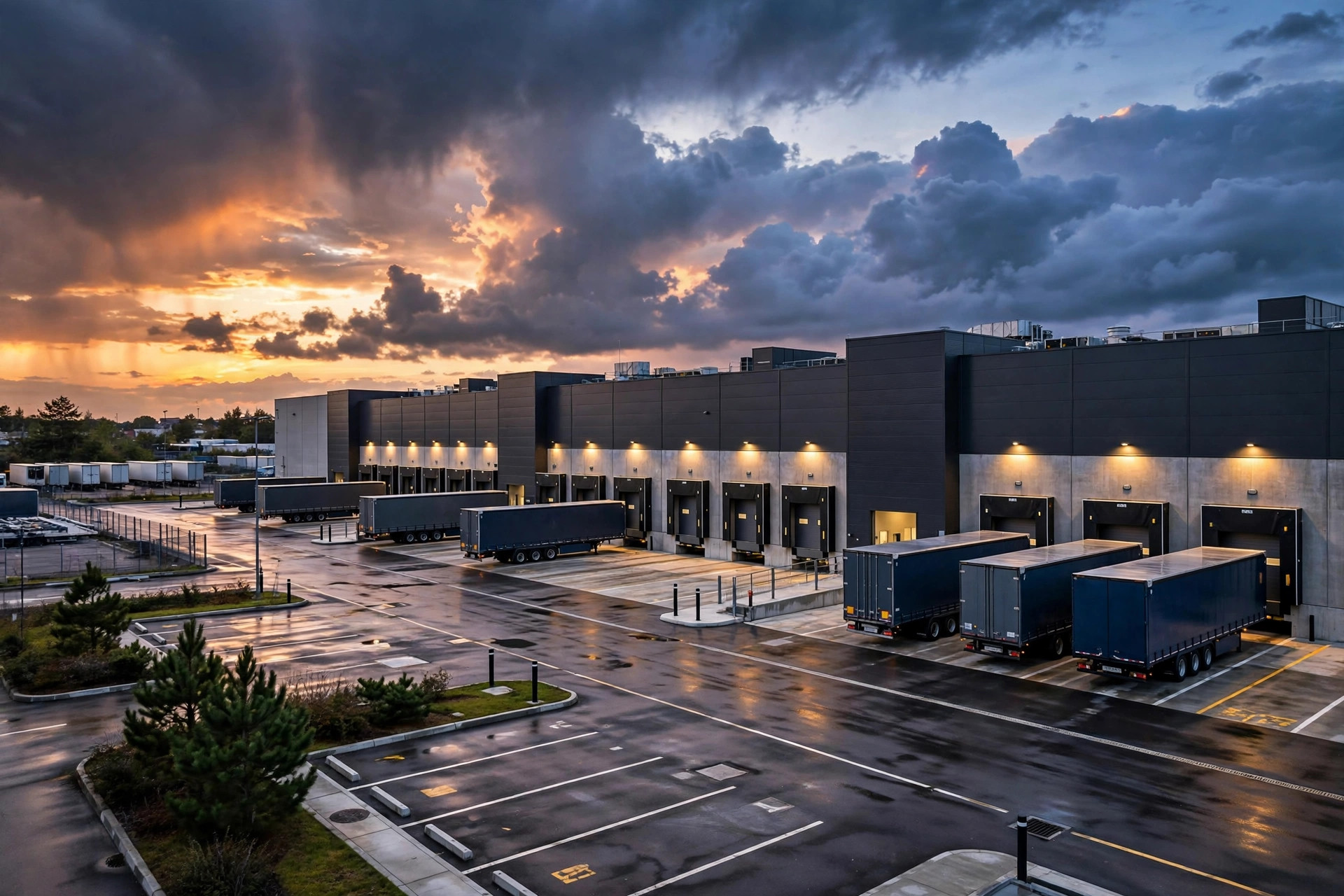
We had a client — a 3PL operator who leased a 120,000-square-foot warehouse in Fontana back in 2023, handling fulfillment for a handful of e-commerce sellers. The owner came from operations, sharp, hands-on about everything — including warehouse insurance. He called carriers directly, shopped around himself, and picked the cheapest quote: under $50,000 a year in premium. He even told me, "Susan, look — hiring an insurance broker just adds a middleman taking a cut. I negotiated it myself."
I didn't say much. In this business, you learn not to argue with a client who thinks he just won a negotiation.
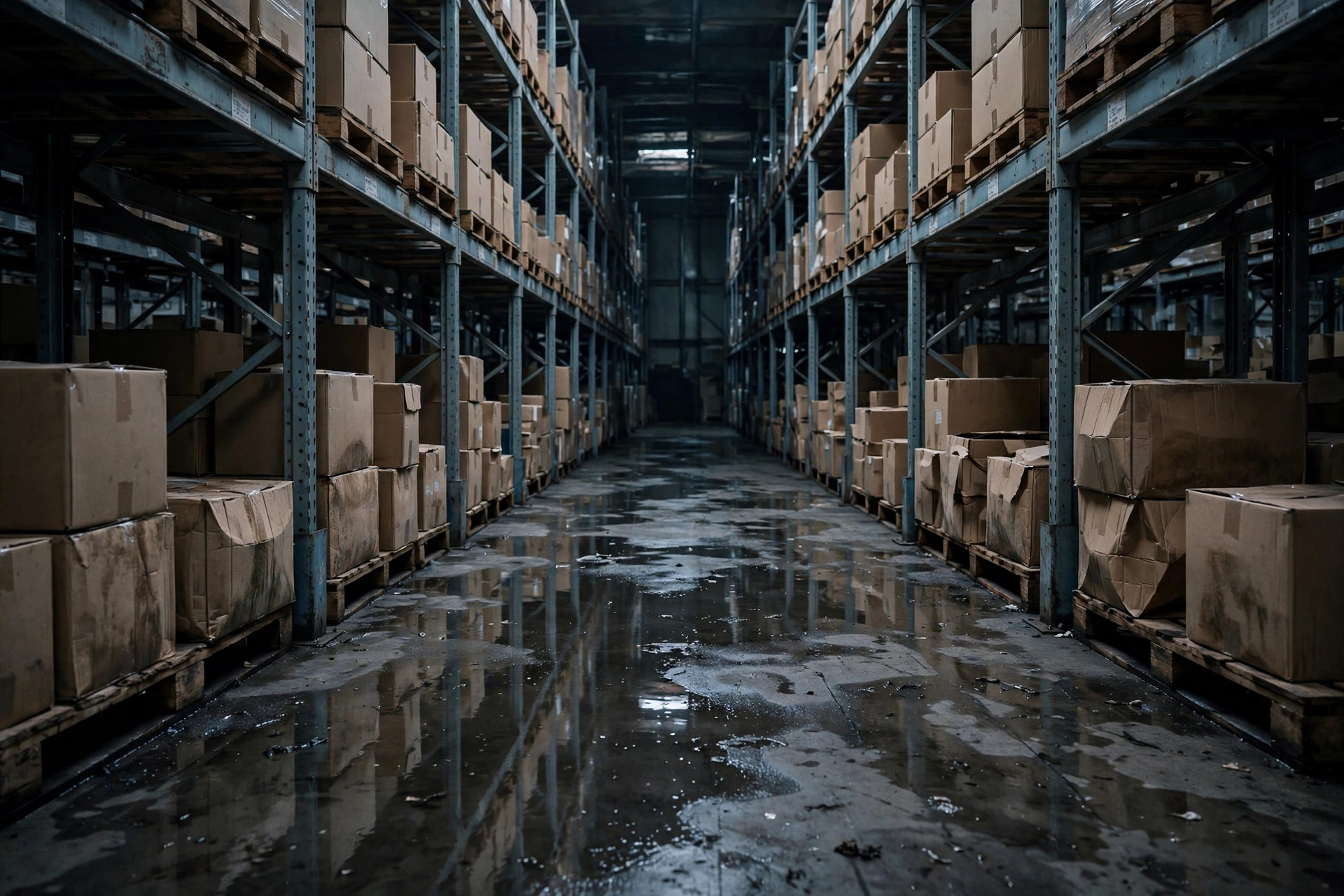
Then came the atmospheric river storms of January 2024. His aging roof leaked right over a row of third-level racking. Three pallets of small home appliances — $180,000 worth of a client's goods — got soaked. The client filed a claim against him; he filed a claim with the carrier. The adjuster came, looked around, and politely declined: "Your policy covers your own property and general liability. Your customers' goods in your care, custody, and control are excluded."
Translation: the policy covered his racks, his forklifts, his office — and anyone who slipped and fell on his floor. But the goods his clients entrusted to him — the entire reason his 3PL business existed — weren't covered for a dime.
He paid the $180,000 out of pocket. Only later did he learn the missing piece was called warehouse legal liability, or bailee coverage — insurance specifically for "someone else's goods in my hands." Not one of the carrier salespeople he had shopped had mentioned it.
That's the insider truth behind today's topic: don't buy warehouse insurance straight from the carrier. It's not that carriers are villains — it's that the person selling you the policy is measured on "policies sold," not "policies sold right."
What Your Insurance Broker Really Earns: Commissions in Plain English
Most people think a broker is "free" — and in a sense, that's true: you never write him a check. His commission is paid by the insurance company, as a percentage of your premium. The industry's open secret: for commercial property and liability lines, new-business commissions typically run 15–20% of premium, renewals 5–15%, with some carriers paying renewals at the same rate as new business.
But there are two more payments you never see.
The first is called a contingency (or contingent) commission. At year-end, the carrier looks at the broker's book of business: low loss ratio, profitable accounts — and shares some of that profit back with the broker. So the broker has a built-in incentive to steer you toward the carrier with low loss ratios and high premiums — not necessarily the best deal for you.
The second is fee-for-service. Some brokers charge a flat advisory fee on top of commission — risk assessments, claims advocacy. Rules vary by state. Ask before you sign.
Once you see the math, you get it: the broker is not a charity. His income rises with your premium. A broker who won't talk commissions with you is as scary as a freight forwarder who won't talk rates.
Three Ways to Buy, One Honest Comparison
| Direct from carrier | Independent broker | Online marketplace | |
|---|---|---|---|
| What you pay | Premium (commission baked in — you can't save it) | Premium + possible service fee | Premium |
| Who shops for you | Nobody — you call around yourself | Broker markets to multiple carriers | Algorithm quotes from your inputs |
| Understands warehousing risk | Salesperson knows their own product | Good ones do; bad ones just sell | No — standardized products |
| Who fights the claim | You vs. the claims department | A good broker does | You |
| Best for | Tiny self-use warehouse, dead-simple risk | 3PLs and large DCs holding client goods | Anyone who just wants the cheapest piece of paper |
See it? Buying direct doesn't save you the commission — it's baked into the premium. You just save yourself the one person who negotiates on your behalf. That's the biggest misunderstanding I've seen in this business.
Here's the counterintuitive part: the cheapest quote is usually the most expensive one. A premium 20% lower often means the most important coverage was quietly excluded — like my client, who saved $20,000 on premium and paid $180,000 in cargo loss. In insurance, cheap and expensive are never compared on the same axis. The only comparison that matters: on the day something goes wrong, does this piece of paper actually pay?
The Other Side of the Story: A Broker Who Saved Real Money
Early 2025, an 80,000-square-foot 3PL in Ontario hired a broker who specialized in logistics risks. The first thing the broker did wasn't quoting — it was building a risk submission: three years of loss runs, inventory values, fire and security specs — sent to four carriers at once. That's called a market check.
Renewal premium dropped from $96,000 to $78,000 — nearly 20% saved. But the real wins were two.
First, the broker spotted a coinsurance clause in the old policy: it required the insured value to reach 80% of the goods' actual value, or claims would be paid pro rata. With seasonal inventory swings, this warehouse was flirting with that line — one bad claim away from the carrier legally paying 30% less.
Second, his warehousing contract used the IWLA standard terms, which cap the warehouseman's liability at $0.50 per pound by default. A 50-pound carton? Twenty-five dollars max. For high-value electronics, that's a joke. The broker negotiated a full-invoice-value option for an additional charge — and the client's biggest account renewed its contract because of that clause.
See the difference? A good broker doesn't earn his keep on the 15% commission spread. He earns it on "I understand what risk looks like in your business better than you do."
How to Pick a Warehouse Insurance Broker: Five Insider Tests
First, check whether they actually do warehousing risks. Ask verbatim: "What's the difference between warehouse legal liability and bailee's customers coverage?" If they can't answer, walk away — they can't even name your core risk.
Second, ask about their commission. Word for word: "What are you making on this deal? What about on renewal? Any contingency?" One who answers straight is one you can work with long-term. One who dodges is telling you everything.
Third, ask to see the shopping process. A good broker lays the market-check quotes on the table and explains what each carrier is cheap or expensive at. One who hands you a single "best option" probably just has a favorite carrier.
Fourth, ask whose side they're on at claim time. "Did you fight a carrier for a client last year? How did it go?" A broker's real skill shows up at claim time, not at sale time.
Fifth, test them on your warehousing contract. Show them your IWLA terms or your customer contract's liability cap and ask whether the policy lines up. If it doesn't, the policy and the contract are two strangers.
One trade-off you must understand: legal-liability coverage is cheaper but only pays when you're at fault; bailee's customers (full-value) coverage costs more but pays regardless of fault within the policy terms. Which one you need depends on how strong your customers are — big accounts usually write "you pay for cargo loss no matter whose fault" into the contract, and then you have no choice but the expensive one.
Next Time You Negotiate, Ask These Three Questions
Question one, to the broker: "In this policy, are my customers' goods stored in my warehouse actually covered? Read me the exclusions."
Question two, to the broker: "What's your commission on this deal — and on renewal?"
Question three, to yourself: "On the day something goes wrong, am I fighting the carrier alone — or is someone standing on my side?"
Insurance is paper when you buy it and money when you need it. Don't save pennies on the paper and spend a fortune on the day it matters — we had a client who already paid that tuition for you.
By Susan, 3PL Sales Director