Let me start with the warehouse legal liability insurance math. You have one pallet of a customer's goods in your warehouse: 40 cartons at $200 cost each, $8,000 total. The roof leaks overnight and the pallet is ruined. The customer files a claim, you pull out the standard terms on the back of the warehouse receipt: liability capped at $0.50 per pound. Pallet plus product weighs 900 lbs. You owe $450. The customer is out $7,550 — and that gap will come out of your pocket eventually, just wearing a different costume: "settlement," "lost account," "legal fees."
That is the problem warehouse legal liability insurance (WLL) exists to solve: when goods in your care are damaged and the law says it's your fault, the insurer pays instead of you. So what does warehouse legal liability insurance cost per year? Short answer first: for about $50,000 of goods in storage, roughly $250–$500 a year. Whether that's expensive or cheap, let's run the numbers.
The Math First: What a Lost Pallet Really Costs You
The standard US 3PL warehouse receipt terms (the IWLA framework) spell out the cap plainly: $0.50 per pound, $100 per occurrence, $500 aggregate over 12 months. A common cold-storage variant (GCCA wording) uses "50 times the monthly storage charge or $0.50 per pound, whichever is less." In plain English: if you signed standard terms, your legal exposure on lost goods is tiny.
But "legally you owe very little" and "in practice you pay very little" are two different things.
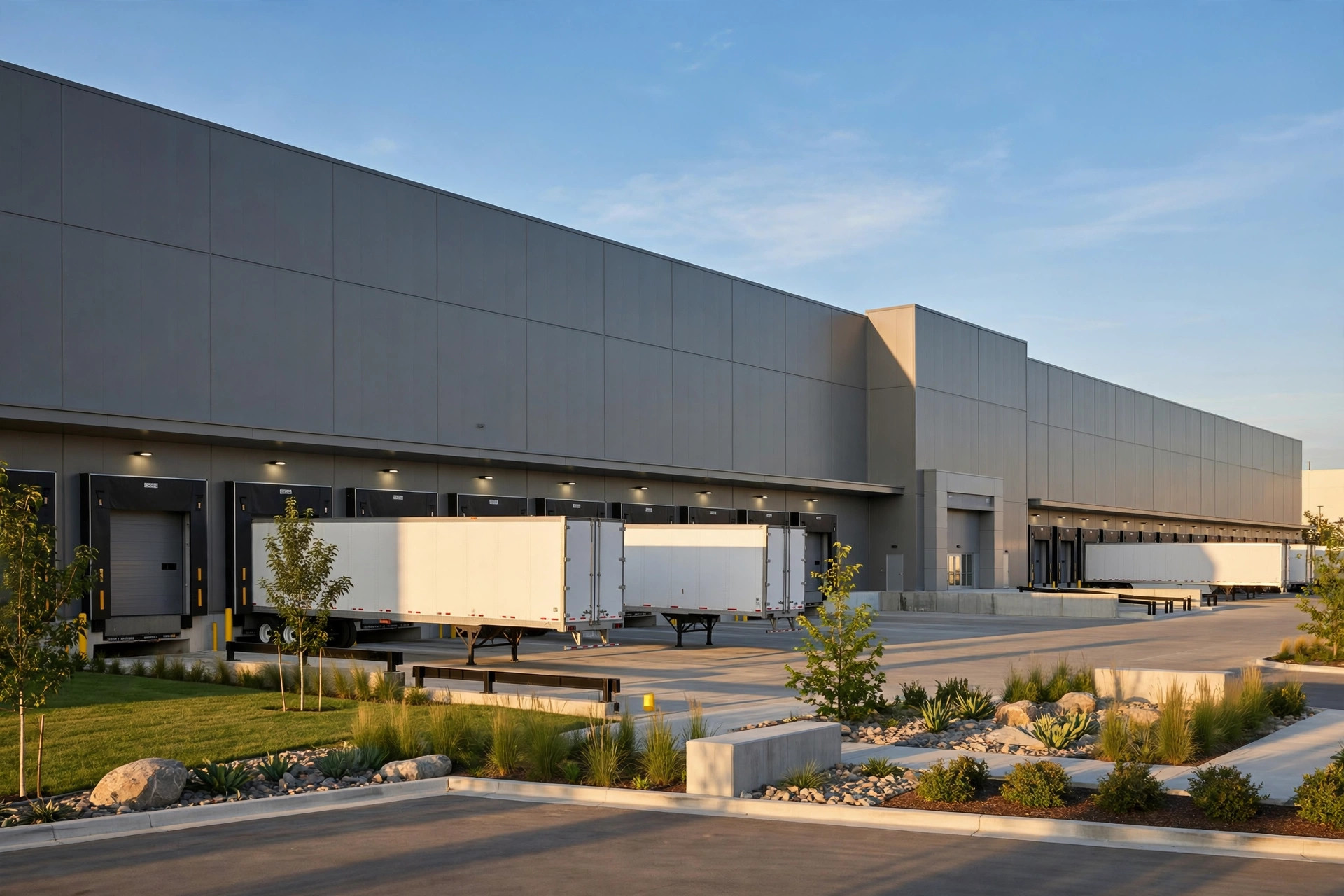
Fall 2023, Ontario, California. An 80,000-square-foot 3PL warehouse. A storm-night roof leak soaked 12 pallets of Bluetooth earbuds worth roughly $90,000. Under standard terms the customer was entitled to a few hundred dollars by weight. They threatened to sue, arguing the warehouse had neglected roof maintenance. The operator had no WLL. When I helped them reconstruct the incident afterward, the ledger was ugly: over $30,000 paid out of pocket in settlement, plus $8,000+ in attorney fees. Had a WLL policy been in place — and had the warehouse been found negligent — that $40,000 would have been the insurer's problem. A few hundred dollars of skipped premium bought a $40,000 self-paid invoice. Anyone can do that arithmetic.
What Warehouse Legal Liability Insurance Covers — and What It Doesn't
One concept first, because everything else follows from it: WLL covers your legal liability, not the value of the goods. The policy triggers only when you are found — by a court or a settlement — to be at fault and legally obligated to pay. No negligence on your part, no payout. In that case it's the customer's own cargo or property insurance that matters.
| Scenario | Covered by WLL? |
|---|---|
| Goods damaged by warehouse negligence (leak, forklift strike, temperature failure) | Yes, within limits |
| Attorney and litigation costs | Yes — even if you're ultimately cleared |
| Natural disaster with no warehouse fault | No |
| Customer's bad packaging or product defect | No |
| Value above the policy limit | No — excess is on you |
| Customer's consequential losses (lost orders, lost profits) | No |
Now the cost side. Premiums hinge on three things: value of goods in storage, commodity type, and your claims history. Electronics and wine — high value, fragile — push rates up; three clean years earn you a discount. The table below extrapolates from the commonly quoted benchmark of $250–$500/year for roughly $50,000 in goods value (confirm against your policy's current terms):
| Goods in storage | Indicative annual premium | Implied rate |
|---|---|---|
| $50,000 | $250–$500 | 0.5%–1% |
| $200,000 | $800–$1,500 | 0.4%–0.75% |
| $500,000 | $1,500–$3,000 | 0.3%–0.6% |
Notice the pattern: the bigger the inventory, the lower the rate. That's why large 3PLs carry WLL almost universally — to them it's a rounding error. Small operators often think "my inventory values are modest, I don't need it," which is exactly backwards: a small warehouse has the thinnest cushion, one claim away from real damage, and pays only slightly more per dollar of coverage.
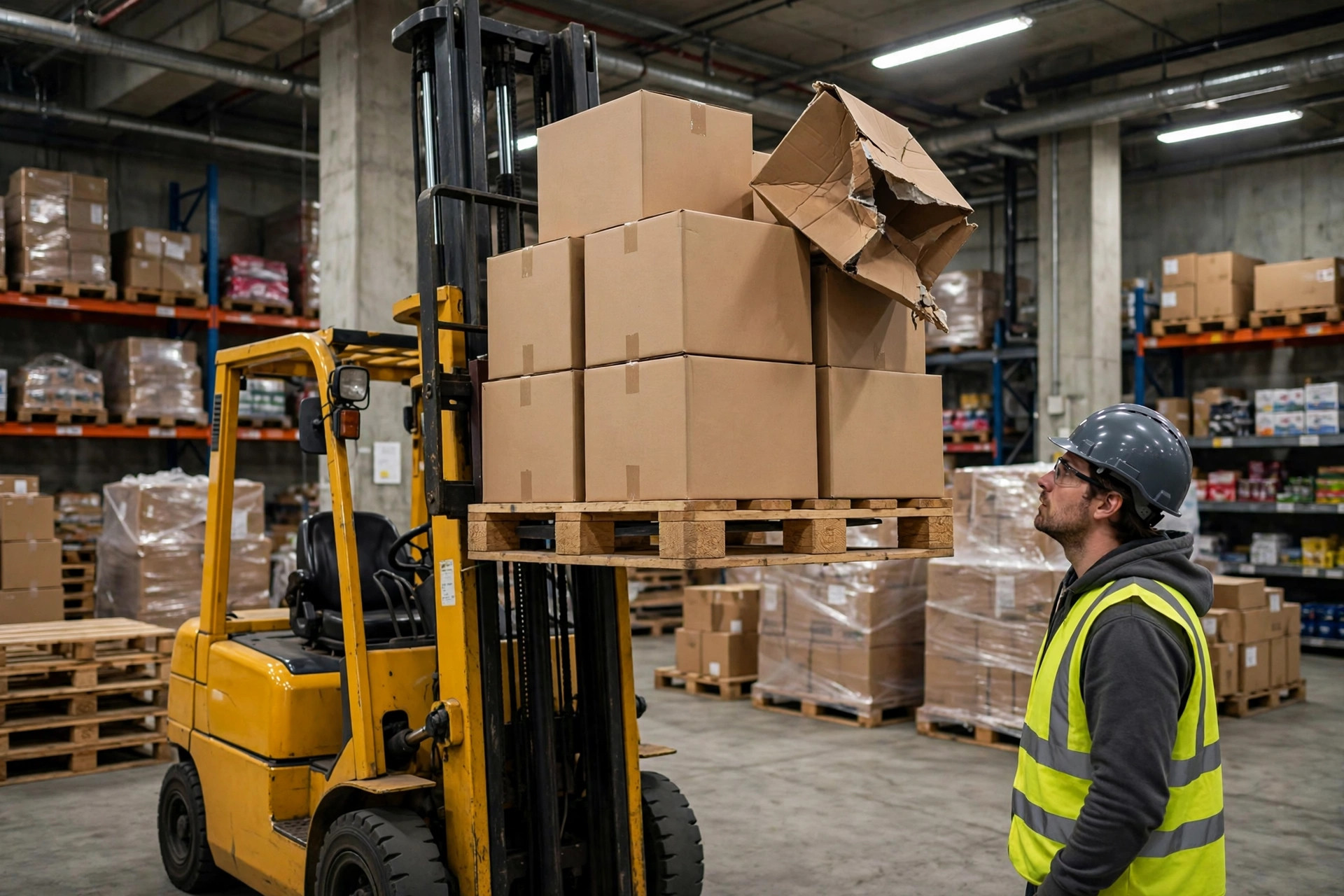
Spring 2024, Dallas, Texas. A 20,000-square-foot 3PL. A forklift driver clipped a rack row in reverse and a full pallet of imported wine — about $24,000 — shattered. The declared-value box on the warehouse receipt was blank, so the customer recovered roughly $700 at $0.50 per pound. The owner ate $15,000 to make it go away. The lesson here isn't about insurance at all — it's about the receipt: leaving declared value blank means voluntarily giving up the right to charge a high-value surcharge. Standard terms let the customer request increased liability in writing, with the warehouse charging an additional monthly fee. Filling in that box and pricing it right for high-value inbound is the cheapest risk hedge there is — zero extra premium required.
The Uncomfortable Truth: Buying WLL Doesn't Mean Full-Value Payouts
Three counterintuitive points, one by one.
First, WLL is not cargo insurance. Plenty of small 3PL owners assume that once they buy WLL, any lost goods get reimbursed at cost. Wrong. WLL only pays the portion you are legally liable for. If the loss was a no-fault act of nature, WLL stays silent and the customer's own policy has to respond. The correct posture is a double layer: you carry WLL for your liability, and your contract requires customers to carry their own cargo/property coverage. If both sides go bare, a loss just becomes a lawsuit.
Second, the premium is absurdly cheap; litigation is absurdly expensive. There's an old line in the industry: one or two attorney consultations cost more than a year of WLL premium. That Ontario warehouse's $8,000 legal bill would have funded 20 years of coverage. What you're really buying isn't the payout — it's having someone else hire the lawyers and negotiate on your behalf. Small operators, who have no legal department at all, are exactly the ones who need that most.
Third, the most expensive option isn't the premium — it's the first claim after deciding not to buy. Insurance is certain small money against uncertain big money. WLL premiums typically run under 1% of goods in storage; a single mid-size claim you pay yourself can wipe out three to five years of warehouse profit. You don't need an actuary for this trade-off. Grade-school math suffices.
One more trade-off worth pricing: high limit with high deductible, or low limit with low deductible? My advice runs against instinct — push the deductible up (say, $5,000) and spend the savings on a higher limit. Reason: you can absorb a few thousand dollars of small damage without blinking. What kills you is the $50,000–$100,000 event. Insurance should cover what you can't pay, not what merely hurts.
A Calculable Conclusion: The 3-Step Buy Decision
No gut feelings. Formulas. Three steps:
Step 1: Size your exposure. Goods in storage × annual loss rate. No history? Use a conservative 0.5%. A warehouse holding $300,000 of customer goods year-round has an expected annual loss of $1,500.
Step 2: Size your self-paid cost. Under the $0.50/lb standard terms, what does one mid-size incident actually cost you out of pocket? The Ontario and Dallas cases suggest a $30,000 settlement is not unusual.
Step 3: Apply the decision rule. If annual premium < exposure × 3, buy. Set your limit at 1.2 × your largest single customer's stored value, for headroom.
Run a $300,000-inventory warehouse through it: exposure $1,500 × 3 = $4,500, while the real annual premium most likely lands between $1,000 and $2,000 — well under $4,500. Buy. Limit: largest customer at, say, $80,000 in goods × 1.2 = $100,000 to start.
One line to close: divide your annual premium by the value of goods in storage. If that number is under 1%, and any random pallet in your building is worth thousands of dollars, skipping this insurance is a gamble. Win the gamble and you save a few hundred bucks. Lose it once and you're back to zero. I've done the math for you — the decision is yours.
By Lao Zhou, Logistics Cost Analyst