Where a Normal Put Wall Breaks First
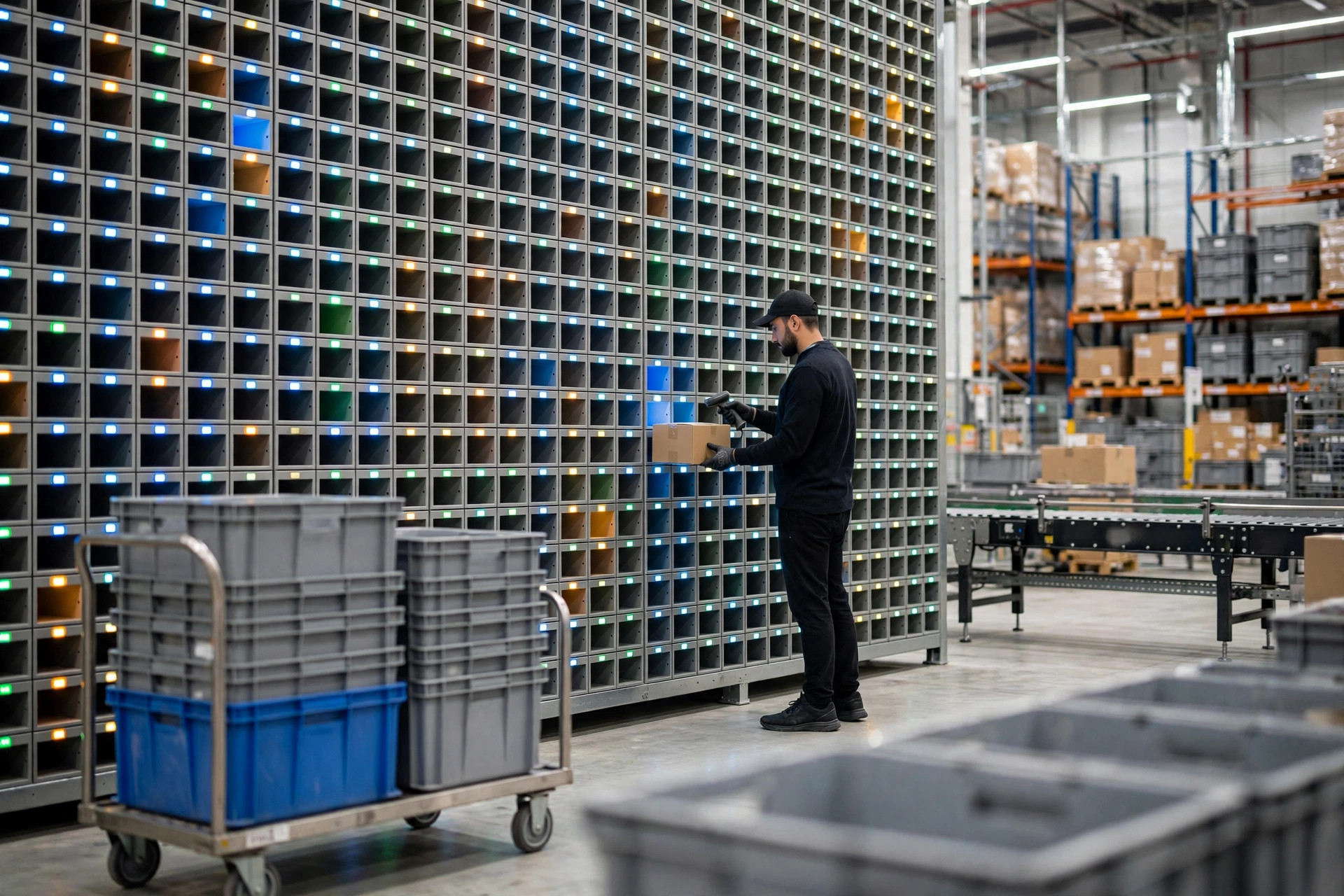
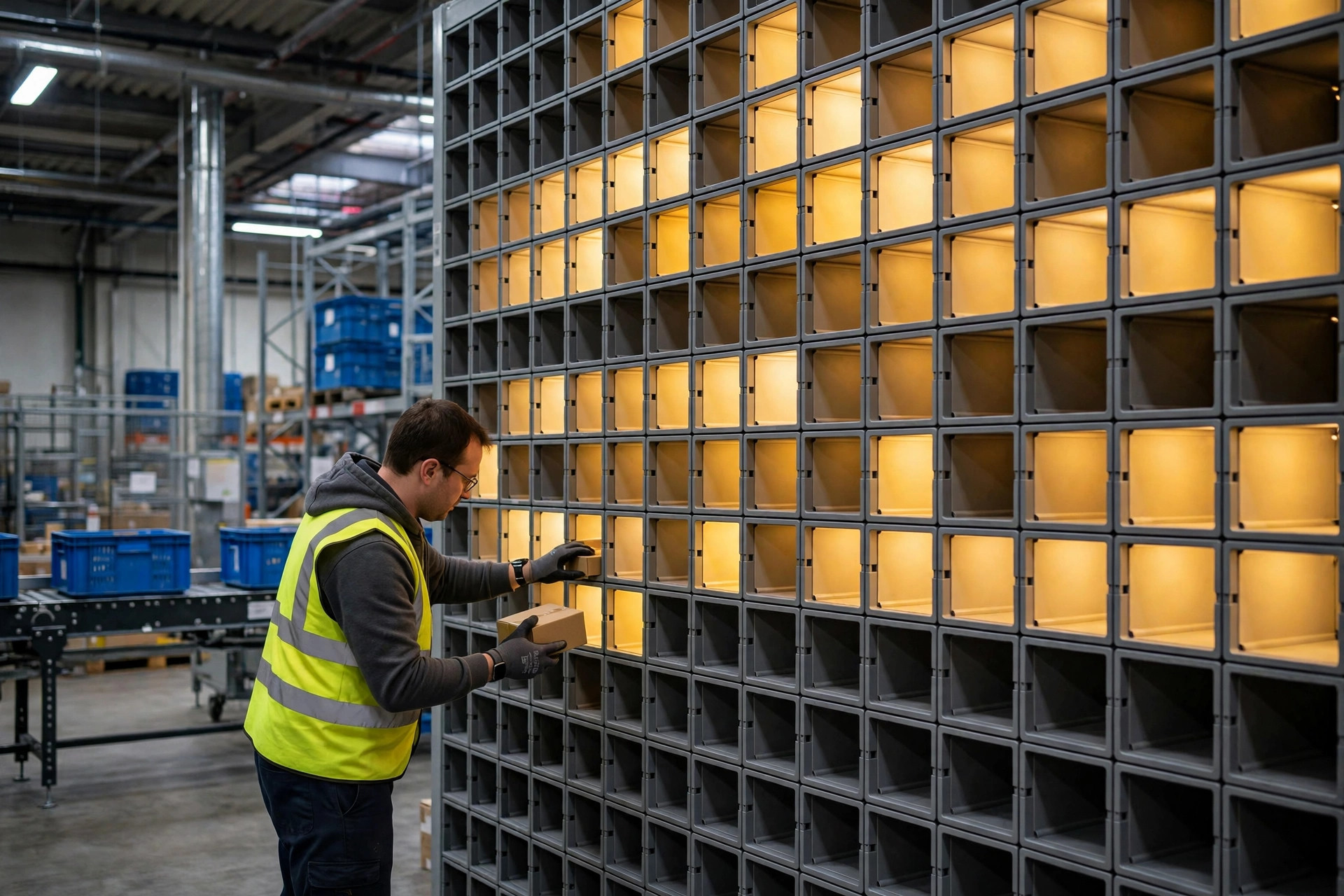
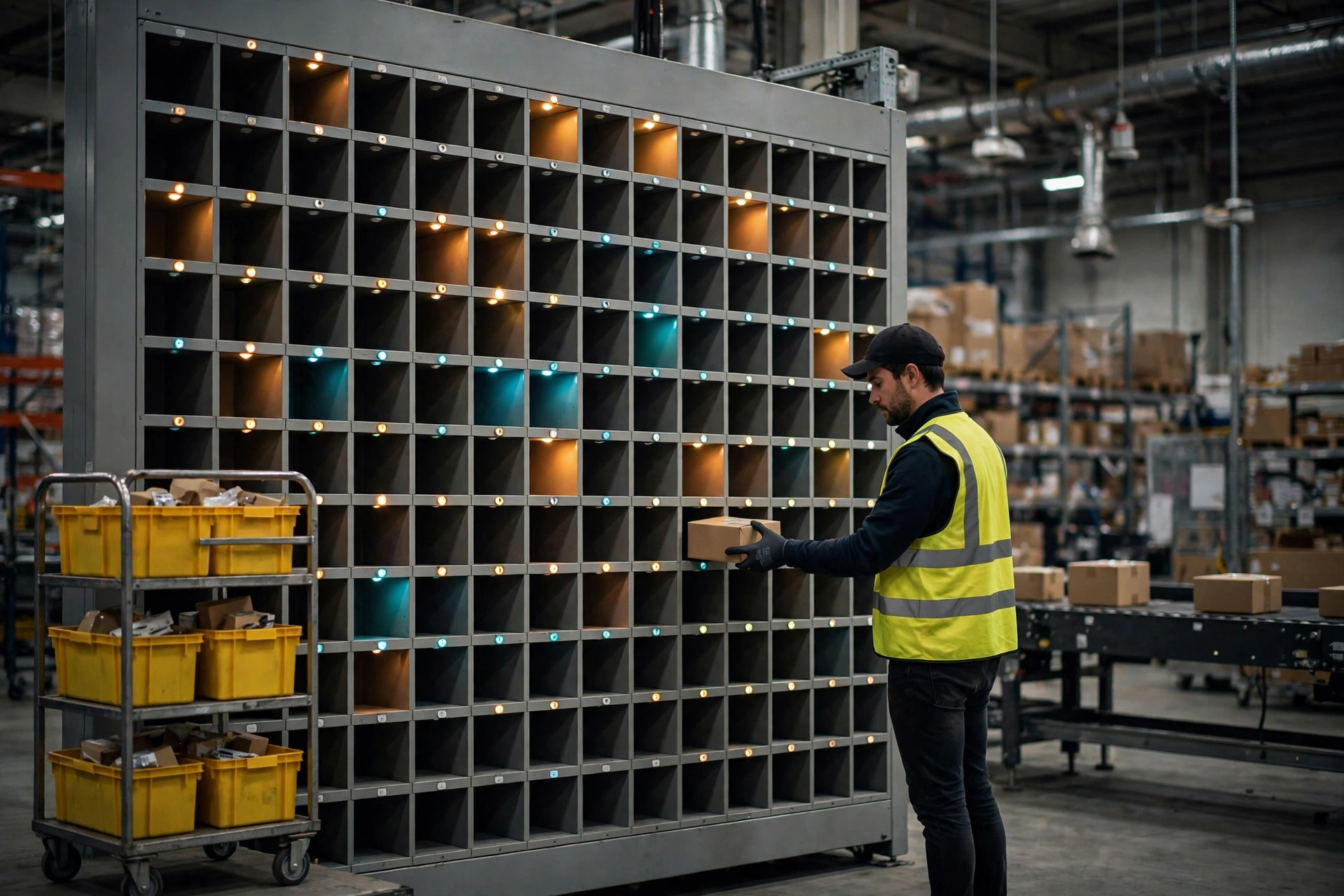
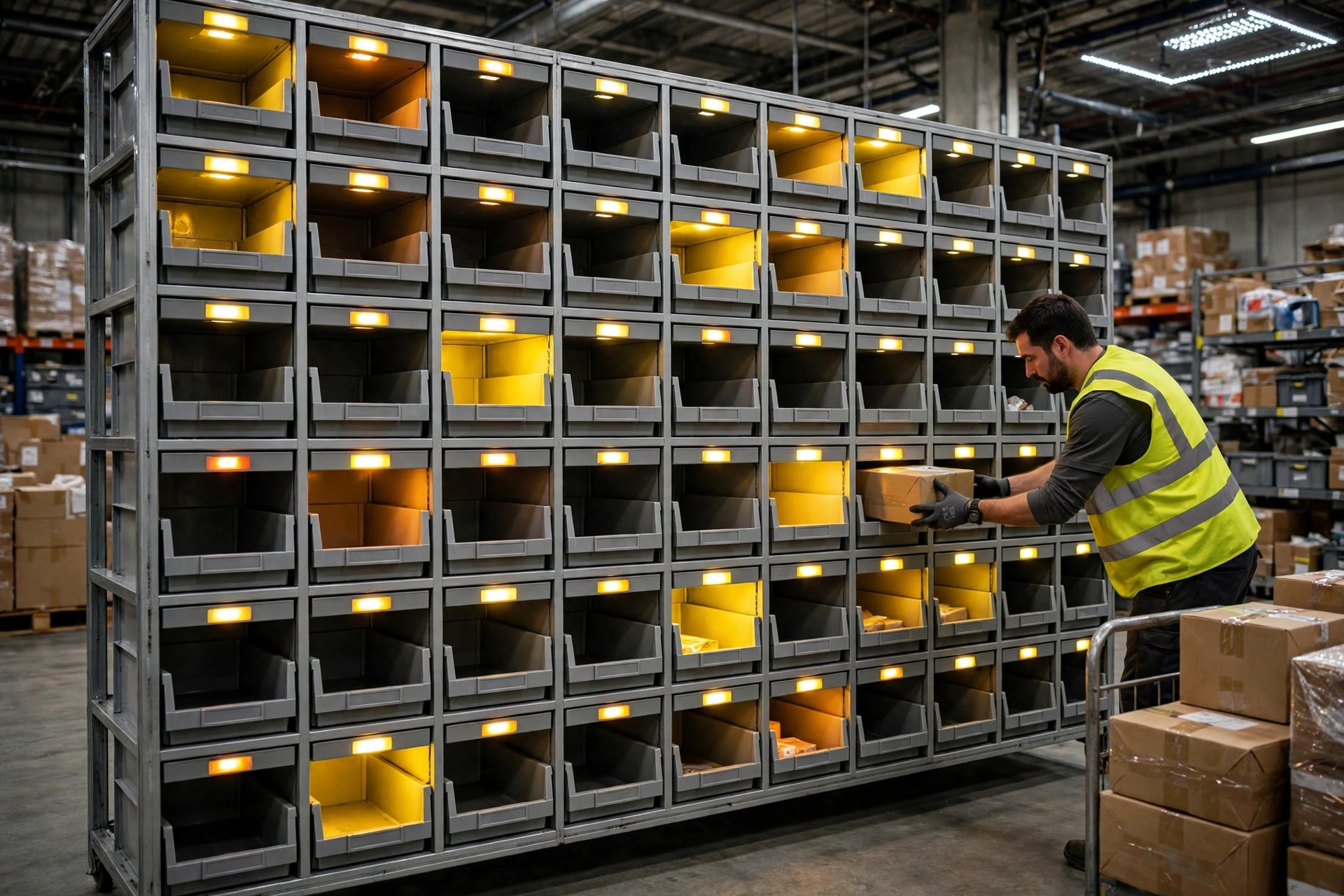
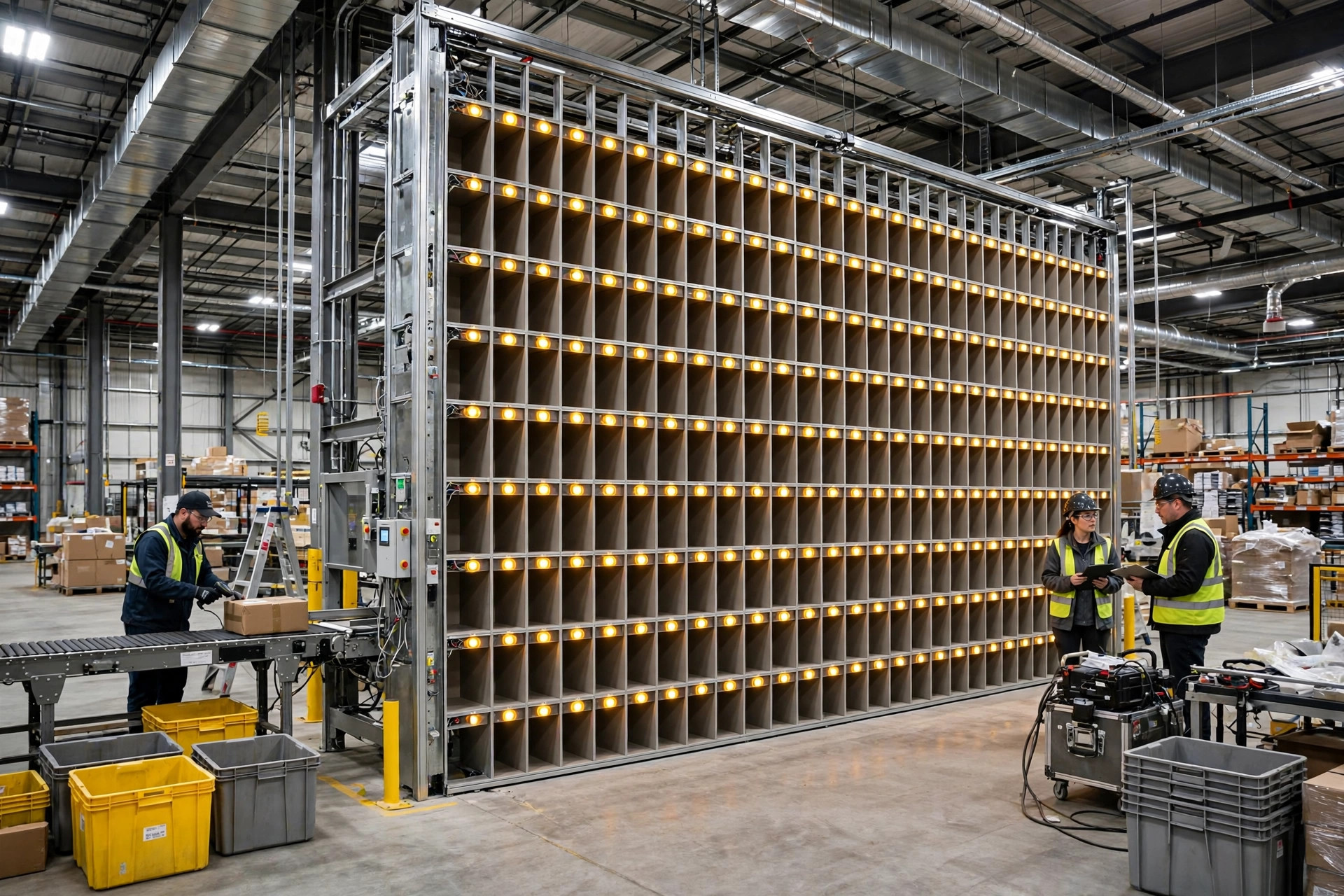
A put wall that hums along at 2,000 orders a day does not fail at 8,000 orders a day because the lights got slower. It fails in three specific places, and each has a different fix:
- Cubby starvation. Waves are capped at cubby count. Peak volume means either waves queue up waiting for free cubbies, or someone quietly uncaps the wave and orders start doubling into cells.
- Put-rate ceiling per operator. One operator scanning and putting at a wall sustains a finite lines-per-hour rate — in most operations a planning band of a few hundred lines per hour per station, depending on item size and travel. More volume than stations × rate = a growing tote queue at induct.
- Pack-out lag. Completed orders dwell in cubbies waiting for packers. At peak, dwell time stretches, cubbies stay occupied, and the wall's effective size shrinks exactly when you need it largest.
Diagnose which of the three you are hitting before buying anything. The fix for starvation is cubbies or wave discipline; the fix for put rate is stations and staffing; the fix for dwell is pack-out capacity and sweep discipline. Money spent on the wrong one buys nothing. If you are still deciding whether a wall fits your operation at all, start with the put-to-wall sortation math; this guide is for walls that already work and now need to survive peaks.
Scaling Cubbies: Three Ways, Three Different Costs
Add cells to the same wall. Cheapest in hardware, but wall length is operator travel. Past a certain length, each added cubby earns less than the last because every put walks further. Watch puts per labour hour as you extend — when it flattens or falls, the wall is long enough.
Add a second wall. A second, shorter wall doubles induct points and lets you split waves by profile: small orders one side, bulky the other; or one wall per carrier cut-off. Two walls also give redundancy — one wall down at peak is a bad day, not a stopped warehouse. The put wall setup guide covers the integration work a second wall implies.
Split by flow, not by wall. Some operations run the main wall for standard orders and route the long tail — oversized, fragile, single-line giants — to a manual sort bench even at peak. Protecting the wall's rhythm from the 5% of orders that jam it is often worth more than 20% more cubbies.
A sizing rule that survives contact with peak week: usable cubbies should cover your largest planned wave plus the exception buffer (commonly 10–15%), at the peak wave size — not the average one.
Wave Strategy Is the Software Half of Scale
Hardware is only half the scaling story; wave design is the other half:
- Cap waves at cubby count, always. The moment waves exceed cells, operators invent storage — floor stacks, double-putting — and mis-put rates climb steeply. Smaller, more frequent waves at peak beat heroic mega-waves.
- Rolling waves. Instead of one wave closing before the next releases, release the next wave's orders into cubbies as they free up. This smooths induct labour and keeps packers fed evenly. It demands more from WMS-to-wall coordination, so agree the behaviour with your vendor before peak, not during.
- Sequence waves by cut-off. Carrier cut-offs, not pick convenience, should order the wave queue at peak. A perfectly sorted wall of orders that missed the truck is a monument, not a result.
- Pre-sort upstream. If a channel or store cluster dominates volume, batch-pick it as its own wave so its orders sweep through one wall section together.
Staffing the Wall at Peak: Roles, Not Just Heads
Throwing extra people at a wall without role design creates collisions. The roles that scale:
- Induct operator(s): scan totes in, feed putters, own the tote queue. Starved putters are usually an induct problem.
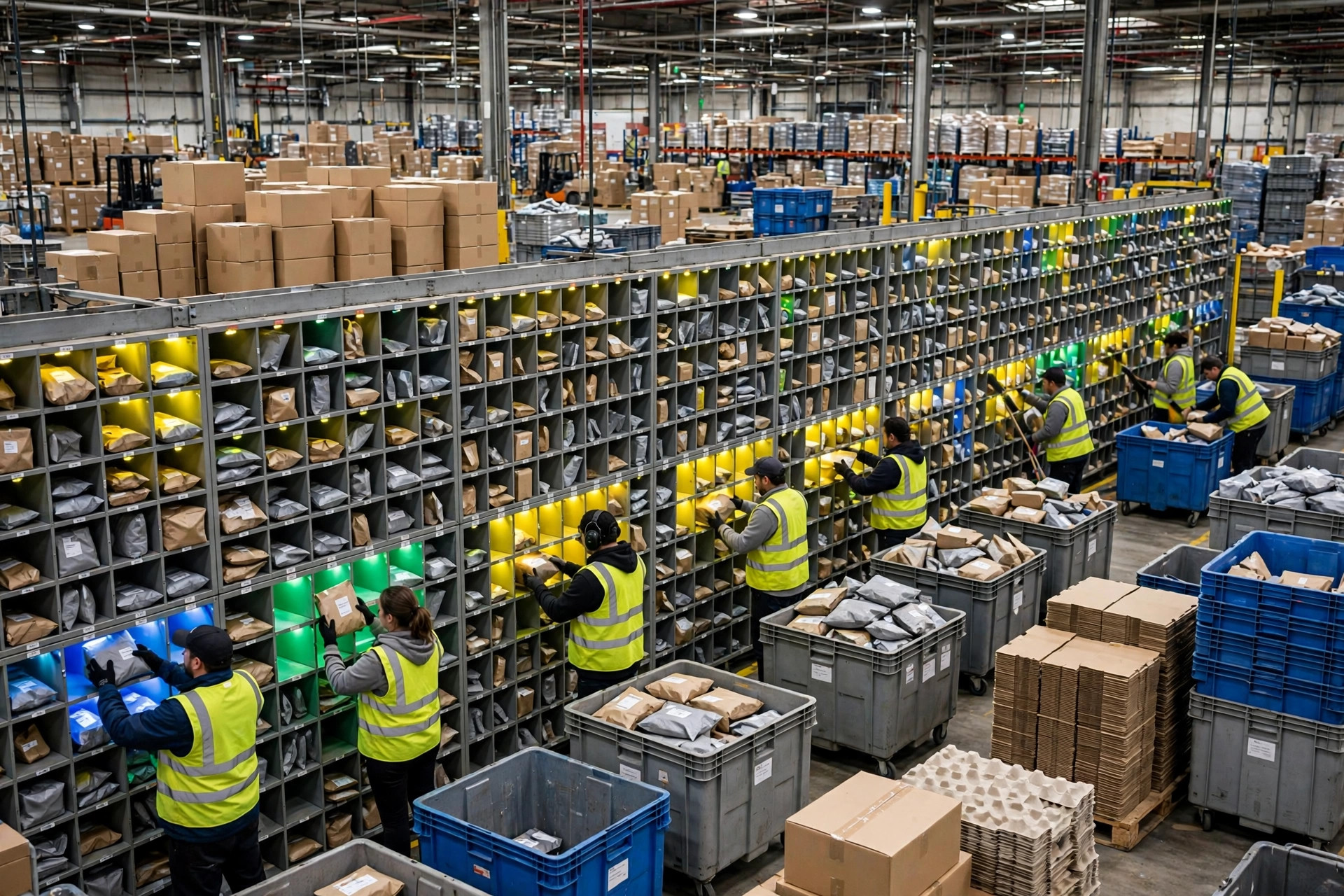
- Putters: one per wall section, staying in their section. Section discipline keeps travel short and accountability for mis-puts clear.
- Pack-out runners / sweepers: work the rear of the wall continuously, clearing completed cubbies in priority order (cut-off first), not in cubby order.
- A floater who owns exceptions — shorts, damages, jams — so exceptions never pull a putter out of rhythm.
Cross-train in the off-season: the time to teach a packer to put is not the morning of the peak. A common pattern is two shorter overlapping shifts across the peak window rather than one long shift — wall work is repetitive, error rates climb with fatigue in the late hours, and fresh eyes at hour six are worth more than overtime heroes. Keep an eye on mis-put rate by hour; when it bends upward, that is your staffing signal, not a discipline problem.
Pack-Out: The Bottleneck Nobody Budgets For
At high volume the wall rarely starves for picks — it drowns in finished orders. Three disciplines keep dwell time down:
- Sweep frequency beats sweep size. Frequent small sweeps keep cubbies cycling; letting packers batch a big sweep means dozens of cubbies sit full and idle in between.
- Signal priority. Rear lights or a packer display sorted by cut-off and dwell age, so the oldest and most urgent orders clear first.
- Packing capacity matched to wall output. A wall quoted by the vendor at some lines-per-hour figure is only as fast as the pack stations behind it. Count your pack benches, label printers, and carton supply as part of the wall system when you plan peak.
Track one number daily through peak: average cubby dwell time. If it trends up day over day, you are borrowing capacity from tomorrow.
Peak Playbook: One-Page Checklist
- ☐ Largest planned wave ≤ usable cubbies (with exception buffer) at peak order profile
- ☐ Second wall or overflow bench decision made and staffed, not improvised
- ☐ Wave cap enforced in the WMS, rolling release tested if used
- ☐ Roles assigned by section; floater named per shift; cross-trained backups listed
- ☐ Sweep rhythm and pack capacity checked against wall output
- ☐ Dwell time and mis-put rate on the daily dashboard; thresholds for adding a shift agreed in advance
A high-volume sorting wall is not a different machine from the one that works in March — it is the same wall with its three real bottlenecks honestly managed. Scale the cubbies where travel allows, discipline the waves, staff by role, and feed the packers. Peak stops being a surprise and becomes a schedule.
By Da Liu, Automation Engineer