Here's my verdict up front: when B2C volume doubles, it isn't pick speed that breaks the warehouse — it's sortation accuracy.
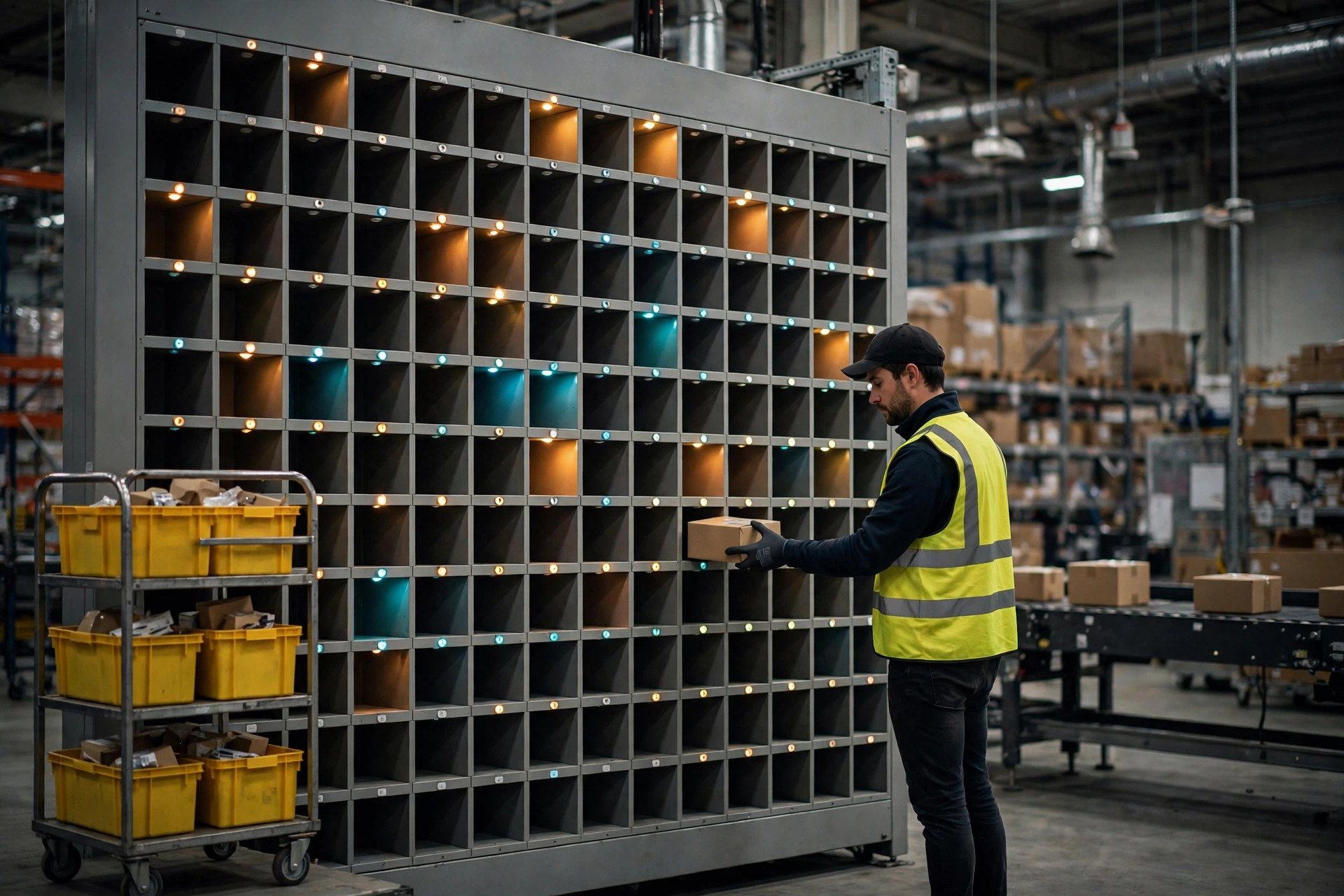
Put wall batch picking in the warehouse is, at its core, a divorce of two jobs. The pickers up front only walk: one trip pulls hundreds of orders' worth of product. The sorters in back only sort: they sit at the wall, a light pops on, the item goes in the cubby. Two sides to this, like everything. Get the order profile right and it's a peak-season weapon. Get it wrong and you've bought very expensive furniture. I've seen too many operations spend big on a wall, then keep working the old way around it.
The scar tissue: Black Friday, 40,000+ orders, one broken sort
Black Friday 2023. A beauty and personal-care B2C warehouse outside Atlanta, fulfilling for indie brands and Amazon sellers. Normal day: 8,000 orders. Black Friday: over 40,000. Five times the volume, overnight.
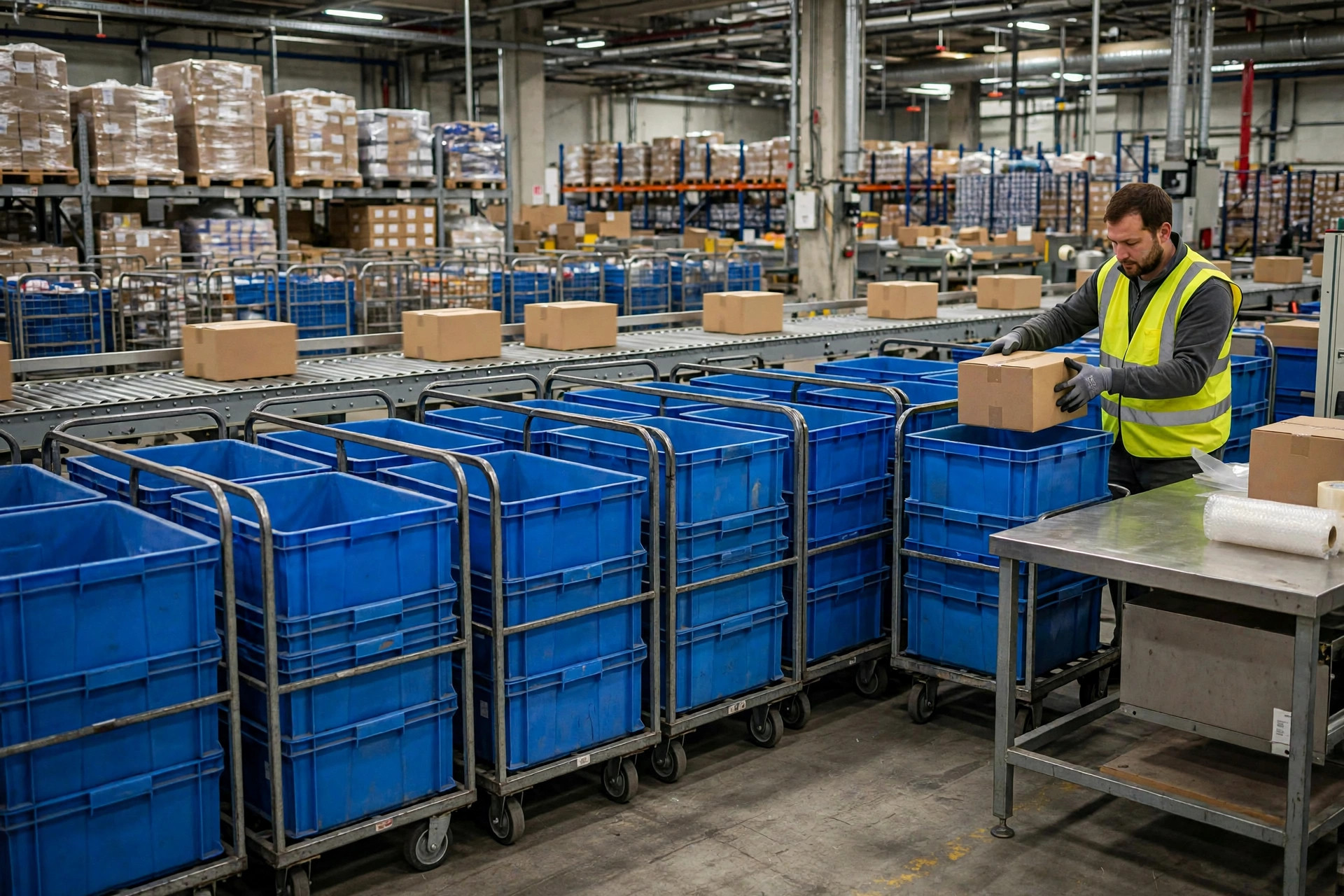
They were running pick-and-sort on carts — a picker pushing a put cart, five to eight orders open at once, lights on the cart telling them which box gets which SKU. At normal volume it was beautiful: the cart was the wall, sort-as-you-go. On Black Friday it fell apart. The lights were blinking faster than human reaction time. People were walking and sorting at the same time. Mispicks spiked into the low single-digit percentages — and every mispick came back as a return, a service ticket, and a reship.
Here's the math nobody does beforehand: a missorted parcel costs several times a clean one once you count return freight, CS time, and the second pick-pack-ship. The owner told me afterward that peak-week profits were roughly cut in half by the cleanup. Bluntly: peak season doesn't test how fast you pick. It tests how accurately you sort.
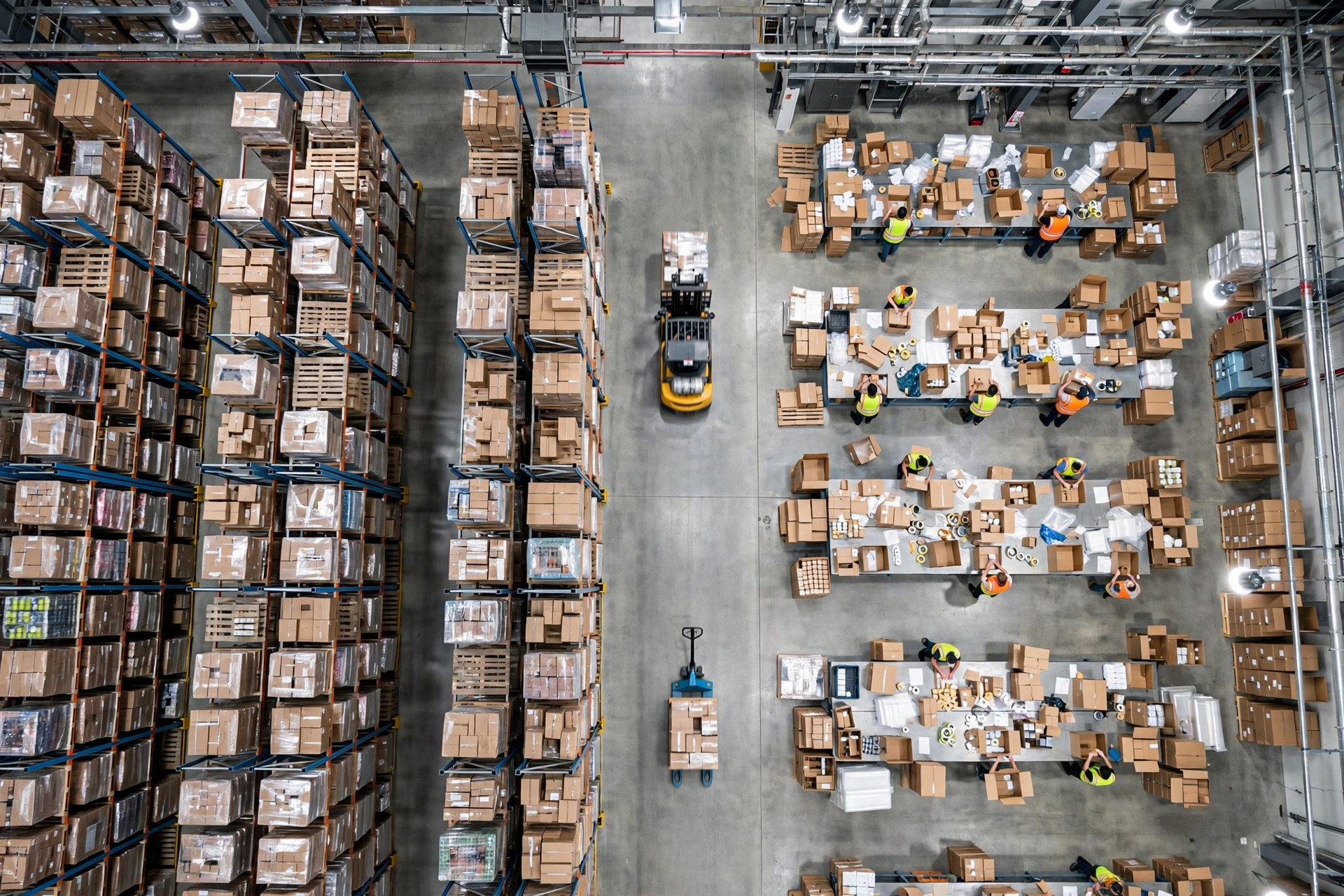
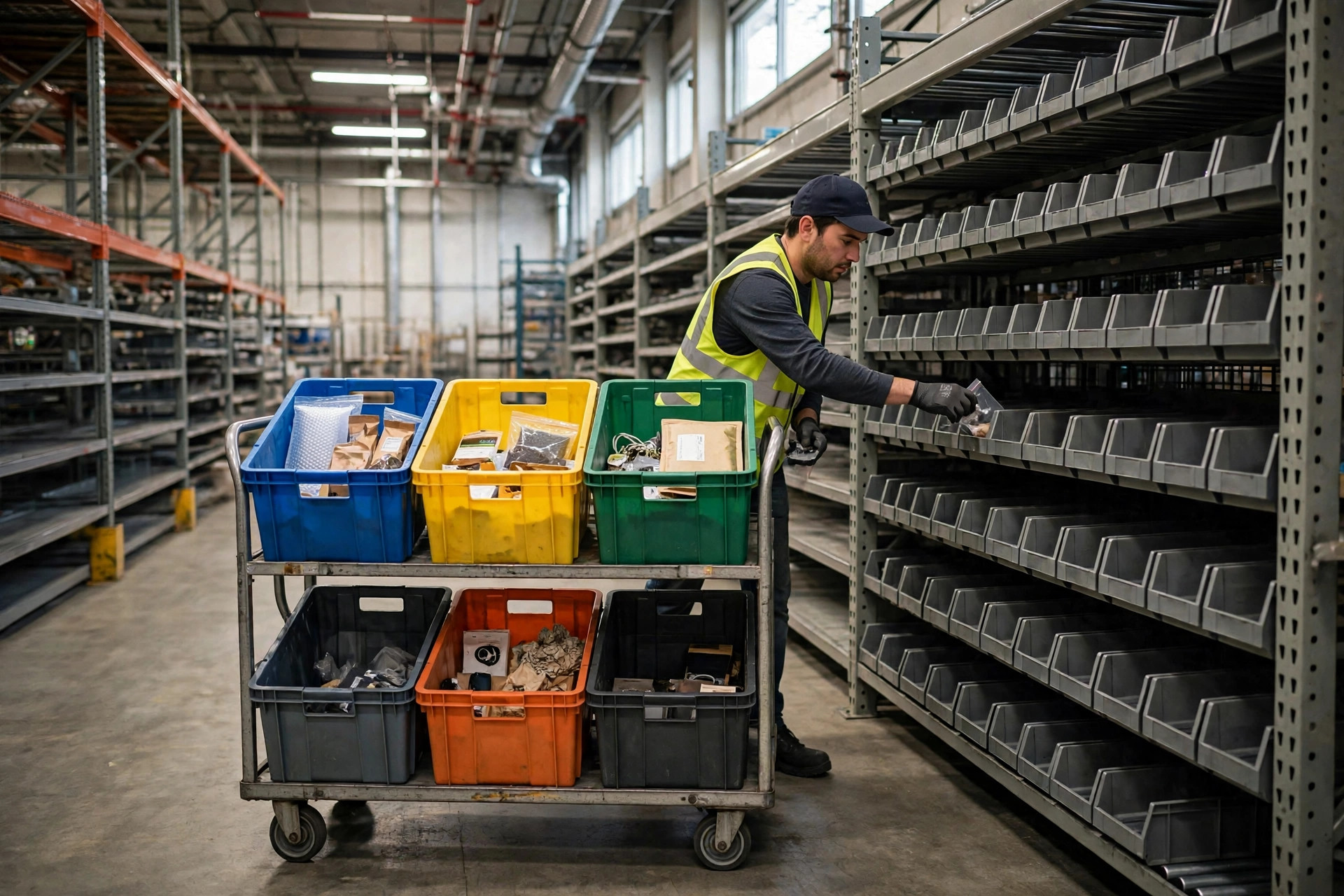
The next year they rebuilt the flow: batch picking up front — the WMS rolling a few hundred orders into one wave, one pass through the aisles — and two put walls in back, one cubby per order. Sorting went from a walking job to a sitting job. Error rates dropped under one percent. The price? An extra process step, more floor space, and a WMS wave-management headache. Trade-offs. There is no free lunch.
Which orders belong on a put wall — and which should stay far away
This is the judgment call that matters most, and it's where most people get burned.
Put walls eat "many small orders": one to three lines per order, a few hundred to a few thousand SKUs, thousands of orders a day and up. In that profile, one batch trip covers hundreds of orders and travel distance collapses. The industry line is that moving from discrete picking to batch-plus-wall lifts pick productivity 1.5 to 3 times. Note I said "the industry line" — your mileage depends on your order mix. Measure it yourself; don't trust a vendor's slide deck.
Three profiles should never touch a wall:
First, orders averaging five or more lines. One cubby waits on five SKUs to arrive, the wall fills with half-finished orders, and no amount of blinking lights fixes it. Just pick those orders discretely and skip the sort entirely.
Second, full-case and bulky items. There's barely any travel to save, and wall cubbies weren't built for big boxes. Putting them on the wall is all cost, no gain.
Third, low-volume operations. A few hundred orders a day means most cubbies sit empty and utilization never pays for the hardware. A put cart does the same job with a fraction of the commitment. Bluntly: the wall is a scale game. No scale, no wall.
A rough-but-useful decision framework:
| Order profile | Recommended method |
|---|---|
| Thousands–tens of thousands of orders/day, 1–3 lines avg, hundreds–thousands of SKUs | Batch picking + put wall |
| Hundreds–thousands of orders/day, 1–3 lines avg | Batch picking + put cart (flexible, cheap) |
| 5+ lines avg, multi-piece combos | Discrete order picking, no sortation |
| Full-case / bulky dominant | Discrete pick, straight to pack |
Put wall layout: kill the backtracking
Wall placement has exactly one rule: put it between the batch pick zone and the pack stations, in one straight line. No backtracking.
The dumbest layout I've seen put the wall at the far end of the building — pickers saved travel in the aisles, then pushed carts across half the warehouse to sort. Every step saved, given back. The right flow is three stages pressed together: batch pick zone, put wall, pack stations, product moving in one direction only. Keep replenishment traffic off the pickers' path — a replenishment cart and a picker fighting for the same aisle is throughput dying in slow motion.
Cubby design follows the human body: one cubby, one order, no exceptions. Waist-to-shoulder height is the golden zone — high-frequency orders live there; top and bottom rows get the slow movers. A couple hundred cubbies per wall face is typical; go much bigger and people can't reach the lights, go smaller and utilization suffers. Size it to your volume and floor plan.
Staffing-wise, sorting is desk work with a safety vest: one person covers half a wall to a full wall — light on, grab, scan, toss, light off, repeat. Peak scaling is simple: add half a wall's worth of people. No pick-path training needed. That's the hidden beauty of the wall — a temp can be productive in half a day.
How error rates actually come down
Sortation errors are, at root, a mismatch between human eyes and human brains: hundreds of cubbies, one glance away from a misthrow. Willpower doesn't fix it. Three lines of defense do.
First, the lights. Put-to-light turns "thinking" into "seeing": the lit cubby is the target. Lights alone cut a huge chunk out of eyeball-only sortation errors.
Second, the scan. Scan the SKU before the toss; the system screams if it doesn't match. This moves the checkpoint from "discover it later" to "stop it now" — and a caught error costs a fraction of a returned parcel.
Third, pack-out verification. Orders coming off the wall get a final scan at the pack station — wrong count, wrong weight, it gets stopped.
With all three in place, order accuracy above 99.5% is achievable — that's the number the industry quotes for scan-verified light-directed sortation. Skip the scan step and lean on lights and eyeballs alone, and low-single-digit error rates are nothing unusual. Here's the part people get wrong: the lights make you fast; the scan makes you accurate. I've watched too many operations buy the wall and cheap out on the scanning. Penny wise, pound foolish.
The math: where put wall batch picking beats the alternatives
| Put wall | Put cart | Pick-and-sort on cart | Automated cross-belt sortation | |
|---|---|---|---|---|
| Investment | High: wall + light system + floor space, tens of thousands of USD per setup (per quote) | Low: cart + lights, thousands of USD | Near zero | Very high: hundreds of thousands USD and up |
| Fits what volume | Thousands–tens of thousands orders/day | Hundreds–thousands orders/day | Hundreds orders/day | Tens of thousands+/day |
| Flexibility | Poor: bolted down, idles when volume drops | Good: push it anywhere | Best | Poor |
| Sortation errors | Low (lights + scan) | Medium | High (walk-and-sort) | Lowest |
| Learning curve | Low: sorter productive in half a day | Low | Medium: walk and sort at once | High: needs a maintenance crew |
The wall and the cart are brothers — the only real difference is scale. Enough volume, and the wall amortizes beautifully; not enough, and the cart wins on economics. Pick-and-sort stacks the two hardest jobs onto one person — and it's always the first thing to break in a surge.
Here's the counterintuitive one, and most people do this math wrong: the put wall doesn't save sortation labor. It saves picking labor. The sorter sits at the wall — you can't eliminate that headcount. What disappears is the one-trip-per-order model: hundreds of orders per trip, and pick-side headcount can drop dramatically. Picking is widely recognized as the biggest slice of warehouse labor cost — the savings come out of the biggest slice.
One more trap, flagged early: the wall's real cost isn't the wall. It's WMS wave management and stockouts. Batch picking concentrates every stockout onto the wall — one missing SKU and dozens of cubbies sit there waiting. The wall becomes a waiting wall. So before you buy the wall, get your replenishment rhythm and safety stock sorted, or the more efficient your wall, the more neatly it stalls.
Before you sign anything, pull your last 30 days of order-line distribution and look at it. The data will tell you whether the wall is a weapon or furniture. Don't ask me. Ask your data.
By Lao Mi, Supply Chain Veteran (20 yrs)