Start with the physics, then talk about buying. You can think of warehouse PDA vs phone barcode scanning as three links in a chain: optical capture, decode tolerance, and the human operating the device on the floor. A phone and a PDA can both read a clean barcode at close range. The difference shows up in where each link breaks — and in a warehouse, barcodes are rarely clean.
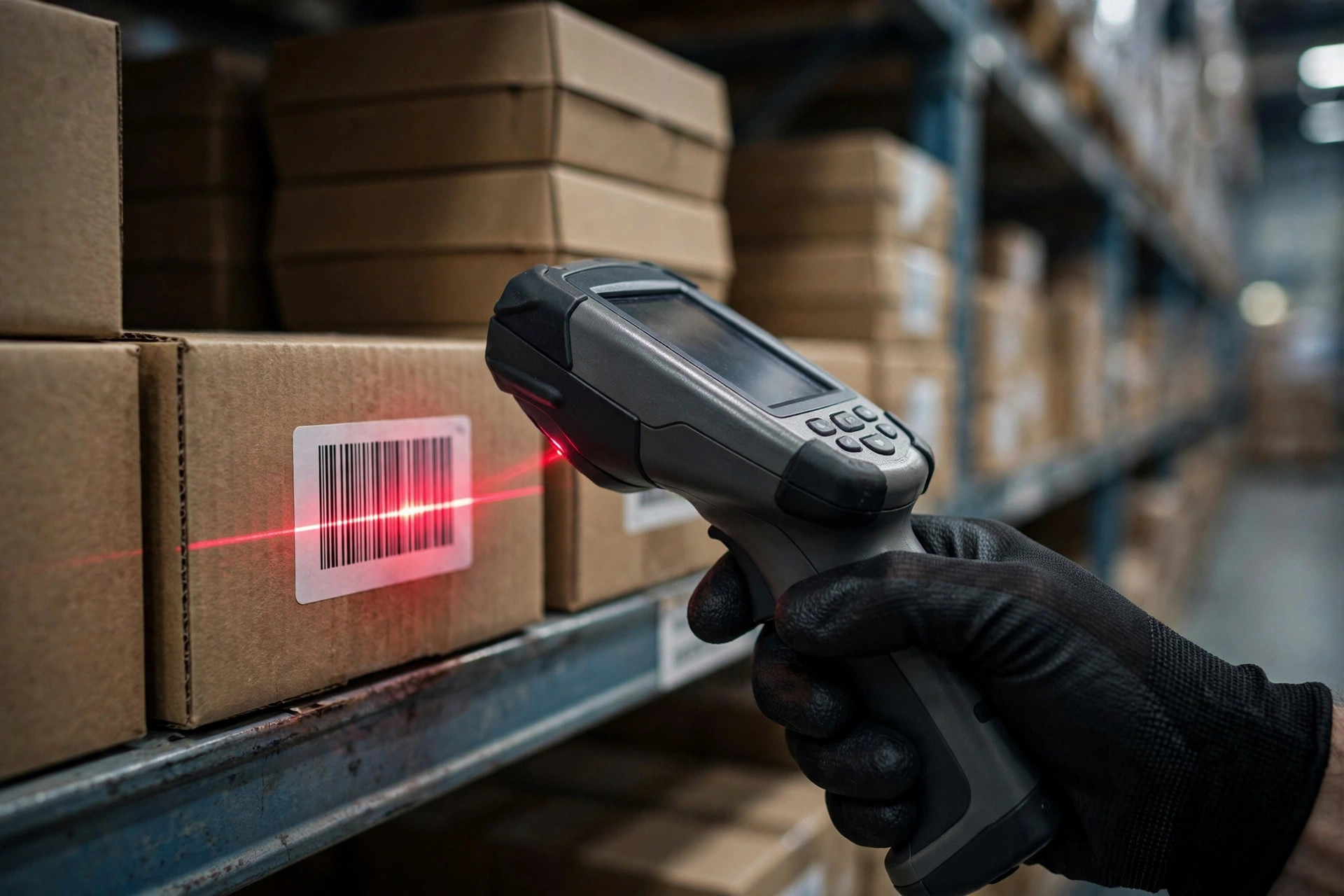
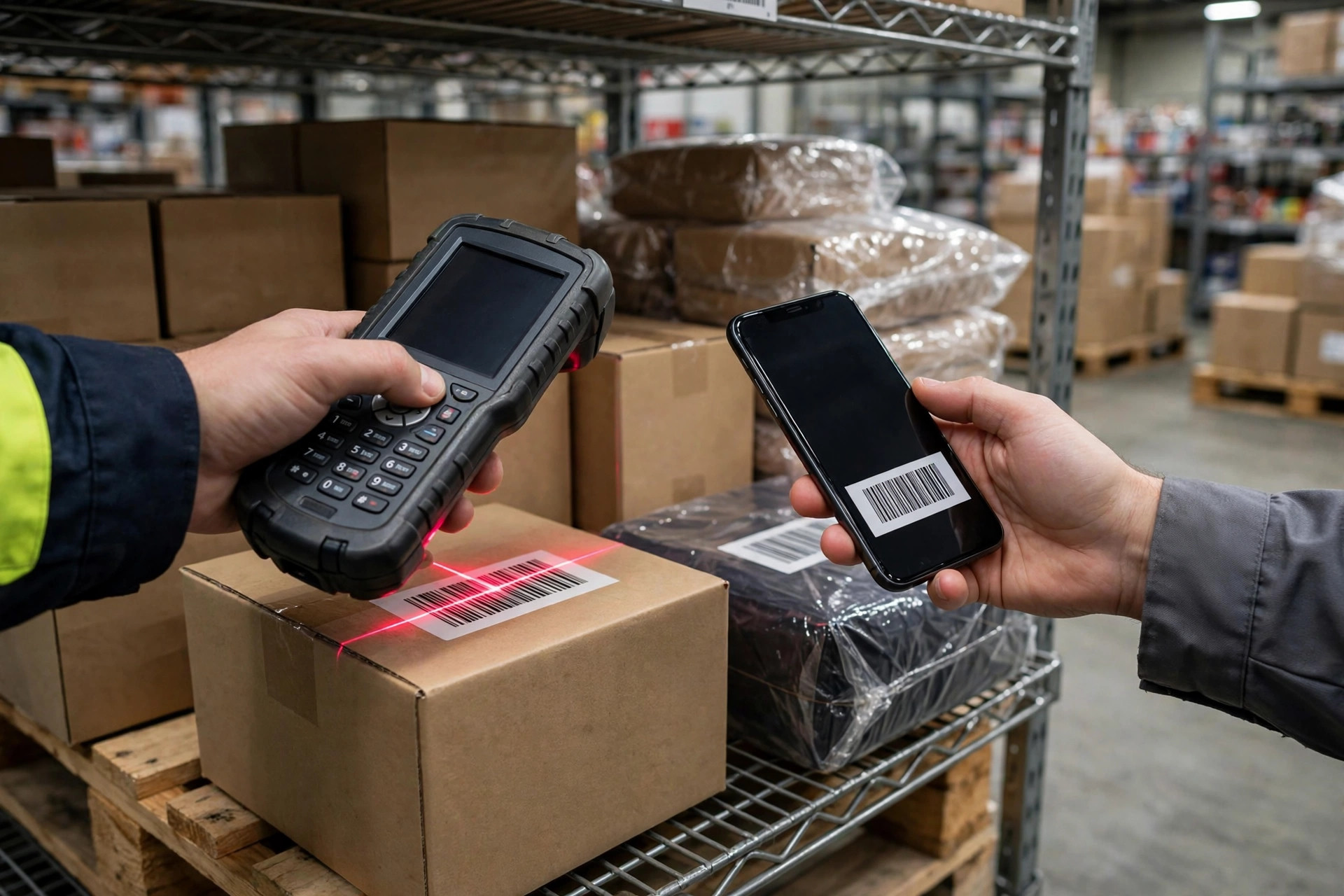
A phone reads barcodes with its camera: take a picture, then decode it. That works fast when the label is new, well lit, and close. Stretch the distance past a metre, add a worn label, a reflective film, or a pallet tag half-covered in tape, and both speed and first-read success fall off. An industrial PDA uses a dedicated scan engine — laser or purpose-built imager — designed for exactly this job. It tolerates damaged codes, glare, and distance far better. And damaged codes are the normal case in cycle counting: labels get rained on, taped over, and dusted up. Anyone who specs a scanner on pristine sample labels is testing the wrong thing.
Cold Storage: Where the Phone Quit First
In the winter of 2023, a fresh-food warehouse in northern China ran its quarterly count with staff phones plus clip-on Bluetooth scanners, chosen to save money. The ambient-temperature zones went fine. Inside the frozen zone, at around minus 18 degrees Celsius, the problems stacked up: phone batteries drained fast, screens fogged, and thick gloves made touch input unreliable. A six-person team scheduled for four hours in two frozen zones took seven, and two phones shut themselves down from the cold mid-count. The interrupted data had to be re-entered afterwards from paper notes, in a warm room, from memory — and two locations were keyed wrong, which sent pickers on detours for a week.
The real cost of that count was not hardware. It was time and rework. The re-entry pass hurt most: every hand-keyed correction is a new chance to create an error, and errors found during picking cost far more than errors found during counting. For frozen or harsh environments, the first question is not scan speed. It is whether the device keeps working at all.
The Warehouse That Paid More and Replaced Nothing
In the spring of 2024, a home-goods e-commerce warehouse in eastern China counted with a 20-person team. On phones, they were losing three to four handsets per quarter to damage — cracked screens from drops onto concrete and rack edges were the main cause. After switching to industrial PDAs, the purchase price per unit was substantially higher, but over more than two years they replaced only two batteries and one scan-window cover. Not one unit died from a drop.
Think of it this way: a phone is designed for a pocket and a desk. A PDA is designed for concrete floors and rack aisles. The rugged housing, the corner protection, the physical keys, the swappable battery — these look like minor line items on a spec sheet, but they decide how long the device survives in a warehouse. During a four-hour count shift, with gloves on, one hand on the device, and the other moving cartons, physical keys and a hand strap are not luxuries. They are throughput.
The Selection Line: Run the Three-Year Math
Comparing sticker prices alone will mislead you. For warehouse PDA vs phone barcode scanning, the honest formula is:
Three-year total cost = purchase price + three-year replacement and repair + accessories (batteries, cases, straps) + rework labour from failed scans + downtime while waiting for a replacement
| Cost item | PDA | Phone |
|---|---|---|
| Unit purchase | High, industrial pricing | Low, often already owned or cheap |
| Drop and repair | Low, rugged body, replaceable battery | High, cracked screens, water damage, fast battery aging |
| Scan speed and tolerance | Wins on distance, damaged and reflective codes | Fast on clean close-range codes, slows on hard codes |
| Cold, dust, and damp | Built for industrial protection ratings | Cold shutdowns, fogging, glove-unfriendly touchscreens |
| Learning curve | Needs key and workflow training | Zero — everyone already knows how to use one |
Draw the selection line with three questions:
- Daily scan volume: if each person scans fewer than about 200 codes a day, in a clean ambient environment, a phone is enough. Buying PDAs there is a pseudo-requirement, and I will say so bluntly — that money should not be spent.
- Environment: frozen, dusty, damp, or drop-prone work pushes the balance toward PDAs, because protection and swappable batteries cut repair and rework costs enough to win on three-year total cost.
- Label condition: if location plates, pallet tags, and carton labels are routinely worn or reflective, scan-engine tolerance decides count speed directly. A slow scanner stretches the whole shift.
Here is the counterintuitive part: the fastest scanner does not necessarily produce the fastest count. The bottleneck is rarely the fraction of a second a good scan takes. It is what happens after a failed scan — stepping closer, wiping the label, changing angle, keying the code by hand. That retry loop costs tens of seconds, and multiplied across a shift's failure rate, it dominates the real efficiency number. Judge a device by its failure rate in your worst labels, not its best-case scan speed.
Maintenance traps deserve a paragraph each. A PDA is not fit-and-forget: batteries are consumables, so stock spares on a replacement cycle; a scratched scan window quietly degrades read rates and must be replaced on schedule; and after any system upgrade, test older models before count day, not on it. The phone route has its own traps: personal devices need a managed app version and permission policy, and shared phones need a charging, cleaning, and handover routine, or the team will spend more time hunting for charged phones on count morning than scanning.
So is the money worth it? That is how warehouse PDA vs phone barcode scanning should be decided: look at one number, fully loaded cost per scan. Divide each option's three-year total cost by its three-year total scan count. The smaller number wins. Run that math honestly and most warehouses land in the same place: PDAs win in frozen and high-volume counting, phones win in small, light, ambient counts. The dividing line is not the brand on the device. It is your scan volume, your environment, and the condition of your labels.
By Da Liu, Automation Engineer