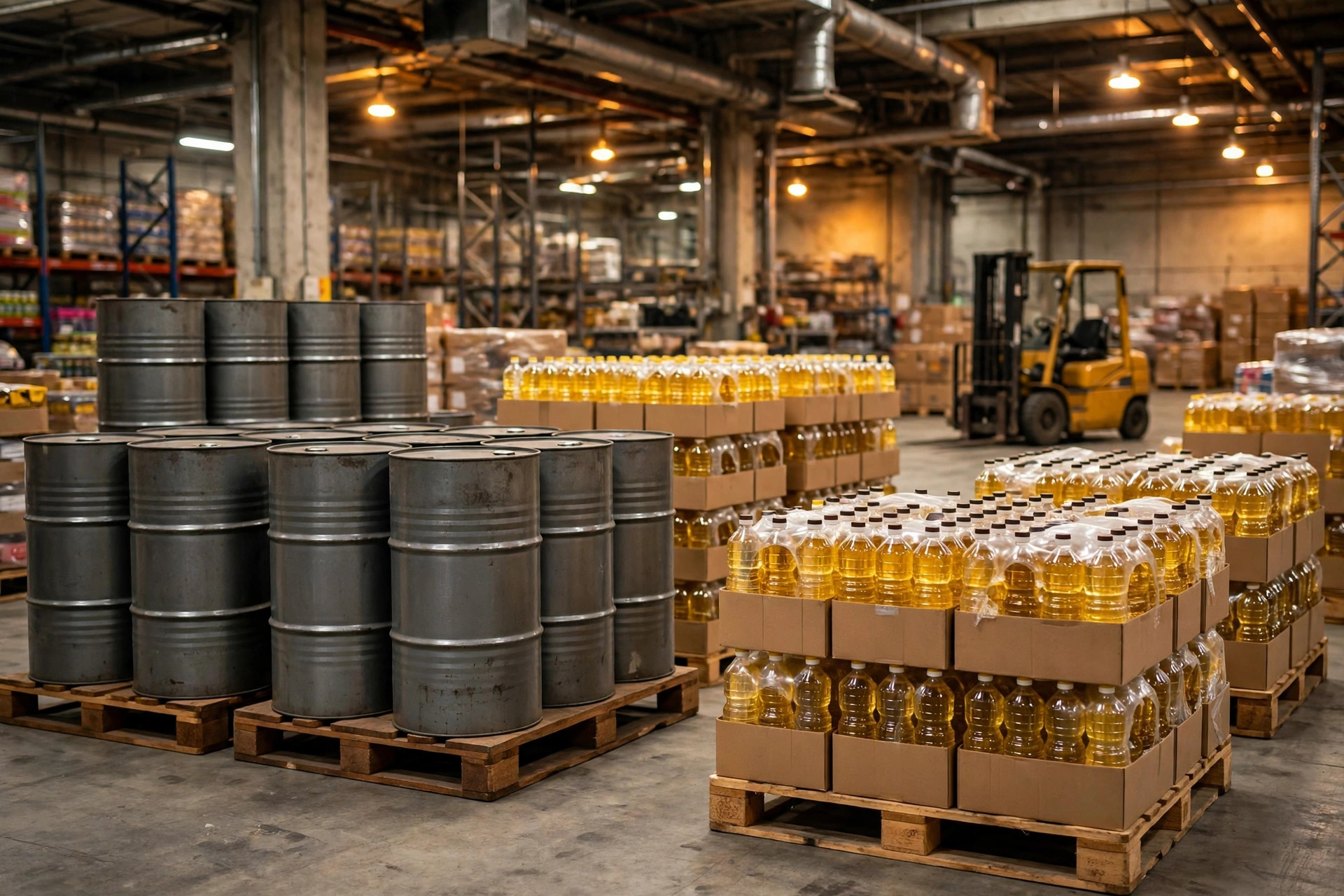
Last month I was reconciling accounts at a cooking oil distributor's warehouse when the warehouse keeper pointed to a row of returns in the corner. Those bottles had not failed to sell. They had gone bad in storage. Over three months, more than forty cases came back for rancidity, and the distributor paid the refund, the return freight, and the rent on the space where the bad stock had sat. That is why I am writing about cooking oil warehouse storage: most operators watch purchase price and selling price, while the real profit leak sits in the warehouse itself.
This distributor ran a single-story warehouse in eastern China, stocked with soybean, rapeseed, and peanut oil, plus a few pallets of imported olive oil. In summer the roof baked, afternoon temperatures inside reached the high thirties Celsius, and drums sat against the west wall. The keeper told me oil is not milk, a few months will not hurt it. He was wrong in the specific way that costs money. Heat accelerates oxidation. Once the rancidity is noticeable, the whole lot is unsellable, and the damage starts with the pallets nearest the heat source, which random sampling often misses. Complaints arrive before the problem shows up in inspection reports.
Cooking Oil Warehouse Storage and the Oxidation Bill
I went through their returns for the previous six months. Returns clustered in two periods: the July and August heat, and the leftover stock that had sat for more than three months after the spring festival. The return rate in the heat season was roughly three times the normal rate. The slow-moving stock told a different story, but with the same ending. Oxidation is invisible at first. By the time a customer can smell it, the batch is already lost. That is the central risk in cooking oil warehouse storage: margins are thin. Returning one case can wipe out the profit on ten cases sold, before counting return freight and disposal.
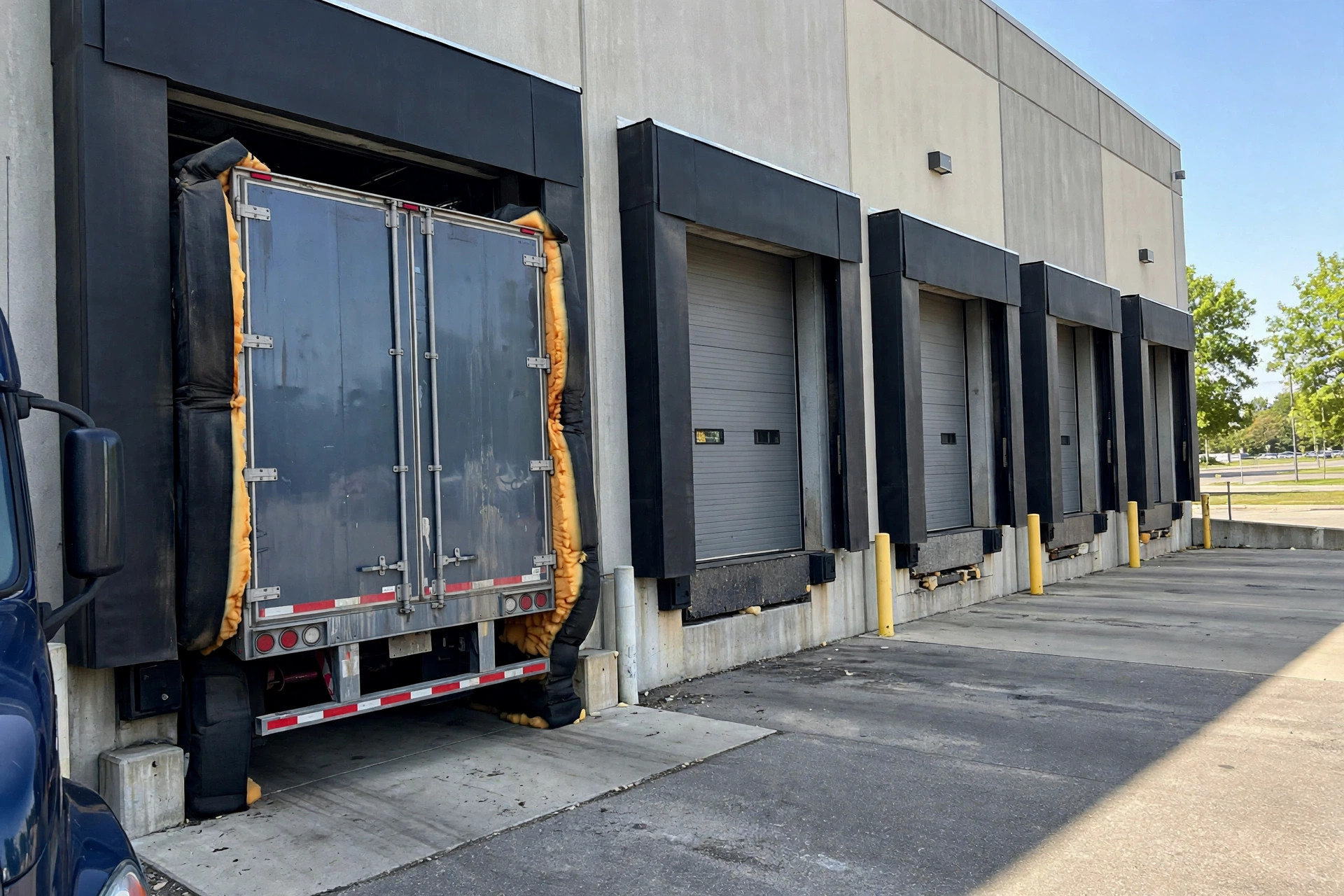
A second warehouse I visited did something simple. It moved oil away from the west wall to the shaded side, left ventilation gaps between racks and walls, and added roof insulation. Summer peak temperatures fell by five to six degrees. High-temperature returns that season fell to almost zero. The cost was a few thousand yuan in insulation and one round of relocation labor. The saving was a season of returns and, more importantly, customer trust. That is a straightforward trade, and it is the kind of math more warehouses should do before buying equipment.
My practical advice is blunt. Do not store oil against a hot wall, under a sun-baked roof, or beside a window in direct sun. Put batches on the shelf in order, and write first-in, first-out onto the picking slip itself, not onto a poster on the wall. Open one bottle a week and smell it. If it smells off, isolate the whole pallet immediately. Do not wait for a customer to do your quality control. Flag stock with less than three months of shelf life left, and move it first. Holding it until the last month is gambling, not inventory management.
Cooking Oil Warehouse Storage: Leaks and Odor Cost More Than Prevention
Leaks look like a rare accident until you see how they actually happen. In my experience, nine times out of ten the drum did not arrive broken. A pallet edge punctured it, a forklift clipped it, or the weight above deformed the seal. One leaking drum contaminates the pallet below it and the cartons beside it. Oil soaked into a concrete floor is worse: cleanup labor and downtime cost far more than a spill pallet would have.
Prevention is not complicated. Use spill pallets or absorbent mats under drums. Stack to the strength of the drum, not to the height of the rack. Inspect seals and drum bodies monthly, and isolate any drum that is dented, rusted, or deformed. If oil reaches the floor, absorb it at once. Do not hose it down. Water spreads the oil, makes the floor slippery, and creates a safety incident out of a cleanup job.
In cooking oil warehouse storage, odor is the quieter loss. Cooking oil absorbs smells easily. Stored beside spices, flavorings, detergents, or freshly painted surfaces, it picks up off-notes that customers taste before anyone in the warehouse notices. One warehouse stored peanut oil next to Sichuan pepper oil ingredients, and customers complained the peanut oil tasted of pepper. The fix was zoning: cooking oil in its own area, physically separated from strong-smelling goods by at least an aisle. Smelling nothing in the aisle does not mean the oil absorbed nothing.
Cooking Oil Warehouse Storage and the Climate-Control Question
People often ask me whether a cooking oil warehouse needs full climate control. I do not answer yes or no. I ask them to calculate three numbers: first, what oxidation, off-flavor, and leakage cost them last year in product value and freight; second, what insulation, ventilation, or climate control would cost per year including power and maintenance; third, how much of that loss the investment would actually prevent. Most small and mid-size warehouses find full climate control does not pay, while targeted cooling pays easily.
| Approach | Upfront cost | Annual running cost | What it solves | Best for |
|---|---|---|---|---|
| Relocate away from heat, add ventilation | Low, mostly labor | Near zero | Hot spots, sun exposure | Almost every warehouse |
| Roof insulation and shading | Medium | Low | Summer heat across the building | Single-story, metal-roof warehouses |
| A climate-controlled zone | Higher | Moderate power | High-value, slow-moving oil | Imported and premium oil |
| Full warehouse climate control | High | High power and maintenance | Year-round heat | Large warehouses, slow turnover |
There is a counter-intuitive conclusion in that table. The most expensive option is not always the best value. For fast-turnover stock that leaves within two or three weeks, oxidation has little time to develop, and climate control money is largely wasted. For slow-moving, high-value stock, the same investment is cheap insurance. Saving money does not mean spending nothing. It means spending where the loss actually happens.
One more point gets overlooked. First-in, first-out matters more for cooking oil than for most goods. Many systems record batches, yet pickers grab the nearest pallet for convenience. I mark near-expiry locations clearly and put the batch directly on the picking slip, so the picker does not have to decide. When a system leaves the decision to people, people choose the easiest route, and the easiest route is often the most expensive one.
In the end, cooking oil warehouse storage comes down to three disciplines: keep it cool, keep it contained, and keep it away from strong smells. Run those numbers honestly, and the oil that leaves your warehouse will stay sold.
By Lao Zhou, Logistics Cost Analyst