Every April, I know camping gear warehouse storage season is about to ruin my month. My seller group chat starts blowing up: tents are here, sleeping bags are here, folding tables and chairs are here, and everyone wants to know if I still have floor space. I look around my warehouse, which is under 3,000 square meters, and see last winter's heaters still sitting on the racks. One thought crosses my mind: here we go again, playing Tetris with real boxes. We are a small warehouse. We cannot afford to burn money the way the big players do, renting an extra floor before peak season just in case. We have to squeeze space out of the building we already have. What follows is what we learned doing exactly that, the hard way.
Camping Gear Warehouse Storage Is Hard Because Nothing Is the Same Shape
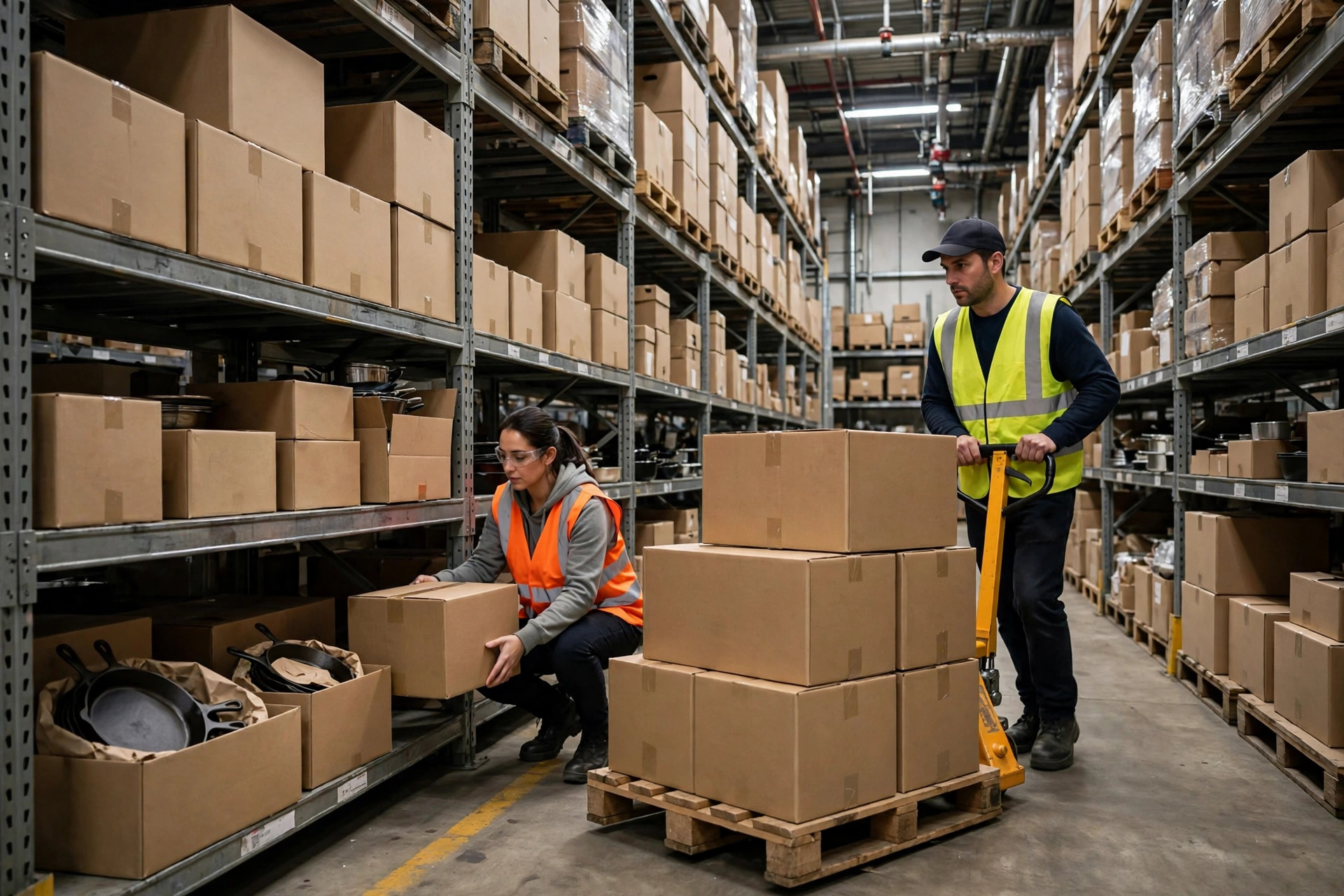
The most infuriating thing about camping gear is that there is no standard unit. A packed tent is a long tube. A sleeping bag is a round, squishy bundle. A folding chair is flat. A canopy pole is long and thin. None of them stack like cartons, and if you shelve them like cartons, they will fall over by the next morning. That is how we started, and our pickers spent half their day just propping things back up.
Last April, a cross-border seller dropped off 800 tents, 1,200 sleeping bags, and 600 folding chairs in a single delivery. The truck spent the whole afternoon unloading at our door. I had promised him it would be no problem. Then we found out the long tent packages did not fit sideways into our rack bays, and they toppled over when we stood them upright. We ended up laying two rows of floor stacks, which cost us an entire aisle. That month our shipping slowed down, and worse, more than 30 sleeping bag compression sacks got crushed under the pile. The seller nearly walked away from us.
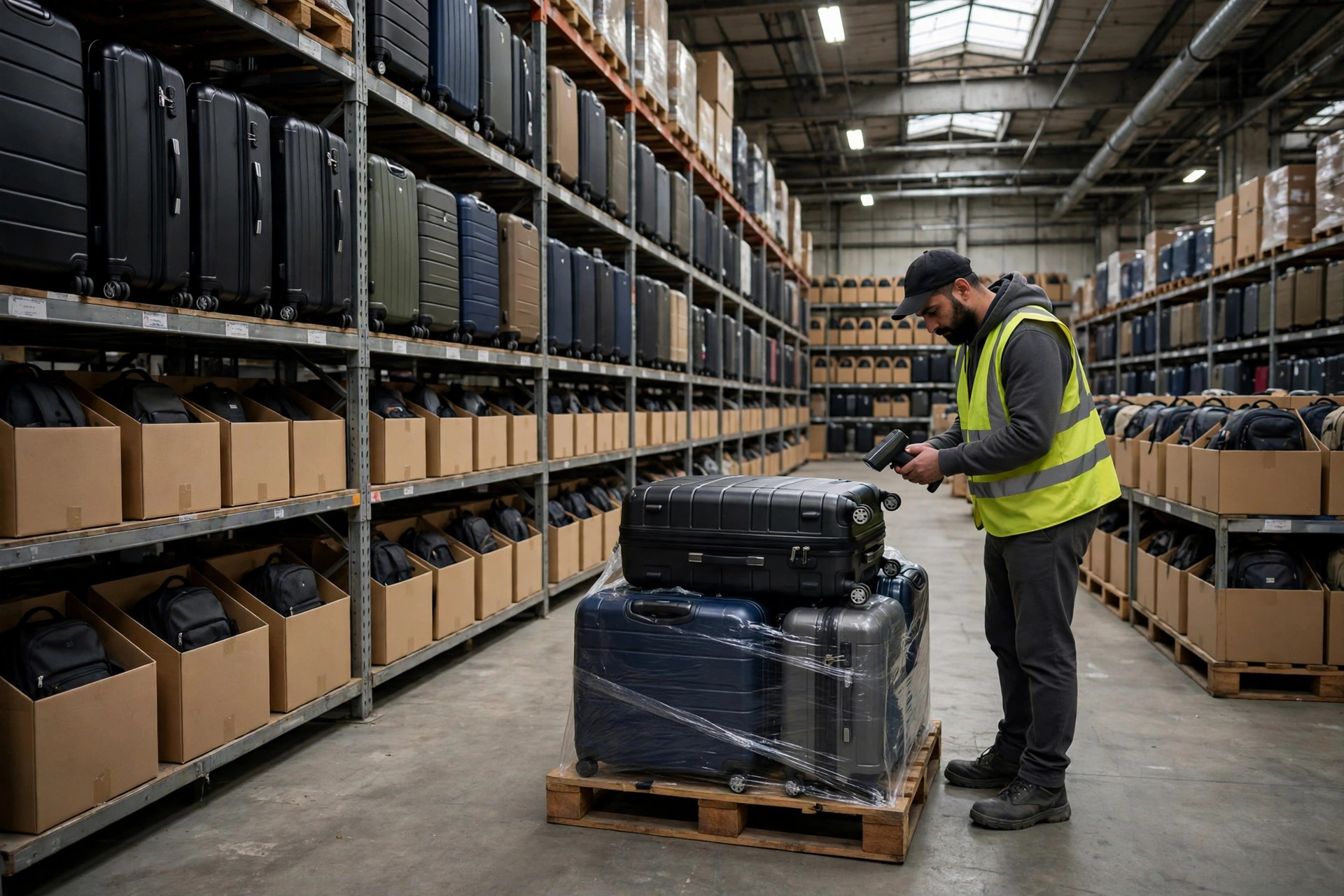
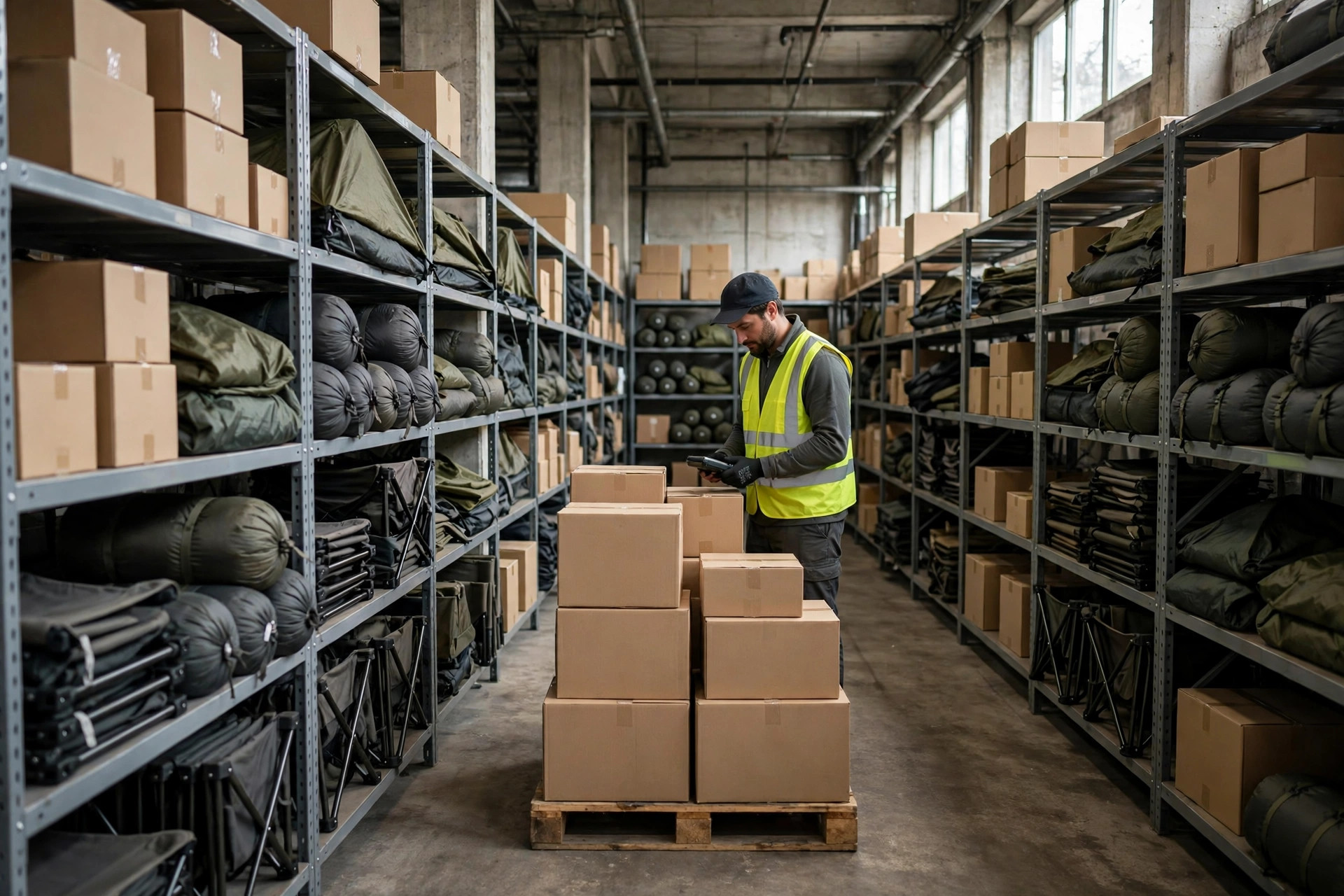
We learned our lesson: stop assigning locations by seller, and start assigning them by shape. Long items like tent poles and canopy poles go into one row of narrow bays. Round bundles like sleeping bags go on upper levels with cargo netting to stop them rolling off. Folding chairs stack flat, with big item-number labels on the side so nobody has to pull a whole stack out to check what it is. Sorting by shape is a pain the first time, but picking gets much faster afterward, and nobody spends their day rescuing fallen stock. The racking fix cost us almost nothing: a few rolls of netting and a batch of dividers, fitted by a technician in half a day. The big companies can keep their automated high-bay systems. We do not need them, and frankly, we could not run them even if someone gave us one for free.
Kitting: Do the Math Before You Pre-Pack
Camping sellers love selling kits: a tent plus a sleeping bag plus a ground pad, bundled as one camping set. The ticket price looks great. But the moment that kit enters the warehouse, it becomes a problem. Pre-pack the whole kit and it eats floor space; if one item runs out of stock, the entire kit cannot ship. Do not pre-pack, and during peak season your picker has to run across three zones to assemble a single order.
We ran the numbers on a batch of 100 kits, and the result surprised us:
| Approach | Floor space | Pick time per order | Biggest risk |
|---|---|---|---|
| Loose items, stored separately | Smallest | About 8 minutes | Pickers run themselves ragged at peak |
| Fully pre-packed kits | Largest | About 2 minutes | One stockout freezes the whole kit |
| Half-kitted | In between | About 4 minutes | Needs one extra handling step |
Here is the counterintuitive part: the neater you pre-pack your kits, the faster you can lose money. A fully pre-packed kit looks professional, but if the ground pad stops selling, the tent and the sleeping bag sit there with it, gathering dust. A small warehouse cannot afford to let one slow item hold a whole kit hostage. We would rather spend two extra minutes picking than watch an entire kit get stuck.
This August, during peak season, we tried half-kitting for one seller: tents and sleeping bags were staged together as kits, while small accessories like ground pads and tent pegs stayed loose in the picking zone. That week we shipped more than 300 orders a day without a single picking meltdown. When something ran short, we were only missing one accessory, not blocking the whole order. The seller later told me his return rate dropped too, because fewer wrong items went out. That is the small-warehouse way: do not aim for perfect, aim for a setup where one problem cannot shut down everything.
Peak Season Camping Gear Warehouse Storage: Keep Shipping First
When peak season hits, forget about making the warehouse look beautiful. Protect shipping first. Our sequence never changes. Two weeks out, we clear winter stock: return what can be returned, discount what can be cleared, and free up the aisles and the picking zone. Then we go through the bestseller list with the seller and move the hot items to the locations closest to the packing bench. The last thing you want during peak is a picker hunting through the whole building for a tent.
Whether to rent temporary space is also a math problem, not a pride problem. We worked it out: two hours of overtime every day for a month, plus the mistakes that come with tired pickers, costs about as much as renting a 200-square-meter empty bay next door for the season. And mispicks and missed items cost even more once you pay to fix them. So now I negotiate a two-month short lease next door before every peak season and hand it back when the rush ends. A big warehouse manager might laugh at that. But we cannot afford to burn money on stubbornness, and the cost of toughing it out always lands on us in the end.
Slow season deserves attention too. Returns are the part of this business most small warehouses ignore until it bites them. A returned tent is not resellable until someone checks the zipper, counts the pegs, and confirms the stuff sack is in the bag. We now keep a dedicated returns bench: returned gear goes there first, gets opened and counted, and only goes back to a location once it is complete. Items missing parts sit in a separate bin for the seller to deal with. It looks slower, but it prevents the second shipment complaint that costs far more than the inspection time.
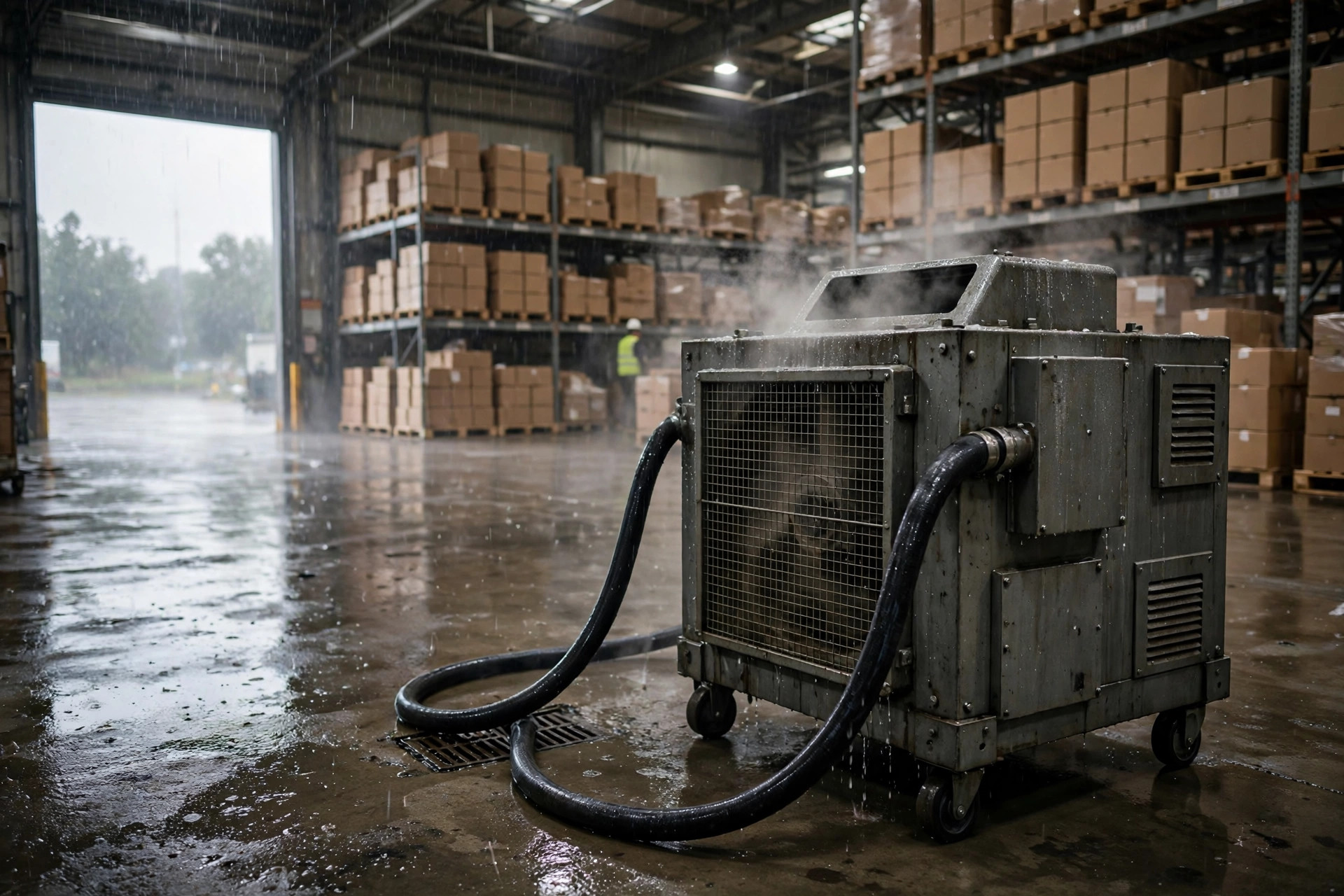
After November, tents and sleeping bags are most at risk from damp and mold. Our method is basic: everything sits raised on a pallet, off the floor, with a ventilation gap along the walls, and a few desiccant packs added when the rainy season comes. We do not run a fancy climate system. We walk the floor once a week and check by hand. It has worked for years without a single batch lost to mold. The equipment can be humble. The inspection routine cannot be skipped.
The truth about camping gear warehouse storage is that it is not a contest over who owns the fanciest racking. It is about whether you can still find stock and ship orders when the building is full. Sort by shape, do not tie kits together too tightly, protect shipping during peak, and keep up damp checks in the slow months. A small warehouse can absolutely handle this business.
If you run a small warehouse like mine, here is my one piece of advice: do not measure yourself against the big players and their showpiece facilities. Measure your improvised fixes against your own products, your own space, and your own team. Small warehouses have their own way to survive.
By Xiao Ma, Small Warehouse Owner