Let me be straight with you: seasoning warehouse storage looks like simple stacking from the outside, but any warehouse hand worth their salt can walk into a seasoning aisle, take one sniff, and tell you how well the place is run. One rainy-season night shift last year, I got called in at 3 a.m. A customer was picking up a batch of chili powder first thing in the morning, and when the crew opened a carton, the powder had caked solid. It would not pour at all. That batch had only been in the building for a couple of months, the pallets were stacked neat as you like, the paperwork was clean — but nobody had noticed the wall at the far end of the aisle sweating with damp. After that night, we carved out a dedicated seasoning zone in our warehouse, and we rewrote the rules for it from scratch.
Seasoning warehouse storage has three quiet enemies: moisture, odor transfer, and expiry. None of them announce themselves the way a crushed carton does. By the time you spot them, you are usually looking at a whole pallet, or a whole batch, gone bad. So let me walk you through the three gates we guard, one by one, the way we actually do it on the floor.
Seasoning Warehouse Storage Gate One: Fight Moisture from the Floor and the Air
The thing about seasoning warehouse storage is that moisture rarely arrives as a leak. It creeps. Powdered chili, ground Sichuan pepper, starches — they drink humidity out of the air and cake up fast, and once they cake, they are unsellable. Liquid seasonings look tougher, but damp bottle caps and moldy cartons get rejected by customers just the same.
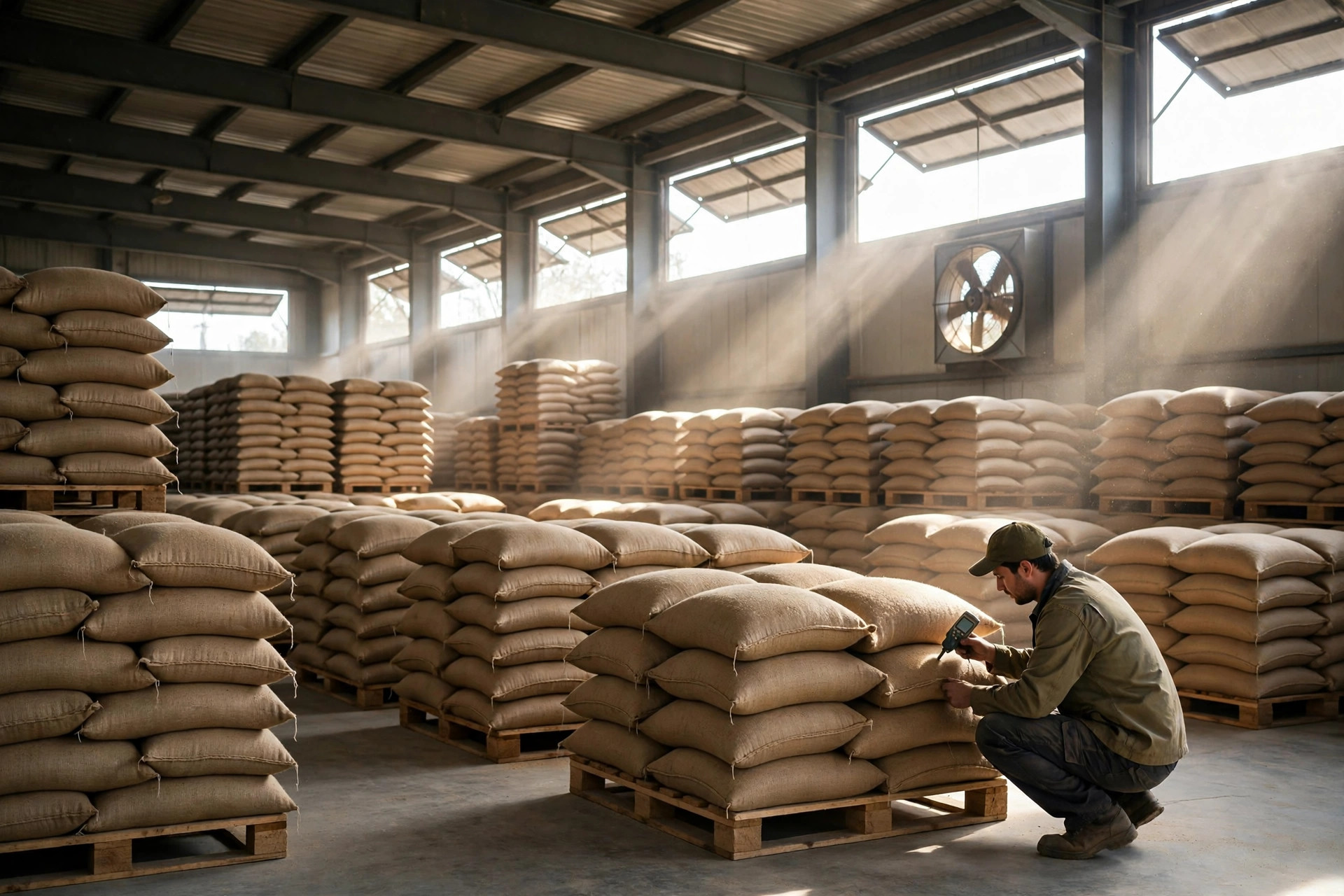
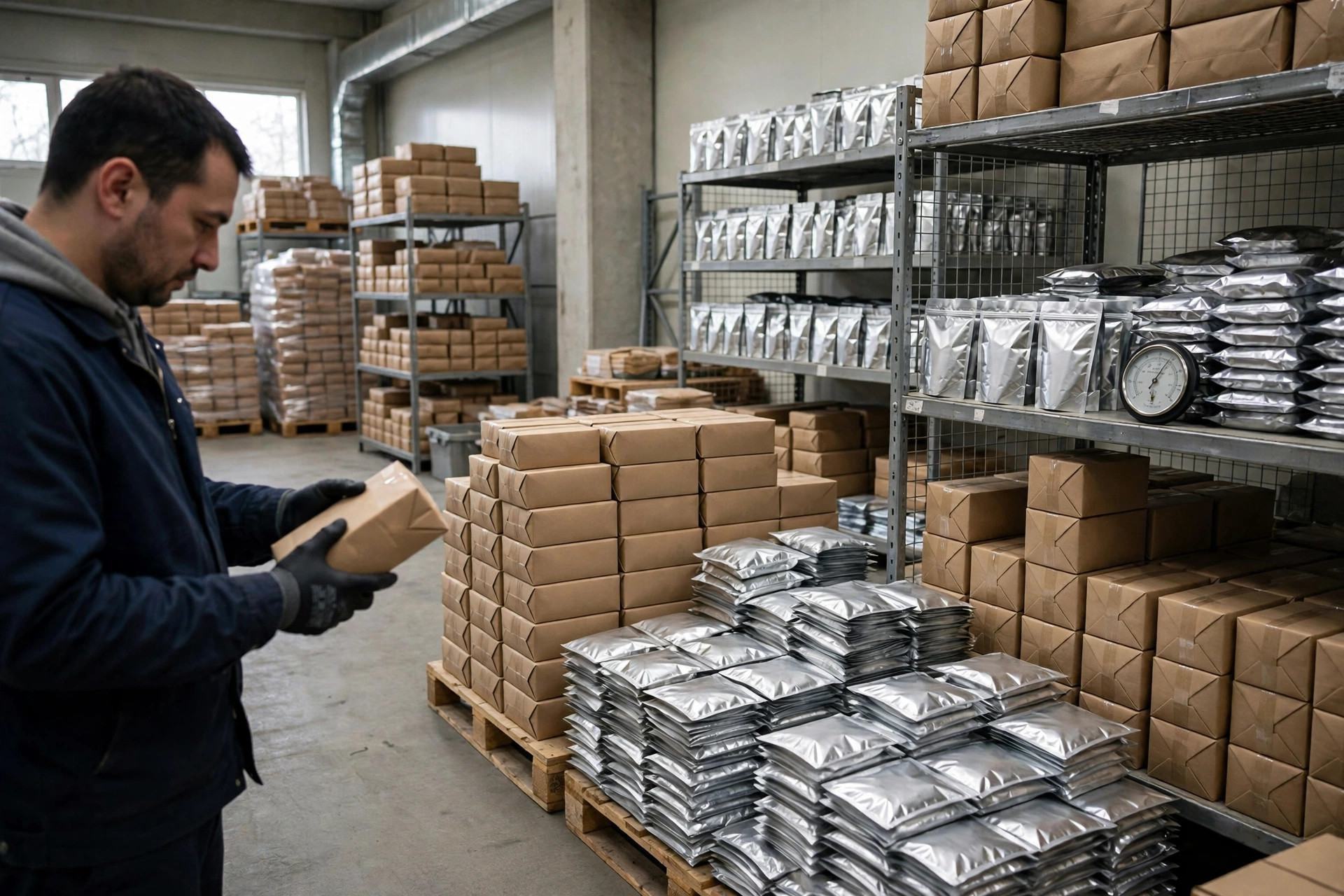
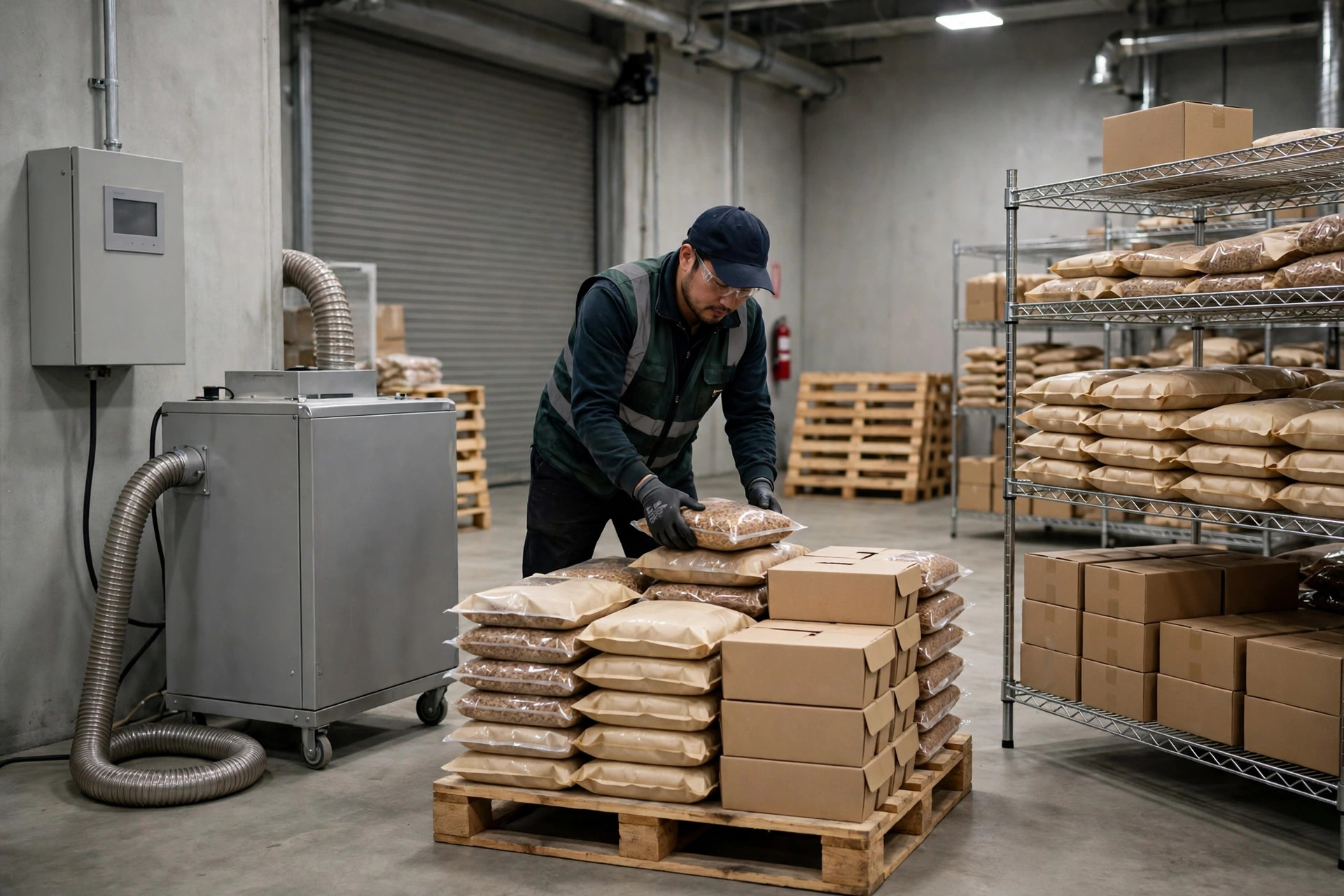
Here is what our warehouse does now. First, nothing sits directly on the floor, and the row against the wall keeps a gap, so when the wall sweats, the damp never touches the cartons. Second, the seasoning zone has its own humidity gauge, read once on the day shift and once on the night shift. When the number climbs, we switch on the dehumidifiers first and check the doors and windows second. Third, powdered seasonings get a packaging check at receiving: torn bags or loose seals get pulled out on the spot, repacked or stored separately, and never go straight onto a shelf. We learned that one the hard way. A couple of years back, a batch of ground pepper came in with weak seals, sat for about a month, and lost half its aroma. The customer took one sniff and sent it back.
One more detail most people miss: do not store seasonings next to goods that just came out of a cold room. Cold goods sweat condensation, the water runs down the pallet, and the neighboring cartons soak it up without anyone noticing. We now bring cold goods and seasonings in through separate doors, staggered by half an hour, just to dodge that small headache.
Seasoning Warehouse Storage Gate Two: Stop Odor Transfer with Zones, Not Lids
The second gate is odor transfer. Heavy-smelling goods — chili, Sichuan pepper, star anise, mixed spices — their smell works its way into cartons and into other seasonings. We once stored ground pepper on the rack right next to a batch of plain starch, and two weeks later the starch smelled like pepper when the carton opened. The customer docked our payment. That day I understood something: you cannot lid your way out of odor transfer. You have to zone your way out of it.
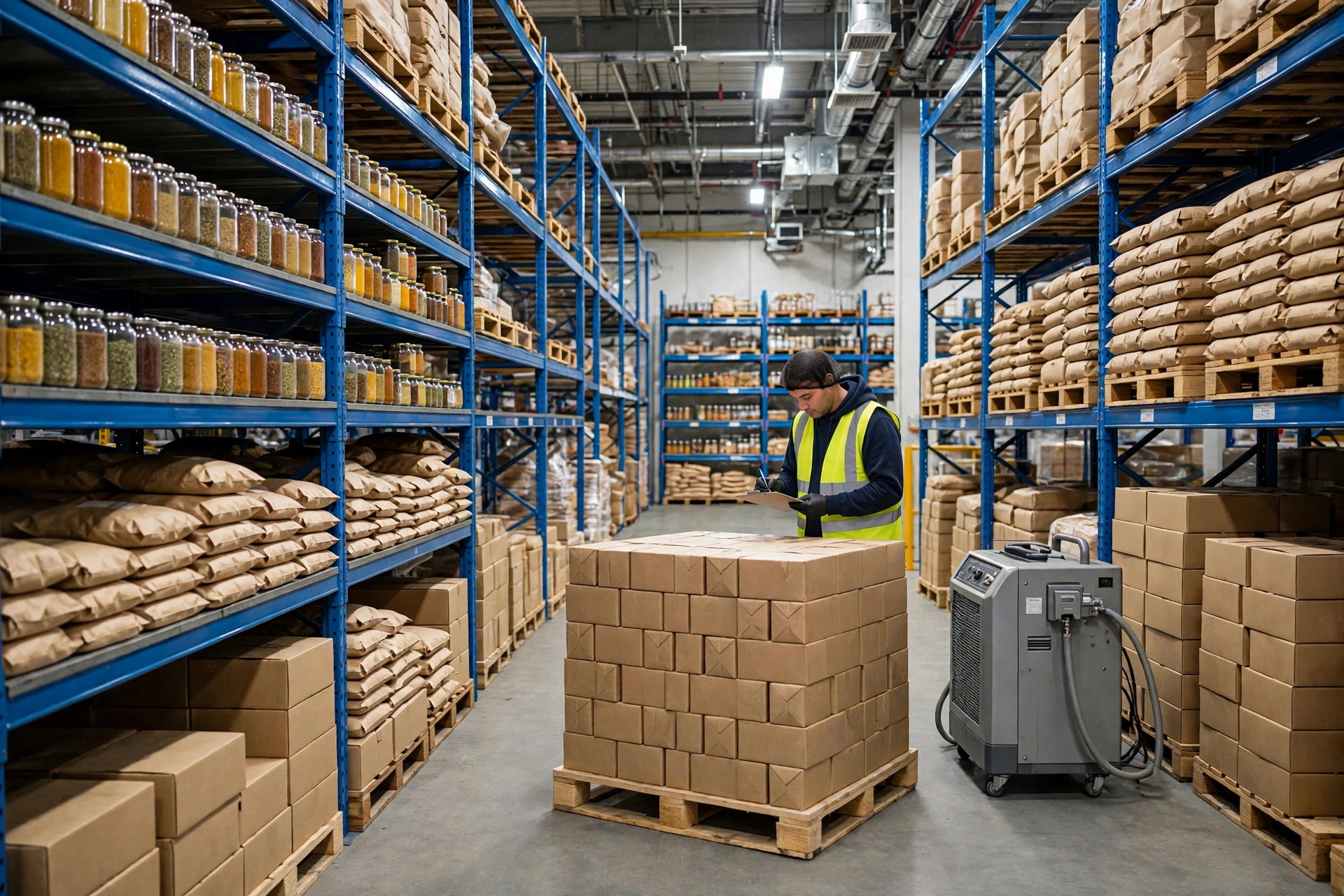
Our fix is three odor grades. The strong-smelling zone holds pepper, chili, and spice blends. The medium zone holds sauces and vinegars. The mild zone holds starch, salt, and sugar — the goods that pick up other smells the fastest. The three zones are separated by aisles, they do not share picking carts, and the gloves and tools used in the strong zone never wander into the mild zone. It sounds fussy. Once it becomes habit, it costs almost nothing.
When a new hire joins my team, the first thing I tell them is this: smell is part of the inventory. If you cannot manage the smell, you cannot manage the goods. The veterans take newcomers on a sniffing tour of all three zones on day one. Smell it once, and you never forget why the zones exist.
Seasoning Warehouse Storage Gate Three: Expiry Is About Rotation, Not Dates
The third gate is expiry. Seasonings look like slow movers with long shelf lives, so people relax and let them sit. That is a mistake. Seasonings come in dozens of varieties and batches, some sell fast and some crawl, and the slow one can sit in a corner for half a year. By the time anyone remembers it, the expiry date is days away and there is no time left to move it.
Our warehouse now picks by expiry date, not by arrival order. When a batch comes in, different batches of the same product are stacked separately, labels facing out, with the batch and expiry date written on the location card where anyone can see it. In the first week of every month, the shift lead walks the seasoning zone and lists everything expiring within the next three months, and that list goes to the sales team so they can plan ahead. It is a fixed routine, not an end-of-month panic.
| Three questions before shelving | Why we ask |
|---|---|
| What is this batch afraid of | Moisture, odor, or crushing |
| Which zone does it belong in | Strong, medium, or mild smell |
| When does it expire | Batch and date go on the location card |
That table is posted at the entrance of our seasoning zone. New hires read it before they shelve anything. If they cannot answer all three questions, the goods do not go up yet — we get the answers first.
Here is the counterintuitive part, and I will say it plainly: in seasoning warehouse storage, the most expensive loss is usually not equipment. It is goods sitting still. A pallet parked in a corner for six months looks like saved labor, but caking, odor transfer, and expiry risks are all climbing the whole time. Warehouses that keep moving, checking, and rotating their seasoning stock keep their losses low. Moving goods costs labor. Leaving them still can cost you the whole batch. Do that math honestly.
There is also a trade-off worth knowing: tighter packaging is not always better. Some seasonings hate being sealed up airtight and stacked dense, because heat cannot escape and trouble brews inside. Our approach is to keep the outer packaging intact, leave ventilation gaps when stacking, and wrap pallets without sealing them all the way to the top, so the goods can breathe. There is no universal number for this. It comes down to the daily walk-through, eyes open, hands checking.
Seasoning warehouse storage comes down to one sentence: moisture, odor, expiry — guard all three gates, and never let one slide. On your next morning shift, take a walk through your seasoning aisle. Check the humidity gauge, sniff the zones, flip through the location cards. If all three look right, that zone is in good shape.
By Chen Feng, Warehouse Operations Manager