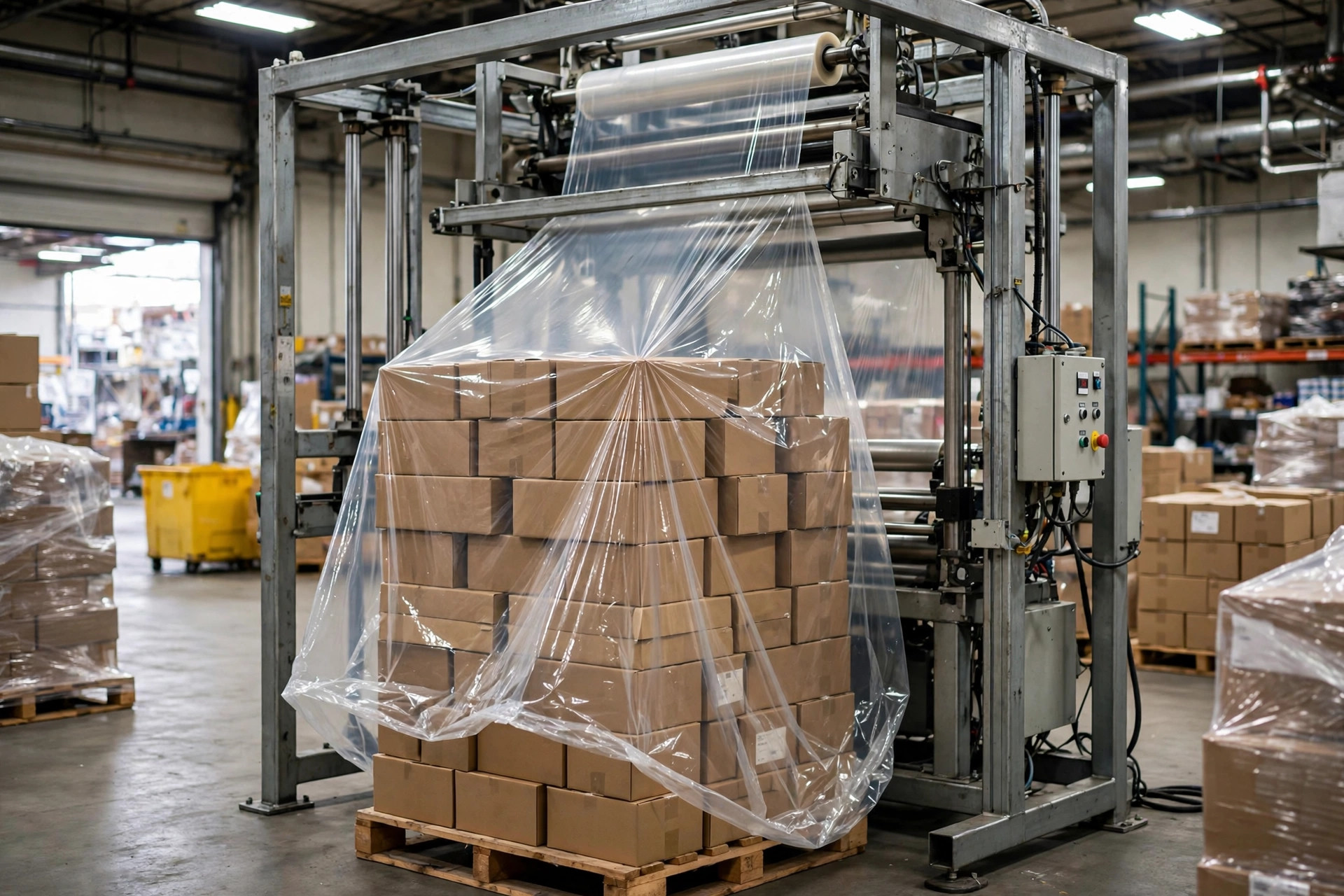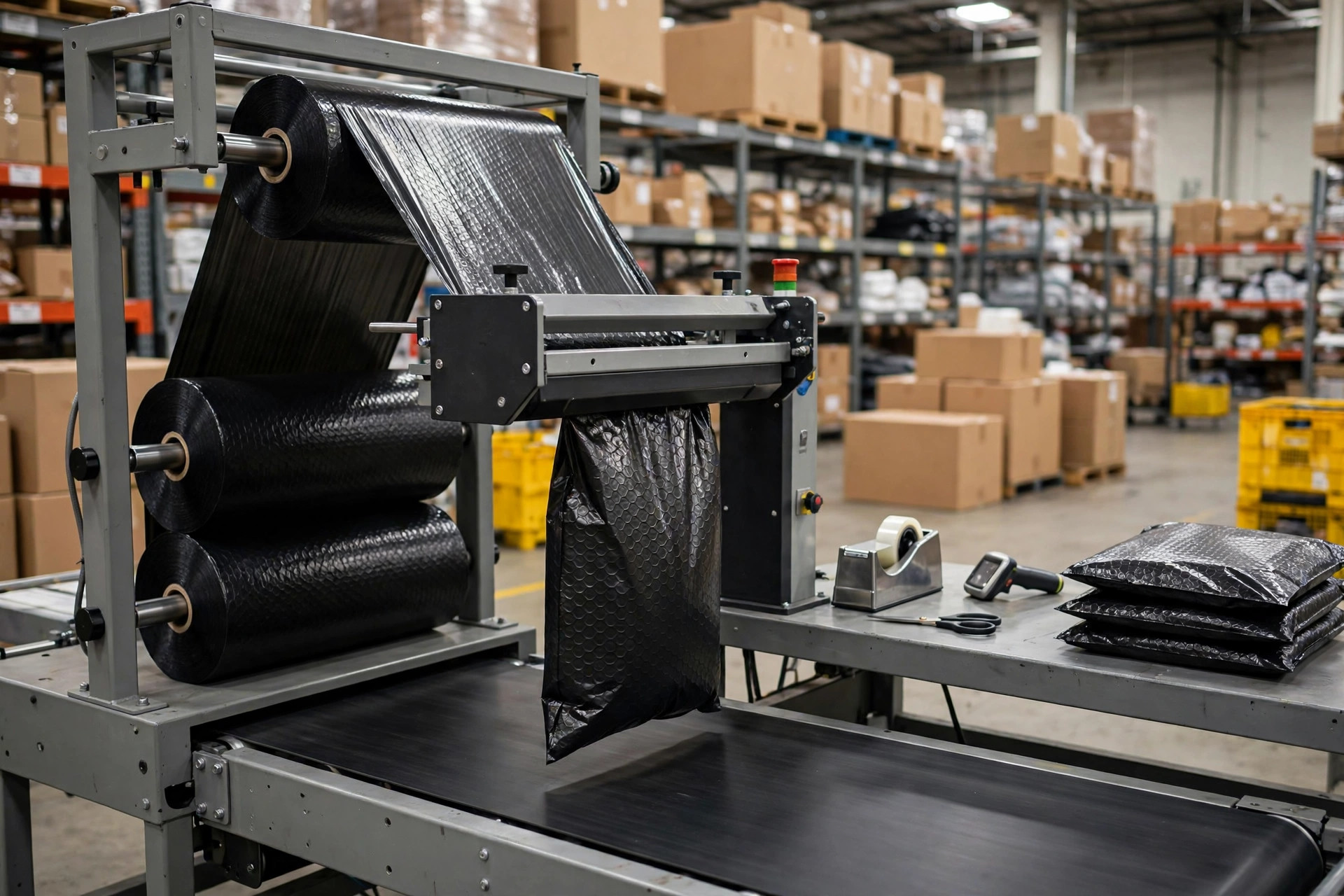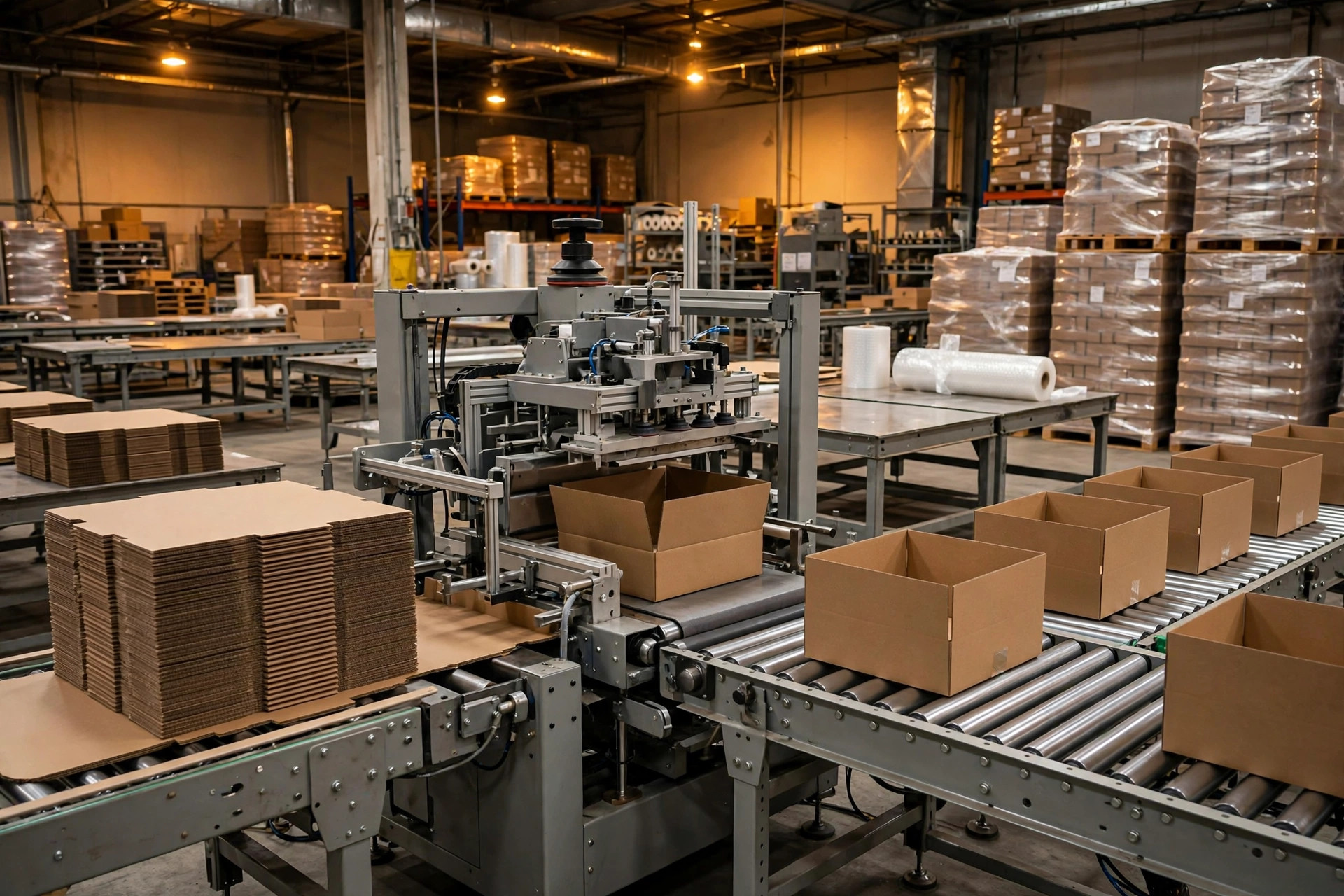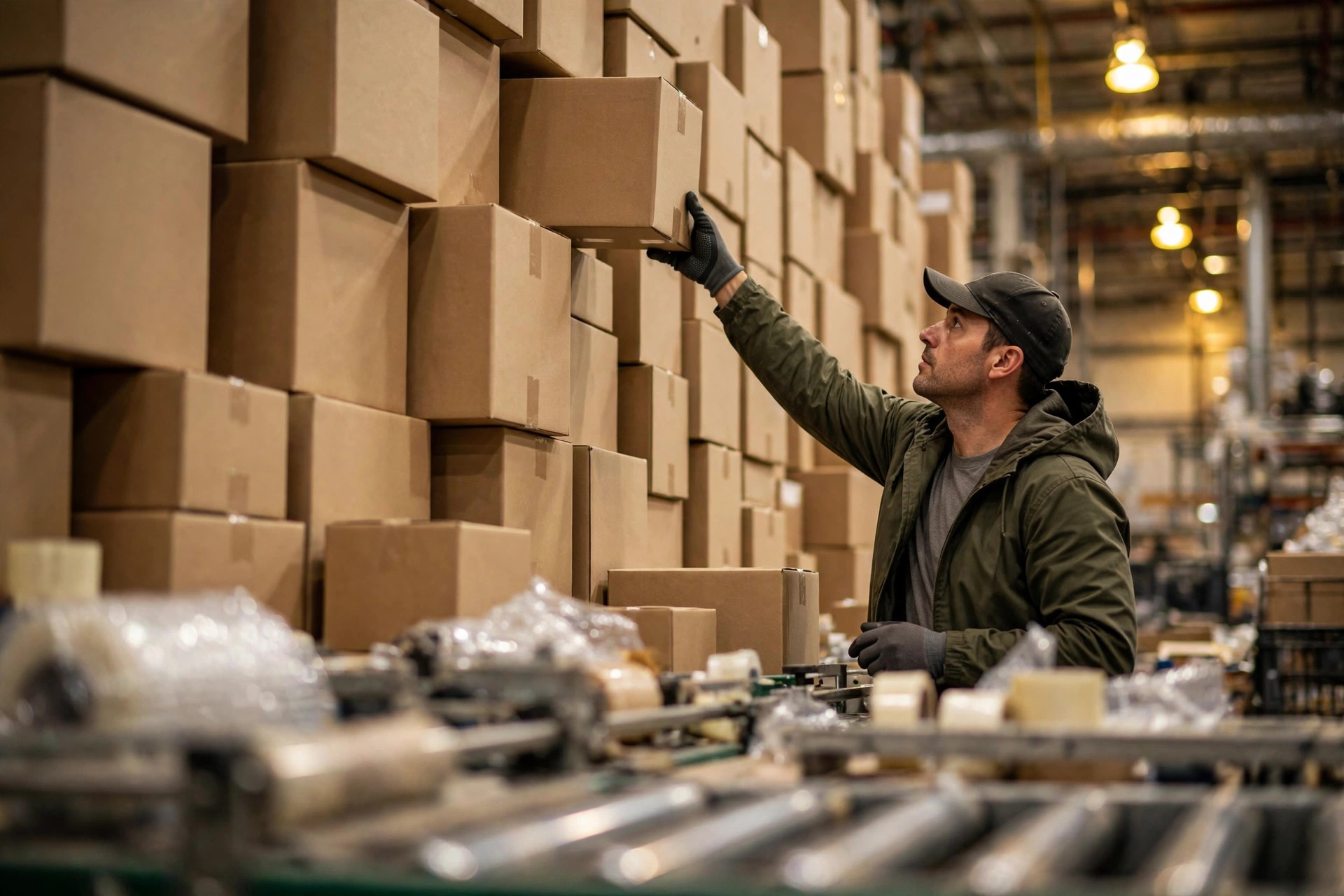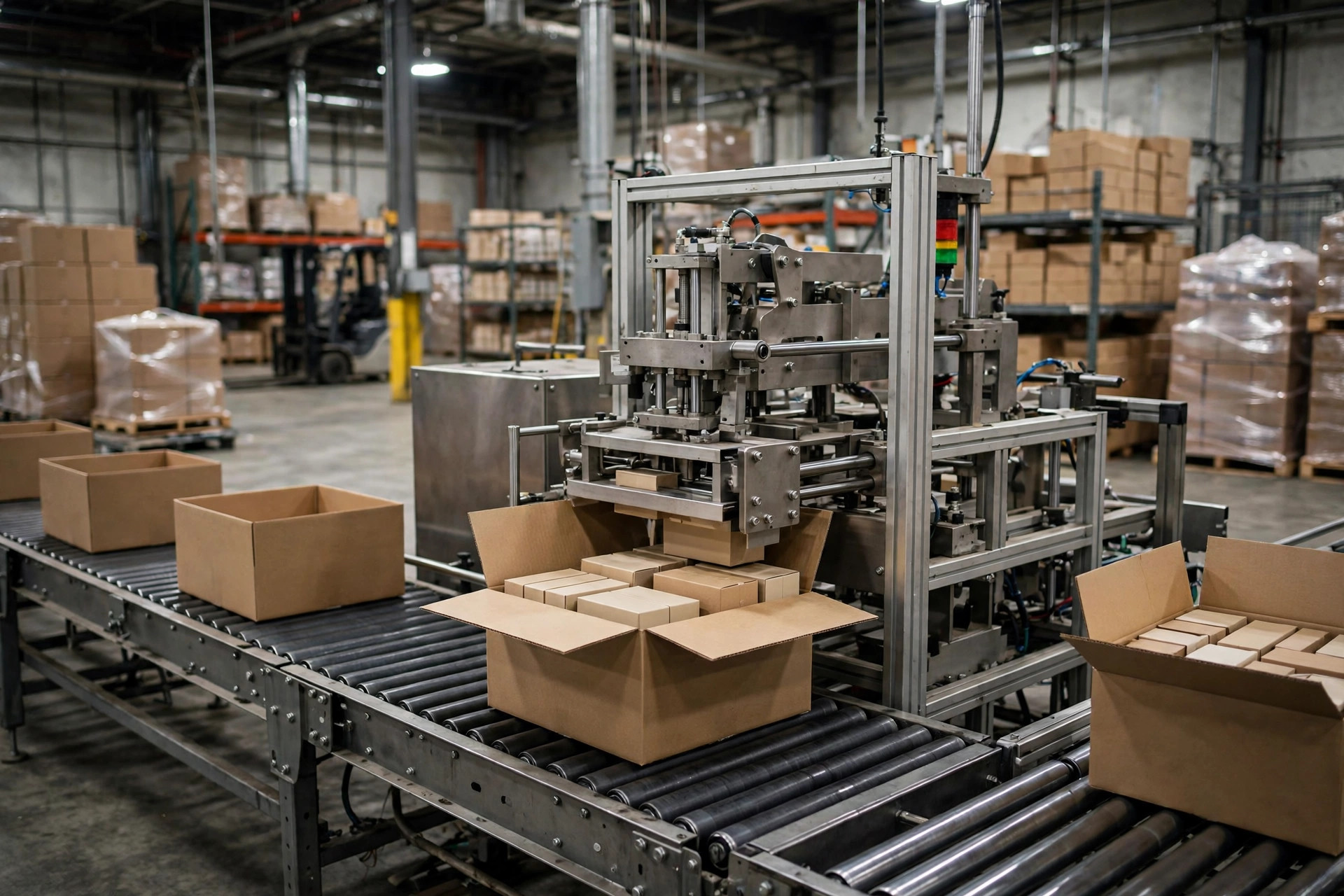
Let me tell you something. Fifteen years behind the wheel, and I have learned that the loading dock is where you see the truth about a warehouse. A truck pulls in, the door goes up, and you can already tell if this load will be smooth or a headache. Most of the time, it comes down to one overlooked step: how the cases got packed. When a warehouse hands that step to a machine, we call it a case packer machine warehouse — one line that loads the product into the case, drops in the dividers, and seals the box shut.
A couple of autumns back, I picked up a load at a beverage distributor's warehouse in Ontario. Workers hand-packed cases around the conveyor, dividers remembered sometimes, forgotten others. One pallet had a top layer of cases with a caved-in corner. The forklift rocked it and the bottles clinked against each other. The receiver pulled that pallet aside — rejected, repacked, re-palletized. I sat at the dock half the day, and my next run went sideways. What stuck with me: the problem had nothing to do with the road. It started in the warehouse, at the most overlooked step in the building.
Last spring, I picked up at a seasoning warehouse, and it was a different world. They had a case packer line running. The machine opened each case, loaded the bottles, set the dividers, sealed the top — one motion. The pallets came out square, every case the same height, forklift in and out. The receiver checked a few cases, signed, and I was gone. Put those two pickups side by side and the lesson is plain: machine or hands, the difference is not just speed — it is what the truckload looks like on arrival.
What a Case Packer Machine Warehouse Line Actually Does
A lot of people hear "case packer" and picture a machine that just stuffs things into a box. It is three jobs on one line.
First, case erecting. Flat cartons come in, the machine opens them up, stands them upright, and seals the bottom. That job on its own is called a case erector. It only builds the box.
Second, loading. Product moves in, arranged in the right pattern, and dividers go in where they belong. On the road, everything shakes, and the divider is what keeps bottles, cans, and glass jars from beating each other up. A missing or crooked divider is the first thing a receiver notices.
Third, sealing. The top flaps fold down and get glued or taped shut. A machine that only does this step is a case sealer. A case packer ties all three — erecting, loading, sealing — into one line. A flat carton goes in one end, a sealed finished case comes out the other.
If a warehouse says "we have a sealer," that is only the last step. Ask whether their case packer is the whole line or just one piece. The answer tells you how much you can trust their packing.
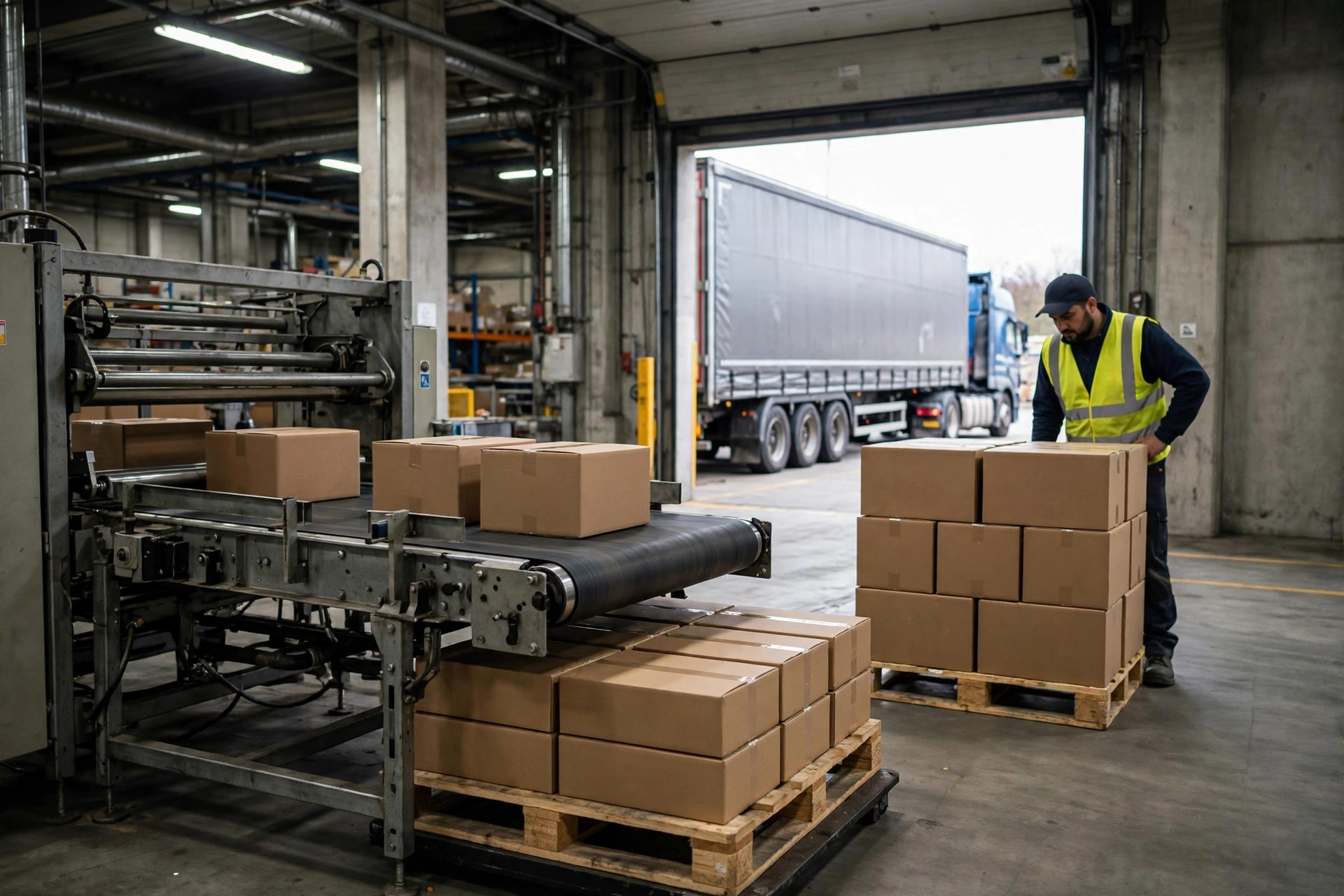
Four Types of Case Packer — Pick the Wrong One and It Sits Idle
A case packer is not one machine — four approaches, each for different products. Buy the wrong type and the most expensive machine becomes a paperweight.
| Type | How it loads | Good for | Watch out for |
|---|---|---|---|
| Side-load | Product slides in from the side | Bottles, cans, boxed goods | Crooked cases jam |
| Bottom-load | Product lifted in from below | Bags, soft packs, light products | Product shifts if lifting is unsteady |
| Top-load / gripper | Gripper picks from above, places inside | Bottles, cans, odd shapes, fragile goods | Gripper must match product shape |
| Robotic / spider | Robot picks and places | Many SKUs, small batches, frequent changeovers | Needs programming and tuning |
One warehouse packing bagged seasoning bought a side-load machine to save money. The bags went in crooked, the dividers never sat right, and the machine ended up idle while workers went back to hand packing. Nothing wrong with the machine — it just did not fit the product. Before you shop, list your own products — shape, weight, case size — and take that list to the vendor. Let the product pick the machine, not the other way around.
One more thing about speed. A vendor's brochure may tell you how many cases per hour their machine can run. That is their brochure number, not your warehouse's real number. Carton quality, product shape, changeover frequency — every one of them changes the real speed. One vendor's spec sheet I have seen lists 8–30 cartons per minute as an example. That is one vendor's spec sheet example — check with your vendor — never treat it as a general fact. Before you buy, bring your own cartons and your own product to the vendor and run a trial. The speed you see in the trial is your speed. Remember that at the negotiating table.
When a Case Packer Machine Warehouse Setup Is NOT Worth It
By now you might think every warehouse should have one. I am telling you, it is not true. I have seen case packers turn a warehouse around, and I have seen them collect dust. Here is when you should hold off.
First, low volume. A case packer is built for steady, high volume. If you only pack a little each day, the machine keeps starting and stopping, and hand packing ends up cheaper. A machine earns its keep running nonstop.
Second, changeovers that never end. If you switch case sizes and products several times a day, every changeover means stopping to adjust. Enough changeovers, and the time the machine saves gets eaten right back by the time it spends being adjusted. For small batches with lots of variety, human hands are more flexible.
Third, product that is too delicate or too oddly shaped. Odd shapes, fragile goods, surfaces that scratch — if the gripper is not matched well, a machine can damage more product than a careful worker would. Trial it with samples first. If the trial shows damage, do not force it.
Fourth, bad cartons. Machines are pickier about carton quality than people are. Thin board, uneven cuts, cartons gone soft from humidity — a machine will fold them wrong and seal them crooked. The worse the carton, the faster a fast machine makes mistakes. Get your carton supplier under control before you talk about machines.
Counter-intuitive truth: a case packer does not fix upstream problems. If product comes off the filling line crooked, if the case size does not match the product, a machine just makes the mistake faster and neater. Straighten out the upstream first, or the machine has no point.
Before You Buy, Do Three Sums
The decision is not "what does the machine cost." It is three sums.
The first sum is labor. Take the number of people you have packing cases today, multiply by the hourly wage, multiply by the hours per day. That is what case packing costs you in labor right now. The machine saves part of that, minus what it costs to run and maintain. What is left is the real saving. Do not guess at it. Use your own payroll numbers.
The second sum is rework. How many pallets get rejected or reworked each month because of packing problems? How much labor, how much time, how many delayed truck runs does each one cost? Most warehouses never add this up. Sometimes a case packer's biggest value is not saving labor — it is cutting rework.
The third sum is changeover. How many changeovers per day, how long does each one stop the line? Changeover downtime is the hidden cost of a machine, and once you count it, you know how many hours a day the machine will truly run in your building. Few changeovers, the machine pays. Many, run the numbers carefully.
If the answer is "not worth it yet," do not buy. Wait until the volume is there. Buying too early is a burden; buying at the right time is a helper.
Shippers: when you visit a warehouse, do not just look at space and price. Check the packing step — square cases, dividers in, seals tight. Warehouses: before you bring in a machine, get cartons, specs, and upstream process straight. A machine is an amplifier — a good process becomes good throughput, a bad one becomes bad results, faster.
Next time you pick up at a warehouse, take one extra look at the packing step. How square the cases are tells you how much trouble the road is going to give you.
By Shifu Zhao, Trucking Veteran (15 yrs)