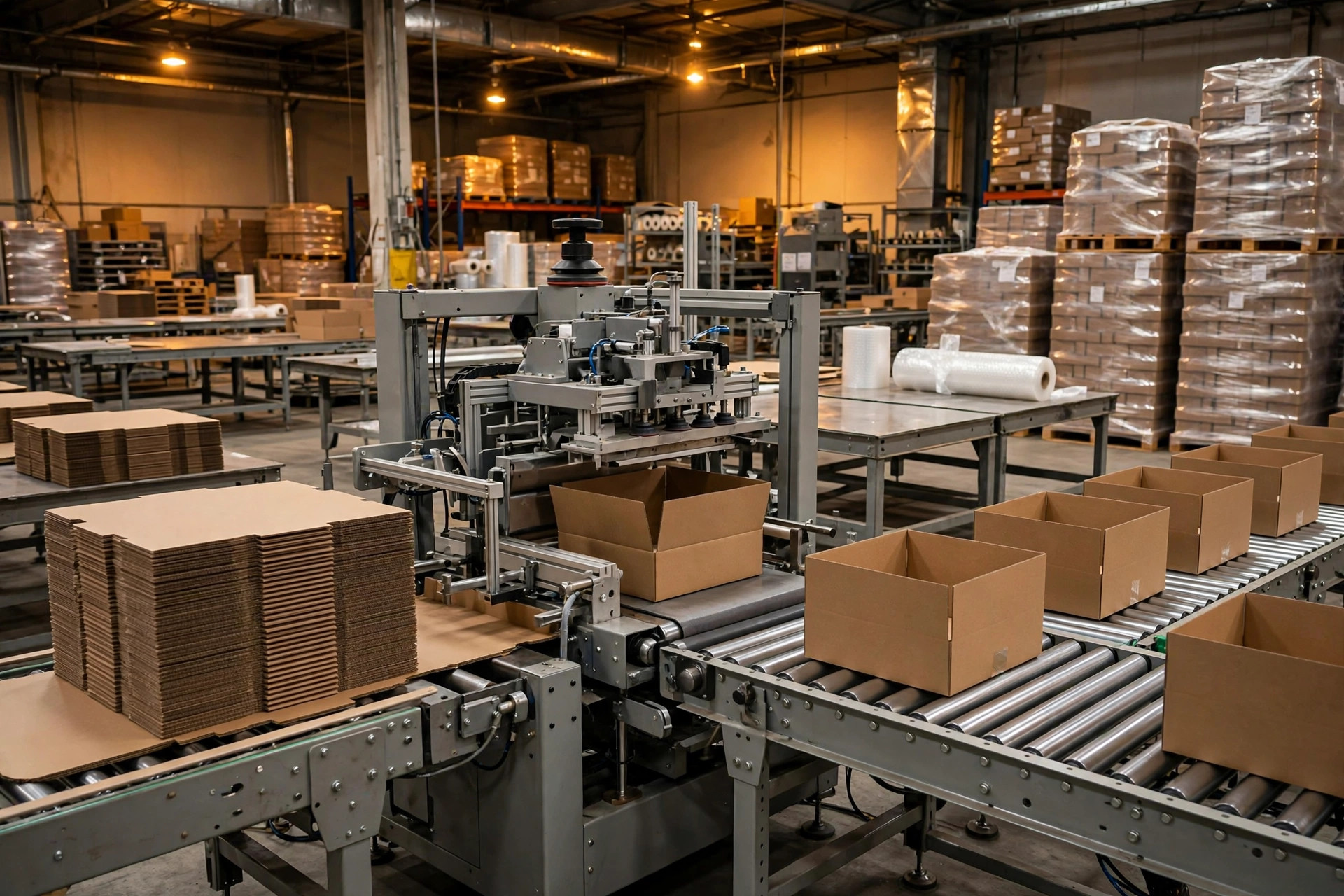
Last November, during peak season, I almost bought an automatic case erector for my 3,000-square-meter warehouse. We were shipping over 2,800 orders a day, and two guys at the packing stations did nothing but fold cartons and tape bottoms all day long — about 900 boxes per person. By quitting time, neither of them could stand up straight, and I was ready to pull the trigger.
But here's the thing — small warehouses like mine can't afford to burn money. A machine like that runs close to twenty grand, and if it ends up gathering dust, that's just an expensive lesson. So instead of ordering one, I did two things first: I ran the numbers on labor versus machine, down to the last dollar, and I squeezed every last drop of efficiency out of manual case erecting with some decidedly low-tech tricks. Six months later, I have my answer. Here's the whole story.
Our mess: 1,200 cartons a day eating 1.5 people's labor
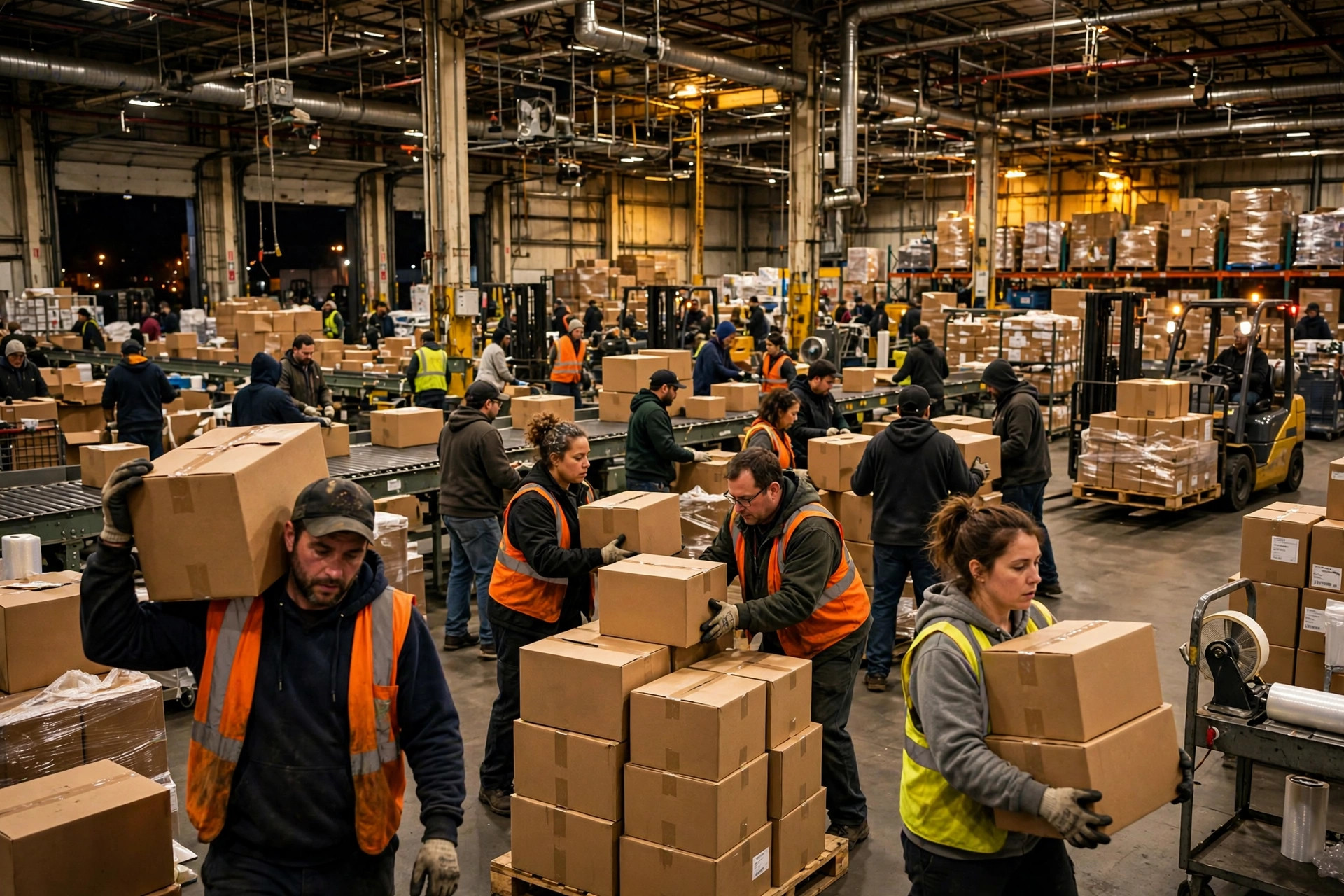
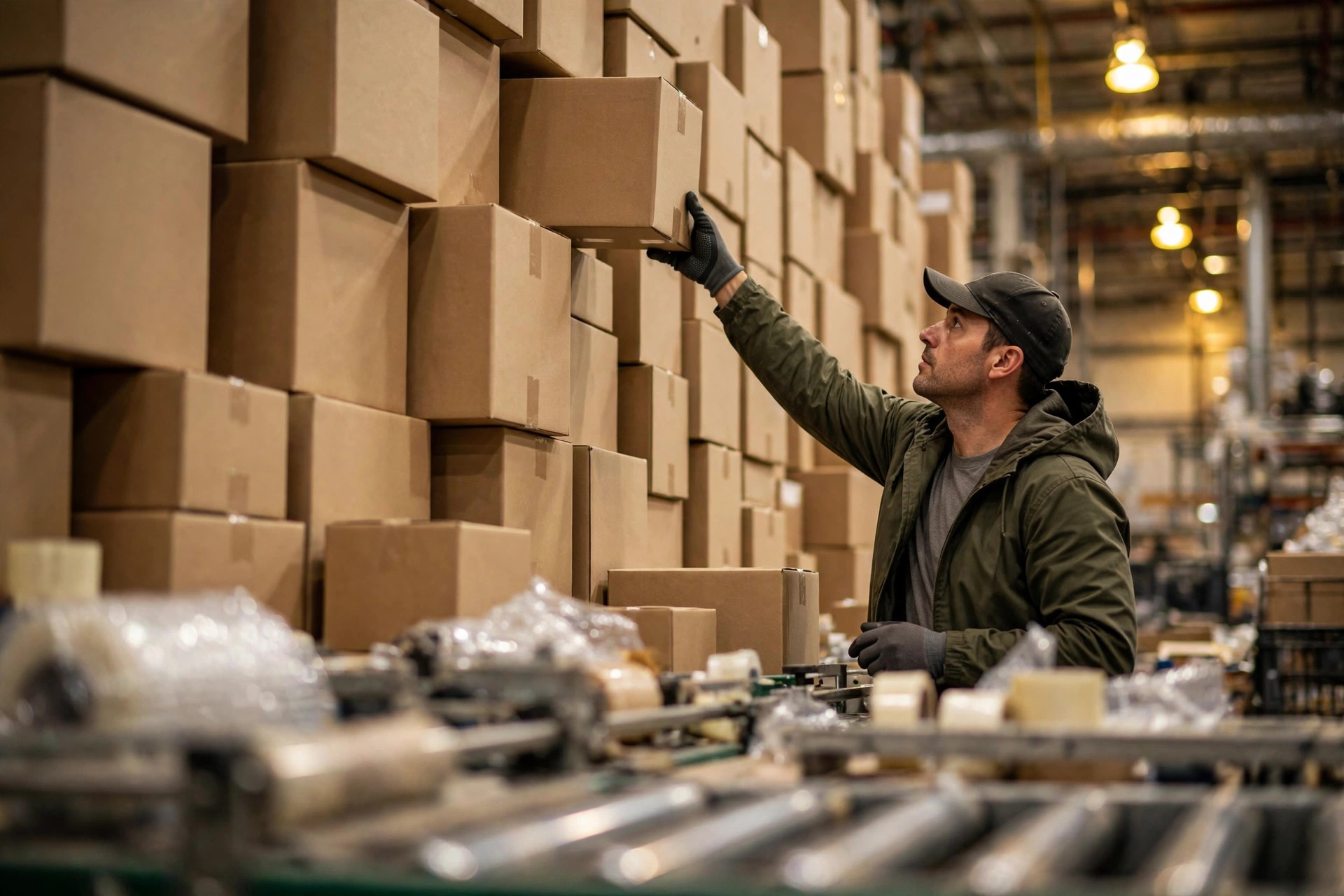
Let me paint the picture. Twelve people total, four packing stations. Case erecting sounds like unskilled work, but it eats labor alive: haul flat carton blanks off the stack, fold along the score lines, tape the bottom, stack finished boxes by the packing table. A skilled hand does 2–3 boxes a minute. At 2.5 per minute, 1,200 cartons takes 480 minutes — eight hours, one full person locked down all day. When peak season hits, it eats half of another person too.
Around here in Southern California, packers earn roughly $18–22 an hour, plus insurance and benefits for full-timers. Being conservative at $19 an hour, one person erecting cases full-time costs about $3,950 a month over 26 working days — around $47,000 a year. That stung. But what stung more was the fragility: one sick day and the packing line stalls; temp workers fold crooked boxes and the case sealer jams.
The cheap fix first: we cut carton sizes from nine down to four
Before spending a dime on equipment, I did something free: I killed carton sizes.
We had nine carton sizes — "historical reasons," as always. I had my ops lead pull three months of orders and found that five of those sizes accounted for less than 8% of volume combined. Gone. Merged into the nearest surviving sizes. Then I had our carton supplier deepen the score lines and standardize the fold pattern across the four remaining sizes, and we built a "pre-fold rack" — basically an angled steel frame. Slap a flat blank on it, push, press, and the bottom pops into shape. Cost: under $200.
The result was immediate: average time per box dropped from about 25 seconds to roughly 18, a about 30% efficiency gain. Fewer sizes also meant workers stopped fumbling with unfamiliar folds, and the defect rate dropped. That bought me some calm — turns out our manual ceiling was way higher than I thought.
But cheap tricks have limits. Even after the cuts, we still had to physically fold 1,200 boxes a day — 1,800 in peak season — and no steel frame saves your back from that. That's when the automatic case erector came back onto my radar.
The real math: manual labor vs. an automatic case erector
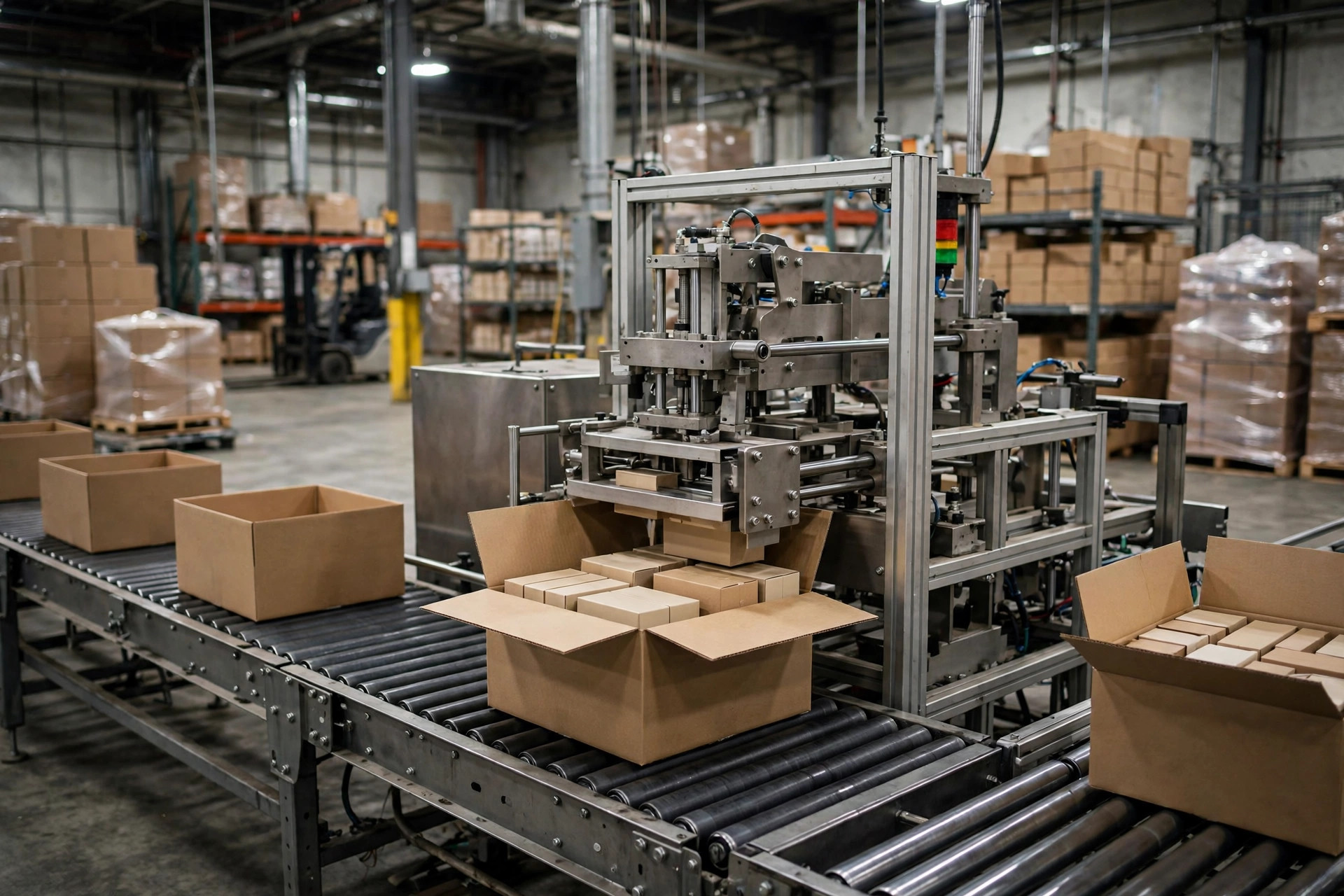
I got quotes from three suppliers. Small case erectors run a market range of roughly $12,000–$25,000 (domestic vs. imported makes a huge difference — get your own quote). Throughput is typically 8–12 cases per minute, footprint about 2–3 square meters, and you'll need a compressed-air supply. Let's run a five-year comparison on a mid-range $18,000 machine:
| Cost item | Manual only | Case erector machine |
|---|---|---|
| Equipment | $0 | about $18,000 (one-time) |
| Install + air supply retrofit | $0 | about $3,000 |
| Annual labor | about $47,000 (1 full-time person) | about $14,000 (0.3 person loading/monitoring) |
| Annual maintenance + wear parts | $0 | about $2,000 |
| Five-year total | about $235,000 | about $110,000 |
On paper, the machine saves more than half over five years, with payback in 6–9 months. Looks beautiful, right? Hold on — that math rests on one big assumption, and it's the trap no salesperson will warn you about.
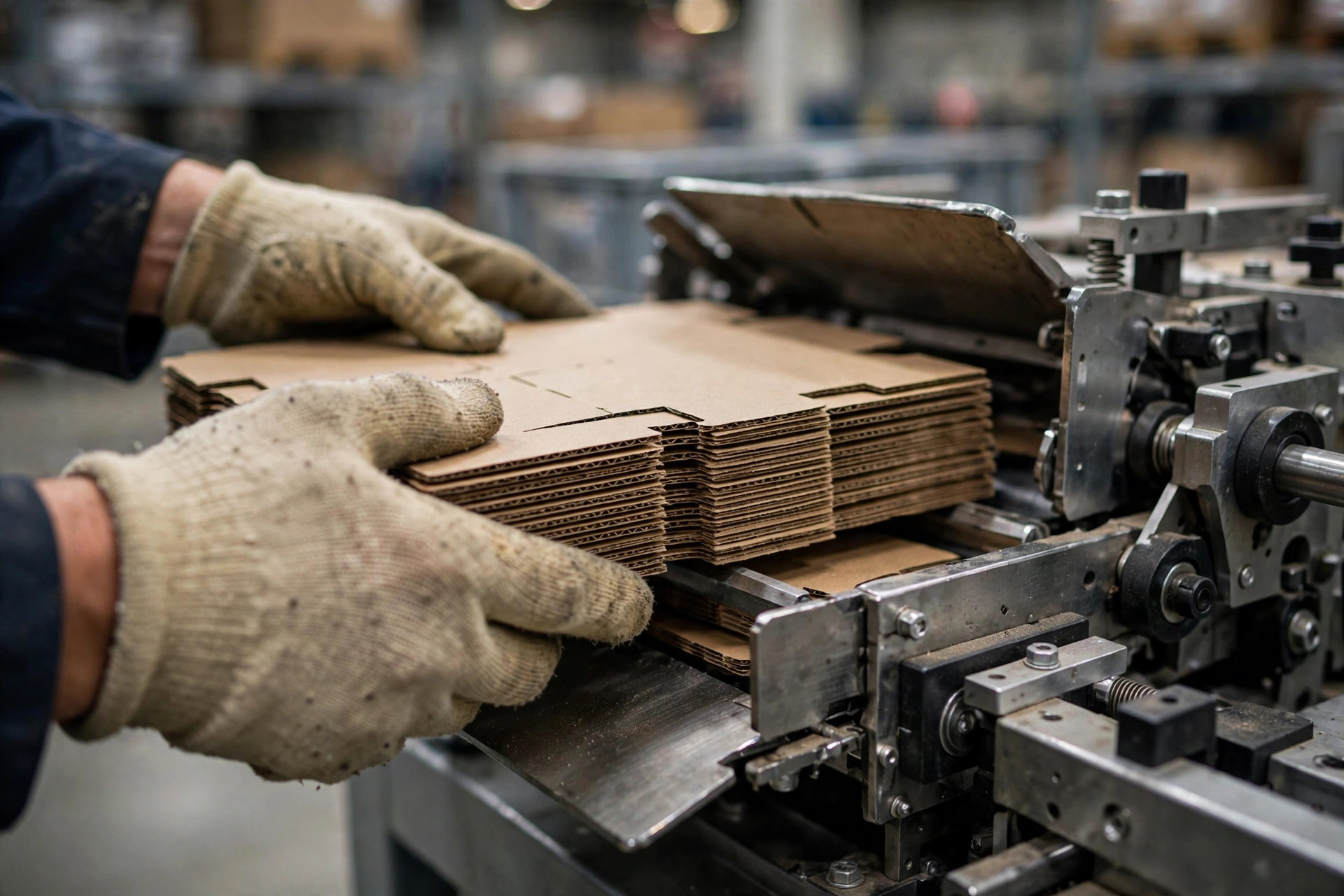
After installing a case erector: the hidden cost nobody talks about
Here's the counterintuitive part: for a small warehouse running small batches in many sizes, the biggest cost of the machine isn't the purchase price — it's the changeover time between carton sizes.
Every size change means adjusting the rails, repositioning the vacuum cups, resetting the folding mechanism — 15–30 minutes even for an experienced tech. We were down to four sizes, and in peak season we'd switch 2–3 times a day. That's over an hour of changeover daily. And with small-batch orders, the machine barely warms up before that size's run is done. Real-world utilization often sits under 50%.
My neighbor Chen learned this the hard way. He runs a 6,000-square-meter warehouse near Eastvale and bought a used erector this March for about $15,000, convinced he'd eliminate a headcount. But his orders spanned six carton sizes with 2–3 changeovers a day — adjusting, unjamming, recalibrating. Every labor dollar saved got eaten by changeover time. After I talked him into cutting down to three sizes, the machine finally started paying for itself. His words: "If I'd cut sizes first, this thing would've paid back six months earlier."
See the pattern? Case erectors and small-batch multi-size operations are natural enemies. A machine is a fixed cost; labor is a variable cost. In the slow season, when you're only erecting 400 boxes a day, the machine sits idle while manual labor would've been cheaper. The machine's real value isn't speed — it's certainty. When you can't hire in peak season and temps fold crooked boxes, the machine doesn't call in sick, doesn't get a sore back, doesn't quit.
My advice for fellow small warehouses: three lines, pick yours
After six months of this, here's my simple framework:
Line one: 800+ cartons a day, steadily, in 3 or fewer sizes — buy it. At that volume the machine stays utilized and 6–9 month payback is realistic. That's where my warehouse sits now, and the machine is officially on our purchase list.
Line two: 400–800 cartons a day, or 4–6 sizes — not yet. Do two things first: cut your carton sizes toward three, and build the $200 pre-fold rack to max out manual efficiency. Revisit the machine once volume grows and sizes shrink.
Line three: under 400 cartons a day — don't even think about it. At that scale, labor plus cheap tricks is the optimal answer. Buy the machine and it'll run two hours and nap for six; depreciation alone costs more than the labor.
Two more practical notes: before buying, make the supplier run YOUR cartons on the machine — every size you use, not just one. And be careful with used machines; ask specifically about replacement costs for wear parts like vacuum cups and belts, or you'll save on the purchase and bleed on the maintenance.
Big companies talk about automation rates. Small warehouses like mine talk about one thing: "if I spend this money, how many months until it comes back?" A case erector isn't a scam, but it isn't magic either. Cut your sizes first, exhaust the cheap tricks, run the numbers honestly — then spend. Small warehouses have their own way of surviving, and careful math is our competitive edge.
By Xiao Ma, Small Warehouse Owner