Let's start with the numbers, because that's the only thing that matters here. A mid-range autobagger, installed and running, costs roughly $40,000. One US packer costs close to $50,000 a year, fully loaded. So "how much does an autobagger cost" is actually the wrong question — the right one is whether your order volume earns the machine back. Run enough volume and it pays for itself in months. Run too little and it's a $40,000 paperweight.
I'm Lao Zhou. I've spent over a decade doing logistics cost analysis, and I've run this exact math dozens of times. The verdict never changes: buy right and it's a money printer; buy wrong and it's tuition. Grab a calculator and follow along — five minutes and you'll know which camp you're in.
What an Autobagger Costs: Beyond the Sticker Price
First, the equipment price bands. Ask three dealers "how much does an autobagger cost?" and you'll get three different answers — the ranges below are the honest version, reflecting 2024–2025 US market levels. Dealer quotes vary widely, so get three competing quotes before signing and treat list prices as the opening bid, not the answer:
| Tier | Type | Price range (USD) | Who it's for |
|---|---|---|---|
| Entry | Tabletop semi-auto bagger | $5,000–$15,000 | Small warehouses testing the waters |
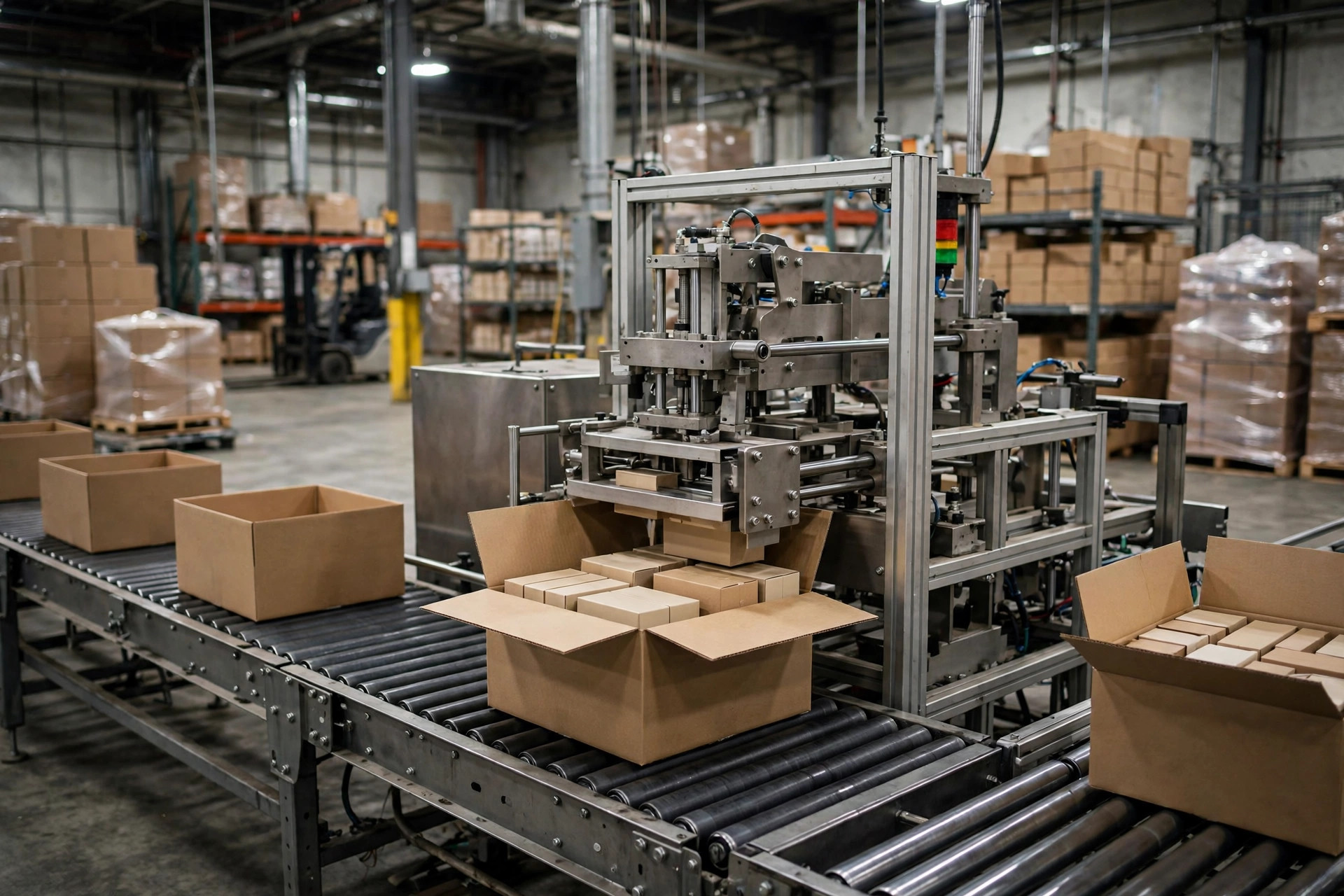
| Mid-range | Mid-speed automatic bagger | $20,000–$50,000 | The workhorse for e-commerce sites doing thousands of orders a day |
| High-end | High-speed bagger with inline print-and-apply | $60,000–$120,000+ | Large DCs and 3PLs at 10,000+ orders a day |
The used market is always liquid — auction or refurbished units typically go for 40–60% of new. But there's no warranty, so confirm the bag specs are still available before buying. A discontinued bag format turns the machine into scrap metal.
The sticker price is only the first check you write. My habit with any automation: look at 5-year total cost of ownership. On an autobagger, the machine itself is often just 30–40% of 5-year TCO. The rest:
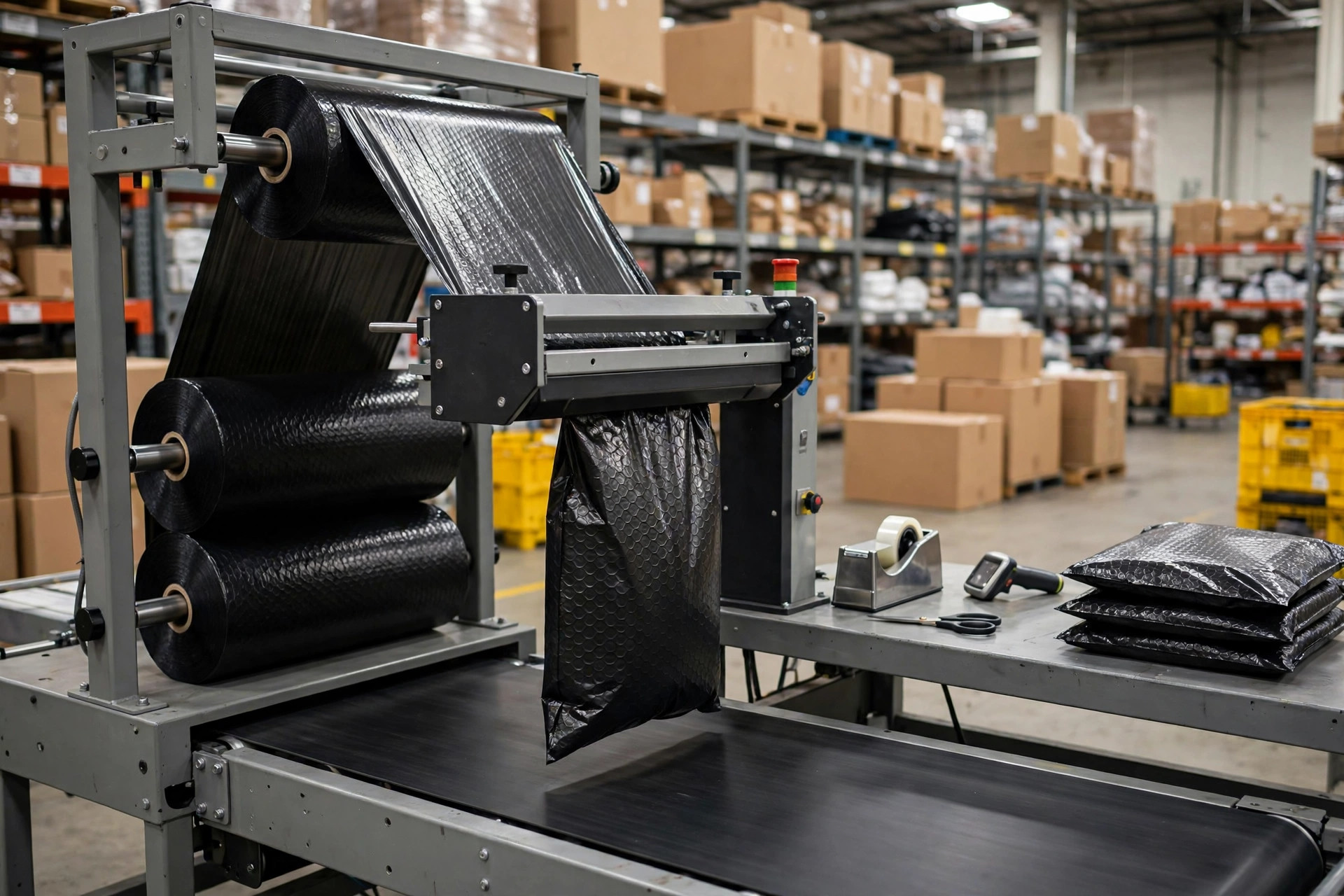
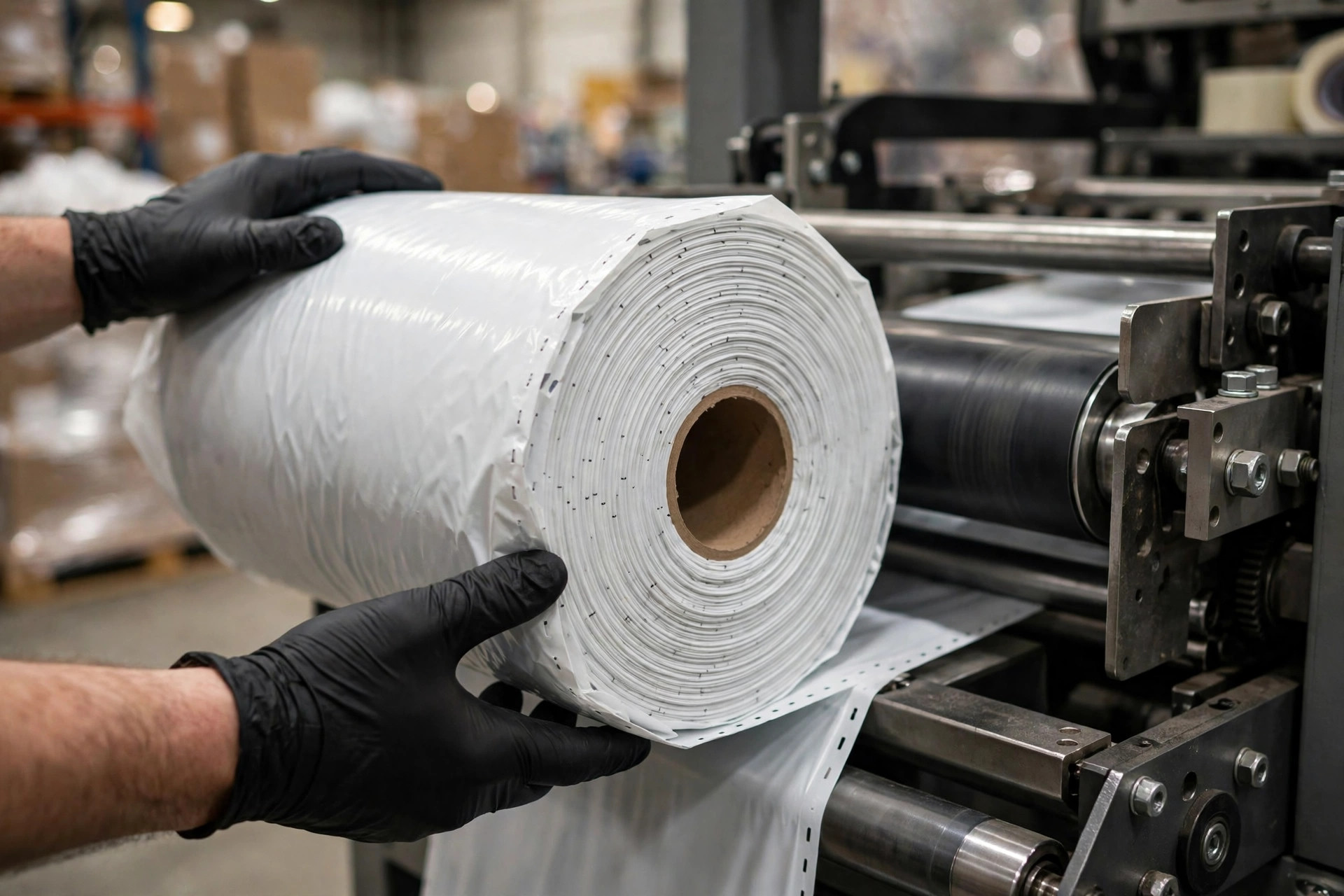
- Consumables. Pre-opened bags on rolls only come in OEM or licensed specs, and they cost more per unit than generic poly mailers. At 1–2 cents extra per order, a site doing 5,000 orders a day burns an extra $18,000–$36,000 a year on bags. Over five years, consumables routinely cost twice the machine. This is the line item sales reps hope you never ask about.
- Installation. Air lines, power drops, integration with conveyors or printers — $5,000 is a common order of magnitude.
- Maintenance and spares. Sealer jaws and cutter blades are wear parts; budget $2,000–$3,000 a year. A tired sealer jaw ships leaky bags, and the returns cost more than the part ever will.
- Downtime. Format changeovers take real time, and bag jams stop the line. Budget at 95% overall equipment effectiveness, not the 99% in the brochure.
Add it up and a $35,000 mid-range machine easily reaches $120,000–$150,000 in 5-year TCO. Once you see this structure, you know where to negotiate: bag price matters far more than the machine discount. Lead with consumables at the negotiating table, not the equipment quote.
Autobagger Cost vs. Manual Labor: The Side-by-Side Math
The table below is a worked example — assumptions listed underneath. Plug in your own numbers; don't copy the conclusion.
Assumptions: an e-commerce warehouse averaging 5,000 bagged orders a day, 300 operating days a year; packer wage $18.50/hour with a 1.3 fully-loaded multiplier (wages plus payroll tax, insurance, and recruiting amortization — higher in California); manual pack rate of 300 units per person-hour end to end; the bagger running at 55% of its rated speed.
| Cost item | Manual (6 packers) | Autobagger (1 machine + 2 operators) |
|---|---|---|
| Annual labor | ~$300,000 | ~$100,000 |
| Equipment (one-time) | $0 | ~$40,000 installed |
| Annual consumables uplift | $0 | ~$22,000 |
| Annual maintenance | $0 | ~$3,000 |
| Annual total | ~$300,000 | ~$125,000 |
| Net annual savings | — | ~$175,000 |
Payback = $40,000 ÷ $175,000 ≈ 0.23 years — under three months. That looks aggressive, and it is: this is what packaging automation genuinely does at high volume. But the conclusion is brutally sensitive to volume. Same assumptions, only daily volume changed:
| Daily bagged orders | Net annual savings (approx.) | Payback (approx.) |
|---|---|---|
| 5,000 | $175,000 | 3 months |
| 3,000 | $85,000 | 6 months |
| 2,000 | $35,000 | 14 months |
| 1,000 | ~$5,000 | 8+ years (don't bother) |
At 1,000 orders a day the machine sits idle most of the year, depreciation keeps ticking, and minimum bag orders tie up cash. That's money spent badly.
Two real engagements from my files. In 2024, an apparel e-commerce warehouse in Ontario, California was pushing 7,000 small parcels a day, 90% baggable, with nine packers across two shifts — and peak-season hiring was breaking them. One mid-range bagger with inline print-and-apply cut the pack team to four. Payback: five months. The owner's words: "Should have bought it two years ago — training temps cost more than the machine."
The counter-example: a Midwest 3PL bought a high-end integrated unit in 2023 for over $90,000. But most of its clients shipped odd-shaped, multi-SKU orders — only 40% were baggable, real utilization stayed under 30%, and every format changeover ate 40 minutes, so operators just packed by hand whenever they could. A year later the machine was collecting dust. The lesson: automation rewards standardization and punishes variety.
Three Lines in the Sand: Who Should Buy and Who Should Walk Away
With the math done, the decision lines draw themselves. Three of them — measure with a ruler:
Line one: 2,500–3,000 bagged orders a day, sustained. Above this, payback compresses under a year and the conversation is worth having. Below 2,000, don't buy — spend the money on process improvement instead. "Sustained" is doing heavy work in that sentence; two peak months don't count.
Line two: at least 60% of orders baggable. Baggers only eat standard small items. If more than 40% of your orders are oversized, irregular, or need dunnage, utilization never gets high enough for the math to work. Pull three months of order mix data first.
Line three: consumables leverage. Before signing the equipment contract, send your 3-year bag volume to two or three consumables suppliers for separate quotes — and don't let the equipment vendor know you're shopping. If you can hold annual consumables uplift under $15,000, you negotiated well. Half a cent per bag beats a $10,000 machine discount every time.
One counterintuitive take to close on: most buyers justify the machine as "labor savings." Wrong frame. Its real value is smoothing peak-season labor volatility — the recruiting scramble, the training lag, the temp error rate. Those risks cost far more than wages. The depreciation you pay while the machine idles in February is exactly the insurance premium for November. Understand that and you won't wince at the idle machine in the off-season or panic without one at peak.
So how much does an autobagger cost? Between $5,000 and $120,000+, but the sticker is the least interesting number on this page. Here's your five-minute verdict — calculator out:
- Your manual cost per order = hourly wage × 1.3 ÷ units packed per hour
- Your machine cost per order = (total installed cost ÷ 5 ÷ annual bagged orders) + consumables uplift per order + (annual maintenance ÷ annual bagged orders)
- Divide step 1 by step 2. Above 1.5, buy. Between 1 and 1.5, rent or buy used and trial for three months. Below 1, walk away.
Numbers don't lie — as long as they're your numbers. Plug yours in and the answer writes itself.
By Lao Zhou, Logistics Cost Analyst