There's an industry saying: "When the ASRS stops, the whole warehouse stops, so the only maintenance window is Chinese New Year." Every time I hear that, I want to argue. In 2023 I audited an auto-parts ASRS in Suzhou — eight aisles, one rotated out for servicing every month, zero unplanned downtime all year, uptime at 99.6%. Contrast: a cold-chain facility in Tianjin in 2021 — four stacker cranes, no redundancy, a rail settlement issue forced a four-day shutdown, outbound on forklifts and manual picking at under a third of normal throughput. Same equipment, two worlds. The difference isn't luck. It's whether the system was designed with room for no-downtime maintenance — and whether the window is scheduled properly.
Bottom line: no-downtime maintenance doesn't mean less maintenance. It means chopping one big shutdown into small fragments and stuffing them into the gaps between production.
The Principle: Slice the ASRS Into Independent "Combat Units"
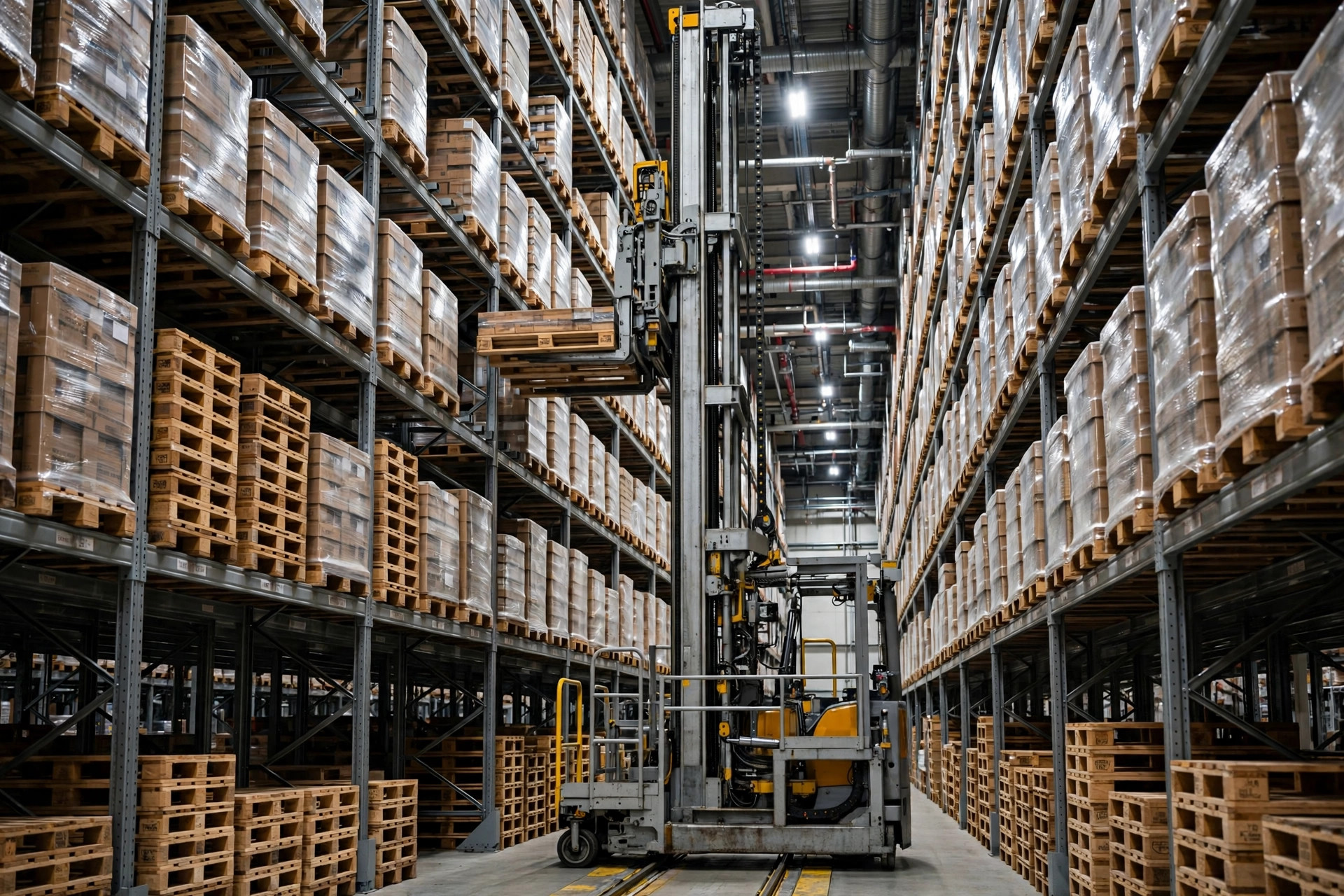
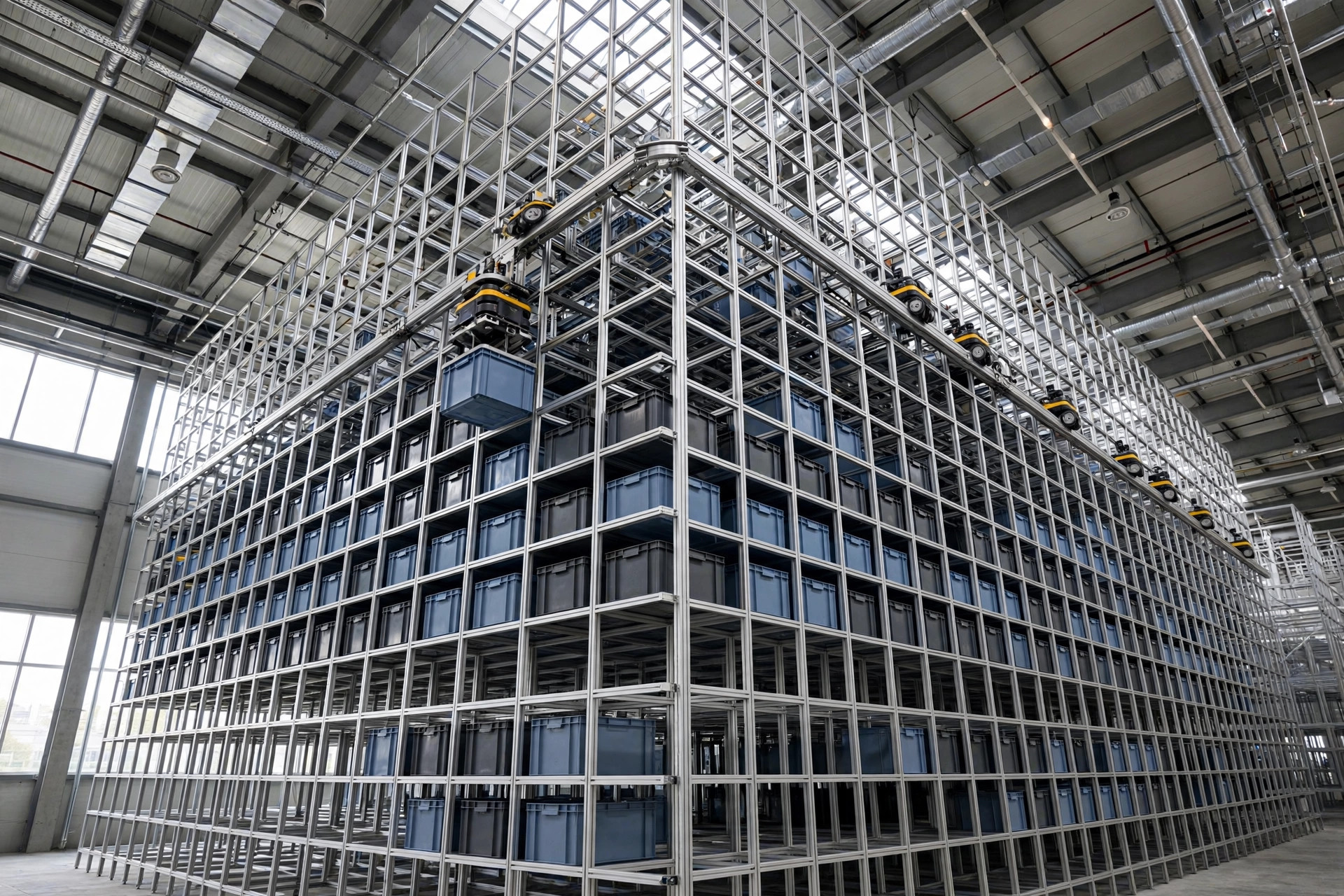
Think of it this way: an ASRS is parallel units — aisle + conveyor + controls. As long as the WCS can isolate zones, one aisle can go down for service while the rest keep running. The warehouse degrades; it doesn't die.
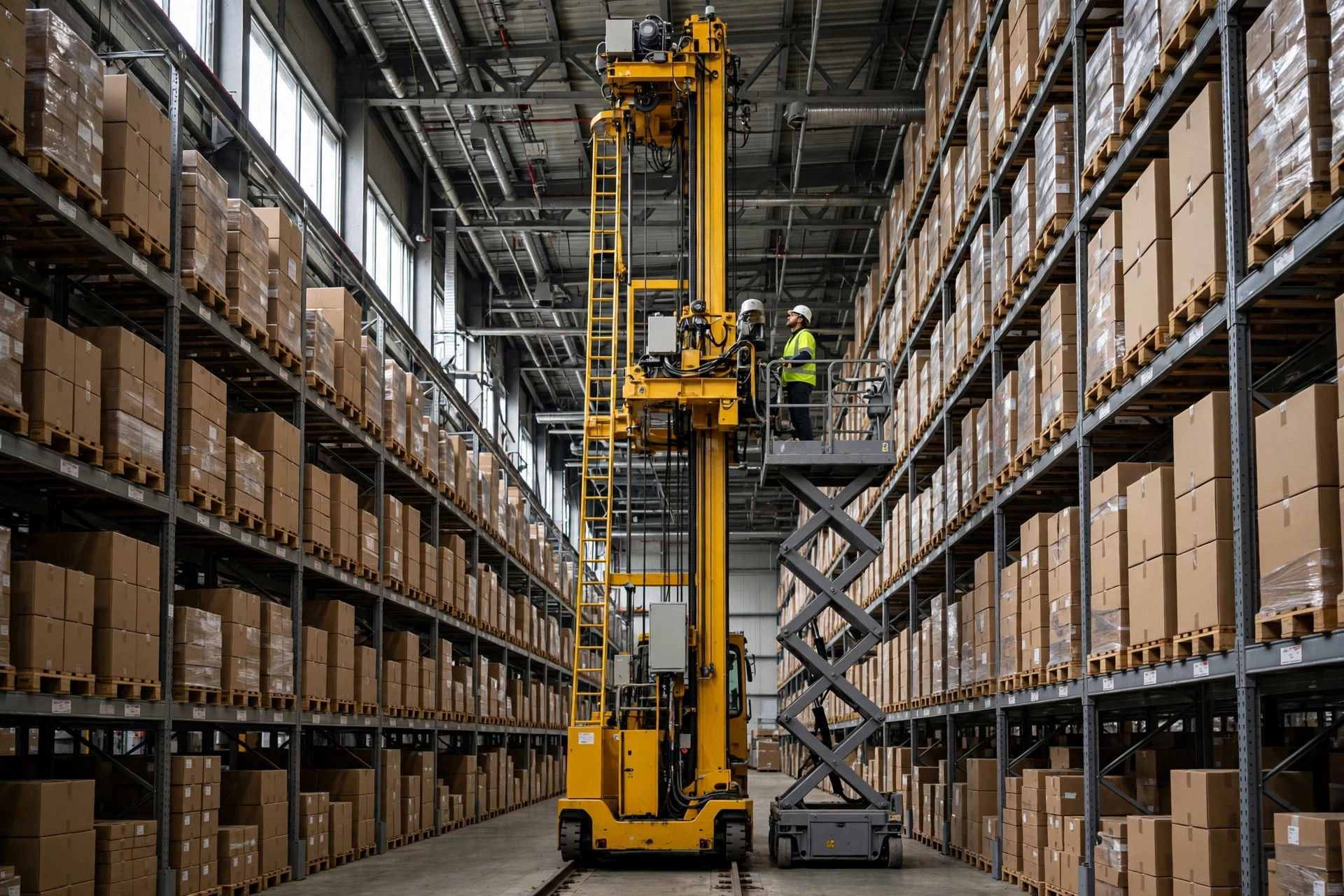
Three mature techniques make this work. First, aisle-level redundancy. The bluntest approach: plan eight aisles for the throughput of seven and keep one as a floater. Double-deep cranes bake redundancy in — one crane serves two rack rows, so losing one only dents capacity. Typical pallet stacker figures: 120–180 m/min horizontal, 30–60 m/min lift, 20–30 m/min fork extension, ~30–40 combined cycles per crane per hour. Eight aisles flat out gives on the order of 240–320 pallets per hour. Take one offline and you lose about 12.5% — pre-stage fast movers to other aisles before the window, and nobody notices.
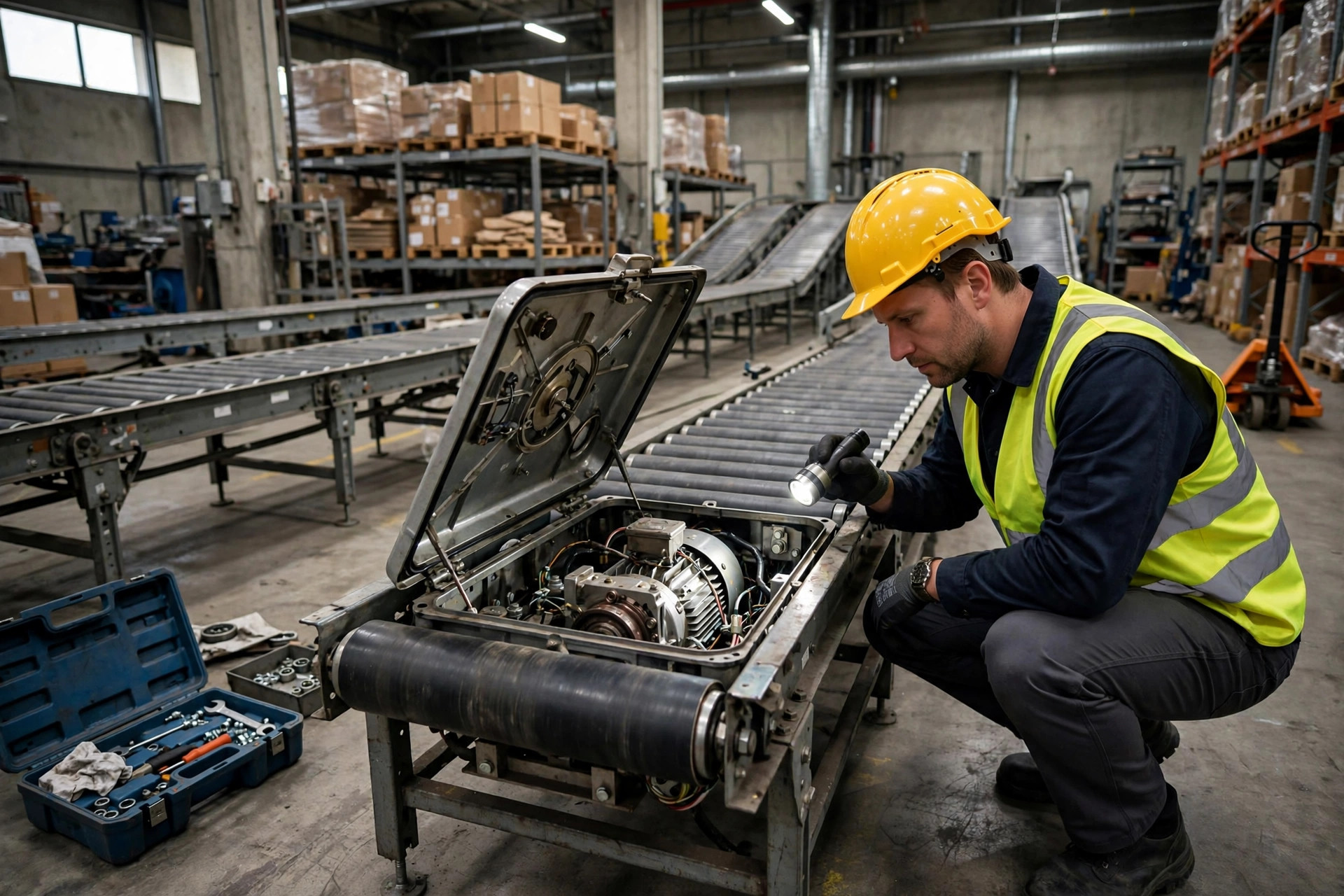
Second, conveyor bypasses. Warehouses obsess over the cranes and forget that front-end conveyors and vertical lifts are where single-point failures actually live. The mature design puts a bypass loop parallel to the main line, or dual discharge paths at outbound. One line stops for a jam clear or roller swap, and pallets route around it automatically — same logic as keeping a service road open while you repave the highway.
Third, control partitioning. The WCS partitions the system by aisle or zone. Maintenance mode is a one-click switch: the target aisle goes into "maintenance lock," tasks auto-redistribute, conveyors stop feeding that zone. Without this, maintenance means manually suppressing tasks crane by crane — slow and error-prone. I've seen a warehouse with no zoning where a dispatcher accidentally released a task while a technician was inside the aisle. On safety, a system lock beats a procedure every time.
In short: no-downtime servicing = redundant hardware + bypass paths + partitioned controls. Miss any one and "no downtime" is just a sales-deck slide.
Scheduling the Maintenance Window: A Four-Quadrant Framework
Principle understood — now, how do you schedule the windows? Here's a four-quadrant framework I've used for years: device criticality (Class A critical / B important / C general) on one axis, operating intensity (peak / shoulder / valley) on the other.
Three iron rules: Class A equipment only gets valley windows; Class B gets shoulder windows; Class C gets fixed on the spot. Stacker cranes, vertical lifts, and main conveyors are Class A. Conductor-rail brush replacement, rail inspection, sensor cleaning are Class B. Lighting, signage, safety door switches are Class C.
Three steps. First, plot the intensity curve — outbound pallets by hour, two weeks of data; valleys show up between 1–5 a.m. or on Sundays. Second, break Class A work into aisle-sized packets: eight aisles, two rotated per month, four valley hours each, full coverage across the year. Third, pre-build "maintenance mode" templates in the WCS — when the window opens, one click and tasks redistribute automatically.
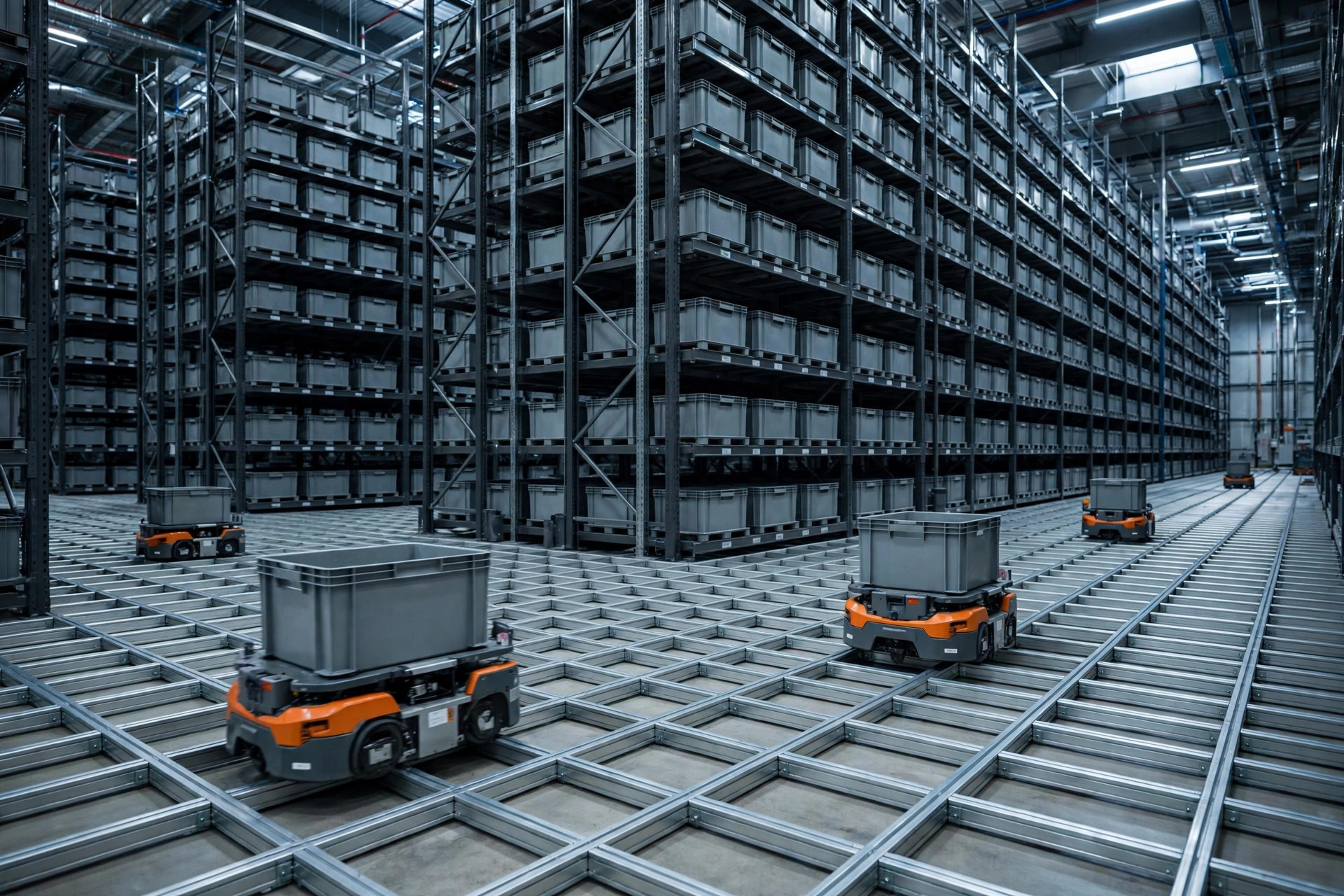
Two real cases. In 2022, an auto-parts ASRS in Suzhou — eight aisles, double-deep cranes, about 4,000 pallets a day outbound. Their rhythm: 1–5 a.m. on the first and third Wednesdays of each month, one aisle rotated out, the WCS clearing fast movers two hours ahead. Standardized checklist: rail fastener torque spot-checks, conductor-rail brush wear measurement, fork chain tension, encoder verification. About 100 hours of planned maintenance across the year — none of them during production hours — and 99.6% uptime for the year. The cost: the maintenance crew works nights, roughly 30% more in labor cost than day shifts.
Winter 2021, a food cold-storage ASRS in Tianjin, −25°C, four cranes in a single-line layout with zero redundancy. A December inspection found rail settlement from frost heave under the slab. No redundancy meant a full stop. For four days, outbound ran on forklifts and manual picking; at −25°C a person lasts twenty minutes before needing to warm up, and throughput sat under a third of normal. They added two aisles of redundancy in the phase-two expansion — redundancy always looks expensive at design time and overdue after the incident.
The Decision Line: When Is "No Downtime" Worth Paying For?
This is the most important section — no-downtime maintenance is a money-for-time trade:
| Planned-downtime maintenance | No-downtime maintenance (redundancy + off-peak) | |
|---|---|---|
| Upfront investment | Baseline (no redundancy) | 1–2 extra aisles or bypass conveyors; ~15–25% incremental |
| Annual maintenance hours | ~200–300, concentrated on holidays | ~400–600, fragmented across the year |
| Downtime per event | 8–24 hours | Zero in production hours |
| Ramp-up recovery | 1–2 days of discounted throughput after each shutdown | None |
Notice something? No-downtime maintenance actually takes two to three times the maintenance hours. That's my first counterintuitive point. People assume "no downtime" means less hassle — it's the opposite. It's replacing one major surgery with a year of acupuncture. The value isn't in saving maintenance money; it's in not losing production money.
Second counterintuitive point: for 90% of warehouses, 99.9% uptime is a fake requirement. The gap between 99.5% and 99.9% is about 35 hours of annual downtime — but buying those hours back can mean an extra aisle and dual controls, millions in extra spend. Integrators love selling "zero downtime" and "four nines" as premium features. Before signing, calculate what one hour of downtime actually costs you — penalties, emergency labor, lost orders — and compare it with the annualized redundancy cost. If the math doesn't work, do planned-downtime maintenance with well-scheduled windows. Paying for a metric you'll never use is the most expensive tax in automation procurement.
One more shot, at "predictive maintenance platforms." Vendors sell platforms that tell you a bearing has 2,000 hours left. I've asked three warehouses running them the same question: did you stock the spare parts? Two said no. The platform tells you the bearing is dying and the lead time is six weeks — so what? Predictive maintenance presupposes a spare-parts system and a response process; the software is only the last mile. Critical spares (motors, encoders, fork chains, conductor-rail brushes) must be on site. Stock to the vendor's recommended spares list — that list is the foundation. Without it, the platform is a castle in the air.
Three Maintenance Traps, Each Paid For in Real Money
Principles and procurement covered. Now the three traps in day-to-day maintenance — every one of them something I've watched happen.
Trap one: servicing the crane but ignoring the "road" and the "power." The stacker crane is a precision machine, but it runs on rails and eats power from conductor rails. Loose rail fasteners, slab settlement, worn-out collector shoes — these fail far more often than the crane itself. Collector shoes are consumables, typically replaced every year or two under heavy duty. Plenty of warehouses have a checklist that says "crane inspection" with no line item for rails or conductor rails — that's changing the oil and never checking the tires. The checklist must run three lines: machine, track, power.
Trap two: scheduling windows for aisles but not for conveyors and lifts. The aisle rotation looks beautiful, and then the front-end conveyor jams or the vertical lift's wire rope hits its replacement interval with nobody watching. The aisles are alive but nothing flows in or out. The maintenance calendar must cover the full chain — aisles, conveyors, lifts, controls — on one page, with Class A work staggered so service windows never collide.
Trap three: maintenance records live in the senior technician's head. Too many warehouses keep maintenance in a notebook that walks out the door when the technician leaves. The professional approach: every measurement from every service (rail levelness, brush remaining thickness, chain tension, motor current) goes into the system and becomes a trend line. Bearing current creeping up 5% month over month is your early warning — more reliable than any "intelligent platform," because the data is yours.
Back to the opening question: is the money worth it? It comes down to this one number —
Redundancy payback period = incremental redundancy investment ÷ (annual planned downtime hours × cost per downtime hour)
The numerator is the extra money spent; the denominator is the downtime loss saved each year. Under three years, invest without hesitation. Three to five, weigh your peak-season risk tolerance. Over five, do planned-downtime maintenance properly with well-scheduled windows. Technical questions always end as accounting questions.
By Da Liu, Automation Engineer