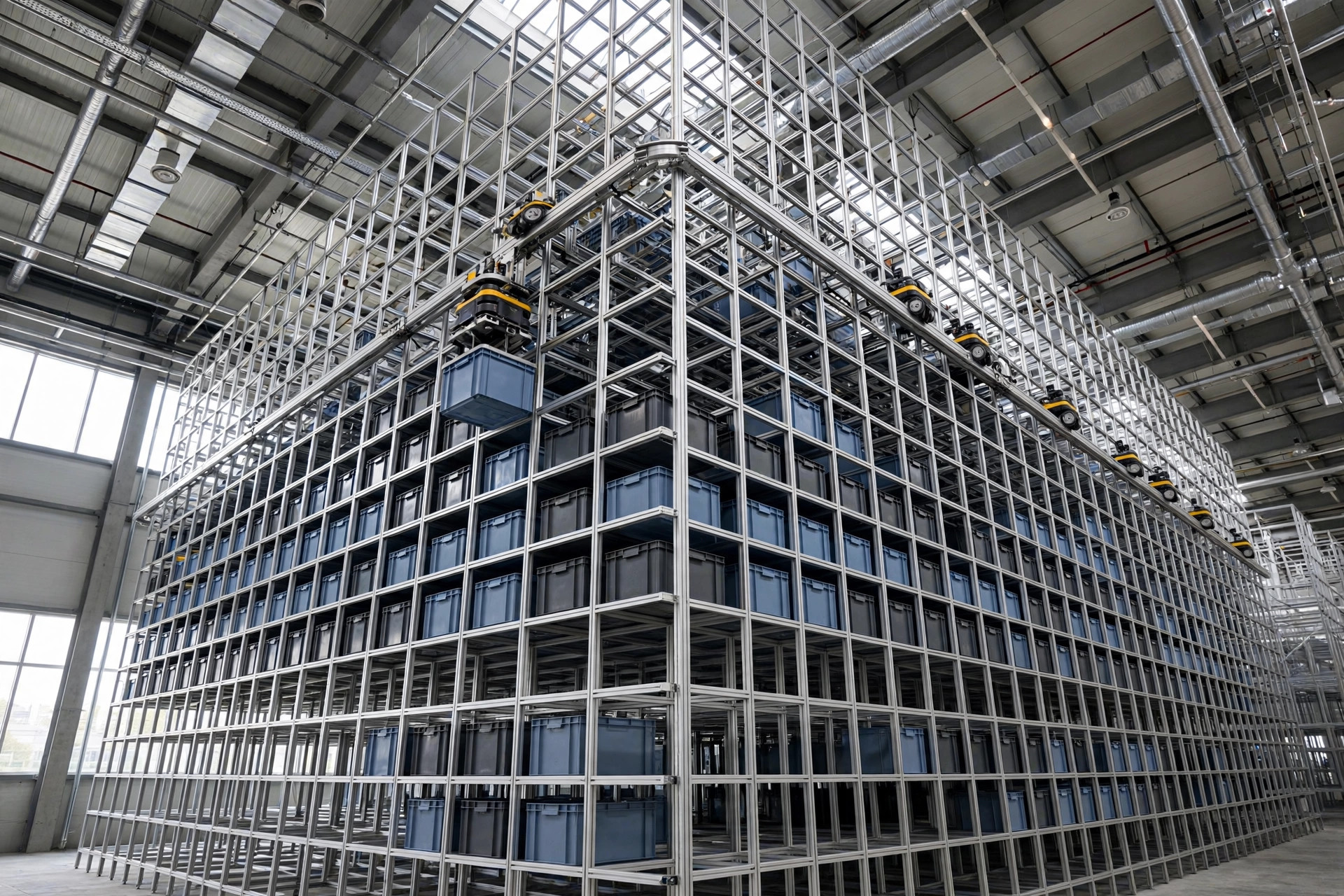
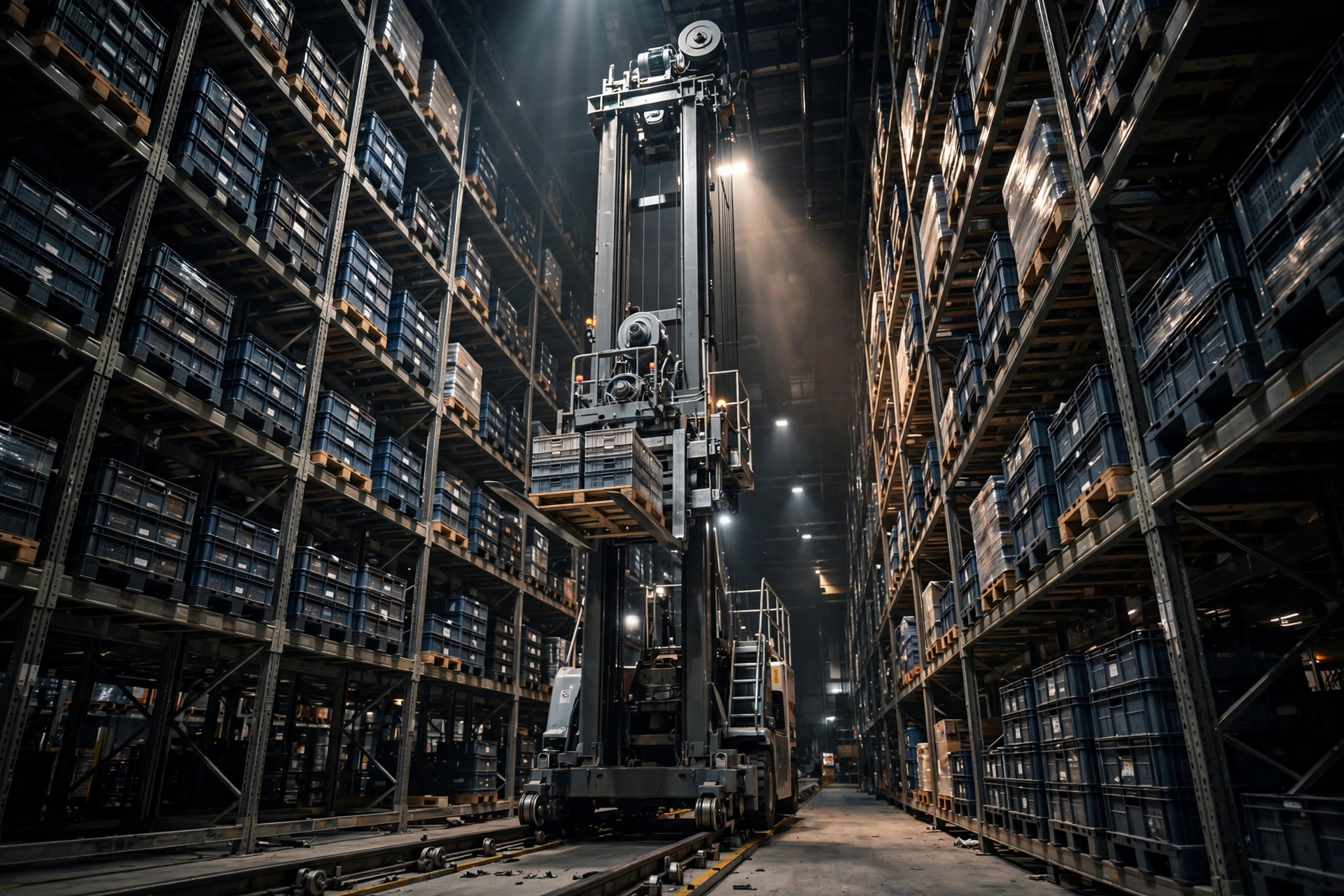
Let me tell you something about ASRS acceptance testing. Last fall I was queued up outside a brand-new automated warehouse in Kunshan, China — six trucks ahead of me, more than three hours of waiting, and a driver group chat full of complaints that this place had gotten slower since it went automated.
Turns out the warehouse was in the middle of hot testing — loaded trial runs of the system. The moment real pallets went in, alarms started going off. A stacker crane froze halfway down the aisle, and technicians spent the whole afternoon climbing up and down trying to fix it. And I remember thinking: hold on, last time I delivered here, I watched those machines running empty up and down the aisles, smooth as anything. How does it fall apart the moment real freight shows up?
A buddy at the warehouse set me straight with one sentence: running smooth empty doesn't mean it works. Before an ASRS goes live, there are three gates — cold test, hot test, and performance acceptance — each one more serious than the last. And here's the trap I watch owners walk into again and again: they see the cold test, watch machines moving, and figure everything's fine. Then the hot test starts, real pallets go in, and every problem in the building shows up at once. I've seen go-lives slip by months that way.
I'm just a truck driver, but even I can see the logic: acceptance is no place for wishful thinking. So let me break down these three gates in plain language, with three checklists you can actually use.
Cold Test: the Commissioning Dry Run
A cold test is a no-load run — stacker cranes and shuttles running the full length of every aisle with nothing on board, speeding up, slowing down. Stand at the end of the aisle and watch: it looks impressive. Smooth. Almost hypnotic.
But the cold test isn't checking whether the machines run smooth. It's checking the rules: does every limit switch trigger, one by one, and does the machine actually stop when it does? Push a safety gate open a crack — does everything halt immediately? Hit the emergency stop — does the whole line brake at once? And the signal handshake with the WMS: send a command, does the right machine move, and move correctly?
Back in 2024 I watched something at a warehouse in Suzhou that stuck with me. During the cold test, a safety gate's limit switch was misadjusted — you could push the gate open and the crane just kept running. The commissioning guys waved it off: "minor thing, we'll adjust it later." Lucky for everyone, it was an empty run. Now picture that same failure during a loaded run, with a pallet weighing hundreds of kilos ten-plus meters in the air. A cold test is where you check the stuff that keeps people alive. Not one item gets skipped.
Checklist one, in one sentence: everywhere it's supposed to stop, it must stop — no limit switch left unverified.
Hot Test: Loaded Runs Tell the Truth
A hot test is a loaded run — real pallets, real totes, real freight, fed in one after another, running continuously. And then you deliberately cause trouble: slam the emergency stop, cut the power to simulate an outage, send in a crooked pallet and watch what the system does with it.
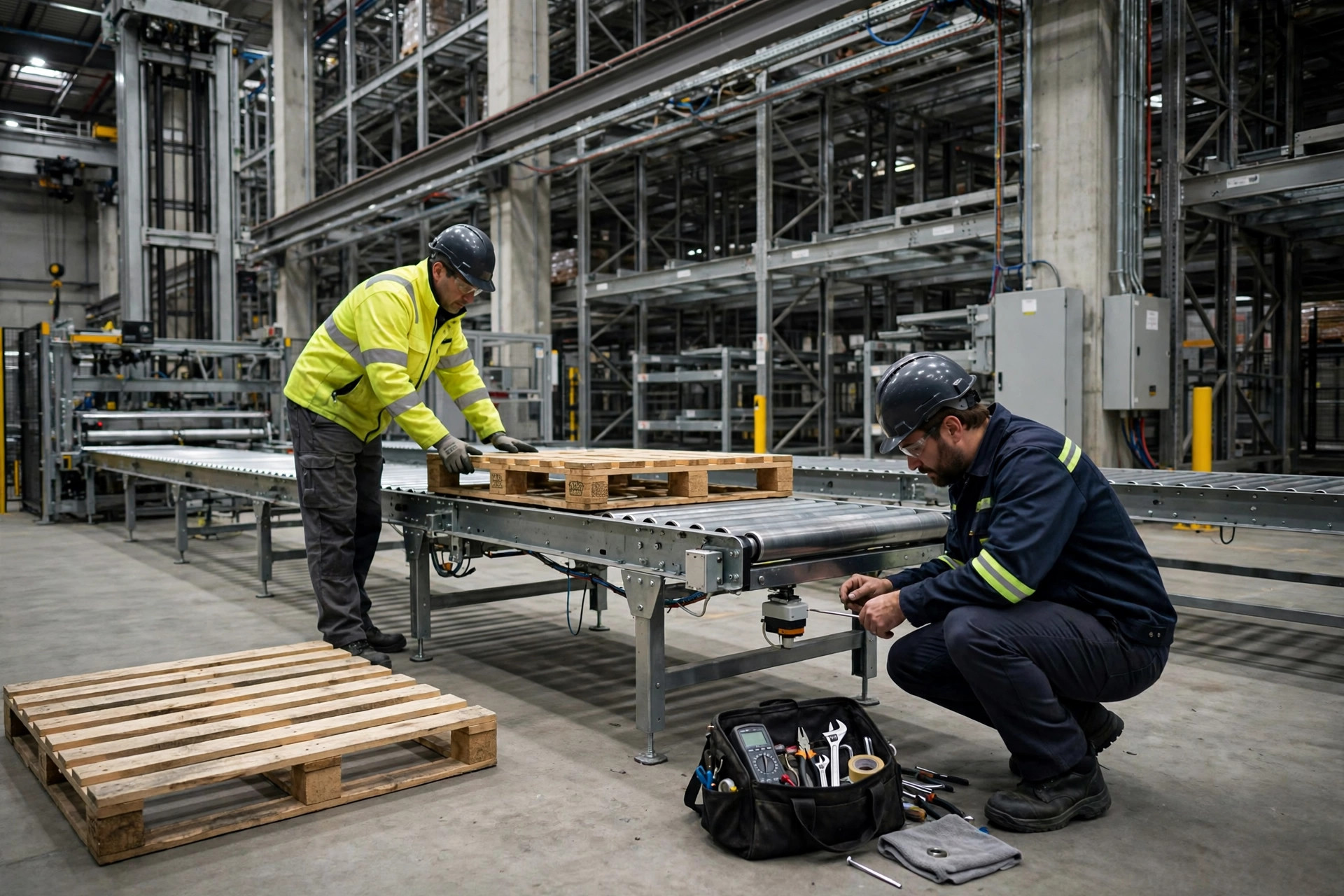
Fifteen years behind the wheel, and I know what pallets look like in the real world. Out of every ten pallets I've hauled, one or two are always warped, cracked, or a slightly different size. The integrators commission with perfect pallets — square, uniform, beauty queens. But your warehouse doesn't run on beauty queens. Whatever pallets you actually use, that's what the hot test must run on. The ugly pallets are the real test: a warped pallet hits the conveyor and suddenly you've got jams, skewed loads, failed reads. Every one of those problems surfacing now — before go-live — is exactly the point.
It's like driving: anyone can cruise an empty rig down the highway. Hauling a full load up a grade — that's where you find out what the truck's made of. Passing the cold test only proves the equipment can move. Passing the hot test proves it can work.
Checklist two, in one sentence: real freight, real pallets, real faults — none of them optional.
Performance Acceptance: the 72-Hour Proof
Then comes performance acceptance: does the throughput rate hit the number written in the contract — not some number somebody mentions on site that day, the contract number. Accuracy: misplace one pallet in the wrong slot and you'll cry when it's time to find it. And the big one — 72 hours of continuous operation, throughput and accuracy holding steady the whole way. Only then do you sign.
Here's the counterintuitive part, and I'll say it plainly: the moment to be toughest in acceptance is exactly when the equipment already looks like it's working.
Why? Because that's when the owner is most tempted to relax — "it's running, good enough, right?" — and when the integrator most wants the signature, because the final payment is waiting on it. Both sides nod along, and checklist items start getting a "close enough." But with automation, close enough isn't close: a throughput gap means the building blows up at peak season; an accuracy gap means your cycle counts never reconcile. Fixing those problems after go-live costs multiples of what it costs during acceptance — and it stops production while you do it.
The Three Checklists, One Table
These three ASRS acceptance checklists fit on one page — print it and bring it to site:
| Phase | What acceptance checks | What "passed" looks like | In plain trucker words |
|---|---|---|---|
| Cold test (no load) | Full-aisle empty runs of cranes and shuttles; every limit switch triggered and verified one by one; safety gates, e-stops; signal handshake with the WMS | Everywhere it's supposed to stop, it stops — no switch skipped | This checks the rules — the stuff that keeps people alive is non-negotiable |
| Hot test (loaded) | Continuous runs with real pallets and totes; e-stop, power-loss, and bad-pallet simulations; warped and oversized load tests | Real freight goes in with no alarms, no jams; loads stay put and machines recover when faults hit | Anyone can cruise empty; a full load up a grade is the real test |
| Performance acceptance | Throughput rate vs. the contracted number; accuracy; 72 hours of uninterrupted operation | 72 hours in, throughput and accuracy still holding | Be toughest exactly when it already looks like it's working |
Advice for Owners and Warehouse Managers
First, put the acceptance checklist in the contract — not in a conversation. "We'll definitely tune it for you" is worth nothing when something breaks at 2 a.m. Which items the cold test covers, what freight the hot test runs on, how the 72 hours are scored — write it all down in black and white.
Second, tie the final payment to acceptance. Sign-off first, money after. That's the only leverage you've got. While the money's still on the table, they'll come tune your system at midnight. Once it's paid, getting them back on site takes a month of scheduling.
Third, the hot test runs on your freight and your pallets — not the integrator's beauty queens. Whatever actually moves through your building is what acceptance must move.
Fourth, keep your own people on the floor through the whole acceptance, not just at the signing. You don't need them to understand the technology. One job: for every checklist item, was it actually tested, or was it "close enough"?
Fifteen years on the road, I've watched plenty of warehouses argue over equipment. It all comes down to one line: say the uncomfortable things up front, save the pleasantries for later. Take one more look before you sign — because whatever you find after the signature is on you.
By Shifu Zhao, Trucking Veteran (15 yrs)