Here's my conclusion up front: when a warehouse automation project misses its ROI, nine times out of ten the equipment isn't the problem — the math is. In twenty years in US supply chain, I've lived through and post-mortemed automation projects of every flavor: AMRs, AS/RS, sortation lines, robotic arms. The ones that actually paid back on the schedule in the original business case? I can count them on one hand. The rest didn't "fail" — their payback stretched from three years to five or six, until nobody wanted to ask about it anymore.
So when people search "why warehouse automation projects fail," the answers they find match exactly what I've seen for two decades: the problem was never the machine. It was how the numbers were built.
The short answer to "why warehouse automation projects fail": the invoice was never complete
Every missed-ROI project I've reviewed comes down to the same five causes:
- The ROI model assumed a perpetual-motion machine — no downtime, no commissioning, no ramp-up.
- The business changed; the equipment couldn't — rigid assets meeting flexible demand.
- The process never changed — the robots just run the same broken workflow faster.
- Nobody built the team to keep the equipment alive.
- Integration and go-live ate the entire first year.
To put it plainly: the vendor's ROI calculator assumes your warehouse is a frictionless vacuum. A real warehouse has peak seasons, busted pallets, Wi-Fi dead zones, and turnover. The calculator has none of those line items.
The prettier the ROI model, the more dangerous the project
This is the counter-intuitive take I most want you to hear: the prettier the ROI model, the more dangerous the project. Projects modeled at a 2.5-year payback almost always land past year four. The ones modeled at four to five years — the ones the CFO complained were too slow — usually deliver about what they promised.
Why? Because a beautiful model is built by subtraction: subtract the downtime, subtract the ramp-up, subtract the integration, subtract the maintenance. The cleaner the model, the further from reality.
Here's the table I wish every buyer saw before signing — the seven line items where ROI math most often goes soft. Left column is the sales-deck version; right column is the post-mortem version:
| Line item | The sales-deck math | The post-mortem math |
|---|---|---|
| Labor savings | Headcount eliminated × nameplate throughput | Actual headcount released × effective throughput (net of downtime and interventions) |
| Capital cost | Equipment quote | Quote + systems integration + civil/fire/electrical retrofit |
| Maintenance | First year under warranty, "free" | Post-warranty service contract + spares + cost of downtime |
| Ramp-up | Full rate from go-live | 3–6 months of ramp-up, dual-running labor paid twice |
| Effective capacity | Nameplate rate × 24 hours | Rate net of faults, changeovers, and human interventions |
| Volume assumption | Designed for peak/planned volume | Real seasonality and SKU-mix swing |
| Depreciation | Spread over 10 years | Spread over 5–7 years given the technology cycle |
Every trade-off has two sides: the vendor isn't lying to you — they genuinely don't know what your warehouse is like. But you're the one signing, so the second pass of the math is your job.
Three more faces of "why warehouse automation projects fail"
Cause two: the business moved, the steel didn't.
In 2021 I walked a project in California's Inland Empire: a 3PL had built a dedicated AS/RS for a major client, sized to that client's volume at the time — roughly four million dollars all in. In the second half of 2022 the client's business contracted and outbound volume fell nearly 40%. An AS/RS is poured concrete and fixed crane aisles; capacity is cast in place while demand is not. Utilization dropped to about sixty percent, and the "full-utilization operation" the ROI model assumed simply ceased to exist. A manual warehouse cuts heads in the slow season. An automated one keeps paying depreciation. That's rigidity.
Cause three: automating a broken process.
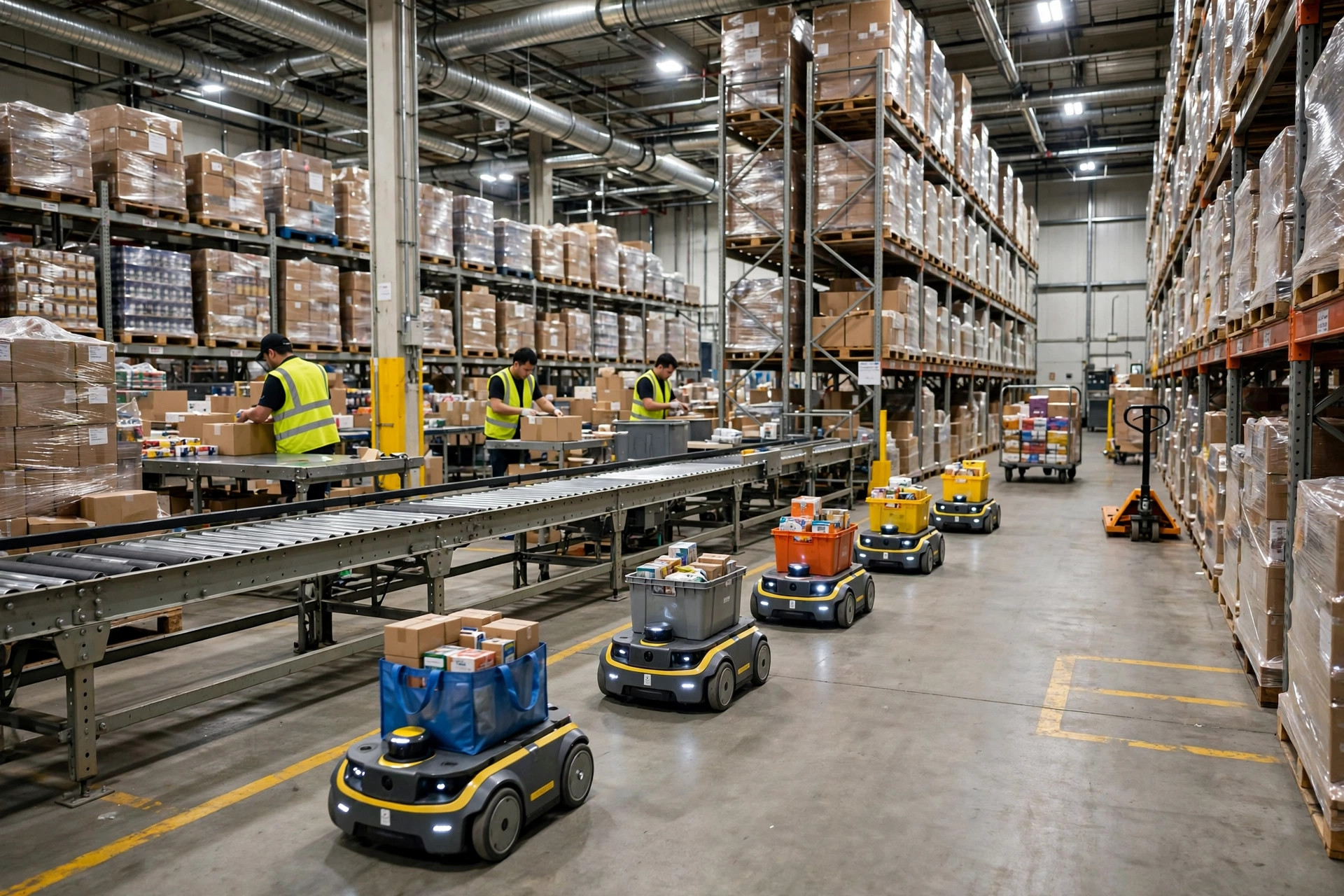
In 2023, an e-commerce fulfillment center deployed dozens of AMRs for goods-to-person and transport, modeled on "replacing 20 material handlers." Three months in, throughput was up less than twenty percent. I spent a day on the floor and the problem wasn't the robots — it was slotting. Fast movers were scattered across six aisles, and the fleet spent most of its mileage on empty runs and detours. Put bluntly: with manual handling, workers quietly "human-optimized" the bad layout as they went. With AMRs, the broken process got digitized one-to-one, and the loss became perfectly measurable. Fix the slotting and the waves first, then automate. Reverse the order and the money is gone.
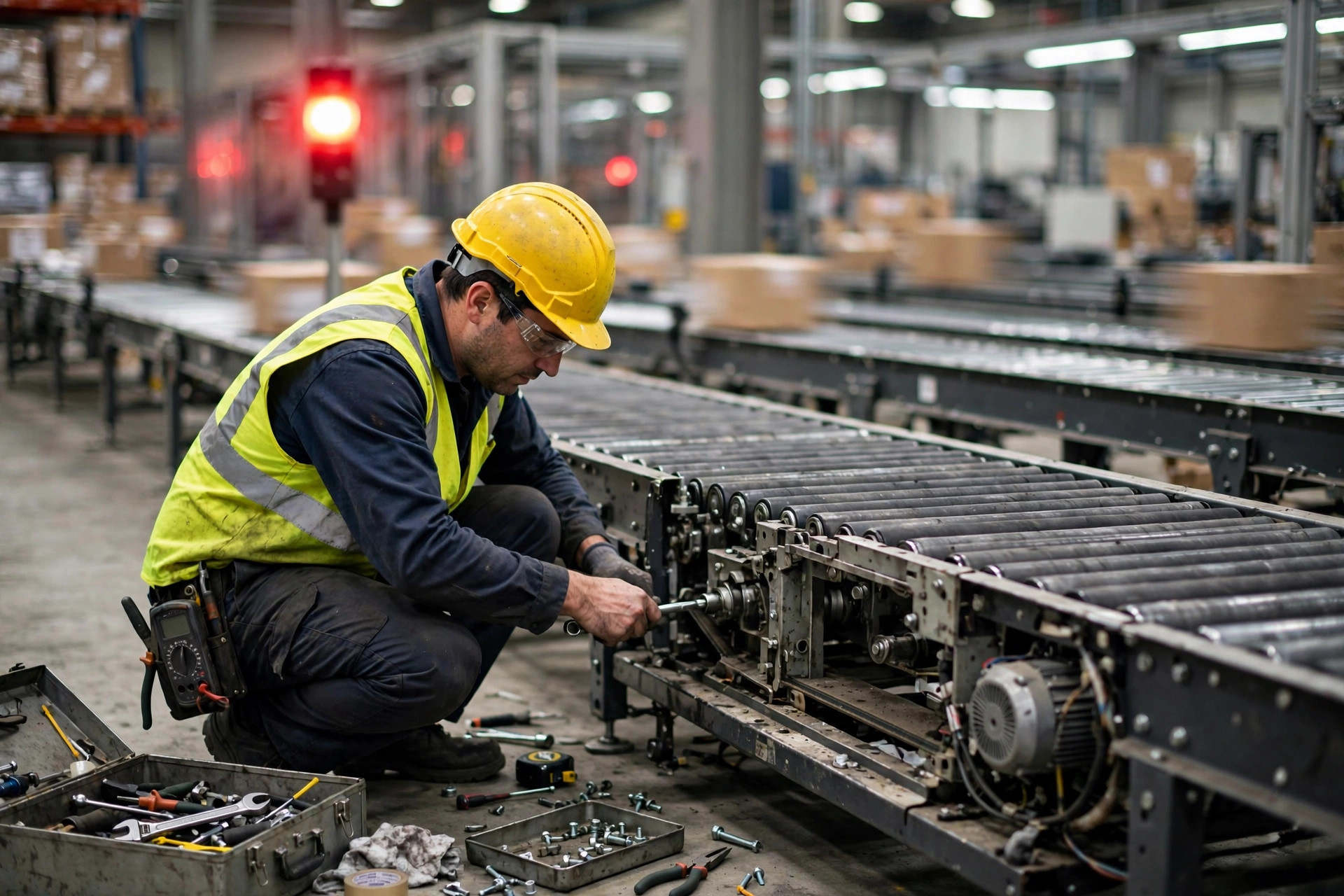
Cause four: no one to keep it running.
This is where the data hurts most. A 2026 industry survey by MultiSensor AI found that 91% of companies approved automation knowing their maintenance teams and facilities weren't ready for it — and 80% had suffered six or more unplanned downtime events in the previous year. Siemens' True Cost of Downtime 2024 report adds the price tag: the world's 500 largest companies lose an average of 27 hours a month to unplanned downtime, and in fast-moving consumer goods a single hour of downtime costs roughly $36,000.
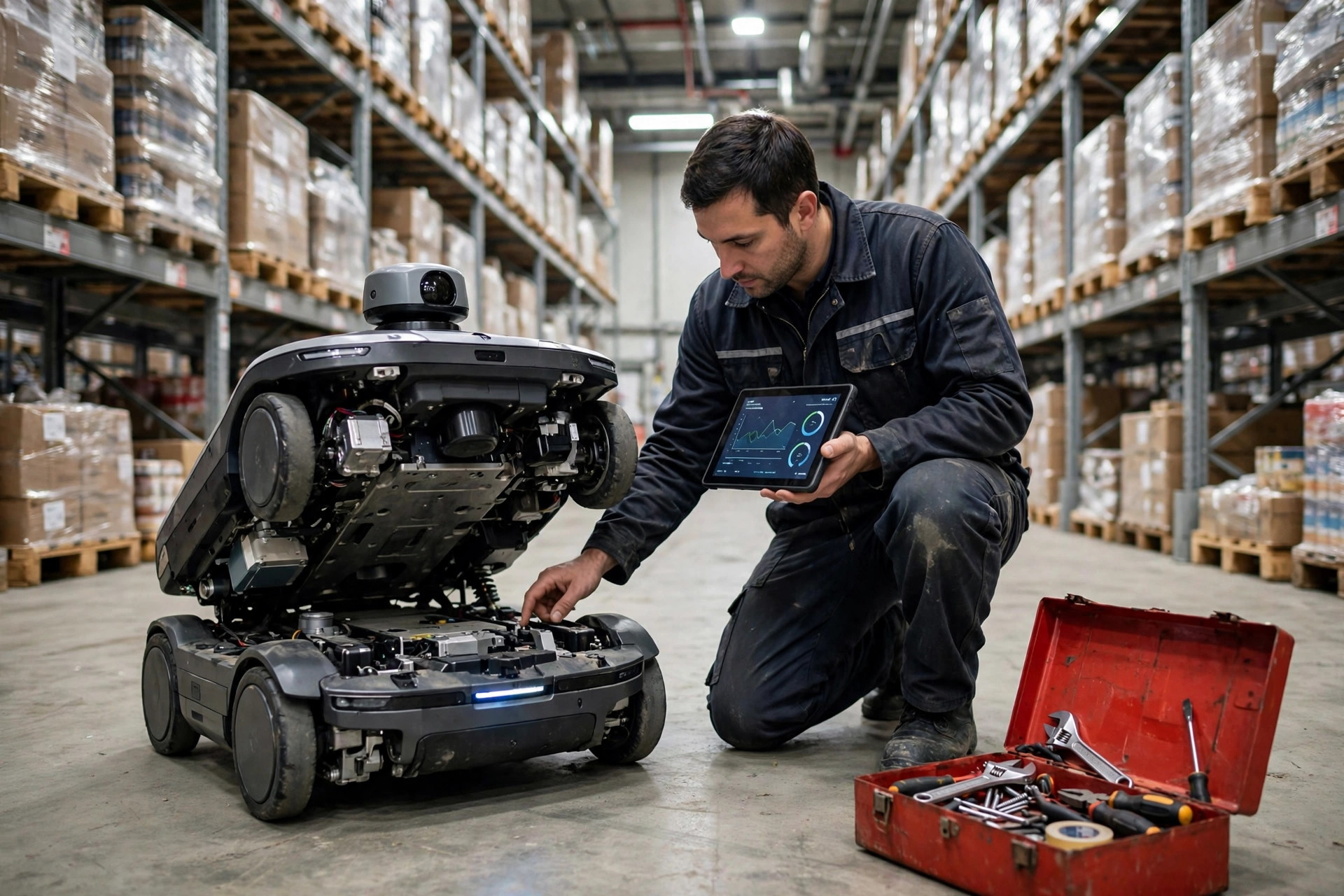
I've seen it too many times: brand-new equipment, the same two electricians who used to fix the forklifts, a PLC alarm that only gets a reboot, spares shipped from two states away. Two hours of downtime wipes out the labor savings and then some, plus overtime. The biggest hidden cost of automation isn't spare parts — it's every day nobody on your team knows how to fix the machine.
Seven questions to ask before you sign
After enough post-mortems, I now run every automation proposal through seven questions. If you can't answer three of them, the ROI is fiction:
- Is the modeled throughput the nameplate rate, or the effective rate net of downtime, changeovers, and human intervention?
- Are the maintenance team, spares, and safety stock in the budget? Who fixes it, and how fast can they be on site?
- Is the 3–6 month ramp-up in the model, with dual-running costs counted?
- If volume drops 30%, what's left of utilization — and does the math still hold?
- Is the process fixed first, or are you counting on the equipment to run a bad process well?
- Who integrates the WMS/WCS, and what does one interface change cost in dollars and days?
- Will this equipment still be mainstream in five years — and over how many years is the residual value spread?
Not one of these is in the vendor's first proposal. Every one of them shows up in the financial statements by year three or four.
One last piece of advice: automation isn't buying equipment — it's buying how you'll work for the next five years. Whenever an ROI model looks as clean as a textbook, ask one question: who ends up paying for everything that was subtracted? Nine times out of ten, it's you.
By Lao Mi, Supply Chain Veteran (20 yrs)