Here's my verdict up front: if you're running under 20,000 SKUs and picking fewer than 10,000 lines a day, cube storage probably wins on cost. Above 50,000 SKUs with spiky order patterns, shuttle ASRS handles the chaos better. That's the short version of this cube storage vs shuttle ASRS comparison — now the math behind it, because I've implemented both routes and watched both go sideways.
The vendor decks all look beautiful: 4x density, 3x throughput. What they never put on slide one is what it costs to be wrong.
The Short Version of This Cube Storage vs Shuttle ASRS Comparison
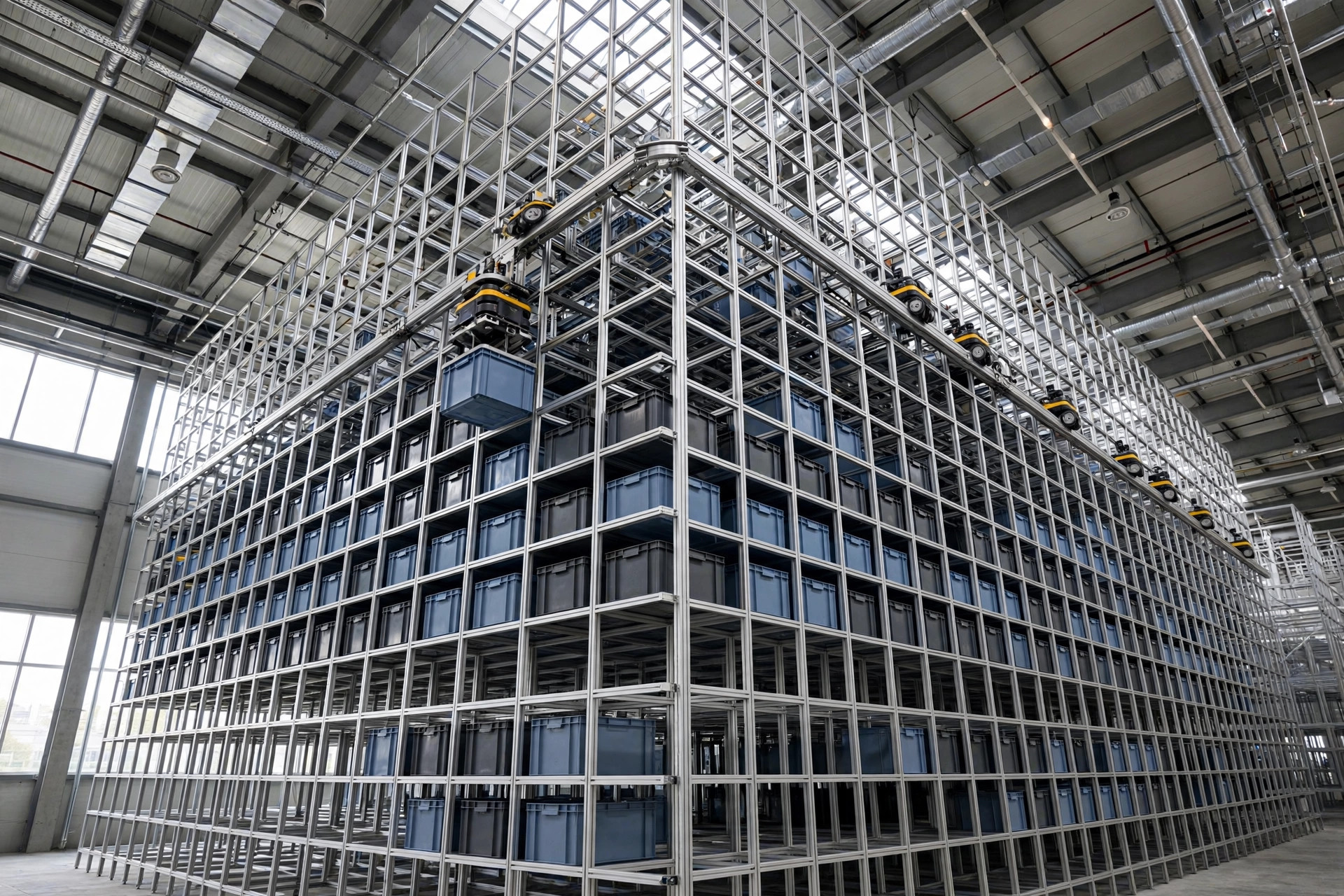
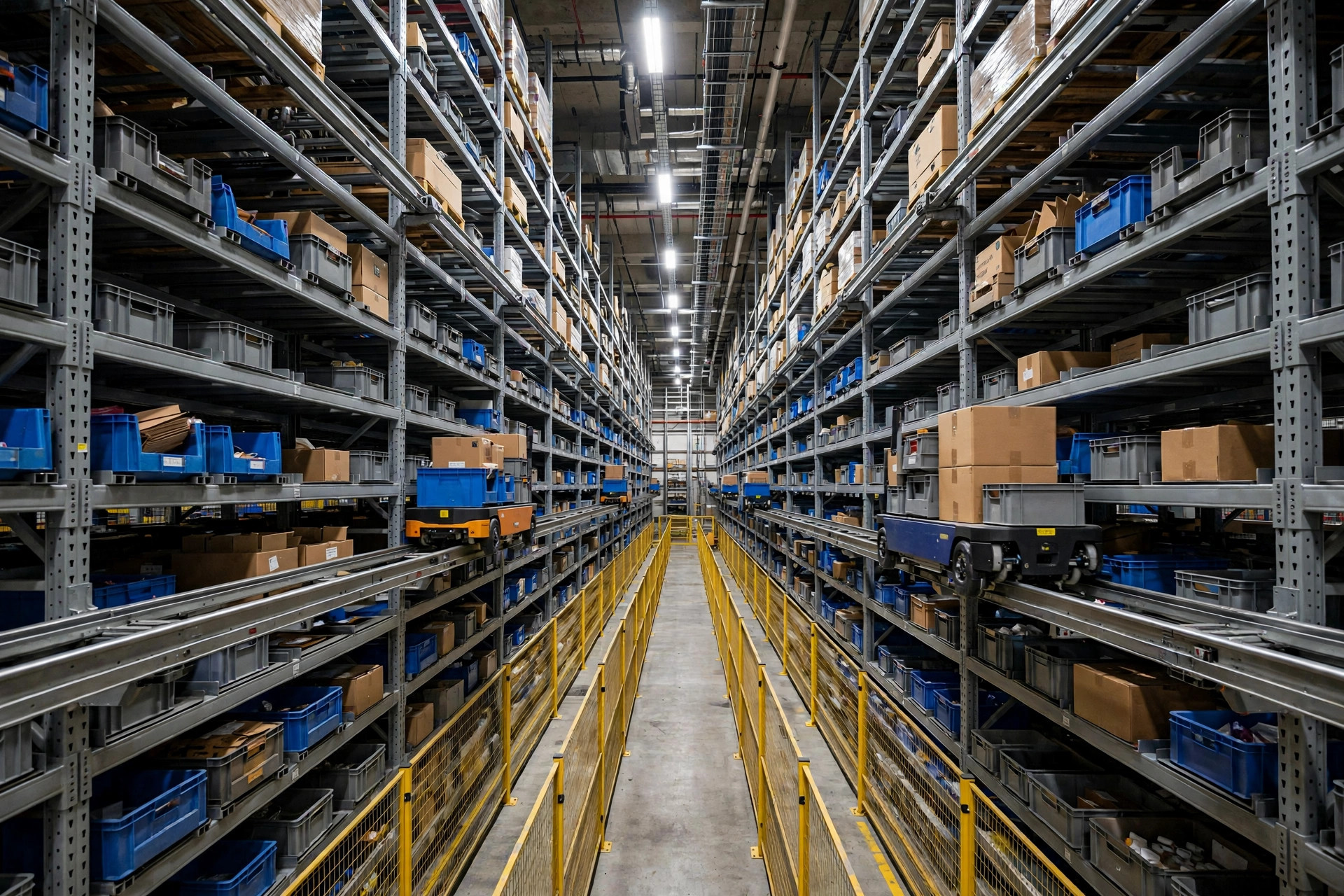
Cube storage wins on density. No aisles — bins stacked a dozen-plus high inside a grid, robots running on top. For the same footprint, a cube system typically holds 30–40% more bins than a shuttle system. In markets like LA or northern New Jersey, where warehouse rent runs $15+/sq ft/year, density is money. Every 10,000 sq ft you don't lease is six figures a year back in your pocket.
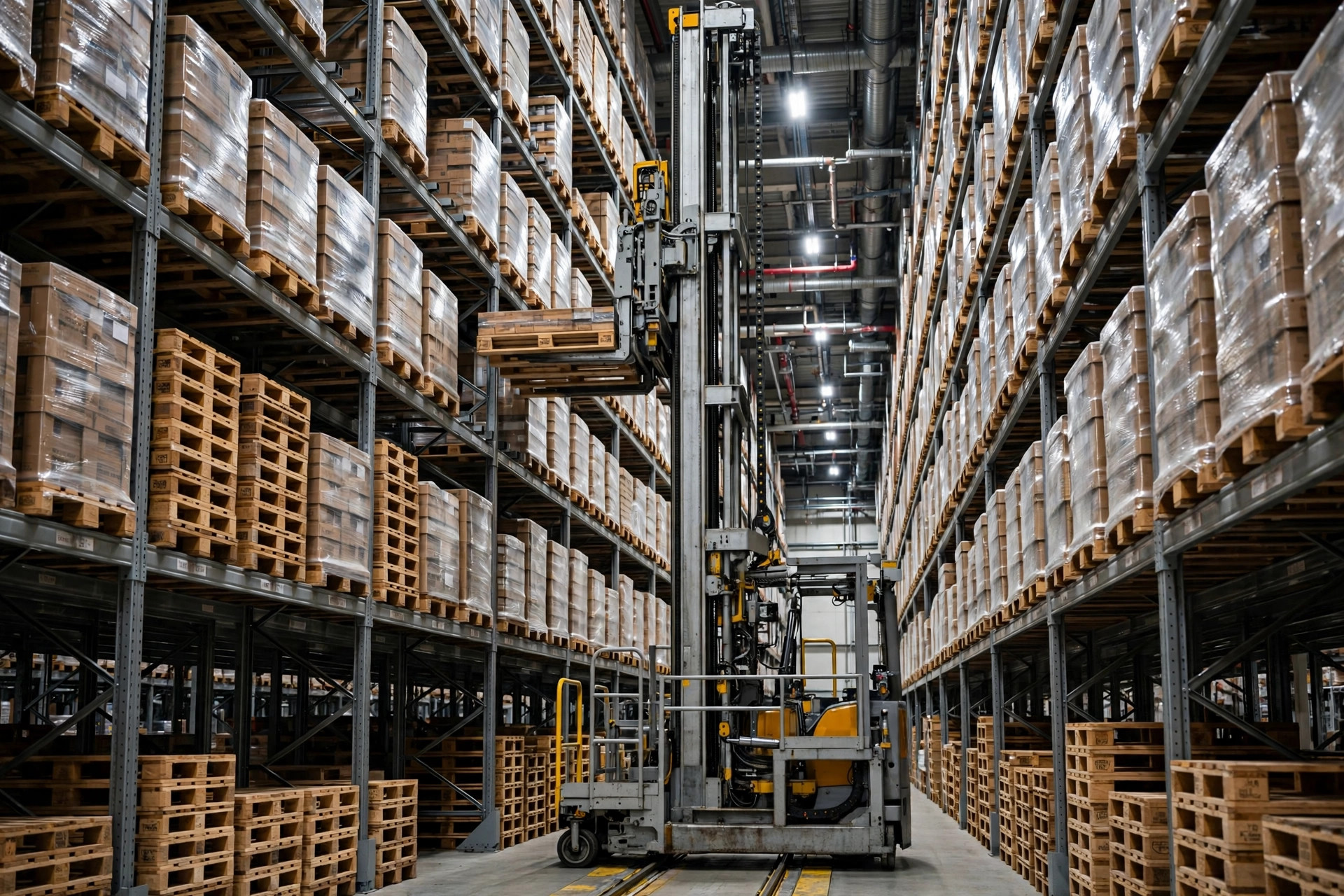
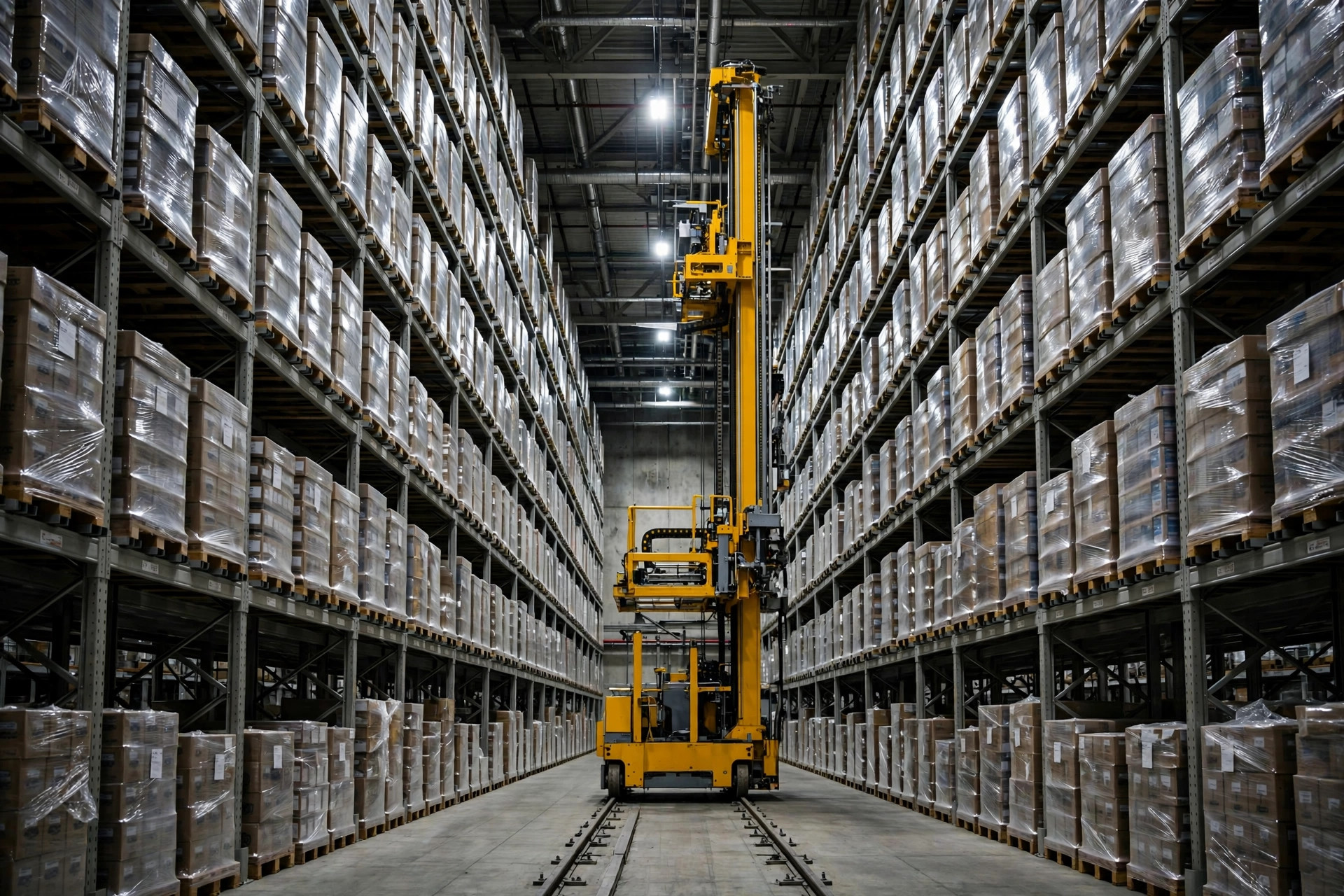
Shuttle ASRS wins on throughput elasticity. A cube system's output ceiling is set by its fleet of grid-top robots: you can add robots and scale linearly, but the grid is only so big, and eventually you hit the wall. Shuttles are different — each aisle is independent. Add shuttles, add aisles, throughput follows. When your demand swings hard, that elasticity is worth real money.
Here's the thing: density and elasticity live on opposite ends of this trade-off. You don't get both. Figure out which one your business is actually starving for before you look at a single proposal.
And a counter-intuitive take from twenty years of watching these projects: the densest option usually carries the highest cost of being wrong. The real question in automation was never "who's fastest at peak." It's "three years from now, when the business looks different, how much does it hurt to change course?" I learned that one watching other people pay tuition.
Where the Money Actually Goes
Fair warning before the table: these numbers are magnitudes from projects I've touched and vendors' public materials — not quotes. When it's time to sign, go by your integrator's proposal, not my article.
| Cube storage | Shuttle ASRS | |
|---|---|---|
| Typical project size | $2M–$8M | $1.5M–$6M |
| Storage density | Highest, no aisles | High, but roughly 30–40% below cube |
| Throughput scaling | Add robots — linear, with a ceiling | Add shuttles/aisles — more flexible |
| SKU fit | Stable SKU base, small items | Large/changing SKU counts |
| Expansion cost | Add grid modules, usually means downtime | Modular aisle adds, less disruption |
| Implementation | 6–12 months | 8–14 months |
| Failure profile | Robot fleet is redundant; one down barely matters | A dead shuttle takes its aisle with it |
| Best for | <20k SKUs, expensive rent | 50k+ SKUs, volatile demand |
Tables are nice, but let me run one concrete scenario. Picture a 50,000 sq ft facility: 15,000 SKUs, 8,000 pick lines a day, rent at $12/sq ft/year — ordinary numbers for a second-tier US market.
Cube route: storage footprint drops from 40,000 to 15,000 sq ft. That's 25,000 sq ft saved, $300k a year in rent, $1.5M over five years. Against a $4M project, rent savings alone pay back in a little over three years.
Shuttle route: footprint drops to 28,000 sq ft — 12,000 saved, $144k a year, $720k over five. Against a $3M project, the payback stretches longer.
But that's not the whole math. If your SKU count doubles in year three — 15,000 to 30,000 — the cube system needs new grid modules and a week-plus of downtime, ideally not two weeks before peak season. The shuttle system gets a few more shuttles and two more aisles while business keeps running. That "cost of being wrong" is what this cube storage vs shuttle ASRS comparison is really about.
The Mistake I Keep Seeing
Dallas, 2022. A medical device distributor: 12,000 SKUs, small high-value parts, 60,000 sq ft leased, rent climbing every year. They went cube. Storage footprint fell from 40,000 to 15,000 sq ft, and the rent savings covered most of the equipment cost within three years. Genuinely successful project.
Then year two: they picked up two new brands, SKUs hit 20,000, bins ran out. Expansion meant new grid modules and 9 days of downtime — landing two weeks before peak. The ops team nearly broke. The price of cube storage isn't paid at purchase; it's paid when you need to change. They survived, and the owner told me: "If I'd known expansion hurt this much, I'd have built in 30% headroom."
Ontario, California, 2023. An auto parts e-tailer: 80,000+ SKUs, an endless long tail, peak daily orders 4x the average. They went shuttle — 12 aisles. Eight shuttles in normal times, fourteen at peak, and scaling up took three weeks with zero downtime. The price? About 40% more floor space than the cube option, meaning several hundred thousand extra in rent every year. The owner's line stuck with me: "Consider the extra rent my regret insurance."
One won on density, the other on elasticity. The common thread: both winners had figured out what their business would look like three years out. The losers? They'd only read page one of the vendor deck.
Three Questions Before You Sign (Cube Storage vs Shuttle ASRS Comparison)
Don't look at proposals yet. Answer these three first — the route picks itself:
One — where's your SKU count in three years? If "it could double" is an honest answer, cube's density advantage might be a trap. Expansion downtime doesn't appear in the contract, but it hurts just the same.
Two — what's your peak-to-average order ratio? Under 3x, either route copes. Above 4x, shuttle elasticity is worth more. Cube can scale too — it's just slower and pricier when it matters.
Three — any move or expansion planned in three years? A cube grid is bolted to the floor; moving it is basically rebuilding. Shuttle racking unbolts and reinstalls — painful, but survivable.
If you've answered honestly and still can't decide, you're in the middle ground — and my advice is: don't automate yet. Get your ABC classification and slotting right first. I've watched plenty of warehouses do that exercise and discover they never needed an ASRS at all. That's a few million dollars saved by a spreadsheet.
Before you sign anything, ask the integrator exactly one question: if our SKU count doubles next year, what does expansion cost, and how many days of downtime? If they can't answer, walk away — no matter how pretty the proposal looks.
By Lao Mi, Supply Chain Veteran (20 yrs)