Let me rant first. Every peak season, the platforms flood my store with traffic, and my packing stations die on the spot. If you're googling "what is pick and pack warehouse," chances are you're an e-commerce seller who's already been crushed by outbound at least once.
So what is pick and pack, really? Six words: pick the goods, pack them, ship them. An order comes in, the warehouse pulls items off the shelf (pick), boxes them up (pack), slaps on a label and hands them to the carrier (ship). Sounds like three steps. But once your volume grows, every single step becomes a minefield.
What Is Pick and Pack, Really? A Day in the Warehouse
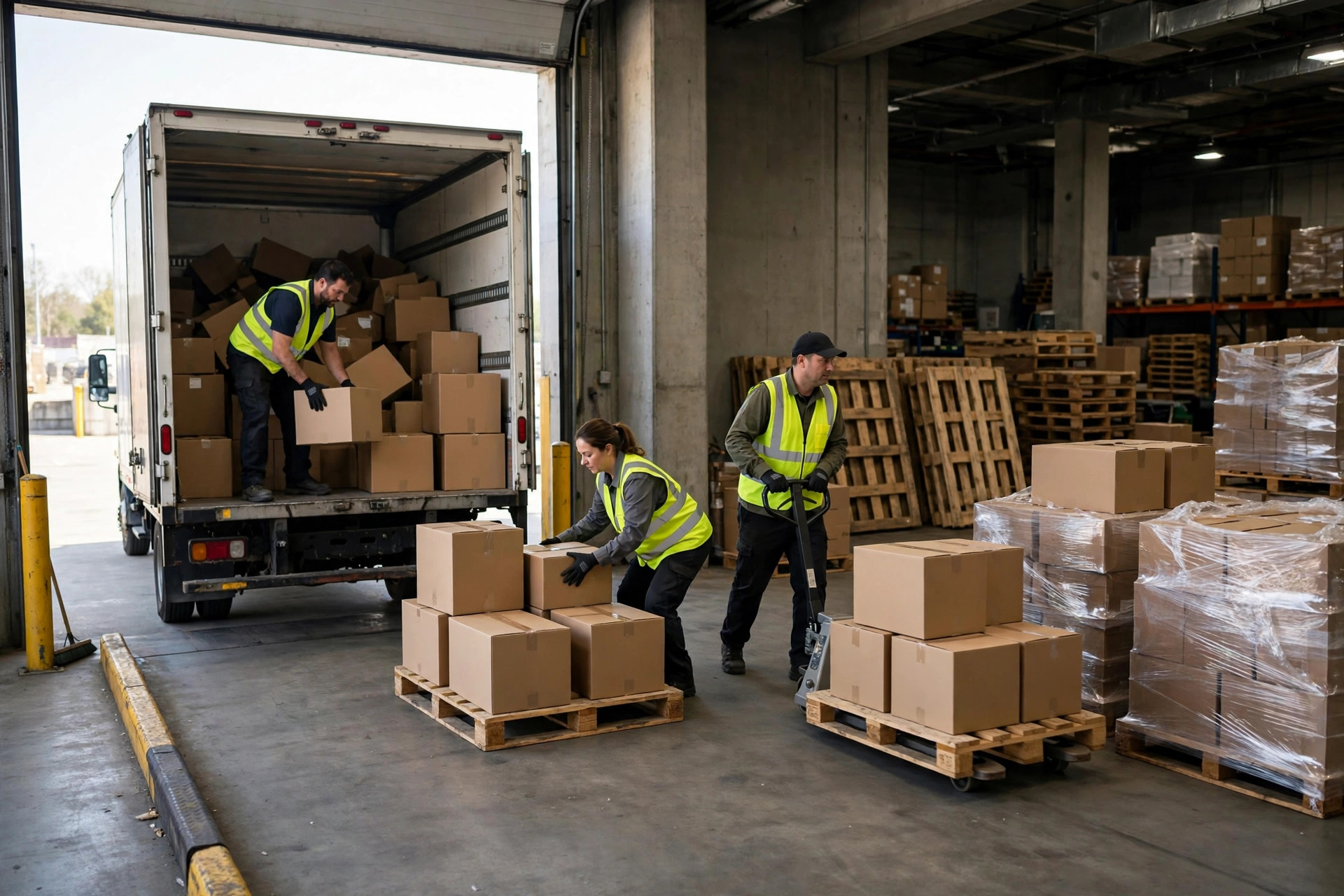
I sell home decor, mostly to the US market. Here's the actual flow in my operation: orders push into the WMS → print pick lists → batch picking → packing stations → scan-and-verify → labels → sort by carrier → load the trucks.
Picking is the most leg-intensive part. In the early days it was "man to goods" — a printed pick list, a push cart, and an employee running the whole warehouse. Once my SKU count passed 300, I moved all my bestsellers to the golden zone right next to the packing stations. Cut the walking distance in half overnight.
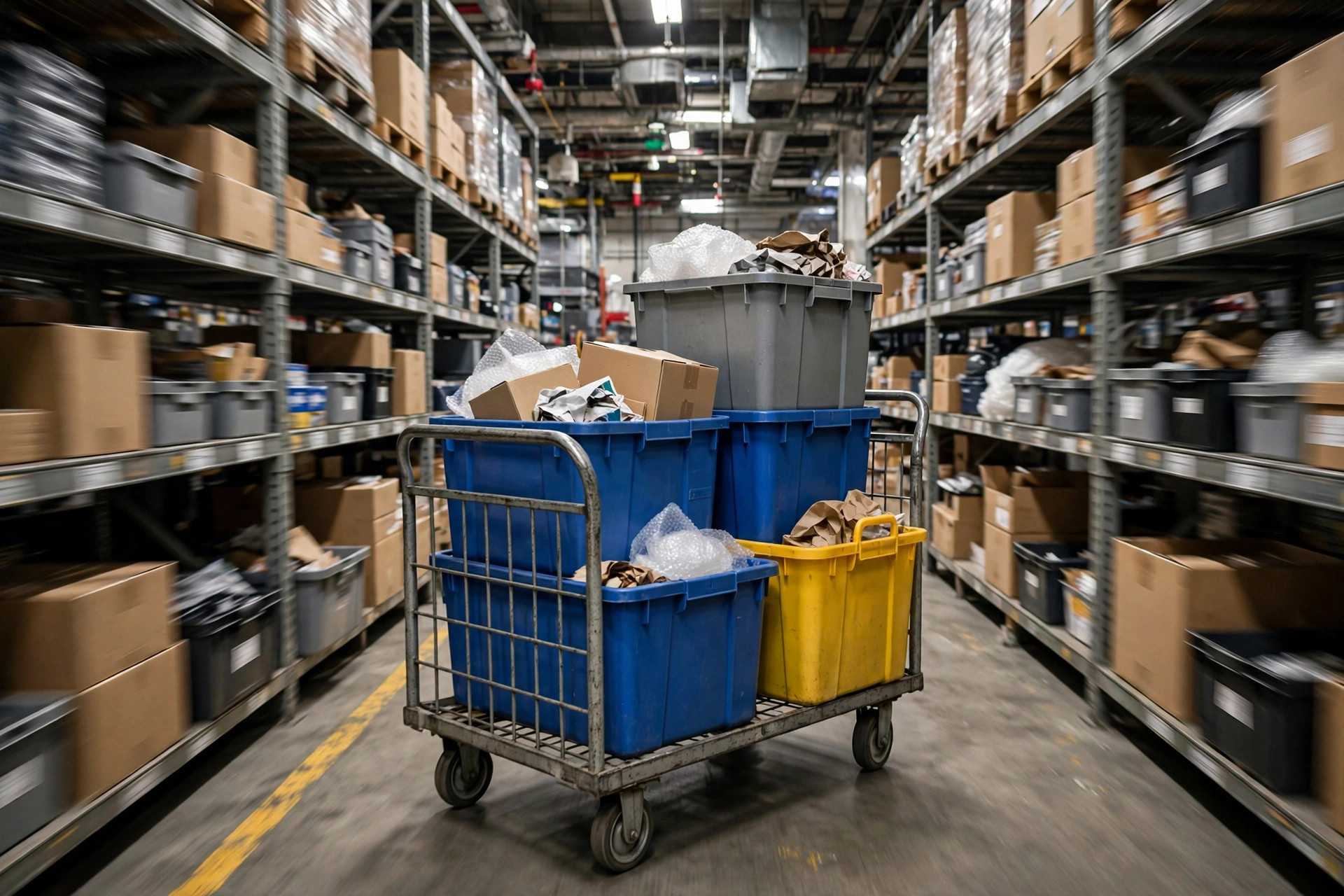
The night of Black Friday 2024 blew my whole system up. Daily orders went from a normal 400 to 2,600. Three packers worked from 9 PM to 3 AM, completely fried. That night alone we had 17 mispicks — wrong colors, wrong quantities, everything. Platform penalties plus a pile of one-star reviews wiped out roughly half a month of profit. That's the day I learned: pick and pack isn't manual labor. It's a process game.
Your Three Options for Running a Pick and Pack Warehouse
Every seller hits this question at some point: run your own small warehouse, hand it to a 3PL, or use an overseas warehouse? Here's the dividing line I drew from my own tuition money:
| Model | Fits | Fulfillment cost per order (USD) | Biggest trap |
|---|---|---|---|
| Own small warehouse | Under ~100 orders/day | ~5–8 (labor + rent amortized) | Idle staff when volume swings |
| 3PL | ~100–800 orders/day | ~4–7 (per-order fee) | Slow response on address changes/returns |
| Overseas warehouse | Heavy US market, needs next-day delivery | ~6–10 (storage + last mile) | Inbound freight ties up your cash |
Here's how I walked this path. In June 2025, my US store hit a steady 300+ orders a day, and my little self-run warehouse couldn't survive the rent and payroll. I switched to a 3PL. Cost per order dropped from roughly $9 to roughly $6 — thousands of dollars saved per month.
But a 3PL isn't magic. Once, a buyer changed their address 10 minutes after ordering. The order was already submitted for outbound. I sat in the 3PL's support queue for 40 minutes, and the package still went out to the old address. Return shipping plus reship: nearly $30 down the drain on a single order. The trade-off is clear: doing it yourself is flexible but expensive; a 3PL is cheap but you have almost zero control over timing and exceptions. Which one to pick? If you sell standard products, go 3PL. If you sell customized items with frequent address changes, do it yourself.
Saving Money at the Packing Station: Three Things
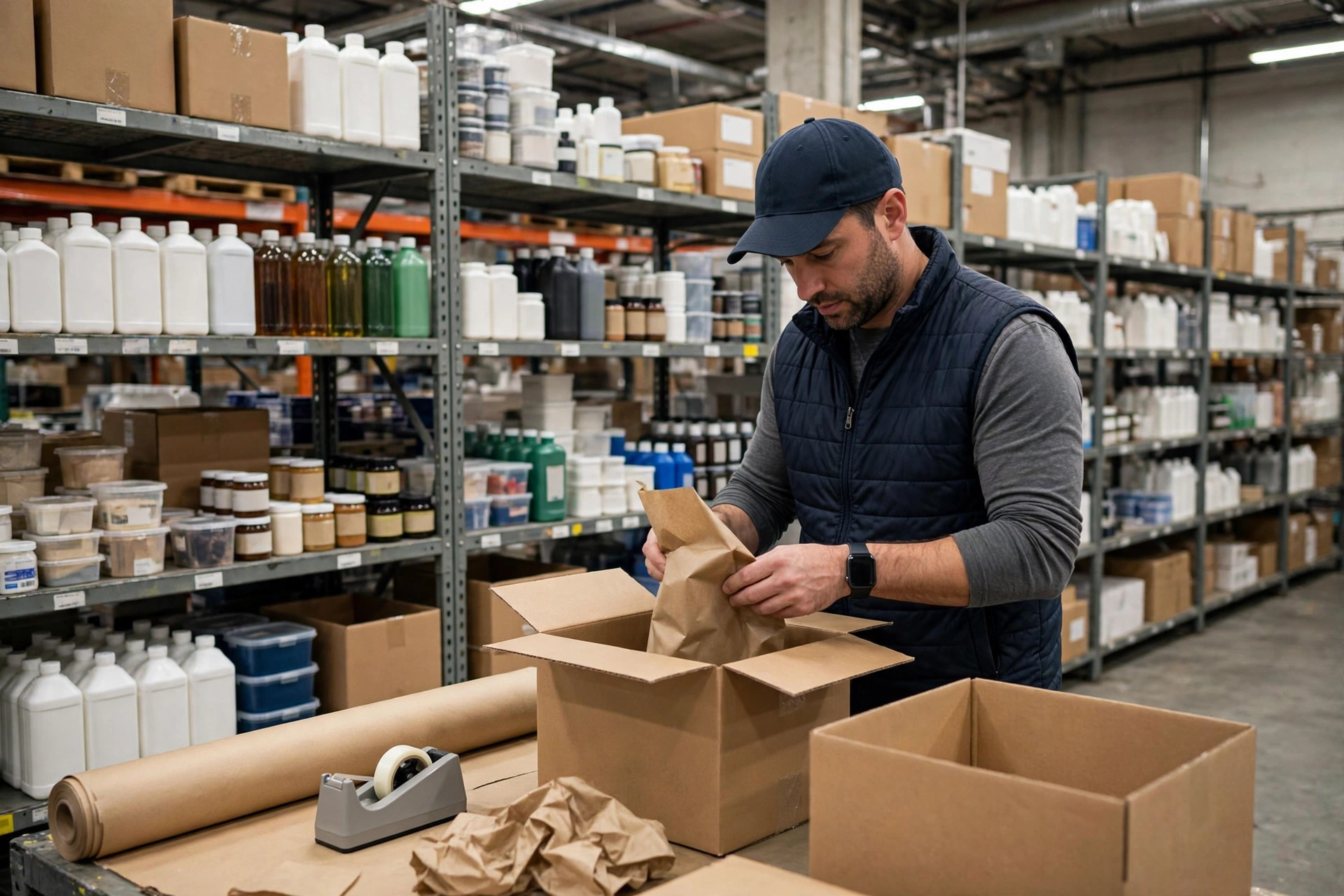
The packing station is where I squeezed real margin out of my operation. Three levers:
First, box sizes. Don't get lazy and use one big box for everything. I did that once — every SKU went into a 12-inch box, small trinkets buried in bubble wrap. Carriers bill on dimensional weight, and my shipping bill ran hundreds of dollars higher per month than it should have. Now I use three box sizes matched to product dimensions, with cheap air pillows as fill. Packaging plus shipping per order dropped by roughly $1.50.
Second, the label printer. A thermal label printer is a must. My first year I printed labels on an inkjet and taped them on. One drop of water and the address smeared. I can't count the lost-package arguments that started this way. A thermal printer costs a few dozen dollars. Buy one.
Third, verification. Scan-and-verify every packed box. That single scan pushed my mispick rate from roughly 2% down to roughly 0.3%. Don't shrug at 1.7 points: one mispick costs you outbound shipping + return shipping + packaging + a bad review — easily ten to twenty dollars. Those 10 seconds at the verification step are the highest-ROI seconds in the entire warehouse.
Reverse Logistics: Never Share a Table With Outbound
Returns are the part every seller dreads and nobody escapes. I made a dumb mistake in early 2025: returns and outbound shared the same table, returned goods piled up right next to the picking area. Twice we picked old returned items and shipped them out. The buyer got a used product, posted photos, trashed me publicly — that listing's conversion rate fell by nearly half.
Now I keep a dedicated little returns corner with a three-step flow: inspect (can it be resold?), refurbish (new packaging, wipe-down), restock (sellable items go back on the shelf, dead ones go to clearance). Returned goods never enter the outbound pick flow. That's the iron rule. And write your return policy carefully — check the platform's latest official policy, don't freestyle a 60-day free-return promise on your own and then cry when the return rate explodes.
Two Big Pitfalls: Peak Season and Mispicks
Peak season breaks someone new every year. My rule: start prepping at least two weeks early, and stock at 1.5x last year's same-period volume. Don't trust the platform's traffic forecasts — they're inflated every single year. Either hire temp workers early or lock a peak-capacity clause with your 3PL in writing.
As for mispicks, one more thing: the danger zone is always lookalike SKUs. One shade off in color, one size off in dimension. Separate their locations, make the labels bigger. I now keep similar SKUs at least one full rack apart. Mispicks have basically disappeared.
The Counterintuitive Part: 30 Seconds Saved Packing Is Worth Less Than One Mispick Prevented
Here's an unpopular conclusion for all the "efficiency" folks.
I once ran an experiment: set a KPI and pushed average pack time from 68 seconds down to 41 seconds per order. Looked great on paper. Output went up. But the mispick rate jumped from 0.5% to 1.8%, and the extra losses that month were several times the labor cost I "saved."
The math isn't hard. Shaving 30 seconds off packing saves you pennies in labor. Catching one mispick at verification saves you ten to twenty real dollars — plus a bad review. So now my packing stations play music and nobody rushes, while the verification step gets double confirmation. Optimize efficiency, sure — but optimize it at the right spot.
Tested it myself, and it works. Don't cut headcount at verification. The labor you save there won't cover a single mispick.
By Ah K, E-commerce Seller (5 yrs)