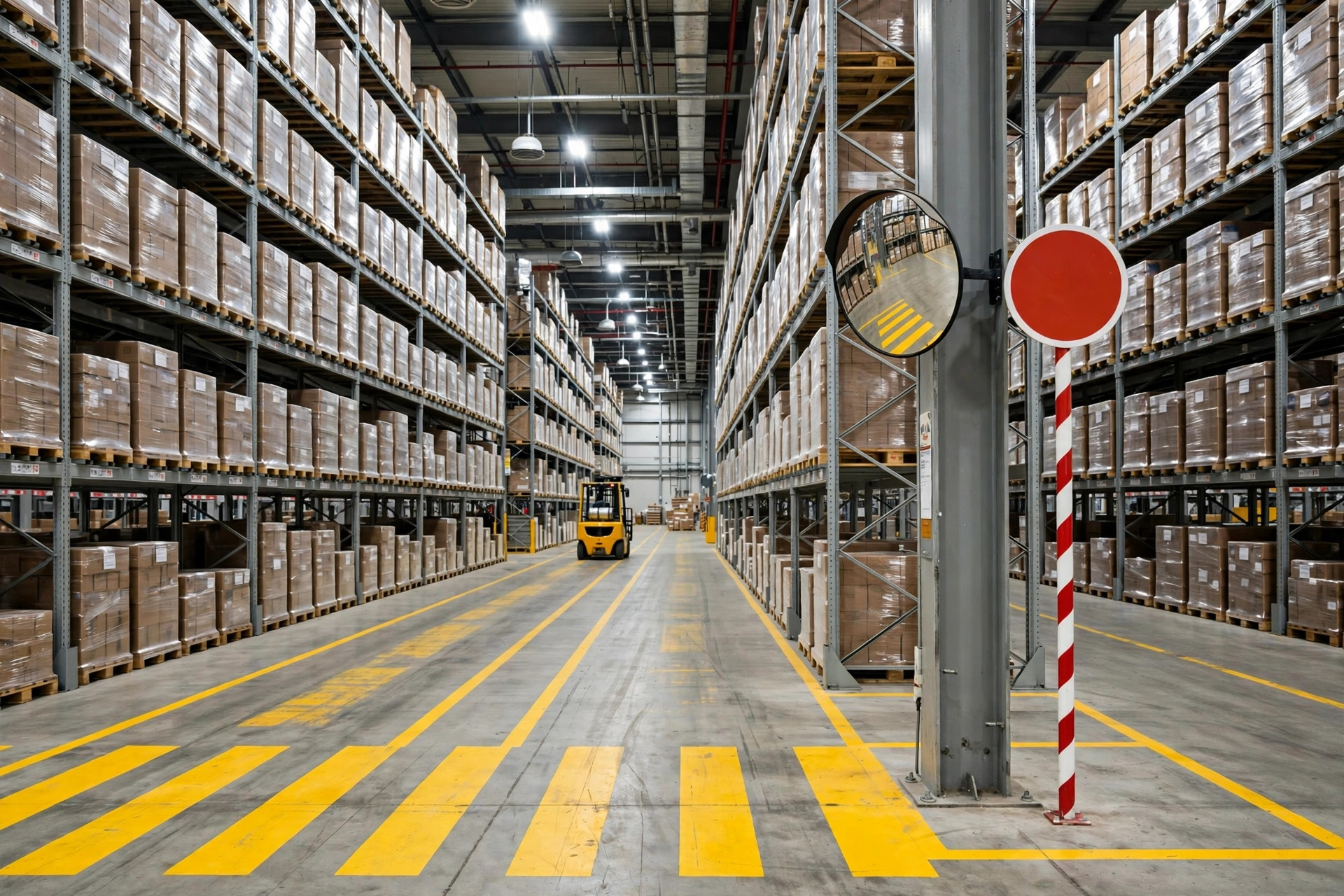
It was 4:30 in the morning, mid-October, peak season.
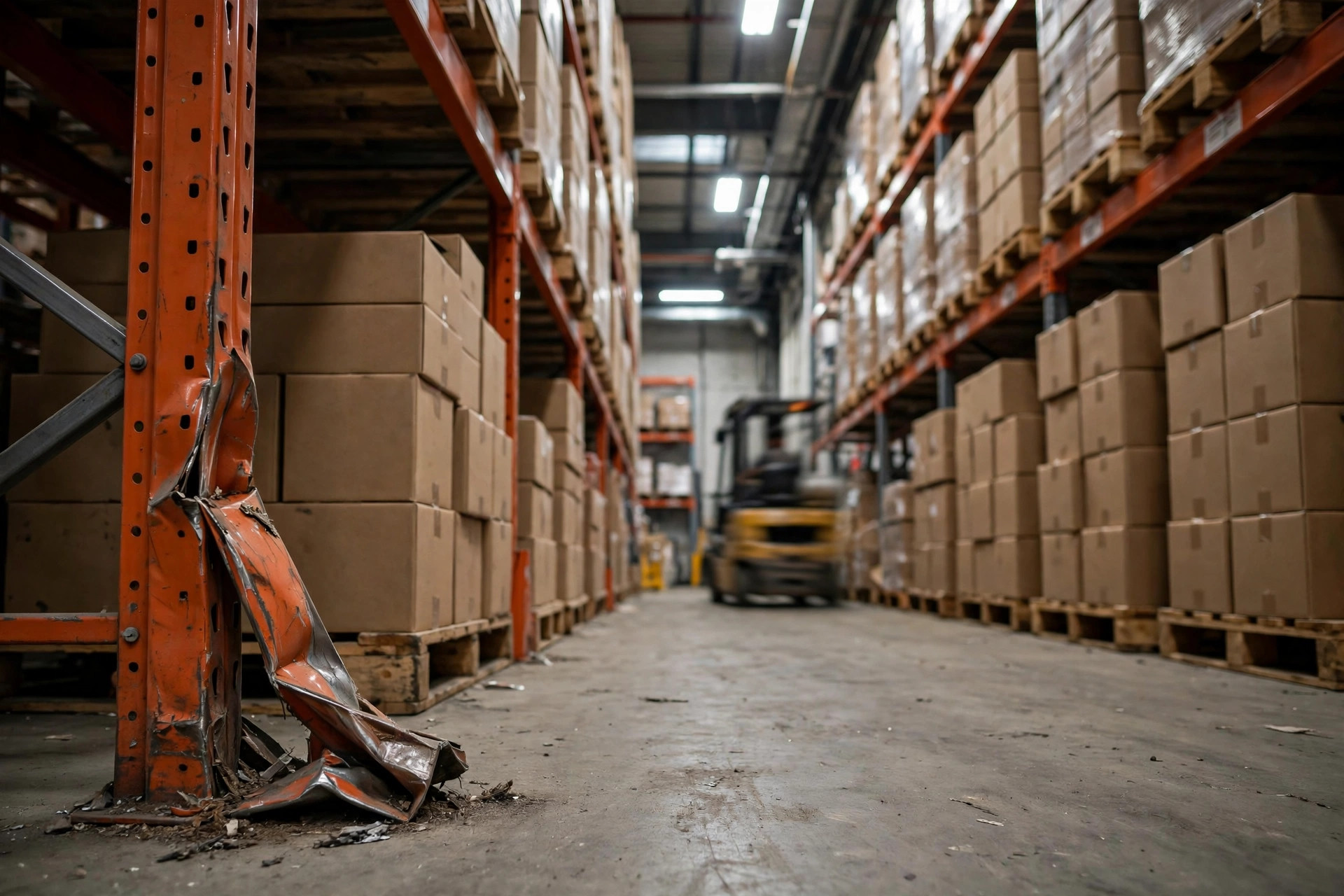
Night shift was winding down. Day shift was trickling in. The intersection of Aisle C and Dock Door 7 — the nastiest blind corner in our building, tall racks on both sides blocking every sightline. Old Zhang rolled his forklift out of Aisle C, started the turn, and the nose of the truck had barely poked out half a meter when a blue spot of light hit the floor ahead of him.
A temp worker, earbuds in, eyes on his phone, was cutting across from the dock door. The blue spot landed about a meter in front of his feet. He looked up and froze. Zhang slammed the brake.
Here's the honest truth: without that blue light, that morning probably ends in an incident report. Maybe worse.
I'm Chen Feng. Over a decade running warehouse floors, buildings with 200-plus people. Today I'm not here to lecture. I want to tell you how our warehouse ended up installing blue spotlights on our forklifts — what forced our hand, the mistakes we made testing them, and what we do now as standard practice. If you're searching for a real-world take on forklift blue light pedestrian safety warehouse practice, this is the field version, not the brochure version.
What This Thing Actually Is
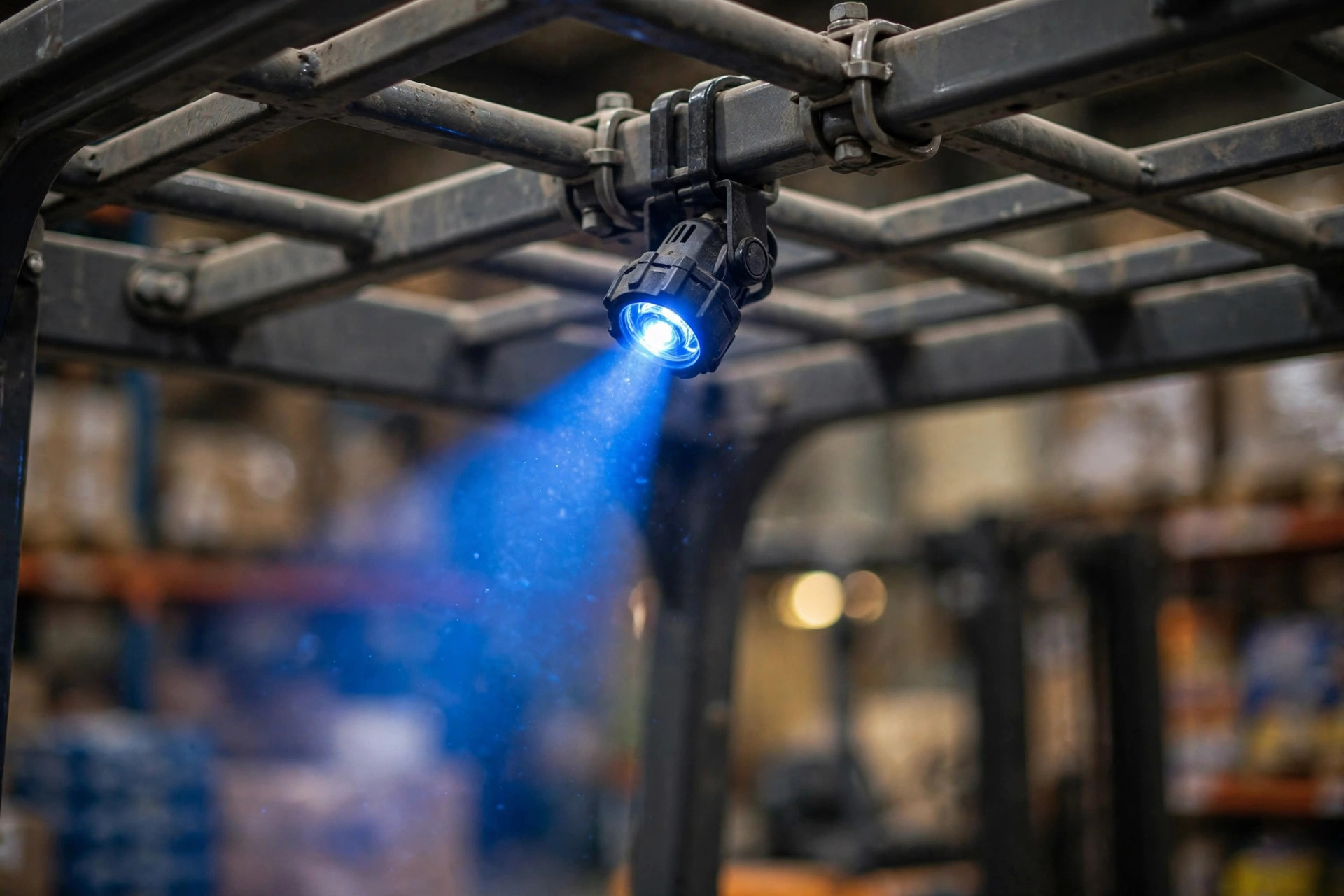
One sentence: a small blue LED light mounted on a forklift that throws a bright blue spot onto the floor in the direction of travel. The truck hasn't come around the corner yet, but the blue light already has. A pedestrian sees a blue spot suddenly appear on the ground and thinks — something's coming, stop.
It costs somewhere in the tens to low-hundreds of dollars per unit (check your supplier's latest quote) — an aftermarket add-on. OSHA's powered industrial truck standard doesn't specifically mandate blue lights; horns are the required item, the light is voluntary. Check the latest text on OSHA's official site for specifics.
Cheap, voluntary, and the effect is immediate. But don't order yet. Hear me out on the mistakes we made first.
How the Problem Built Up: We Wore Out the Horn
Our pedestrian-forklift conflict didn't happen overnight. It accumulated.
Start with the horn. Honking at corners is the iron rule — every driver knows it. But during day-shift peak, a dozen forklifts honking at once, and pedestrians go numb to it. Worse, the younger temps walk the floor with earbuds in. You can lay on that horn all day; they'll keep staring at their phones.
In 2024 we logged seven forklift-pedestrian near misses — all at corners and intersections. Nobody got hurt. Pure luck. At the year-end safety review I told the boss: the horn has hit its limit. We need a warning people can see.
How We Tested Blue Spotlights: Three Trucks First, Three Mistakes
In March 2025, I bought six lights for the three trucks running the highest-risk zone. Two months of testing. Three very real mistakes.
Mistake one: wrong mounting position — the blue spot landed under our own truck. First batch, we took the easy route and mounted them at the rear. When the forklift turned, the truck body blocked the beam and pedestrians never saw it. We moved them to the front of the overhead guard, aimed in the direction of travel. Night and day difference. Lesson: front light warns pedestrians, rear light warns about reversing blind spots. Mount both. Half a job is no job.
Mistake two: the throw distance was never dialed in. Angle too low and the spot landed a couple of meters ahead of the truck — by the time a pedestrian saw it, the truck was already on top of them. Too far and the spot scattered and washed out in daylight. We tuned truck by truck, matching our aisle widths, until the spot landed where the driver's blind zone ends and a pedestrian still has reaction time. No universal spec — test it in your own building.
Mistake three: the blue spot nearly disappears under strong daylight. Our building has skylights, and the midday sun blasts the middle court — the spot was almost invisible there. Two fixes: buy a bright enough unit (don't cheap out on the bargain-bin version), and drill it into drivers — the light is a reminder, not insurance. Slow down in the bright zones anyway.
Running the Numbers: How Blue Lights Compare
During the trial, the boss asked: is this money well spent? Here's the comparison I gave him — steal it and adapt it to your floor:
| Method | Rough cost | Strength | Weakness |
|---|---|---|---|
| Blue spotlight | Tens to low-hundreds of dollars per unit, ~30 min install per truck | Cheap, fast results, minimal training needed | Washes out in bright light; treats the symptom — people and trucks still share space |
| Red zone light (red arc around the truck) | Same ballpark as blue | "Don't enter my circle" is intuitive | Same as blue — relies on people paying attention |
| Backup alarm + strobe | Tens of dollars | Audio + visual, two channels | Noise pollution, and pedestrians wear earbuds anyway |
| Physical separation: guardrails + walkways | Thousands to tens of thousands per aisle | The real fix — people and trucks truly separated | Expensive, eats floor space, brutal retrofit in an old leased building |
| Floor markings + convex mirrors | A few hundred dollars per corner | Cheap | Purely voluntary compliance; nobody looks after month two |
Honest take: the blue light isn't the most thorough solution, but it's the best bang for the buck. Physical separation is obviously better — but we lease an old building, the landlord won't allow major mods, and aisle widths can't change. The blue light is the realistic choice.
The Counterintuitive Part: After the Blue Lights Went On, Our Near Misses Went Up at First
What surprised us: for the first two months after installation, our near misses went up, not down.
Two reasons. First, drivers got complacent — "the blue light's on, pedestrians will move," and cornering speeds crept up. Second, something weird on the pedestrian side: a few people saw the blue spot, got curious, and walked toward it to look. The blue light became a sightseeing attraction.
We scrambled and added three management fixes, and things turned around:
- We rewrote day-one training. New temps get walked to a real corner to see it happen: blue spot appears = a forklift is moving, stop, wait for it to pass. One live demo beats ten lectures.
- Drivers got a hard rule. The light doesn't replace the horn or the slowdown. Stop at the corner like always. The light just buys the pedestrian two extra seconds.
- A dead light gets fixed the same day. We wrote the blue light into the daily forklift checklist. Light's out, the truck doesn't go out. Running a broken one is worse than having none — without it, at least the driver knows he's exposed.
What We Do Now, Standard Practice
After the two-month trial, in May 2025 we fitted all 18 forklifts. It's been running over a year. Here's the locked-in playbook:
Selection comes down to three things. Match the throw distance to your aisle widths — don't buy a unit whose spot can't reach where it needs to. Mount front and rear — front for pedestrians, rear for reversing. Power it off the truck battery with an independent switch the driver can kill — at the dock, working tight against a trailer, the blue glare does more harm than good. Installation is three checks: height and angle aimed at the floor, wiring secured so a rack can't snag it, then drive three laps to verify. A veteran tech finishes a truck in half a day.
Management is one sentence: the light is a safety device, not a decoration. It's on the daily checklist. It gets fixed the same day it dies. If the truck can't be fixed, it sits. Skip this, and everything you spent was wasted.
Three Things I'd Tell a Fellow Manager
First, buy a few and trial them on your most dangerous trucks for two weeks. Don't blanket the whole fleet on day one. Every building's aisles, lighting, and people are different. Prove it, then scale.
Second, don't expect the light to manage people for you. The light is the last line of defense, not the first. Training and SOPs come first — the light just insures those two seconds of reaction time.
Third, OSHA doesn't mandate it, but if something ever happens, the investigator's first question is always "what else did you do." That extra blue spot can be the difference between "we did everything we could" and "we never thought of it." Check OSHA's official site for the current requirements.
Warehouse safety has no permanent fix. Blue lights are cheap, the cost of getting it wrong is low, and they're worth a try. But remember — no light shines brighter than a shift lead who actually cares.
By Chen Feng, Warehouse Operations Manager