

Last week we shipped two wrong orders. I stood next to our customer service girl while she apologized on the phone, and my stomach dropped — because I knew the round-trip freight, the reship, and the one-star review on that single order would wipe out several days of profit. After she hung up, I kept thinking: where should pick verification actually sit? Right after picking? Before packing? Or right before the carrier takes the box?
Big warehouses have a textbook answer: put a check at all three stages, then add weight verification on top. We small warehouses can't burn money like that. Our entire pick-and-pack crew is six people. Three verification stages means everyone does every job twice, and peak season would bury us. So the only question that matters for us is: with the money we've got, which single stage gives us the most protection?
All Three Pick Verification Stages Burn Money
Let's take them apart one by one.
Stage one, right after picking: the item just came off the shelf, hasn't hit the tote yet, and someone scans it again on the spot. Strongest interception — a wrong item never makes it downstream. But the cost is brutal: you've basically doubled your picking labor. We tried it for two weeks. During peak we push three to four hundred orders a day, and the verifier and the picker kept tripping over each other in the aisles. Throughput dropped almost thirty percent. We killed it.
Stage two, before packing: the goods reach the pack station, and someone checks them against the order before anything goes into the box. This is what we run today. The beauty is that the cost of catching a mistake is near zero — the wrong item is still in your hand, swapping it takes seconds. The downside is that the pack station becomes the bottleneck; if the verifier slows down, a line forms behind them.
Stage three, before handoff to the carrier: the box is already sealed, and someone gives it one last look before the label goes on. Sounds like the safest option. In practice it's the most useless — the box is sealed, are you really going to cut it open? We ran this for a while, and "pre-shipment verification" quietly turned into "checking whether the label is crooked." Nobody could tell if the contents were right. Pure peace of mind, zero protection.
| Verification stage | Where it catches | Interception power | Extra time per order (rough) | Fit for a small warehouse |
|---|---|---|---|---|
| After picking | At the shelf | Strongest — wrong items never go downstream | Nearly doubles labor | Poor, not enough hands |
| Before packing | At the pack station, pre-boxing | Strong — swapping an item takes seconds | An extra ten to twenty seconds | High, best bang for buck |
| Before carrier pickup | After sealing, pre-label | Weak — basically label inspection | A few seconds | Low, mostly theater |
Our Dirt-Cheap Fix: Don't Check Orders, Check a List
Last fall we took a painful hit. Two SKUs, visually identical, one shade apart, sitting in adjacent bins. The picker grabbed the wrong one, the packer didn't catch it, and the customer who ordered charcoal got light gray. The item was worth less than thirty bucks; the return freight, the reship, and the bad review cost us several times that, plus half a day of chaos. That day I learned something: mis-ships aren't a "stage" problem. They're a "which specific SKUs keep betraying us" problem.
So we built a "problem SKU list." It's embarrassingly low-tech, and it works:
Step one, dig up every SKU we've ever mis-shipped and put them on a list, taped right above the pack station. Out of three thousand-plus SKUs, the list holds twenty or thirty names — the usual suspects that look alike, sound alike, or live too close together.
Step two, anything on the list gets checked piece by piece before packing, no exceptions. Everything else gets a ten-percent spot check. And the verifier can't be a fixed person — we rotate. Packers verify pickers, pickers verify packers. You check me this month, I check you next month. Nobody gets to phone it in.
Step three, every mis-ship adds a name to the list. Each mistake automatically widens the net a little. A SKU that goes three clean months "graduates" off the list.
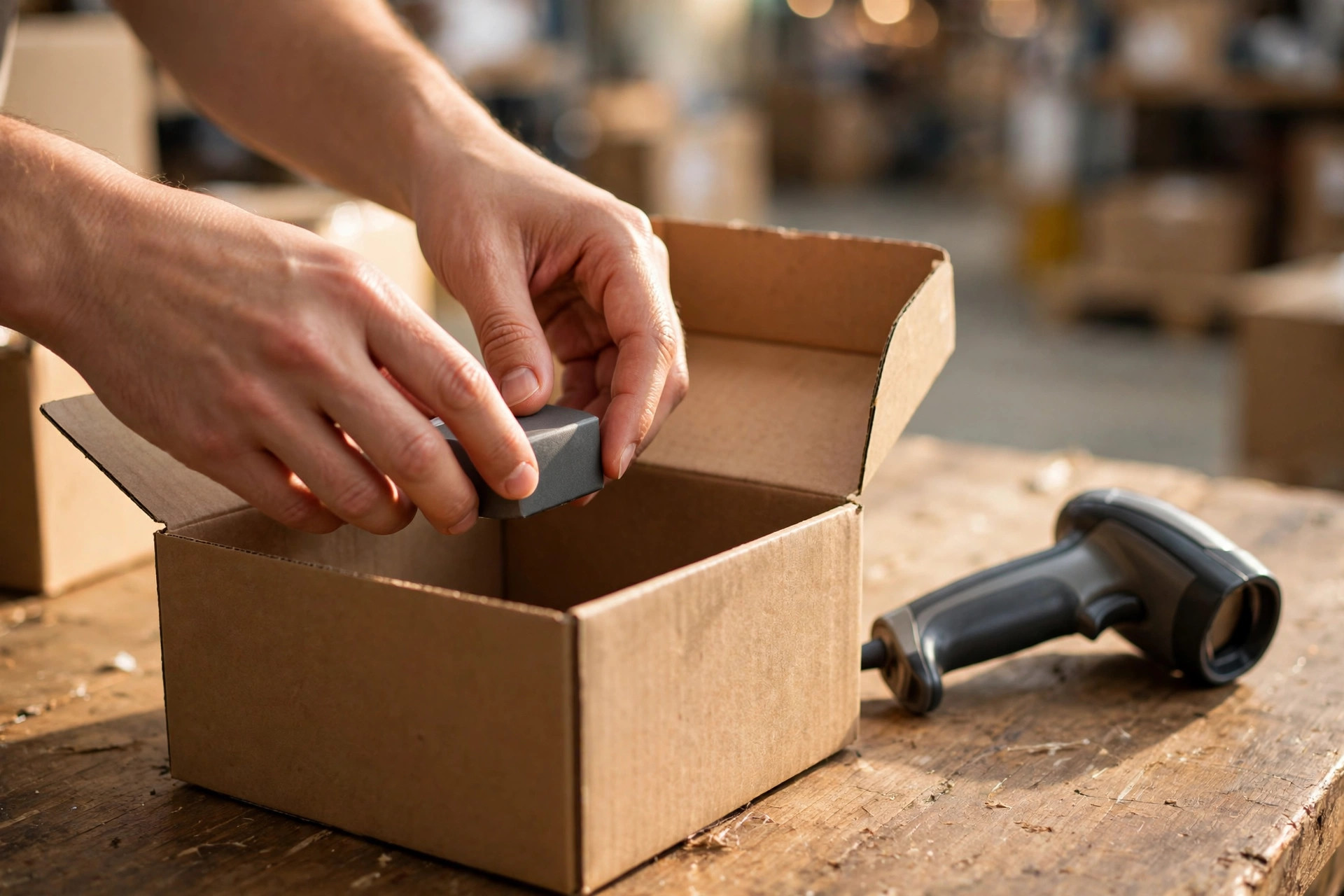
The result? Our mis-ship rate fell from around eight per thousand to around three per thousand — more than cut in half. And the extra labor? An hour or two a day in peak season, because ninety percent of orders outside the list just get the light spot check.
Do the Math: Which Stage Deserves the Money
Run the numbers and it gets obvious. One mis-ship that leaves the building costs you: outbound freight + return freight + repack labor and materials + the review damage and the customer you might lose. The first three alone run several times the profit on a normal order; the last one can't be priced, and it hurts the most.
Catching that same mistake before packing costs ten to twenty seconds of labor. Even at four hundred orders a day in peak season, two extra hours of verification labor versus two or three mis-ships — the math isn't close. Exact figures vary by warehouse, so run your own numbers, but the direction is universal: the earlier you catch it, the cheaper the mistake; and of the three stages, money spent "before packing" earns the highest return.
Here's the counterintuitive part most people won't believe: more verification stages don't necessarily mean fewer mistakes. We tried "after picking + before packing" as double coverage, and our mis-ship rate actually ticked up. Why? "Someone downstream will catch it" — every stage relaxes a little. Diffused responsibility is real, and it plays out on warehouse floors every day. In a small warehouse where everyone wears three hats, three verification stages just mean three rounds of paperwork and a crew full of "close enough" attitudes. Pick one stage — before packing — and do it properly.
When Do You Actually Deserve a Verification System
Now the big-warehouse toolkit: weight verification, scan-to-verify, vision systems. We got a quote for a weight-based setup once. Hardware plus software would have cost us the better part of half a year's rent. Weight verification is accurate, sure — but it catches quantity errors, not wrong-item errors. And in our warehouse, eight out of ten mis-ships are wrong items, not wrong quantities. Spending big money to prevent the rare case while the common case walks out the door? I can't make that math work.
My rule of thumb: until you're pushing a thousand orders a day, do the "problem SKU list + before-packing spot check" properly. If that gets your mis-ship rate under five per thousand, the system money can wait. Scale up, cross ten thousand SKUs, outgrow what humans can track — then buy the system. Tools should serve your scale, not your anxiety.
Three pieces of advice for fellow small warehouses: first, don't get greedy — guard the before-packing stage and let the others go. Second, build the problem SKU list so verification has a target. Third, rotate your verifiers — the same person checking the same freight goes through the motions within three months, guaranteed.
Big warehouses compete on systems. Small warehouses compete on cleverness. We've figured out verification: it's not about how many stages you build, it's about learning from every single mis-ship. Small warehouses have their own way of surviving.
By Xiao Ma, Small Warehouse Owner





