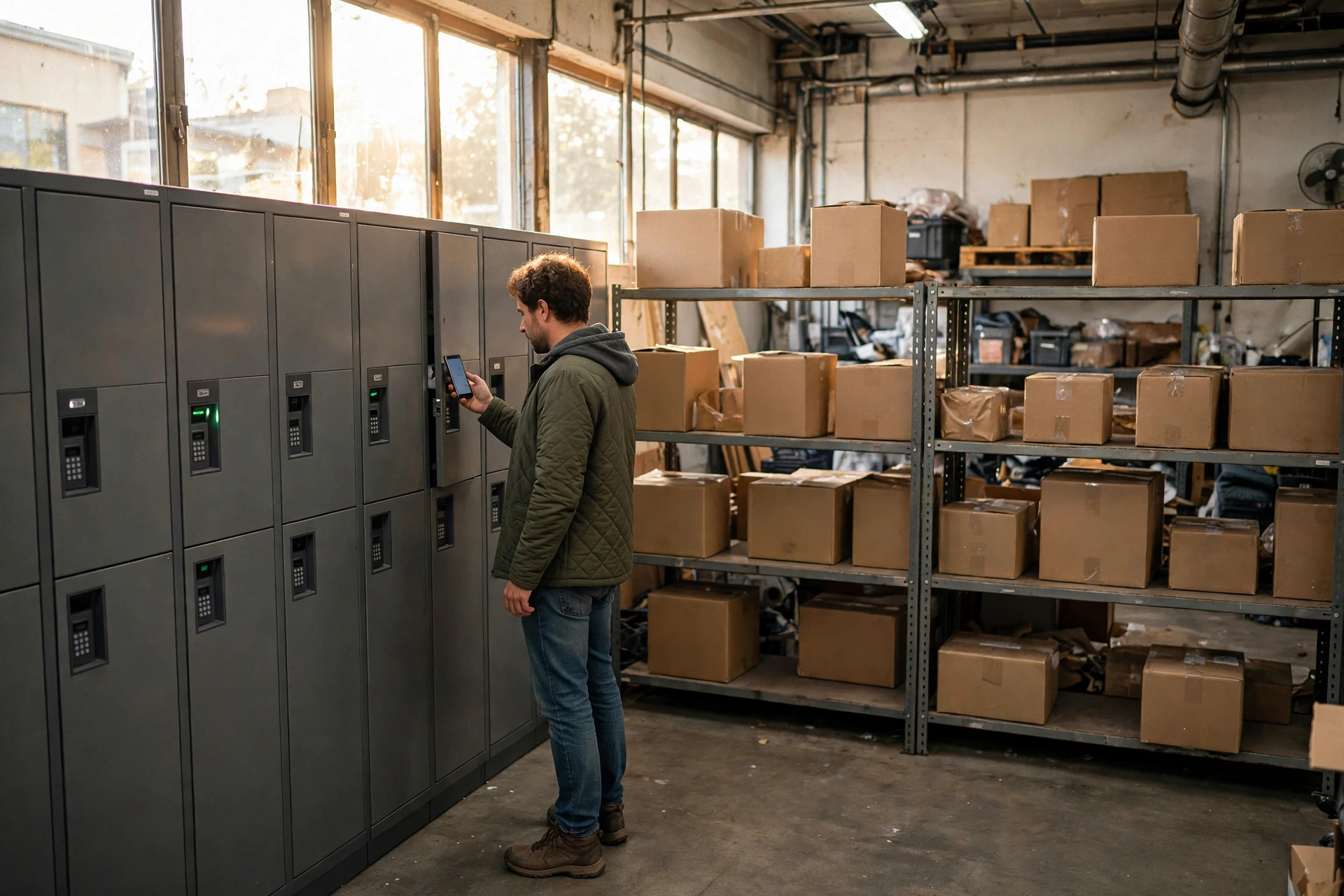
Parcel lockers and pickup points were a hard no for me at first. Our warehouse is about 3,000 square meters, four people, one secondhand forklift, and a daily inbound-outbound grind that already keeps us busy. Take on self-pickup? That sounded like volunteering for extra trouble. We took it on anyway. Not because I had some grand vision. Rent went up, the pickup station owner next door kept dropping by, and one chat turned into a deal.
Last fall, the self-pickup station serving the neighborhood next to us ran out of shelf space. The big sale season had not even started and their racks were already full. The owner asked if some of their parcels could sit at our place, with residents coming to us to collect them, and a small per-parcel service fee paid to us, at the partner's latest quoted rate. Empty shelf space is wasted shelf space, I thought. How hard could it be? The first week answered that question. Their parcels arrived in one big bin by the door, unsorted, with no order by pickup code. A resident would show up, read out a code, and four of us would dig through the bin working up a sweat, often without finding a match. One evening, a woman walked out with someone else's skin care parcel. The rightful owner showed up the next day, and the station owner and I blamed each other. I paid for that parcel in the end. It was not much money. It cost me a lot of face. From that day on, we had one rule: code wrong, parcel stays. Better to make a resident wait two extra minutes than to let a parcel walk out with no clear trail.
How We Sort Parcel Locker Freight Without Losing It
Sorting for a parcel locker or self-pickup job is not the same as normal outbound. Normal outbound is freight chasing people: pick, pack, ship, done. Self-pickup is freight waiting on people. The parcel sits on a shelf, waiting for someone to show up. All that waiting time is where mistakes breed. Our method is embarrassingly low-tech, and it works.
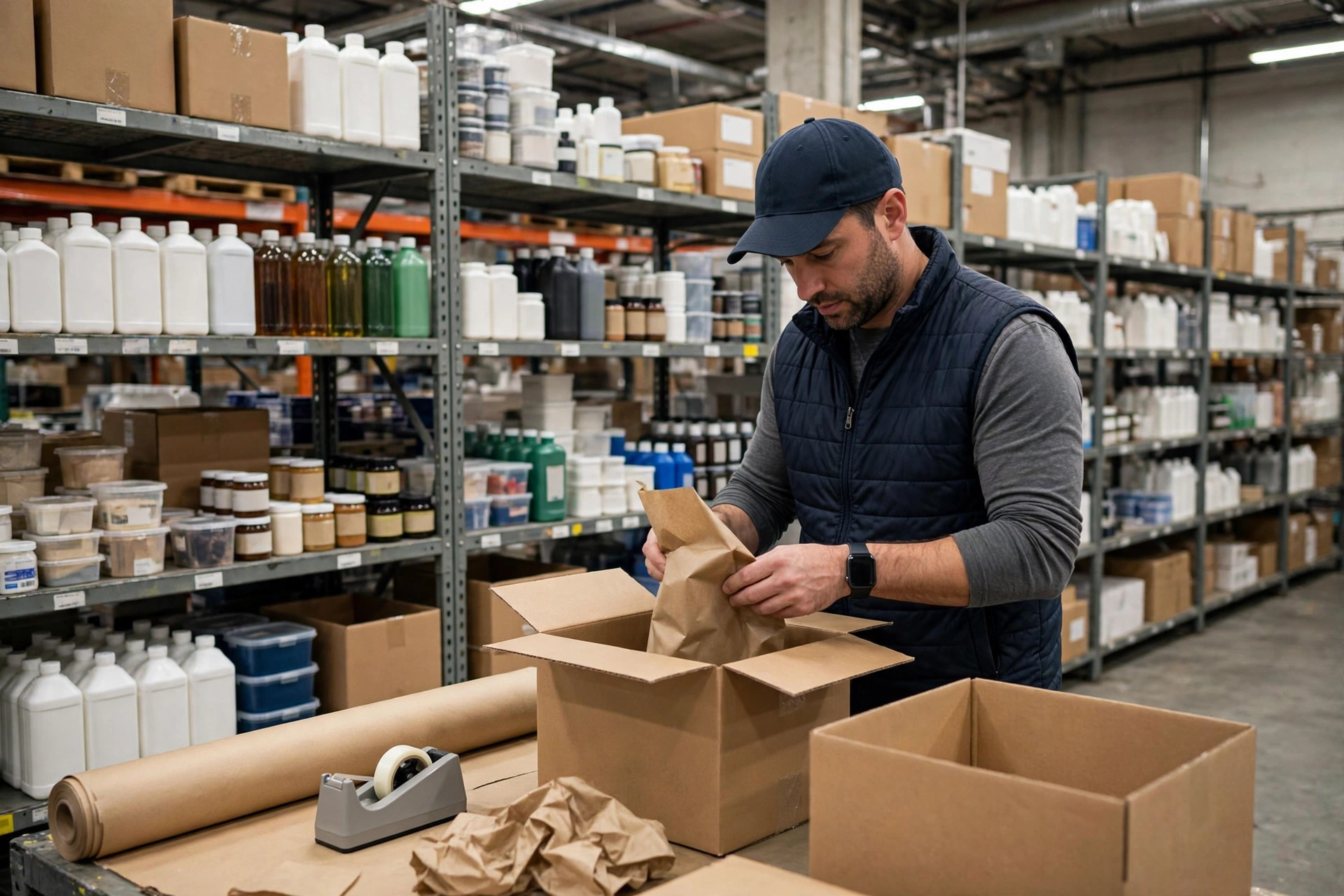
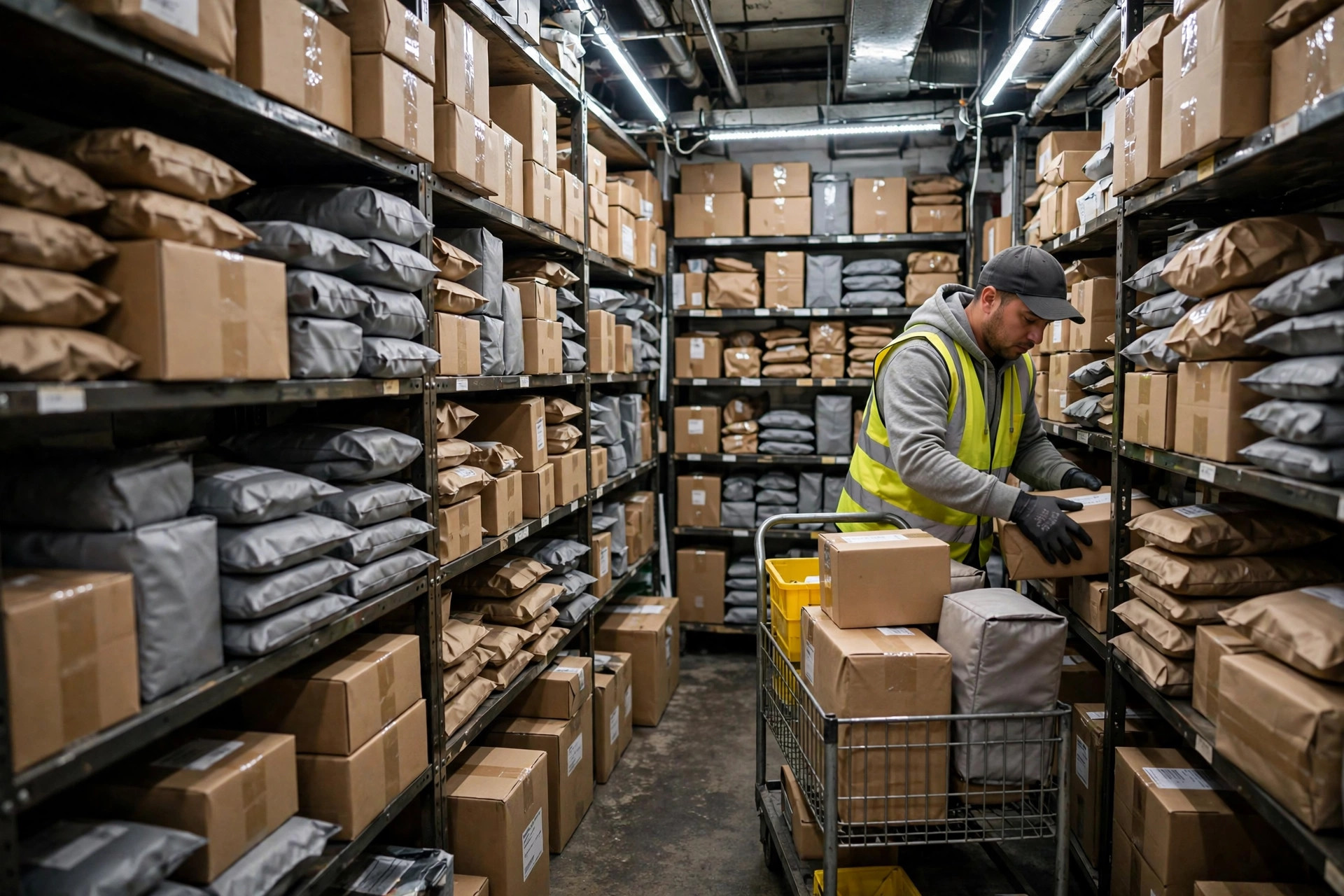
When parcels arrive, we scan them in and sort them into bins by the last digit of the pickup code. Codes ending 0 to 2 go in one bin, 3 to 5 in another, 6 to 9 in a third, with big handwritten labels on each bin. Then the bins go to shelves organized the same way. A resident reads out a code, we walk straight to the matching zone, and we have to find the parcel within a minute. If we cannot, the process broke somewhere. Every evening, the four of us spend about half an hour walking the holdover shelves: whose parcel has sat here two days untouched? We make a call and ask. If nobody picks up, that parcel moves to a separate holdover zone so it stops hogging a good spot. One more detail: valuables never go on open shelves. Skin care, electronics, anything that looks pricey goes into a small locked cabinet, and pickup requires an ID check. It is slower. But since we started doing it, the lost-parcel arguments have stopped.
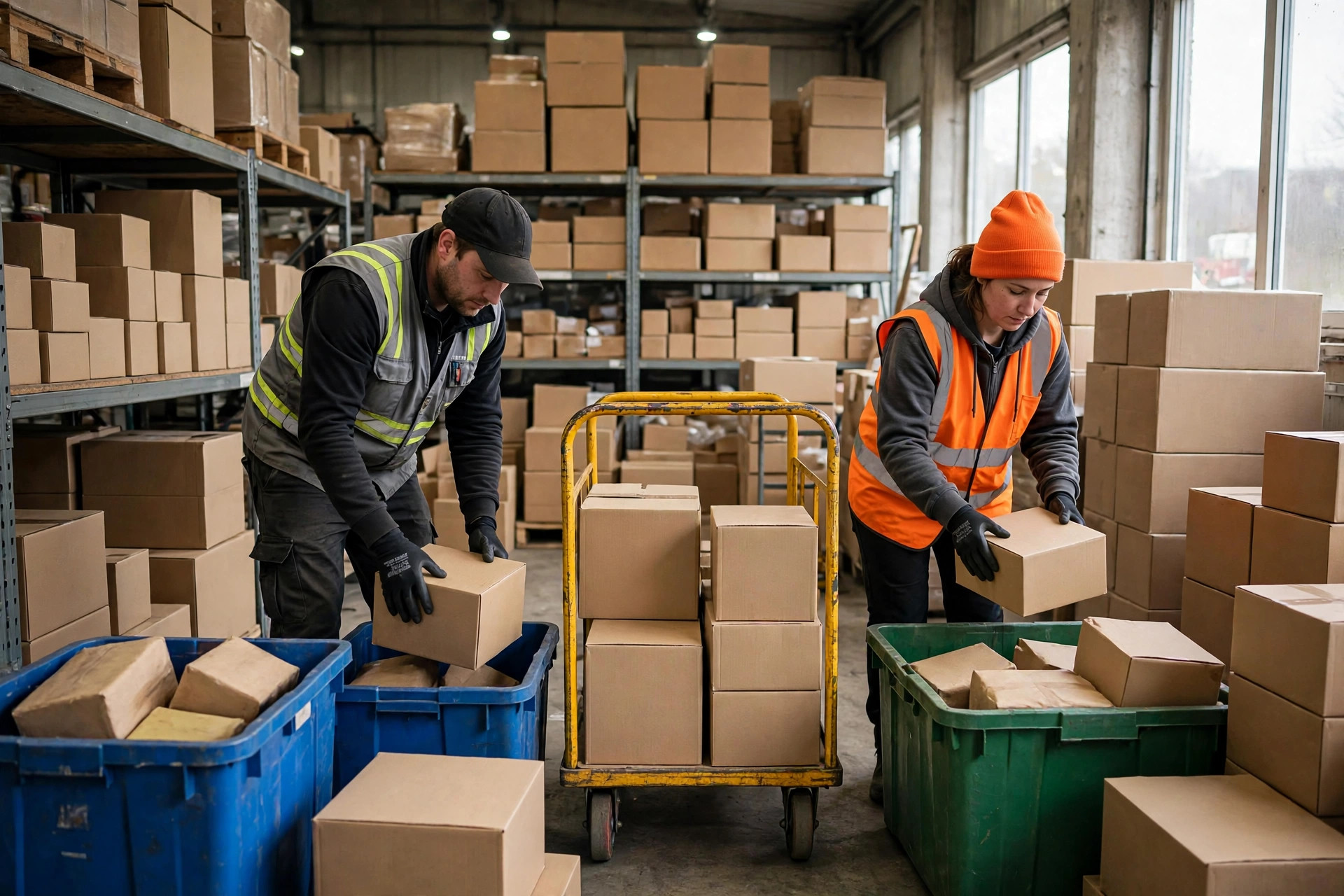
This spring, a second deal showed up. A friend running a community group-buy business wanted to use us as a pickup point for returns too. Returns are worse than pickups. A pickup is freight waiting on a person. A return is a person waiting on freight: the resident brings the goods back, we inspect them, log them, and wait for the courier to collect them. Once, a resident dropped off a box of fruit, it sat by our door in the sun all afternoon, and by the time the courier arrived it had wilted. They said we stored it badly. We said they came late. We argued for half an hour and split the difference. After that, I learned: returns get their own zone, inspected and photographed on the spot, with the timestamp in the photo. Whose fault it is becomes obvious from the picture. Do not rely on memory and talk. Talk does not settle anything.
The American version of this world works a little differently, and it is worth knowing the contrast. Amazon Hub Locker and UPS Access Point setups are mostly carrier-run, code-driven, and strict about dwell: miss the window and the parcel goes back. The Chinese pickup station model that I live with is more human-staffed, mixes parcels from several couriers in one place, and tolerates longer dwell, which also means more haggling over who is liable when something goes wrong. Same idea, different texture. The locker does the holding in both cases. A person still has to do the sorting, the chasing, and the apologizing.
Pickup Point Reconciliation: How We Stop the Blame Game
Reconciliation for self-pickup is hard because it is not one ledger, it is three tangled together: parcel count, money, and liability. The count is how many parcels came in, how many were collected, how many are still on the shelves. The money is the per-parcel fee and whether settlement is monthly or twice a month, at the partner's latest quoted rate. Liability is the grinding part: did the parcel vanish at our place, in transit, or because a resident grabbed the wrong one?
Our small-warehouse method is simple: a small count every day, a big reconciliation every week. Before anyone goes home, we take turns counting what is still on the shelves and matching it against the uncollected count in the system. If we are off by even one parcel, nobody leaves. Once a week we reconcile the totals with the partner, print one sheet of paper, and both sides sign it. Paper, yes. Laugh if you want. Chat messages are impossible to dig up when an argument starts. Ink on paper is right there. And one ugly conversation has to happen before the partnership starts, not after: write the lost-parcel liability into the agreement. Whoever loses it in their step pays for it. Do not wait until a parcel is gone to negotiate. After it is gone, there is nothing to negotiate.
| What | Self-pickup | Home delivery |
|---|---|---|
| Delivery leg | Resident comes to collect, no door-to-door trip | Courier drives door to door, time burned on the road |
| Reconciliation time | Daily shelf counts and pickup-code checks | Simpler, signature closes the job |
| Dwell risk | Parcels sit longer, and the longer they sit the easier they go missing | Undelivered parcels ride back, dwell location is clear |
| Complaints | Wrong code, wrong parcel, parcel sat too long | Slow delivery, parcel left at the door with no call |
| Fits whom | A small warehouse with spare shelves and spare hands | A team with big volume and mature delivery routes |
Run our own books and the picture is honest: about half of what self-pickup saves on delivery gets spent again on reconciliation labor and holdover handling. That is the real deal. Self-pickup saves the delivery fee and adds reconciliation and dwell headaches. Never count only one side of that ledger.
So Is It Worth Taking On?
Here is the counterintuitive part: the biggest cost of running self-pickup is not the locker, not the shelving. It is the time people wait on freight and freight waits on people. A locker is bought once and lasts for years. Shelving too. What burns money every day is your staff digging through shelves, calling residents to come collect, and explaining why a code does not match. You can leave that time off the books. It is still real.
So whether it is worth it does not come down to what one parcel pays. It comes down to whether you have spare hands and spare shelf space. Both spare, take it. Only one spare, think hard. Neither spare, walk away. You will not make money on it, and you will shortchange your regular customers. Our final play is to work with one partner only, keep daily volume inside what we can actually clear, and turn away anything beyond that. Turning away an order stings. Taking it on and drowning stings more. A small warehouse has a small warehouse's way of surviving. We cannot out-scale the big warehouses. We can avoid mistakes, avoid blame games, and keep the books clean.
By Xiao Ma, Small Warehouse Owner