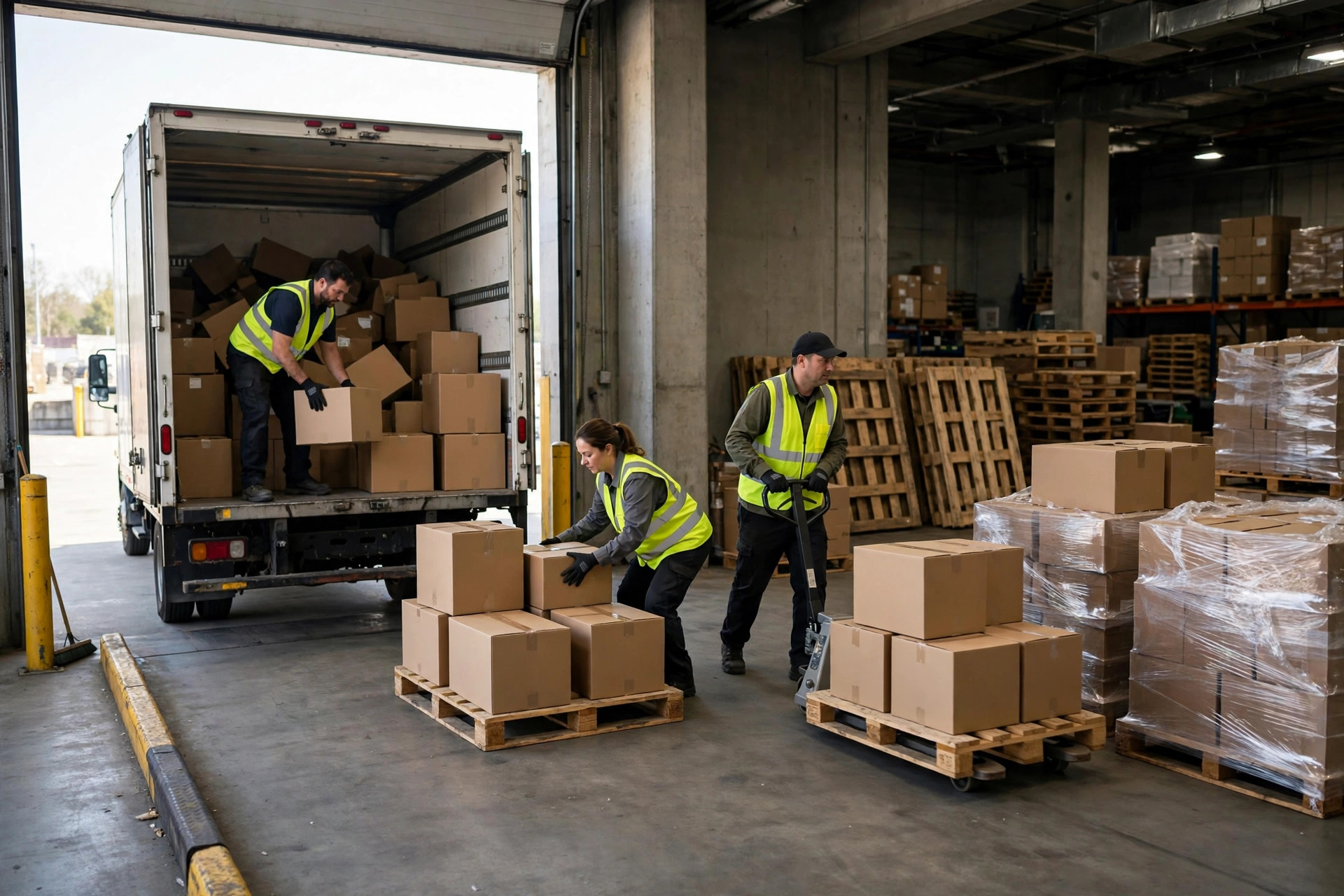
I learned about reverse cross-dock returns sitting in my truck outside a warehouse, waiting four hours to unload.
It was autumn two years ago. I had a full load of returned clothes coming out of Yiwu, bound for a big warehouse in Hangzhou. Tags still on, most of them never even worn. When I got to the gate, the warehouse told me the dock was full and to get in line. So I waited. Four hours, watching empty trucks roll in and full trucks roll out, thinking: half of this load could go straight to the next buyer tomorrow. Why unload it, put it away, pick it again three days later, and ship it a second time? That is a lot of handling for freight that never needed to stop.
Fifteen years behind the wheel, and I have watched a lot of warehouses treat returns like a burden. Freight comes back, gets stacked in a returns corner, and sits there until somebody gets around to it at the end of the month. By the time it is processed, the refund is done and the selling season is gone. Clothes go out of season fast. A month late, you are selling at thirty percent off. The warehouse thinks of returns as "processing." From behind the wheel, returns are just freight that got delayed on the road. If it can keep moving, let it keep moving.
Later I talked to that warehouse's manager. He told me they changed their approach: when a returns truck arrives, it does not go straight into the returns area. The freight gets sorted at the dock first. Whatever can be reshipped goes straight onto an outbound truck. Only what cannot be reshipped goes inside. Their average returns turnaround dropped from six days to under one. Freight is meant to move; every day it sits still, it burns money.
How Reverse Cross-Dock Returns Actually Work at the Dock
The idea is simple: connect the return trip to the next trip. The normal flow is returns come in, get inspected, get put away, wait for an order, then get picked and shipped. Reverse cross-docking cuts out the middle steps: returns arrive at the dock, get a quick inspection and sort, the reshippable ones get loaded straight out, and only the rest go into storage.
It sounds simple, but three things go wrong most often.
First, the arrival information has to get there before the truck does. Before the driver reaches the gate, the warehouse needs to know what is on the truck, how many pieces, and why it came back. Without that, the dock crew cannot stage outbound trucks or plan loading positions, and everything gets figured out on the spot while trucks stack up at the gate. The good ones get the returns paperwork ahead of the truck, so someone is waiting at the gate with a sort sheet in hand.
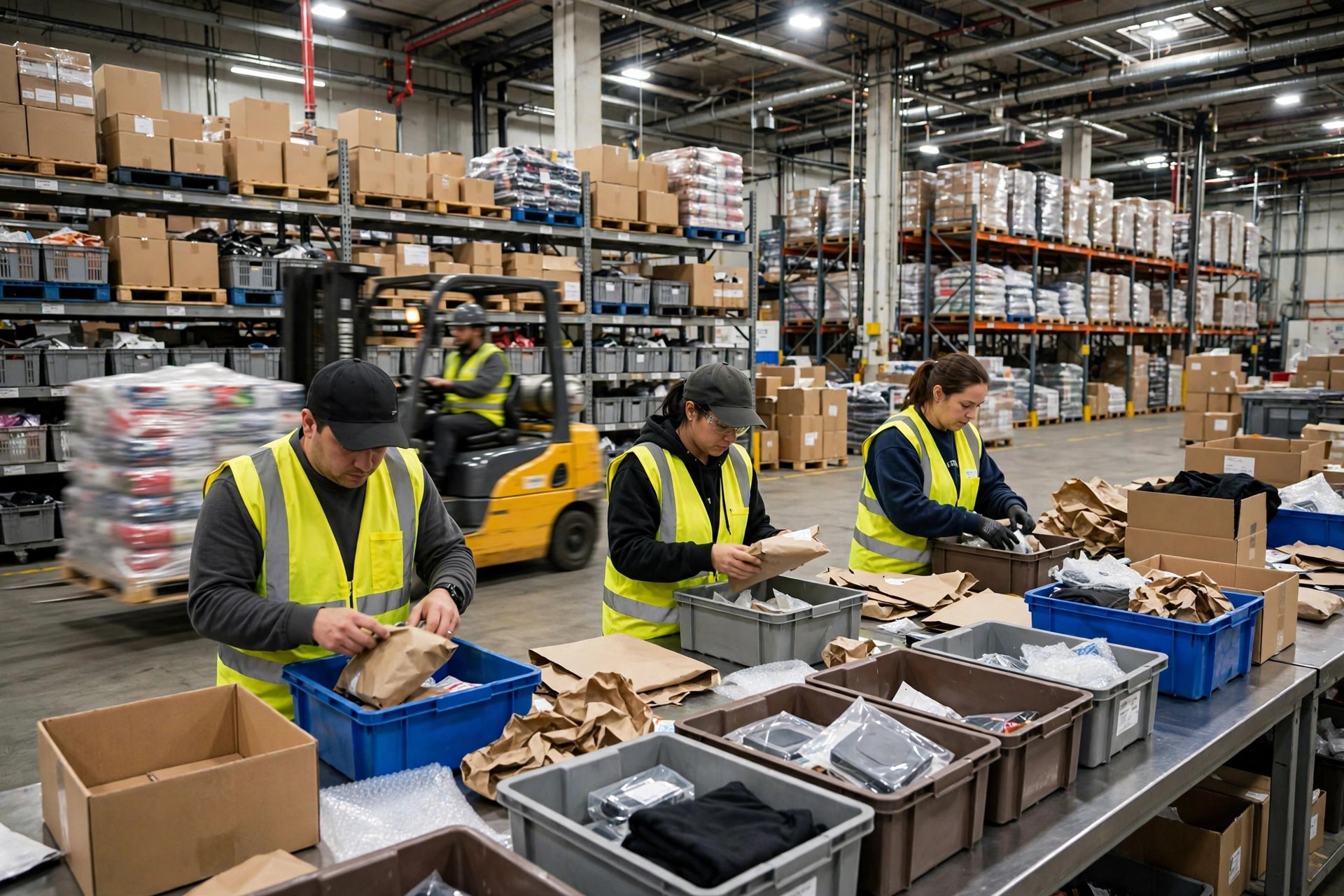
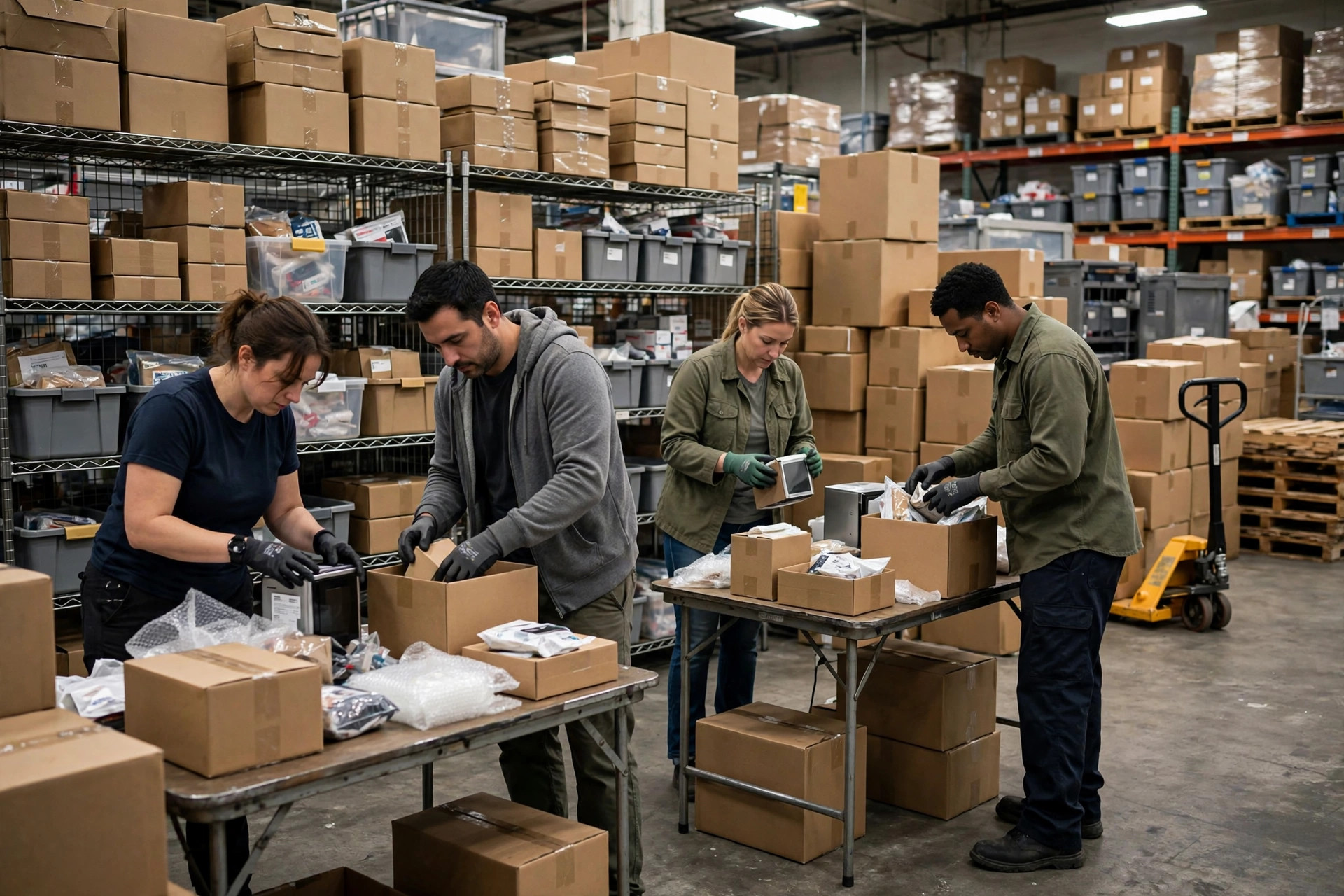
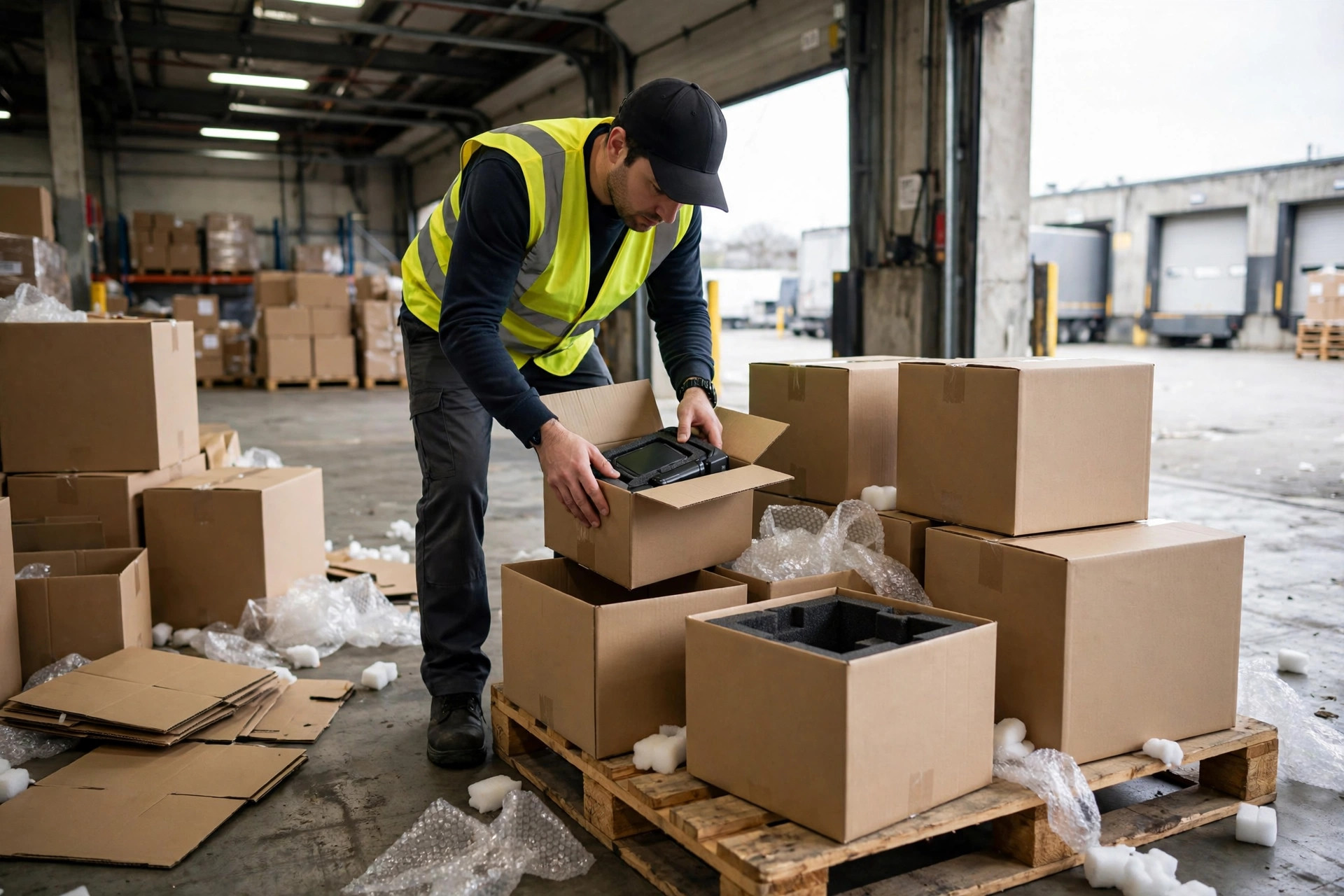
Second, inspection has to happen at the dock, not back inside the warehouse. You need a small station right there: two tables, a scanner, a few flow-through bins. The inspector looks, scans, checks a box on the sort sheet, and the carton goes onto the right pallet. If any single piece takes more than ten minutes, something is wrong with the process: either the standard is too complicated or there are not enough hands.
Third, the outbound trucks have to line up. Sorted freight with no truck to carry it just piles up on the dock, and then the dock is blocked. So reverse cross-docking is not the warehouse's job alone. It has to be tied to the transport schedule: what time the returns truck arrives, what time the outbound truck leaves, how big the window is in between. One warehouse I know fixed returns arrivals at ten in the morning and outbound departures at two in the afternoon, with four hours in between dedicated to sorting. Same schedule every day, and it ran like clockwork.
Reverse Cross-Dock Returns: The Four-Grade Sort
Dock sorting lives or dies on a standard simple enough to use without thinking. Every warehouse I have seen do this well sorts into four grades:
| Grade | Standard | What happens |
|---|---|---|
| Reship as-is | Looks perfect, works fine, original packaging unopened, shelf life OK | Loaded out on the next outbound truck |
| Reship after light touch | Packaging damaged but product fine, or missing a manual or small accessory | Repack or replace the accessory, reshipped within 24 hours |
| Repair first | Minor functional fault, like a sticky button or a jammed zipper | Sent to repair, then put away through the normal flow |
| Scrap or send back | Badly damaged, short-dated, unrepairable | Photo evidence kept, then scrapped or returned to the supplier |
The table looks crude, and that is the point. The moment the standard gets complicated, inspectors start flipping through manuals and calling supervisors, and sorting speed falls off a cliff. I saw one warehouse with eight grades. Inspectors spent half the day checking a chart, and cartons piled up like a small mountain. They cut it back to four grades and the backlog cleared.
There is one more iron rule: at the dock, the inspector's call is final. Sales and customer service do not get to lean over the table. I once watched a rep push an inspector to rush a piece out to calm a buyer. It had a hidden fault, came back a second time, and the warehouse ate double freight plus a day of service time. The dock has its own rules. Whose freight it is and whose customer it is, none of that matters at the sort table.
Two True Stories: One Saved Money, One Paid Tuition
The money-saver first. Last September, an apparel warehouse in Zhejiang got hit with a wave of returns during the seasonal changeover. The manager told me returns had filled more than three hundred pallets, and pickers had to clear returns before they could do normal work. Then they started reverse cross-docking: returns trucks arrived in the morning, inspectors sorted at the dock, and anything with tags intact and packaging unopened went straight back out. That month, more than sixty percent of returns were reshipped directly, and the returns area emptied out by half. Skipping one putaway and one pick cycle paid for two inspectors — and those clothes went back on sale before the season ended.
Now the tuition-payer. A small-appliance warehouse tried the same thing, but to go faster they cut inspection down to looks only and skipped power-on testing. A batch of returned electric kettles looked brand new, but the thermostats had a hidden fault. They went out to the next customers and came right back. Second returns cost double freight, the customers left bad reviews, and customer service spent half a day calming people down. The batch was just over two hundred units; a power-on test would have added about thirty seconds each. They saved those thirty seconds and paid many times over.
Put the two stories together and the lesson is plain: reverse cross-docking does not save inspection money. It saves the money of freight lying around. If you skip inspection, inspection finds a way to charge you double somewhere else.
Straight Talk for Shippers and Warehouses
If you are a shipper, do not just watch your return rate. Watch your returns' "time back to sale": how many days between a return arriving and that same item selling again, and how much warehouse space and labor it ate in between. That number tells you more than the return rate itself. If your warehouse cannot even give you that number, their returns process is guesswork.
If you run a warehouse, before you start, answer three questions: room on the dock for a sorting station? Standard fits on one sheet? Outbound schedule lines up with returns arrivals? Any no, do not start yet — forcing it blocks the dock. Get the three conditions in place, pilot two weeks, watch reship rate and second-return rate, scale up only if the numbers look good.
And one word for fellow drivers: when you take a returns load, ask one question: "At the gate, is this a direct sort or does it go into storage?" A sorting warehouse unloads fast and you might squeeze in an extra run. A warehouse that just stacks returns — build the queue time into your rate.
Faster returns save money, that much is true. But speed only works when inspection is not skipped. Skip inspection to go faster, and you are digging your own hole — and sooner or later you will be the one filling it back in.
By Shifu Zhao, Trucking Veteran (15 yrs)