Let me tell you something. After fifteen years behind the wheel, I've been inside more warehouses than truck stops. But last fall, at a 3PL warehouse in Fontana, I saw something that genuinely stopped me in my tracks — and it had nothing to do with trucks.
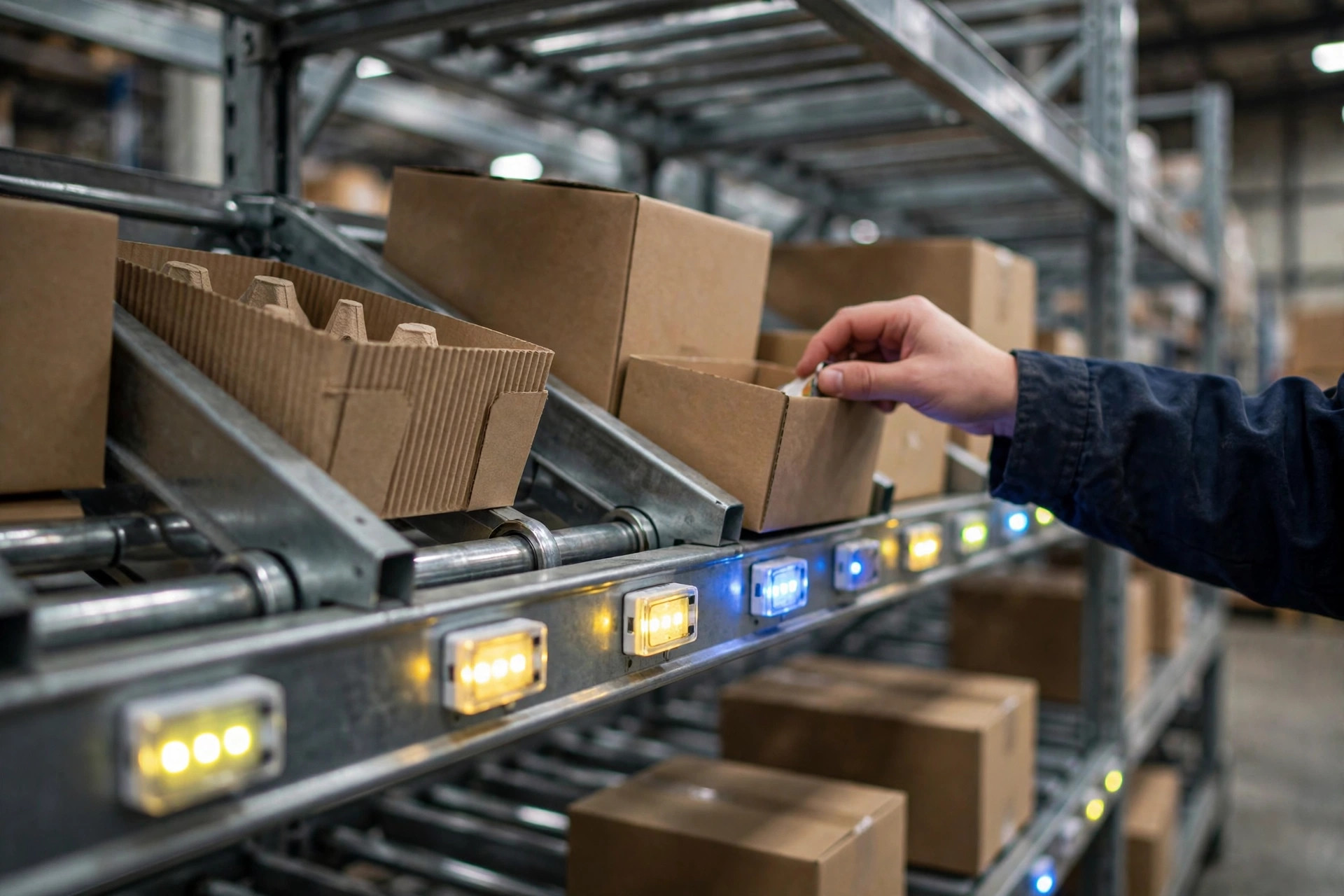
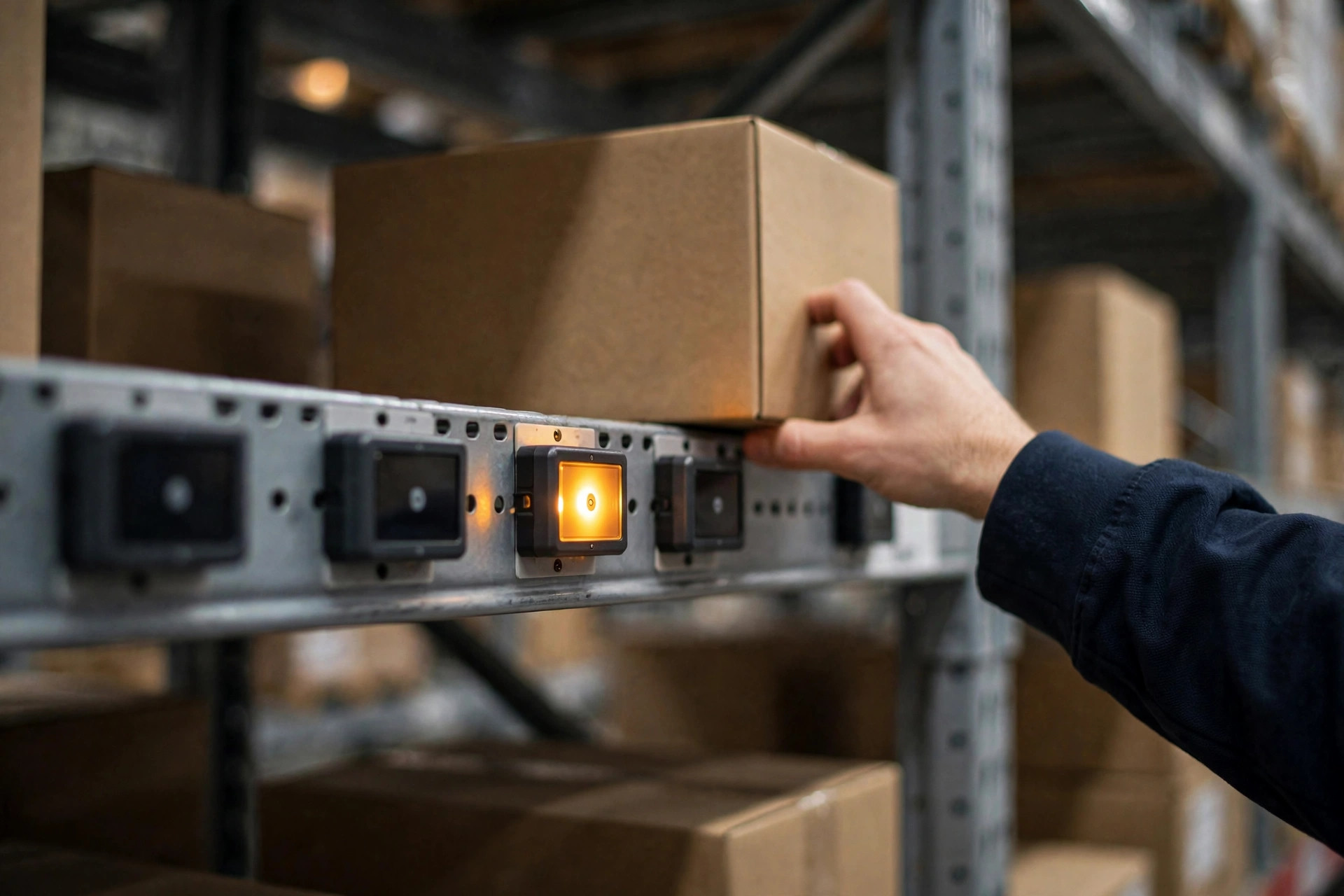
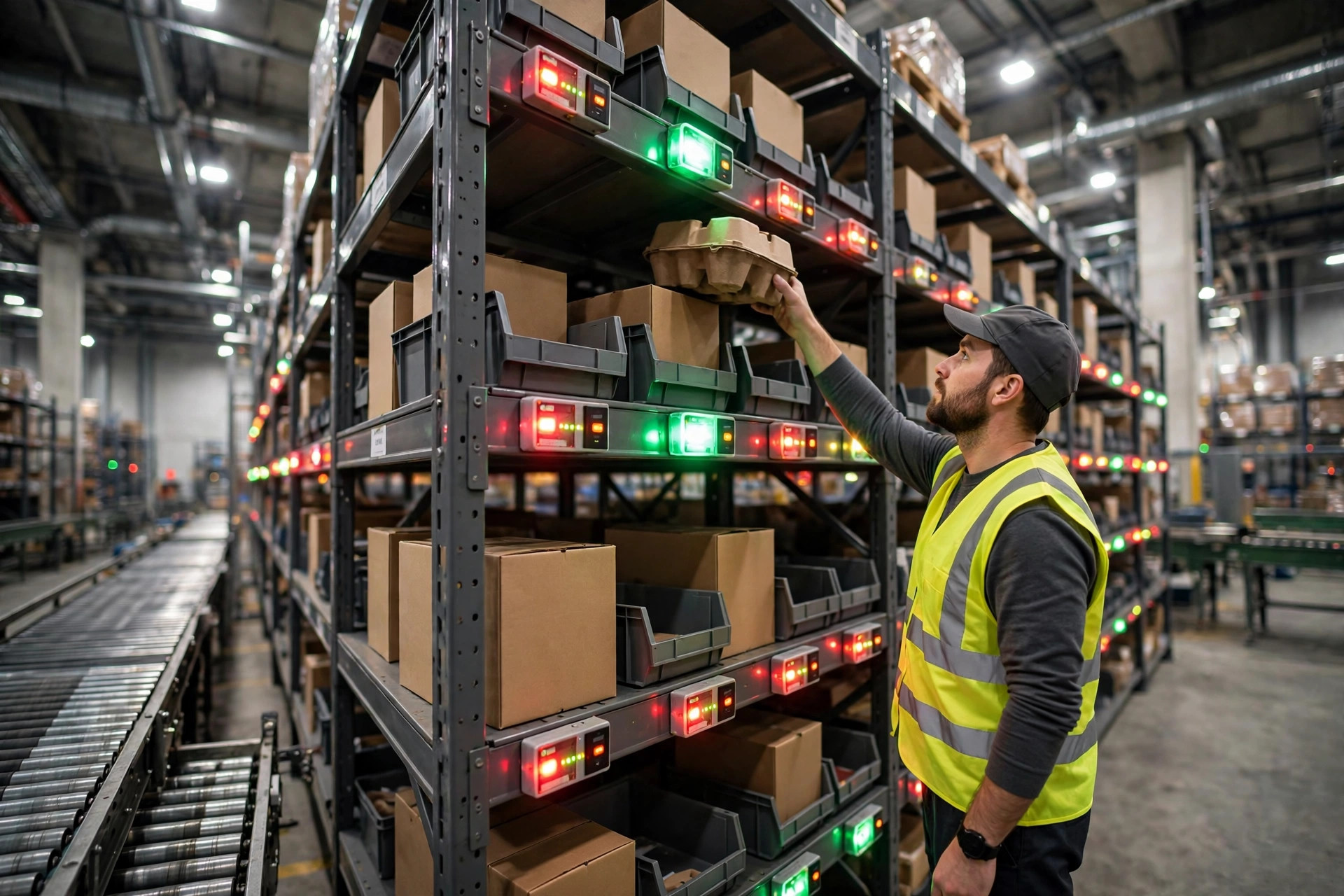
I was dropping off a load, waiting for the receiving office to release me. The little conference room had a glass wall facing the pick zone, and there it was: rows of racks with small indicator lamps — green on, red off — pickers pushing carts with eyes glued to the lights. A lamp lit up, the picker grabbed the product, hit the confirm button, the light died, the next one lit up. The whole rack sang like a piano, one person covering a huge area.
First thought: those lights must cost a fortune. Second thought: who tells them what to do?
I asked their floor supervisor on my way out. The lights, he said, take orders from the WES — the warehouse execution system, the "brain" behind picking. Orders come in, the WES slices them into tasks — which wave, which zone, who picks — then "translates" each task into lamp language: which location lights up, how many units. The picker follows the light, hits confirm, the light dies, and the WES fires the next one.
I'm a trucker, an outsider looking in — but the more I chewed on it, the clearer it got: the WES's real talent isn't sending tasks down. It's something else entirely.
When the Light Goes On, What's the WES Actually Doing?
Here's the chain, in plain English:
Orders hit the WES first, which breaks them into pick tasks by wave, zone, and priority — loads racing a carrier cutoff go first, no-rush stuff waits. Then tasks land on the "execution layer." On the pick-to-light side the WES does three things: lamp binding — which lamp belongs to which slot, moving whenever the slot moves; task dispatch — this wave needs so many units from this slot, lamp on with the quantity; and confirmation — the picker hits confirm, and only then is the task done.
Here's a detail outsiders miss: lamp binding has to share one source of truth with the slot master data. New SKU goes live — bind the lamp before you talk about receiving. The warehouse re-slots and the goods move — the binding in the WES must move in the same motion. The most common screw-up I've seen: goods moved, lamps still shining at the old address, new hires grabbing the wrong stuff while the veterans shake their heads.
Voice picking is the other lane — same logic, different shape. The WES turns the task into a sentence in the headset: "Go to slot X, grab Y units." The picker arrives, speaks back a check code, the system hears it, and only then dispatches the next slot. Hands free, eyes free.
Both lanes share one weak point — honestly the part I find most brilliant as an outsider: exception flow-back.
The lamp lights up, the picker walks over, and the slot is empty. Now what? The voice calls out a slot, the picker hunts and can't find the goods. Now what? The task can't rot on the floor — it has to flow back to the WES: report the shortage, park the task, let the WES find the goods elsewhere — another slot, wait for replenishment, or split the order out. The Fontana supervisor told me the longest stretch of logic in their WES config isn't dispatch, it's flow-back. "Lamp on, no goods" happens several times a day, and mishandled, the whole line just stands there waiting on somebody.

Voice Picking: The WES Grew a Mouth — and Sometimes Mishears
Now the cautionary tale. Back in 2023 I picked up a load in Mira Loma at a warehouse that had just rolled out voice picking — every picker in a headset, looked real advanced. Then a veteran picker vented to me on the dock: between the fan noise, the forklift backup beepers, and a few guys with heavy accents, the system kept missing the check codes, and tasks bounced back to the WES for re-dispatch round after round. "Give me back my old PDA," he said. "At least when I scanned wrong, I knew it was me."
How did they dig out? On a later run I asked: they'd added one fallback rule — three failed voice confirmations on the same task, and it flips to manual intervention automatically, with the WES flagging it for the supervisor instead of re-dispatching forever. One rule, and most of the floor's resentment evaporated.
What's the lesson? With voice picking, the WES doesn't just need to know how to talk — it needs a plan for when it mishears. Everybody can write dispatch logic; the flow-back and fallback logic is what separates the grown-ups. One practical note: headsets are consumables — cables, mics, batteries all wear out. Run short on spares and peak season will make you cry.
Paper, PDA, or Lights Plus Headsets: Three Ways to Run Picking
Fifteen years of docks: I've seen exactly three ways warehouses pick. Here's the honest table:
| Paper picking | PDA scanning | Pick-to-light / voice (WES-driven) | |
|---|---|---|---|
| Ramp-up speed | Slow — you must learn slots and slips | Medium — if you can scan, you can pick | Fast — just follow the lights or the voice |
| Error rate | High — all eyes and work ethic | Low — the scan checks you | Lower — lamp plus confirm button, double safety |
| Upfront investment | Near zero | PDAs plus system integration | High — lamp rails or headsets plus deep WES integration |
| Daily upkeep | None | Charge PDAs, swap batteries | Rebind lamps, headset wear, every slot move needs a config tweak |
| Right for | Few SKUs, low volume | Most mid-size operations | Many SKUs, dense picking, lots of new hires |
| Coupling to the system | Loose — the system just prints slips | Medium — scans report back | Tight — one bad WES config and the whole line goes down |
See the pattern? Move right and efficiency climbs — but so does your dependence on the system. In the paper era, if the system crashed, the old hands kept picking. In the lamp era, one wrong binding and the whole row lights up wrong, and the floor is lost. No free lunch.
The Counter-Intuitive Bit: The Lights Aren't for the Veterans
This was my biggest takeaway from the whole trip, and it's genuinely counter-intuitive:
Pick-to-light and voice picking aren't built for the veterans. They're built for the rookies.
A picker with three years under his belt knows every slot blindfolded — make him follow the lights and he'll call the lamps slow and the headset chatty; to him they're a burden. But a new hire is productive on day one: no slot map to memorize, no slips to read, just follow the glow and the voice, with a low error rate to boot.
So the real value of WES-driven lights and voice isn't "faster picking." It's turning "depends on skilled hands" into "anyone can do it." Peak season, dozens of temps walk in and they're on the pick line the next day. That's the actual math behind a boss signing off on that kind of money. Don't let "efficiency gains" fool you — run the numbers on hiring.
Three Pieces of Advice for Warehouses and Shippers
First, count your SKUs and pick density before buying anything. A few hundred SKUs and modest daily picks? Lamps are a cannon aimed at a mosquito — PDAs will do. Thousands of SKUs with a pick zone lit up like a Christmas tree? That's lamp country.
Second, when configuring the WES, write the exception flow-back before the dispatch logic. Shortage, can't-find-it, confirmation failure — how the task flows back, who it goes to, how long before it escalates. If those rules don't stand up, you'll still end up with a mess on the floor.
Third, a moved slot means a rebound lamp — every time. I said it before and I'll say it again: re-slotting and lamp rebinding are two halves of one move, never two separate jobs.
There's an old saying: a fine horse deserves a fine saddle. But in fifteen years on the road, I've seen plenty of fine saddles on donkeys — not because the saddle was bad, but because the rider was wrong and the reins were never fitted. Lights and headsets are the same: configure the WES perfectly, but if the exception flow-back rules don't stand, all those glowing lamps are just decoration.
By Shifu Zhao, Trucking Veteran (15 yrs)