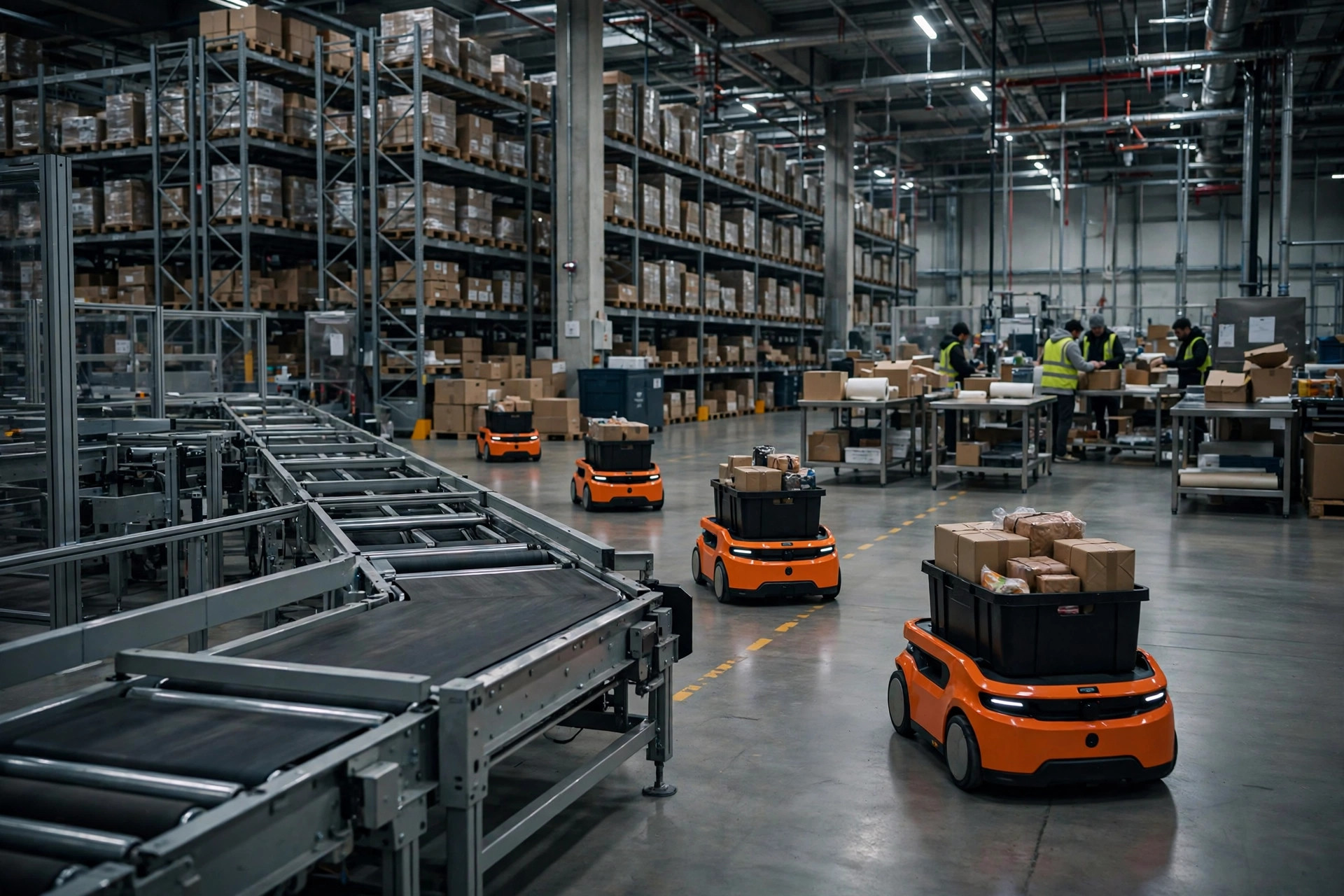
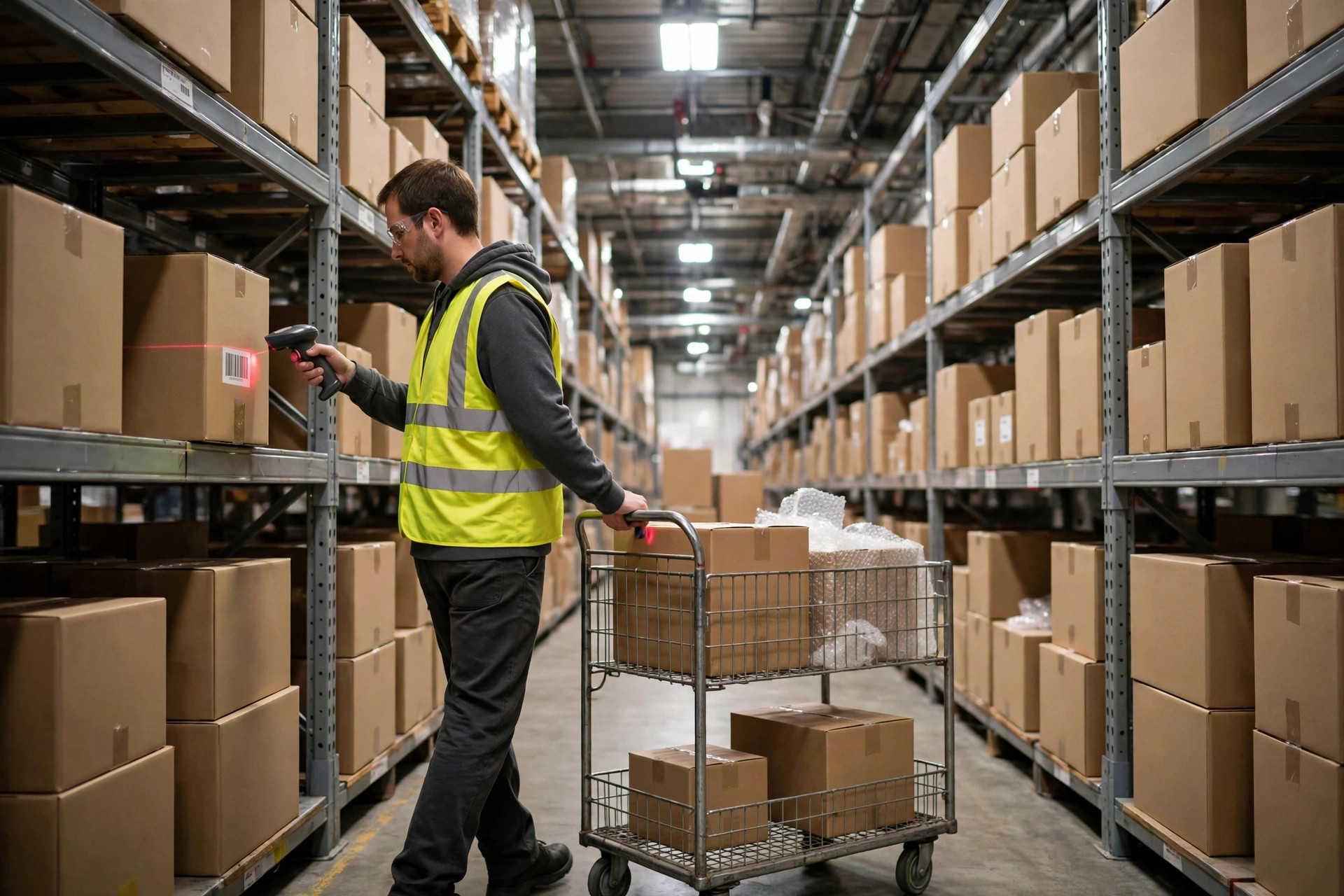
Let me tell you about the week before Thanksgiving last year — and about multi-warehouse WES shared task orchestration, the idea that several warehouses can share one WES instead of each running its own. I had a full trailer sitting outside a warehouse in Fontana, California, for over four hours, and I never even got loaded that day. The shipper was moving freight between three warehouses: product from Warehouse A had to be transferred to Warehouse B before it could be consolidated onto my truck. Warehouse A said their outbound orders weren't released yet. Warehouse B said the freight hadn't arrived, so it wasn't their problem. A full round of phone calls, and nobody owned the load. The truck just sat there, burning fuel and hours. After fifteen years behind the wheel, I've seen this movie plenty of times — freight moving between warehouses while every warehouse runs its own system, and people holding it all together with phone calls. That's exactly the problem a shared WES is built to solve: several warehouses sharing one WES, one brain scheduling tasks and releasing waves across all of them.
What Multi-Warehouse WES Shared Task Orchestration Actually Means
Let me break the jargon down into plain talk. A WES — warehouse execution system — decides who does what and in what order: picking, auditing, loading, all of it. The old way, every warehouse runs its own: Warehouse A releases its own waves, Warehouse B releases its own, and they never talk to each other. With shared task orchestration across a multi-warehouse WES, all of that scheduling gets merged into one place. An order comes in, and the system looks at which warehouse has the inventory, which warehouse has a wave running clean, and which linehaul truck is about to show up — then assigns the work. Think of it this way: it used to be three cooks each making their own dish; now there's one head chef watching three stoves. That is multi-warehouse WES shared task orchestration in one sentence.
From a driver's seat, the difference is real. I used to keep three warehouse managers' numbers in my phone and call each one before a pickup. With a single dispatch point, the order, the time, and which trailer loads first all come from one mouth. Less arguing, more rolling. And let me tell you — drivers don't fear long miles. We fear showing up at a gate where nobody's expecting us.
Cross-Warehouse Transfers: The Wait That Eats a Driver's Day
Earlier this year in Dallas, Texas, I picked up for a home-goods shipper whose two warehouses were already on one shared WES. Should've been smooth, right? Here's what actually happened: the linehaul trucks ran on a fixed schedule, but the waves were cut by order cutoff time. The truck arrived on time, and the freight was still sitting on an audit station at the other warehouse. I waited over three hours. Detention ran a few hundred dollars, and the shipper was furious at everybody — driver blaming the warehouse, warehouse blaming the driver.
Here's what that tells you: merging the systems is only the first mile. A multi-warehouse WES schedules the work inside the buildings, but the freight still has to meet the truck's clock. The prettiest wave plan in the world is worthless if the truck doesn't wait for it. That shipper eventually fixed it the old-fashioned way: two or three fixed transfer runs a day, wave cutoffs moved thirty minutes earlier to leave road time for the shuttle. Drivers could plan their day, and the warehouses stopped scrambling. The system does the math; humans set the timetable. Don't expect one piece of software to do both jobs.
Three Questions Before You Merge Your WES
I've watched plenty of shippers buy the system first and ask questions later — money spent, coordination nowhere. So here's an outsider's honest take: run these three numbers before you merge. The table below uses made-up numbers to show the logic, not real quotes:
| Every warehouse for itself | One WES, shared scheduling | |
|---|---|---|
| Cross-warehouse transfers | Ad-hoc shuttles, two extra runs a day | Folded into wave planning, one run eliminated |
| Driver wait time | Orders don't line up, one to two extra hours per pickup | Single dispatch point, most of the wait gone |
| Rush orders | Whichever warehouse answers the phone first | System sees global inventory, assigns the closest one |
Then the three gut-check questions — all three need a yes:
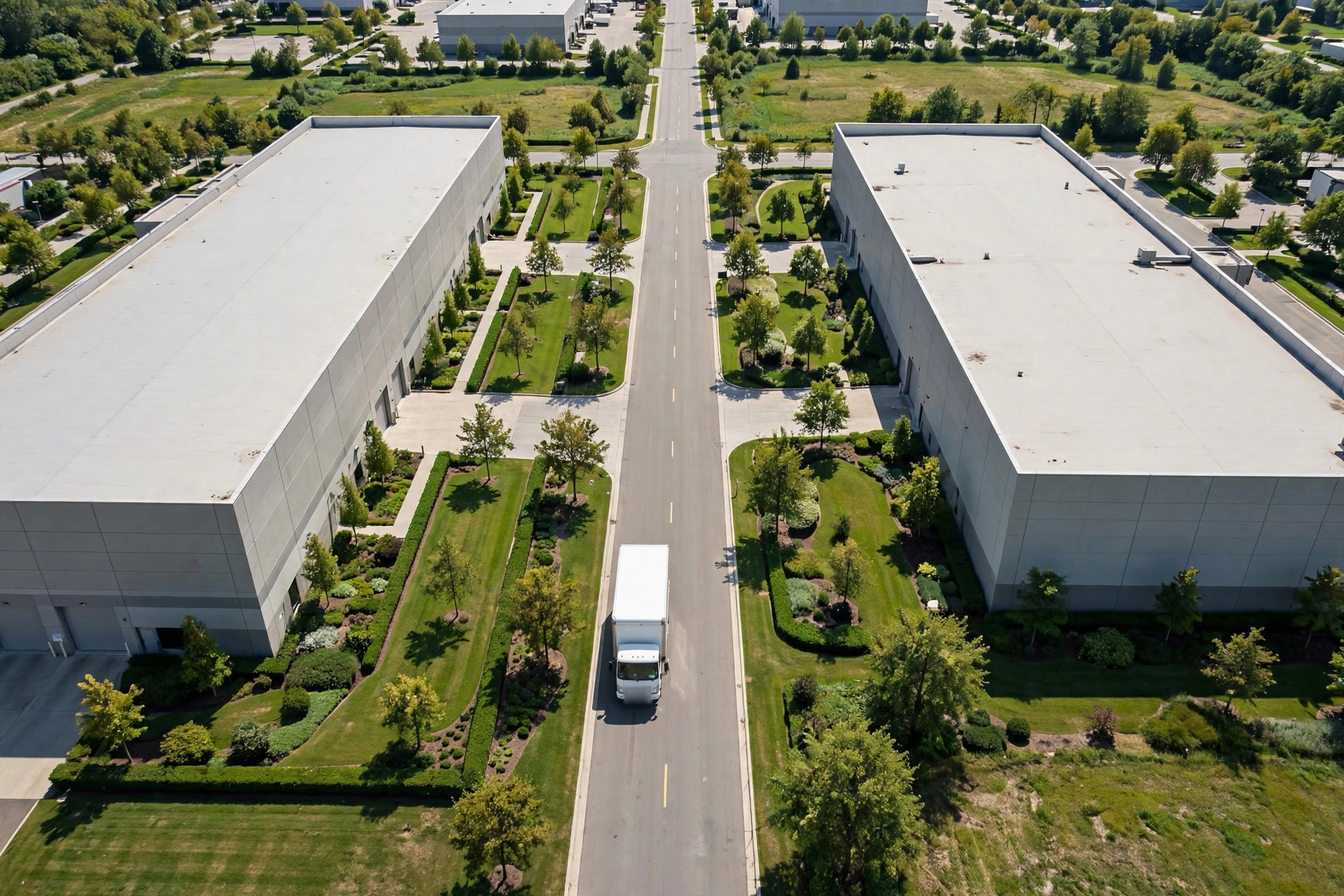
One: are the warehouses close enough? Same metro area, or within a two-to-three-hour drive, and transfers make sense. A thousand miles apart? The transfer costs more than the freight is worth, and no system on earth fixes that. Drivers know this math cold — fuel and hours on the road are real money.
Two: do orders regularly need cross-warehouse consolidation? If under twenty percent of orders need stock pulled from more than one building, the project isn't worth the pain. Over thirty percent, and not merging is the wasteful choice. Any shipper can answer this by pulling six months of order history.
Three: how much do the SKUs overlap? Two warehouses selling completely different product lines — shuttling freight between them is just burning diesel. High overlap, and one merged system makes inventory turn noticeably smoother. This is the one sales reps gloss over. Verify it yourself before you sign anything.
The Counterintuitive Risk: One System, One Blast Radius
This is the part most people miss. When every warehouse ran its own system, Warehouse A going offline was Warehouse A's problem — Warehouse B kept shipping. Merge everything into one multi-warehouse WES shared task orchestration platform, and one bad software upgrade or one network outage takes down all three buildings at once. No pick tickets anywhere, trucks waiting at three gates instead of one. That's the trade-off nobody puts in the brochure: coordination goes up, and so does concentration of risk. You braided three ropes into one — if it snaps, everything unravels.
So don't cut over all three warehouses on the same day. Pilot one building, get it stable, then add the second. And keep a local fallback — if the network dies, you should still be able to ship the day's hot orders on paper tickets. However smart the system is, leave yourself a back door. Fifteen years on the road taught me one thing: any system that's "guaranteed never to fail" is just one you haven't watched fail yet.
Straight advice for shippers and warehouse managers. A few things I've learned dealing with warehouses all these years, for anyone running more than one building:
Don't cut wave times too tight. Move the cutoff fifteen to thirty minutes early and give that time to the shuttle on the road. The system can schedule down to the minute, but it can't schedule traffic lights — and it definitely can't schedule a traffic jam.
One dispatch contact for cross-warehouse loads. A driver's worst nightmare is answering to three people at once — A says this, B says that, and somehow it's the driver's fault. One point of contact, one clear answer, clear accountability.
Unify your data before you unify your systems. Same SKU, one warehouse calls it one name, the other calls it something else; one counts in cases, the other in eaches. Merge the systems with dirty data and the smarter the software, the faster the mess. This is the step everyone skips, and it's where most rework comes from.
Fix your transfer schedule. Two or three set transfer windows a day. Drivers can plan around them, warehouses can stage for them. "Transfer whenever" sounds flexible — in practice it means nobody can plan anything, and everything piles up at end of shift.
There's an old saying where I come from: one monk carries water on his shoulders, two monks share the load with a pole, three monks go thirsty. Multi-warehouse coordination is the same — the best a system can do is straighten the carrying pole. Whether anybody actually drinks still depends on the people holding it.
By Shifu Zhao, Trucking Veteran (15 yrs)