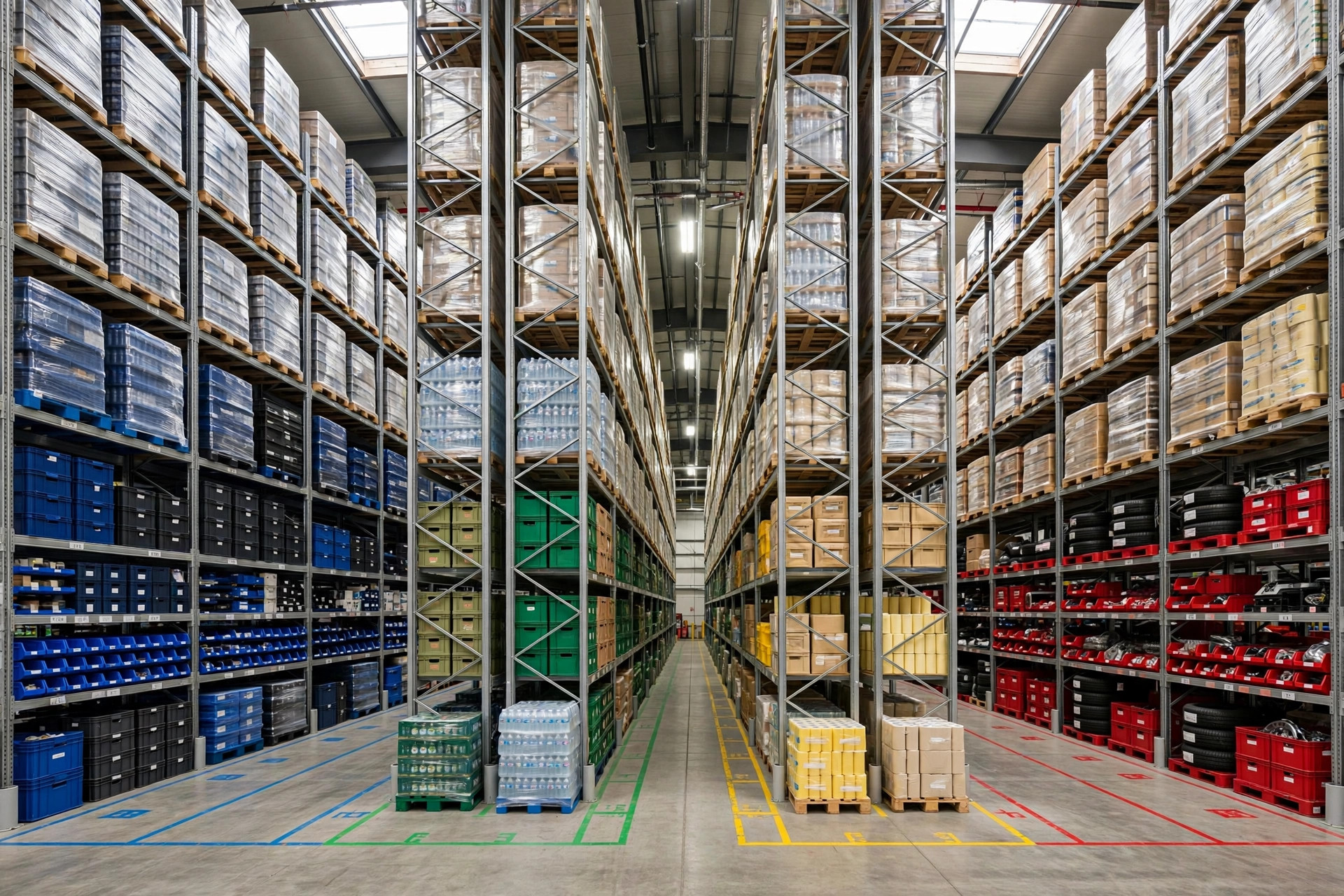
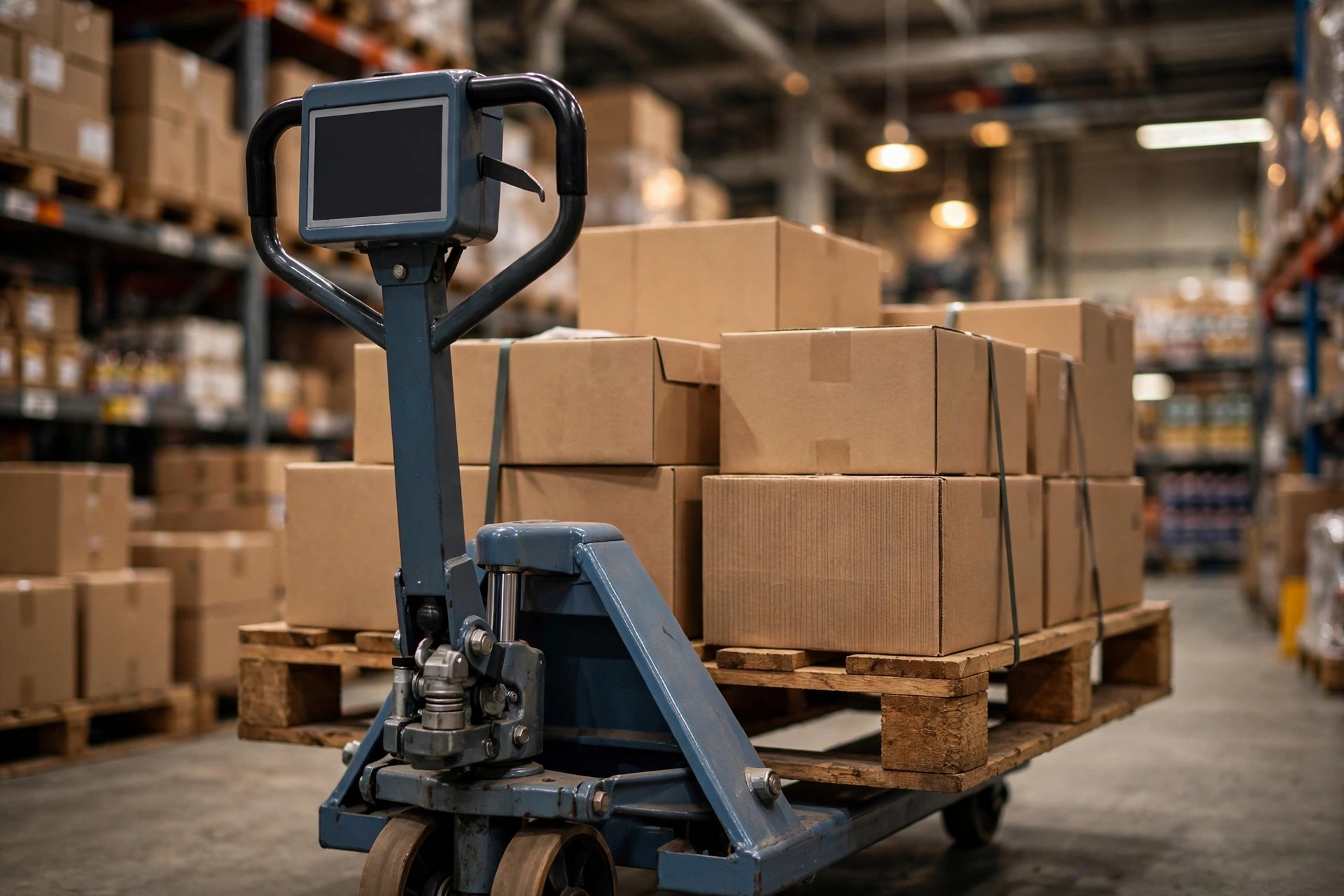
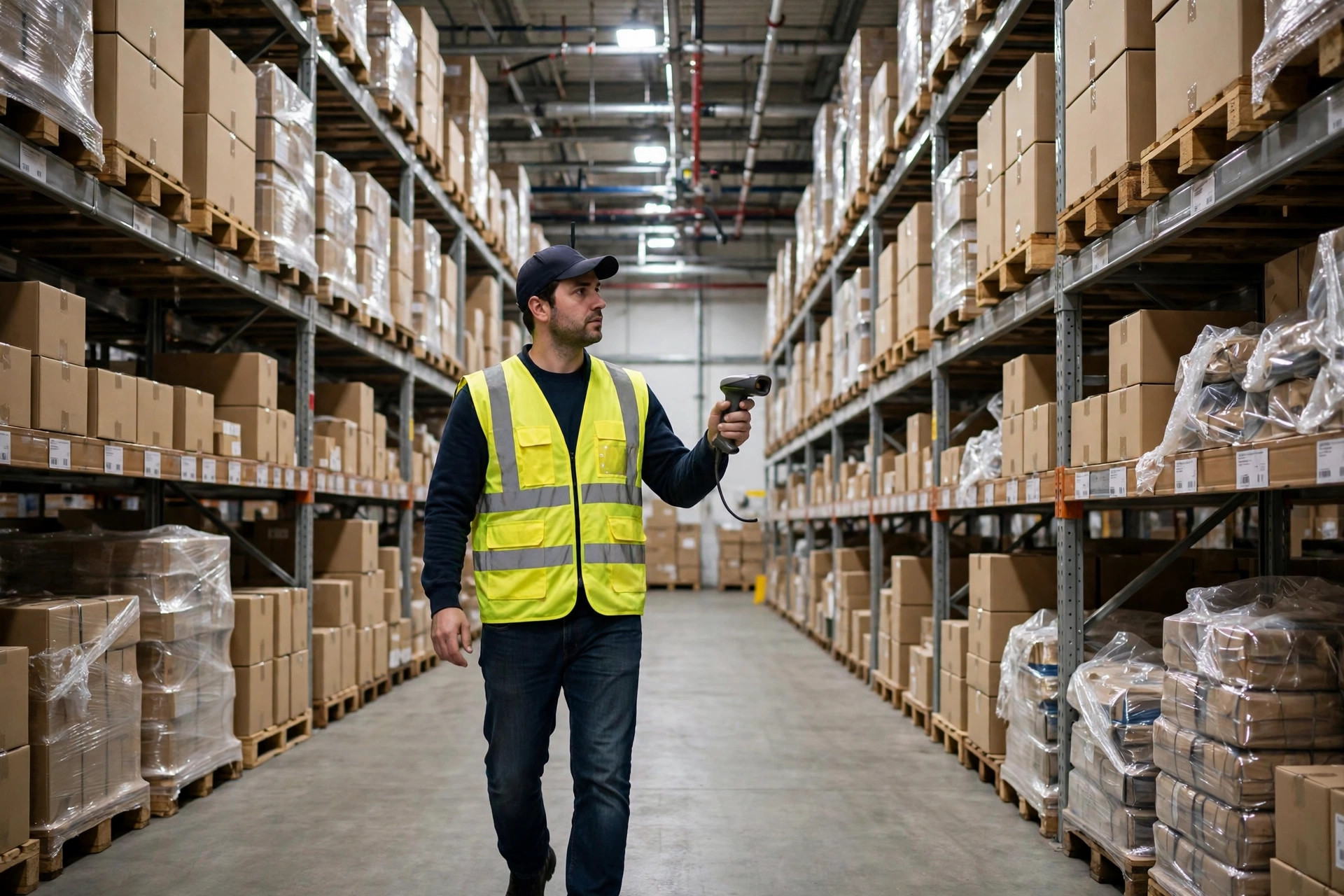
Conclusion first: there are only three forward pick replenishment strategies — Min/Max (system-triggered), scheduled (by shift or wave), and kanban/pull (human signal). None is universally best; the right one matches your warehouse rhythm. Stable SKUs with predictable waves? Min/Max practically runs itself. Sharp picking peaks, like an e-commerce peak season? Scheduled replenishment with staggered windows. Volatile SKUs and few pick faces? Kanban/pull stays flexible. Pick the wrong strategy and your pickers spend their days waiting for stock — or your whole pick zone locks up.
Why the Forward Pick Face Deserves Its Own Replenishment Strategy
The forward pick face is the "front desk" where pickers grab product directly, backed by bulk storage locations acting as the "back office." The front desk has tiny capacity and brutal turnover — a hot pick face may need replenishing 3 to 5 times a day. Ten minutes of stockout there, and pick productivity falls off a cliff. People waiting for product is the most expensive waste in a warehouse.
One clarification: this is not purchasing replenishment — that's a different discipline. This is the internal move of "the back office feeding the front desk." The whole strategy boils down to one sentence: the right quantity, at the right pick face, at the right time.
The Three Forward Pick Replenishment Strategies Compared
| Dimension | Min/Max (system-triggered) | Scheduled (shift/wave) | Kanban / Pull (human signal) |
|---|---|---|---|
| Trigger | System auto-creates a replenishment task when on-hand drops below min | Replenish on the clock, regardless of current stock | Picker or stocker signals: empty carton, kanban card, barcode scan |
| Best fit | Stable SKU demand, predictable waves | Sharp picking peaks that need de-conflicting | Volatile SKUs, few pick faces |
| Strength | Highly automated, nobody has to watch it | Replenishment and picking never fight for the aisle | Flexible, no overstocking |
| #1 failure mode | min too low → stockout mid-pick; max too high → pick face overflow | Under-stocked before the peak → stockout at the worst moment | Signal lag → stockout; signal flood → replenishers run ragged |
| System needs | WMS on-hand levels must be real-time accurate | Simple — a scheduled job does it | Signal capture (scan, button, or kanban rack) |
Min/Max Forward Pick Replenishment: Calculate the Parameters, Don't Guess Them
This is a mistake I've seen three times: someone sets min to "2 cartons" by gut feel. Peak hits, the replenisher is still en route, and the pick face is already empty. Min and max must be calculated. Here's the checklist:
- Measure pick face capacity C: how many cartons (or eaches — pick one unit and stick to it) the face physically holds. Carton flow rack: lane depth × number of lanes. Floor stack: taped-off area. Measure it — don't read the drawing.
- Measure replenishment lead time L: from task creation to product sitting on the face. Include task release, travel, and put-up. Most warehouses land at 30–90 minutes. Measure, don't theorize.
- Compute average demand D during L: use the last 4 weeks of the same wave, not the all-day average. min = D × 1.5 (use a safety factor of 2 for volatile SKUs).
- Set max = the smaller of (face capacity C) and (demand over the replenishment cycle + min). Iron rule: max never exceeds C. Not by one carton.
- Go-live eve checklist: ① are min/max loaded for every SKU? ② was C physically measured? ③ was L physically measured? ④ is the safety factor at 2 for peak SKUs?
- First week after go-live: review daily — how many stockouts, how many overflows — and tune min/max one by one. Parameters are not set-and-forget.
Scheduled Replenishment: Keep Peaks and Replenishment Apart
- Plot hourly pick volume and find the peaks.
- Put replenishment windows 1–2 lead times before the peak: peak starts at 10:00 and L is 1 hour → replenish at 08:00 and 09:00.
- Each round tops up to max — but never beyond it.
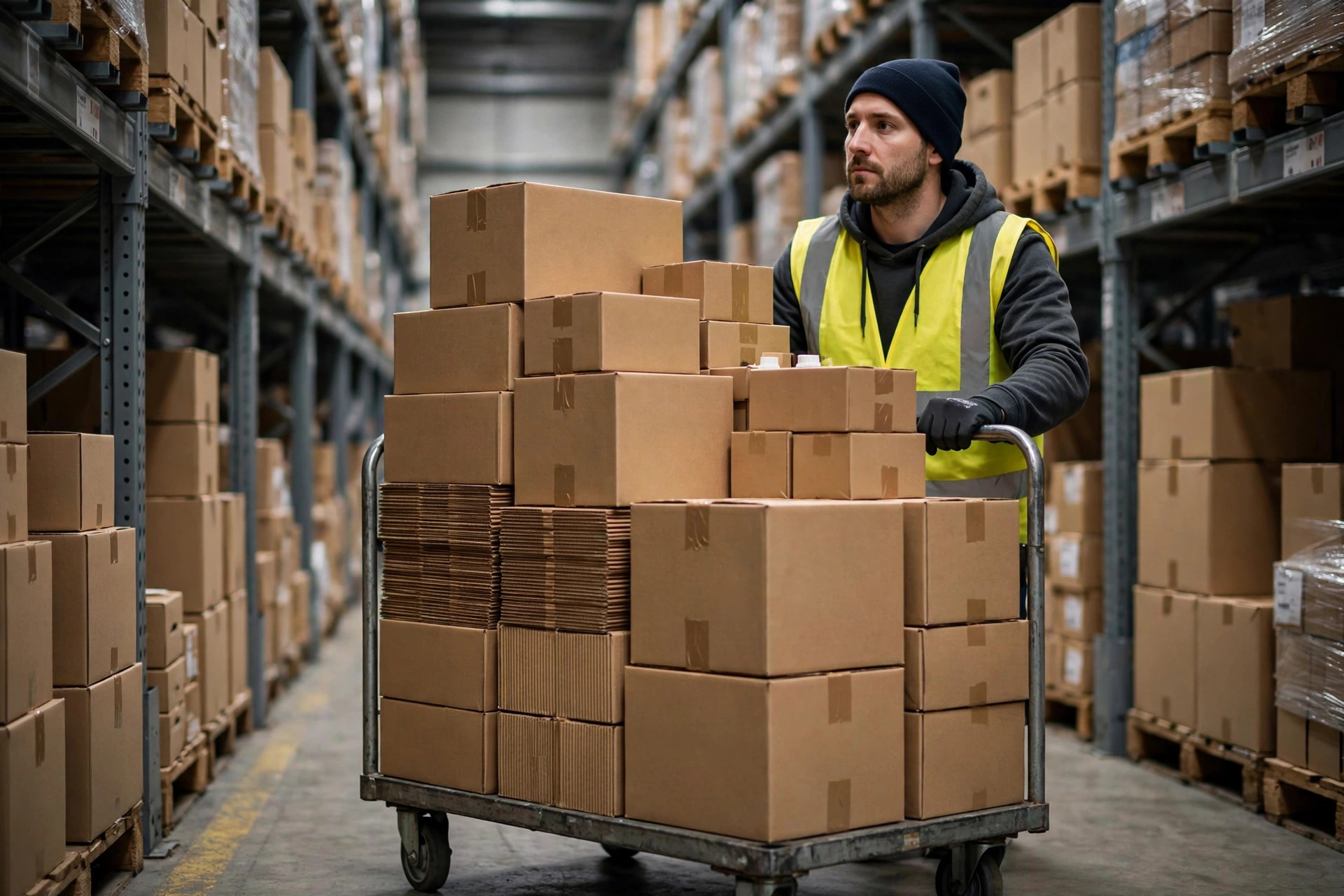
- A mistake I've seen three times: scheduling replenishment during the peak. Replenishers pushing carts fight pickers for the aisle, and pick productivity drops about 20%. De-conflicting replenishment from picking is an iron rule.
Kanban/Pull Replenishment: The Signal Is the Order
- Give every pick face a signal. The most common: the empty-carton trigger — when the last carton is picked, the empty carton goes to a designated spot, and that's the signal. Scans or buttons work too.
- Every signal must become a WMS replenishment task within 15 minutes (manual entry counts, but it needs an SLA).
- Cap the signals: if a face already has one open replenishment task, duplicate signals auto-merge. Don't send the replenisher twice for the same face.
- Know the boundary: kanban shines with few, volatile SKUs. Past about 500 SKUs, humans can't watch it all — switch to Min/Max.
Two Real Project War Stories
Story one: November 2023, a 3PL warehouse in East China, peak season. Their WMS had Min/Max, but every min was a go-live guess of "2 cartons." Day one of the peak, the hero SKU moved 120 cartons an hour with a 45-minute lead time — a min of 2 cartons lasted about 1 minute. The pick face stocked out for 40 minutes; 200+ orders jammed. We recalculated min as "demand during lead time × 2" for the top 50 SKUs overnight and reset max to measured capacity. Zero stockouts on day two. I've seen this mistake three times, and it's always "we'll tune the parameters after go-live" — but peak season doesn't wait.
Story two: May 2024, an e-commerce warehouse in Guangdong. The opposite error: terrified of stockouts, they set max generously — flow racks stuffed to 130% of capacity. Cartons spilled into the aisle, pickers couldn't reach the back rows, and damage rates doubled. The fix: max strictly equals measured capacity. Better to replenish a little more often than to overflow. Remember: the cost of an overflowing pick face (damage + search time) is far higher than one extra replenishment trip.
The Counterintuitive Take: Replenish Too Often and Pick Productivity Drops
Most people assume "no stockouts = replenish as often as possible." Wrong. Fragmented replenishment tasks send replenishers weaving through aisles, fighting pickers for aisle space, RF guns, and pallet positions — shredding the pick zone's effective hours. The right move: batch replenishment tasks into waves. One cart, one full run, one aisle at a time, so replenishers and pickers each do their jobs without tripping over each other. The KPI for replenishment isn't "fast response" — it's "zero picker waiting, zero disruption."
Making It Real in the WMS: Forward Pick Replenishment Task Logic
- Task generation: Min/Max triggers off inventory transactions (recalculate levels on every goods-issue posting); scheduled runs on a cron job; kanban flows through a signal API.
- Task consolidation: merge tasks for the same zone and aisle into one trip — allow a 5-minute batching window.
- Priority: stockout (zero on-hand) > below min > scheduled/kanban. Stockouts jump the queue — but more than 3 queue-jumps a day means your parameters are wrong; go back and fix min.
- Task release: release 3–5 tasks per replenisher at a time, based on their capacity. Don't dump everything at once.
- Close the loop: put-away confirmation must scan the pick-face barcode. No scan = not stocked, as far as the system is concerned.
One more time, the conclusion: measure capacity and lead time first, then calculate min/max; use scheduled waves with de-conflicted windows for peak warehouses, kanban for volatile ones; batch replenishment tasks into waves so replenishers don't get in the way. Follow the checklist, and "the pick face is always out of stock" comes off your problem list for good.
By Lin Xiao, WMS Implementation Consultant