Let me tell you something. Fifteen years behind the wheel, and I have been in and out of more warehouses than I can count — a hundred, easy. Some warehouses, you sit in the queue at the gate questioning your life choices. Others, the freight is loaded before you have even finished your coffee. After a while you start seeing the pattern: the warehouses where trucks wait half as long almost always differ in one thing — how they pick. Paper-list warehouses are slow. Warehouses with electronic pick displays are fast. That is just how it is.
Fall two years back, I went to pick up a load at a small warehouse in southern Jiangsu — three, four thousand square meters, nothing big. Dispatch told me, "Driver, hold on, the order is being picked." I waited an hour and a half. Got to chatting with the picker and learned the whole operation ran on paper: print the list, walk the aisles hunting for product from memory, come back, cross items off, and if you grabbed the wrong one, walk it all back. That day a new guy mixed up two SKUs that looked alike, the check caught it, and the whole truck waited another half hour. I asked the owner, "How long have you been running on paper?" He said, "Since we opened. Seven, eight years."
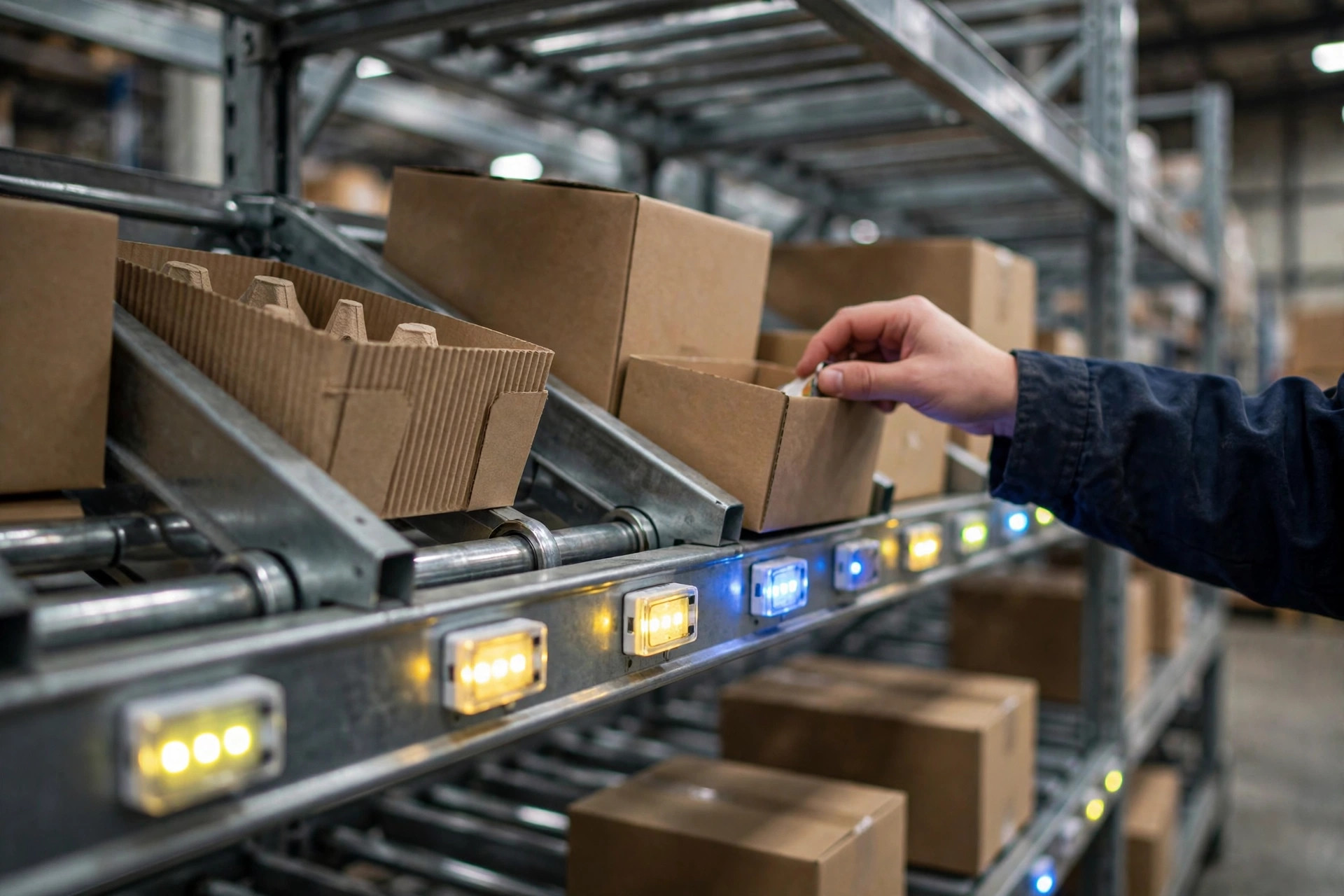
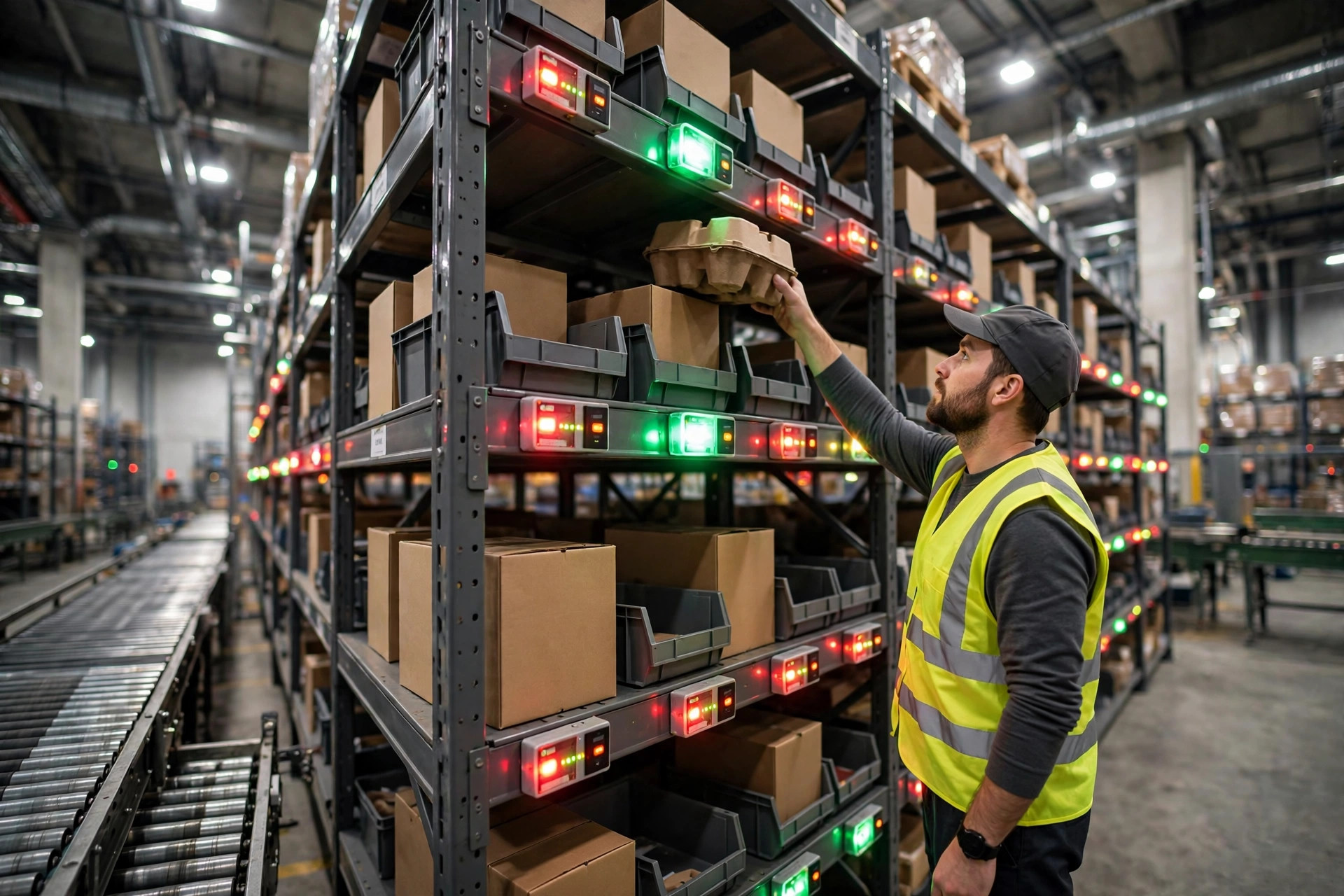
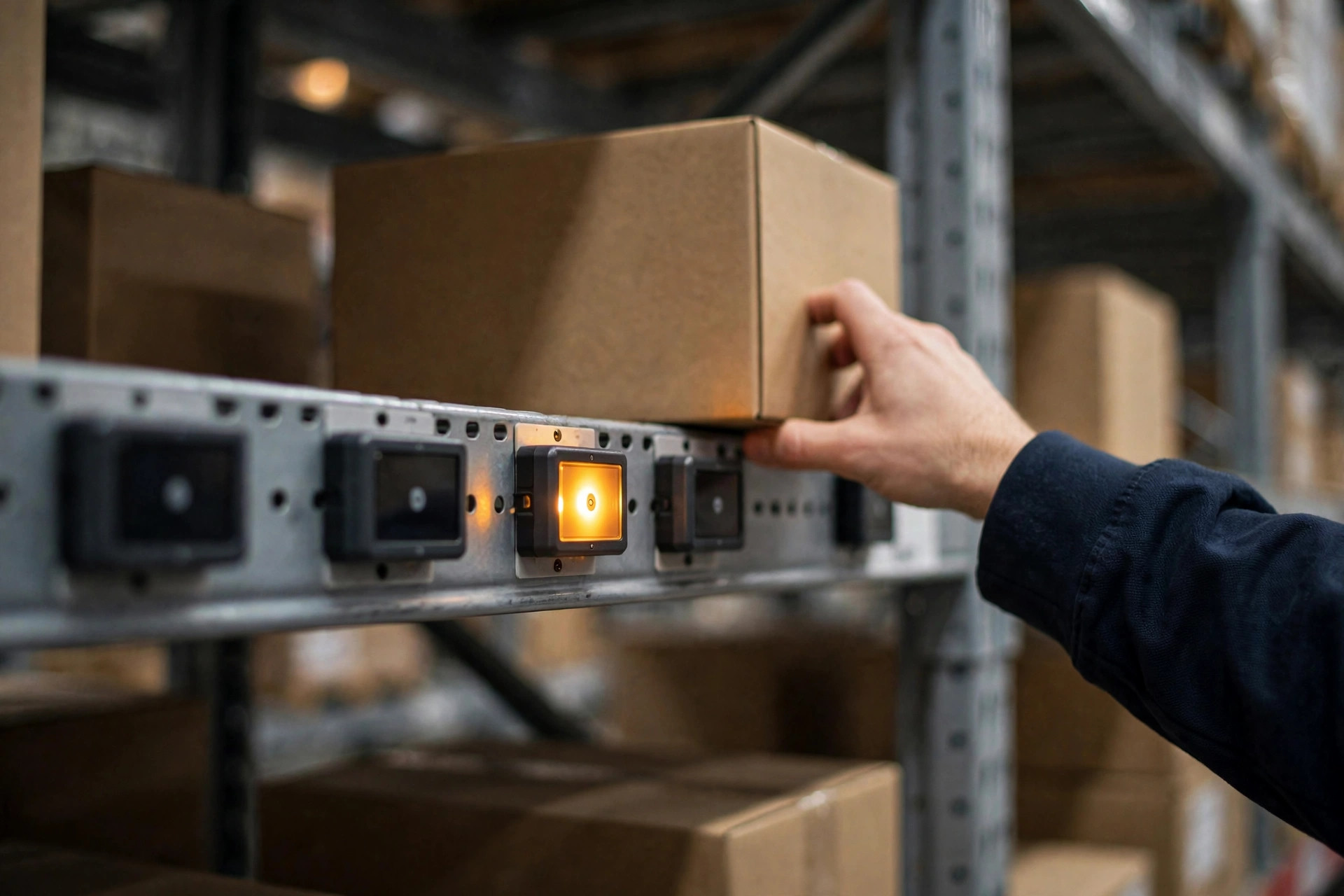
Two months later I pulled into another warehouse, same region, about the same size. No queue at the gate. Inside, the racks were studded with little lights — a green lamp would blink on, the picker would walk over, grab the goods, tap the light to confirm, and move on. The owner told me these were pick-to-light displays: no paper to read, just follow the lamps. His exact words: "With these things, a new hire picks on his own in three days. Used to take a month to train someone up." Same kind of warehouse, and the only real difference was a bunch of little lights — half the waiting time at the gate. I am not exaggerating.
The Real Cost of Paper Picking: You Think It Is Free, But It Burns Money Daily
A lot of small warehouse owners figure paper is "free" — a printer and some paper, done. Let me run the numbers for you. The cost of paper picking is not in the paper. It is in three things.
First, search time. Walking the aisles with a list, hunting for locations, the travel time per order line in paper mode runs way above display mode. Travel time is labor, labor is money, and that money burns every single day — nobody just puts it on its own line in the books.
Second, mispicks. Paper means eyeballing SKUs and hand-checking lines off a list, so the error rate is naturally high. And the cost of one mispick is not "grab the wrong box and swap it": there is rework at the check station, returns when the wrong item ships, customer complaints. One wrong shipment that reaches a customer can cost more in after-sales than years of paper.
Third, training new people. In a paper warehouse a new hire has to memorize locations and learn SKUs by sight — a month before they can pick alone. In a display warehouse the new hire follows the lights and is productive in days. When peak season hits, the paper warehouse cannot risk temp workers; the display warehouse can. That gap is labor flexibility.
So paper is not "free." It hides its cost inside labor, errors, and time. You never see it itemized, but you pay it every month.
What a Pick Display Actually Is: A Small Warehouse's First Step Into Automation
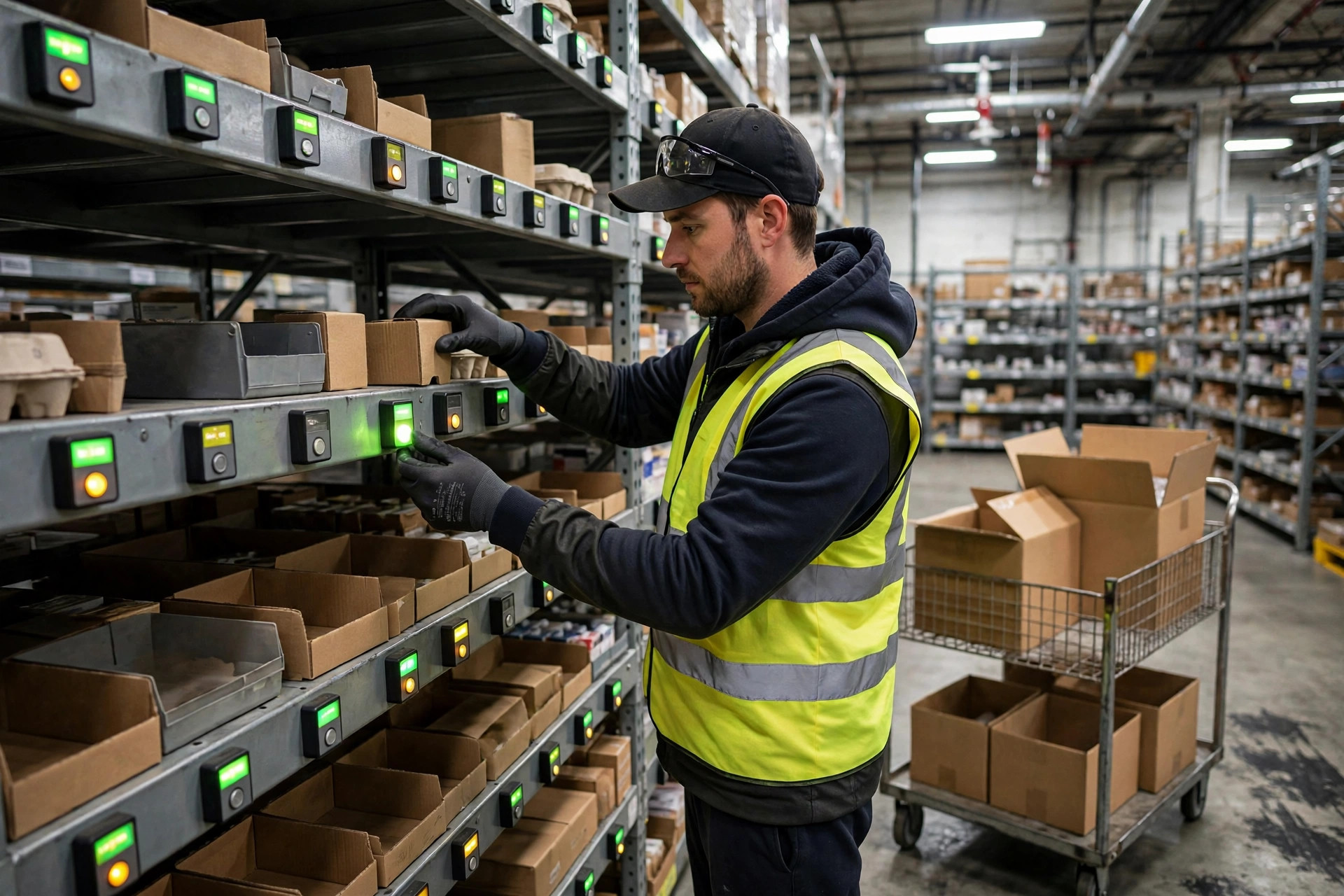
Pick-to-light is dead simple in principle: a small lamp on every pick location, the system fires the order, the lamps for the lines to pick light up, the picker walks over, takes the quantity shown, taps the confirm button, and the lamp goes out. No reading paper, no memorizing locations. The light is the instruction.
The beauty of it is how light-touch it is. No racking changes, no shutdown for retrofit — you mount the lamps one location at a time, wire them to the system, and you are running. For a small warehouse this is the lowest-bar automation step there is: no conveyors, no robots, just turning "people hunting for goods" into "lights telling people where to go."
On cost, I have asked several owners: hardware runs on the order of tens to a hundred-plus dollars per lamp position — go by the supplier's latest quote, and volume buys can be negotiated down. And a small warehouse does not light up the whole building. Start with the fast-mover zone, 50 to 100 lamp positions as a pilot, covering the SKUs that drive most of the volume. Fast movers are typically twenty or thirty percent of SKUs doing seventy or eighty percent of the shipments — that is the definition of spending small money to solve a big problem.
Running the Numbers: Are a Few Lamps Worth It?
Here is the pilot math for a small warehouse. The figures are orders of magnitude — what matters is the structure:
| Item | Paper mode (status quo) | Display pilot (50–100 lamps) |
|---|---|---|
| Upfront spend | ~Zero (printer and paper negligible) | Tens to 100+ dollars per lamp × 50–100 positions, per latest supplier quote |
| Pick speed | Baseline (100%) | Big speedup in the fast-mover zone, travel and search time way down |
| Mispick rate | Eyeball-driven, on the high side | Follow the light, errors drop hard |
| New-hire ramp | ~1 month to pick solo | Solo in days |
| Peak-season flexibility | Cannot risk new temps, headcount is the bottleneck | Temps plug right in, real flexibility |
The key line in this math is not "labor saved." It is "mispicks avoided" and "orders you dare to take in peak season." An owner I know in Zhejiang put in an 80-lamp pilot in 2024, and by his own account, mispick complaints fell by more than half in three months, and he took on twenty percent more peak-season volume without adding headcount. His words: "This money did not hurt, because I can see it working every day."
And here is the counterintuitive bit, which several owners told me independently: denser is not better. A slow-moving SKU that ships a few times a year does not deserve a lamp — that is money wasted. Spend the lamps on the fast movers and keep paper for the long tail; nobody will think less of you. Put the good steel on the cutting edge. I have yet to meet many small warehouses that lit up every aisle and paid it back quickly.
Three Straight Pieces of Advice for Small Warehouse Owners
First: do not tell yourself "we are too small for this." It is precisely the small warehouse — where labor is expensive and mistakes are unaffordable — that this lightweight stuff is made for. Big warehouses can afford the heavy machinery; the small warehouse should nail this first step.
Second: pilot first, never the whole building. Fifty to a hundred lamps, get the fast-mover zone humming, look at the data, then decide whether to expand. The pilot cost is contained, the effect is visible, and the owner sleeps at night.
Third: the lamps are fixed, the slotting is not. Once the displays are in, ABC slotting in the fast-mover zone needs to be re-tuned constantly — whatever is selling hot this month moves to the golden pick zone, and the lamps follow. Plenty of warehouses get disappointing results from displays, and the fault is never the lamp: it is slotting that has not moved in three months.
There is an old saying: sharpening the axe does not delay the woodcutting. Seven, eight years of paper saved you the cost of paper and burned you the cost of labor and errors. These little lamps are a small warehouse's first sharp axe.
By Shifu Zhao, Trucking Veteran (15 yrs)