Pick to light vs voice picking: for a 3,000-square-meter warehouse with 800 SKUs and 10 pickers, which one deserves your money? I have been asked that question more than 20 times in the past three years. My answer never changes: don't ask me which is better. Ask your warehouse two numbers — how many SKUs turn over per year, and how many pickers quit per year. The winner of this cost fight is never on the equipment quote. It is decided in your maintenance ledger over the next five years.
How the Two Systems Actually Work, and Why Their Cost Models Are Opposites
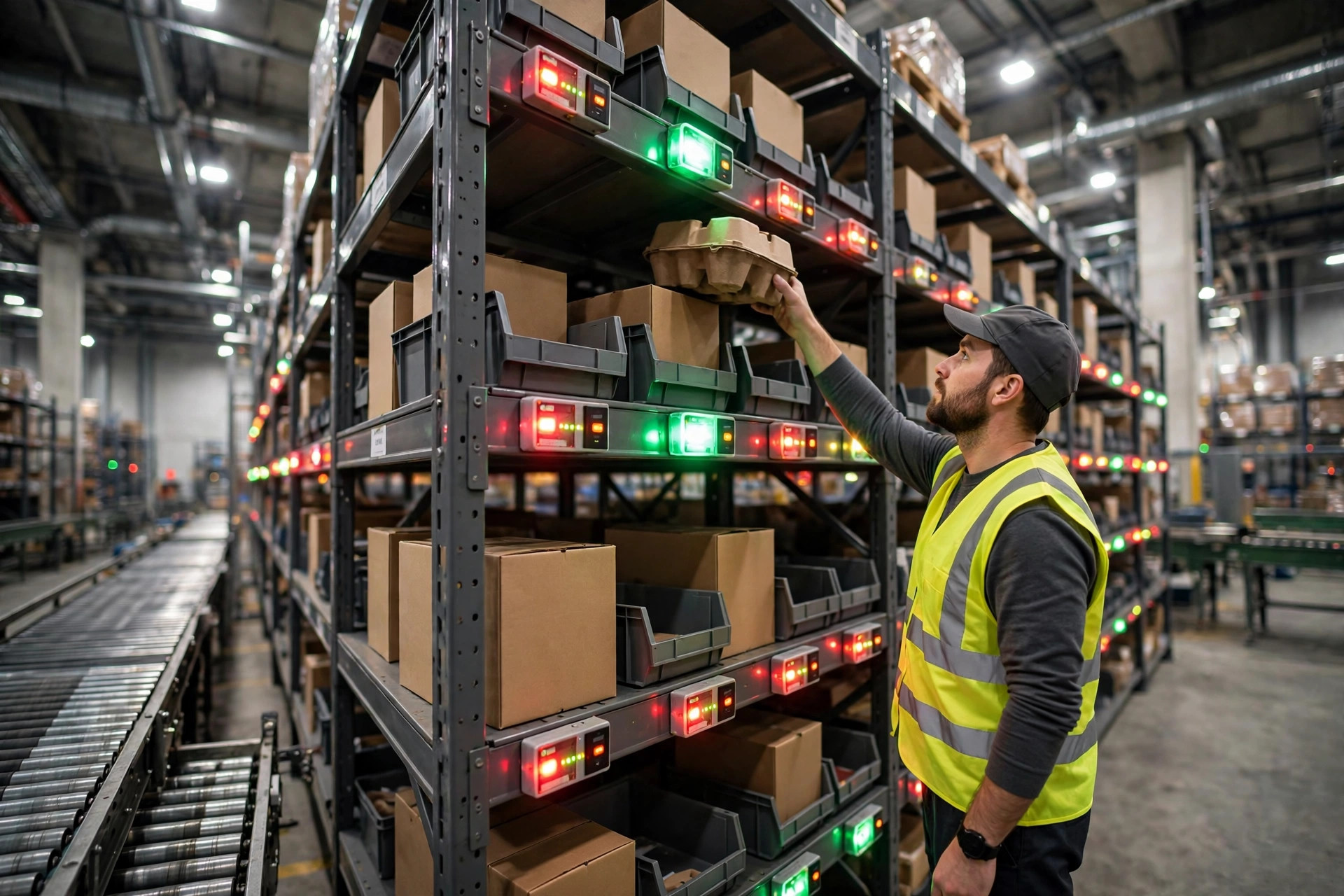
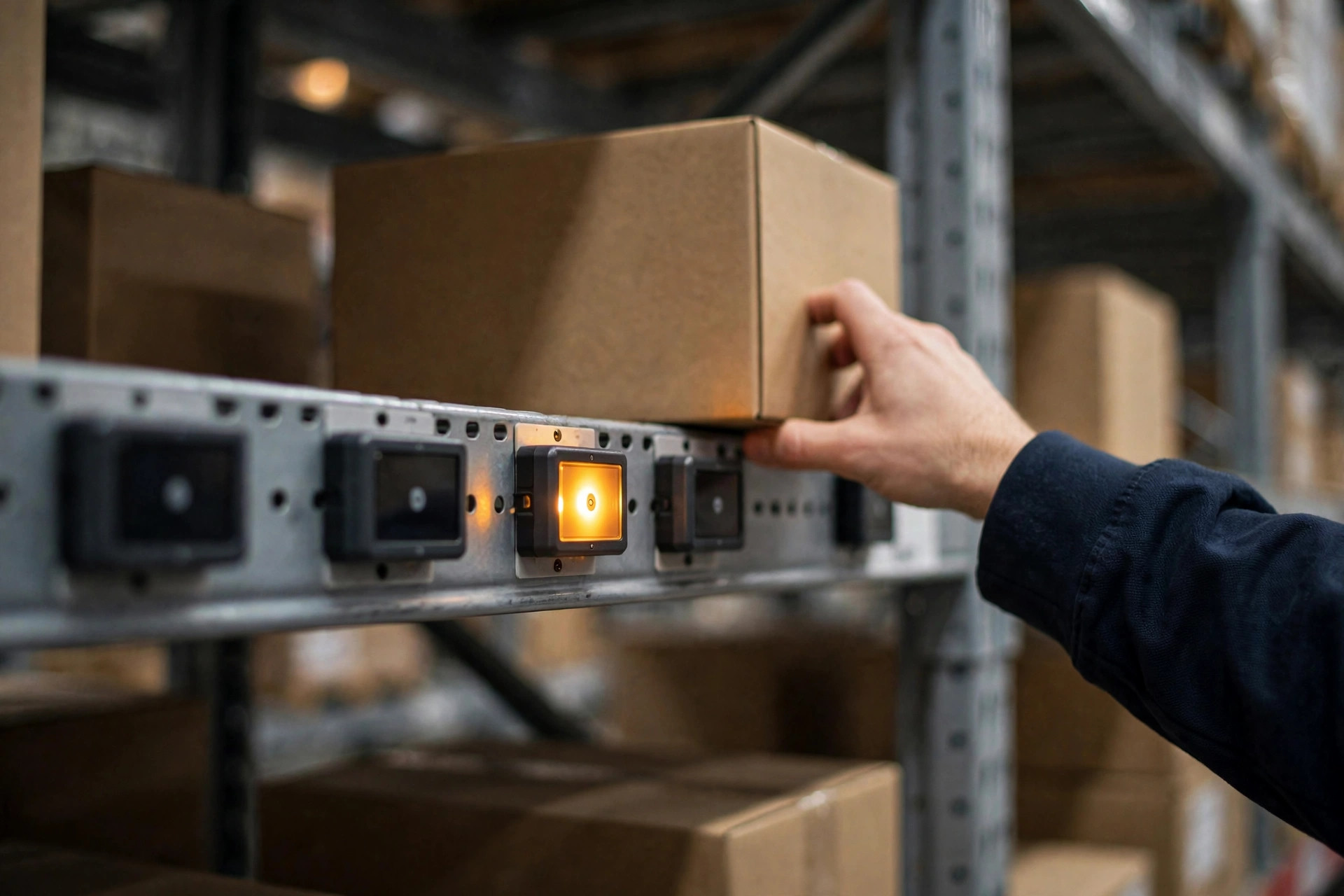
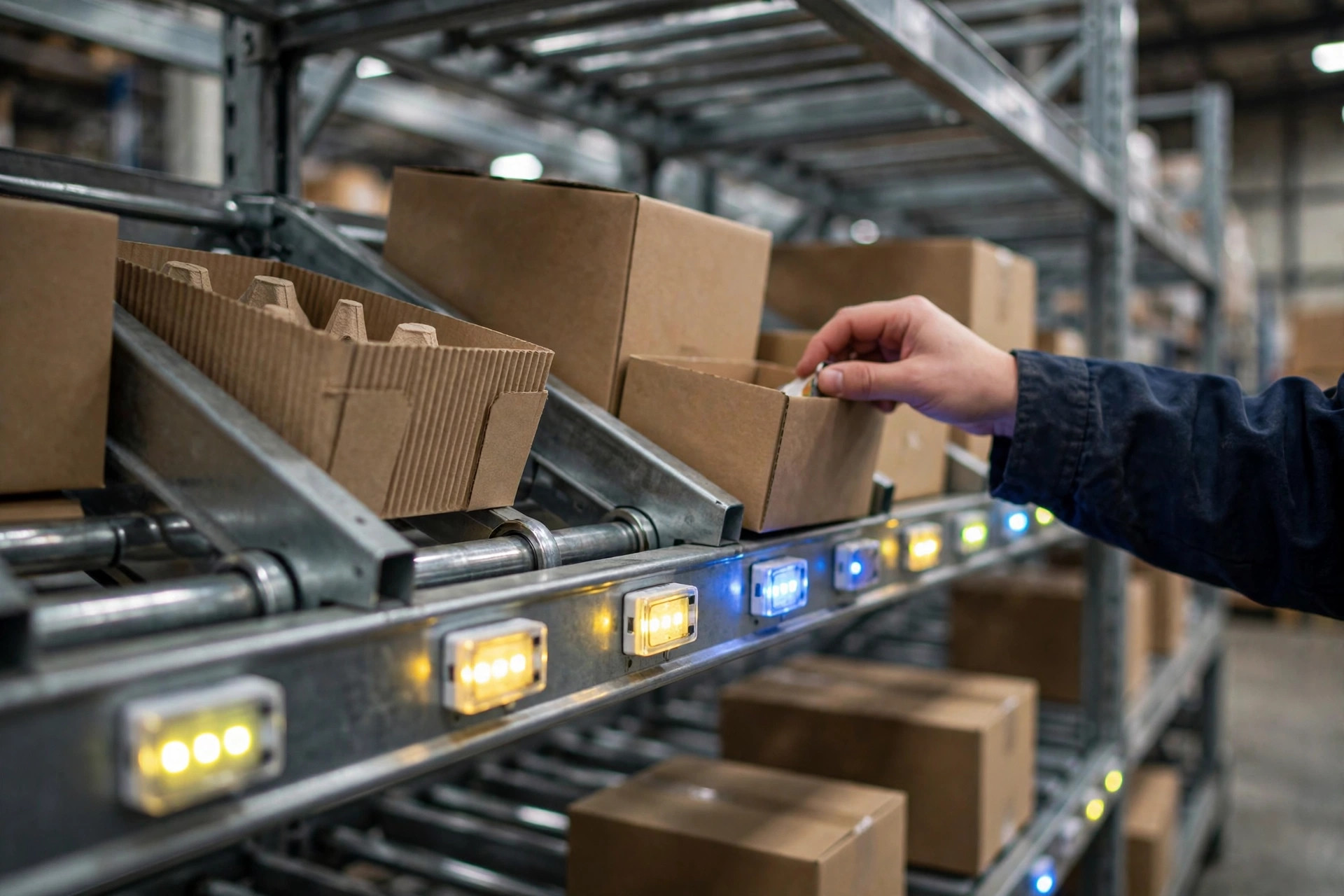
Pick to light is like installing a tiny traffic light on every pick location. The system tells you where to go, a lamp flashes with a quantity, you reach in, grab the goods, press confirm, the light goes out. Its cost logic is per location: one SKU, one light module. Eight hundred SKUs means 800 light modules plus wiring plus controllers. Think of it as a renovation bill — once it is bolted onto the racking, it stays there.
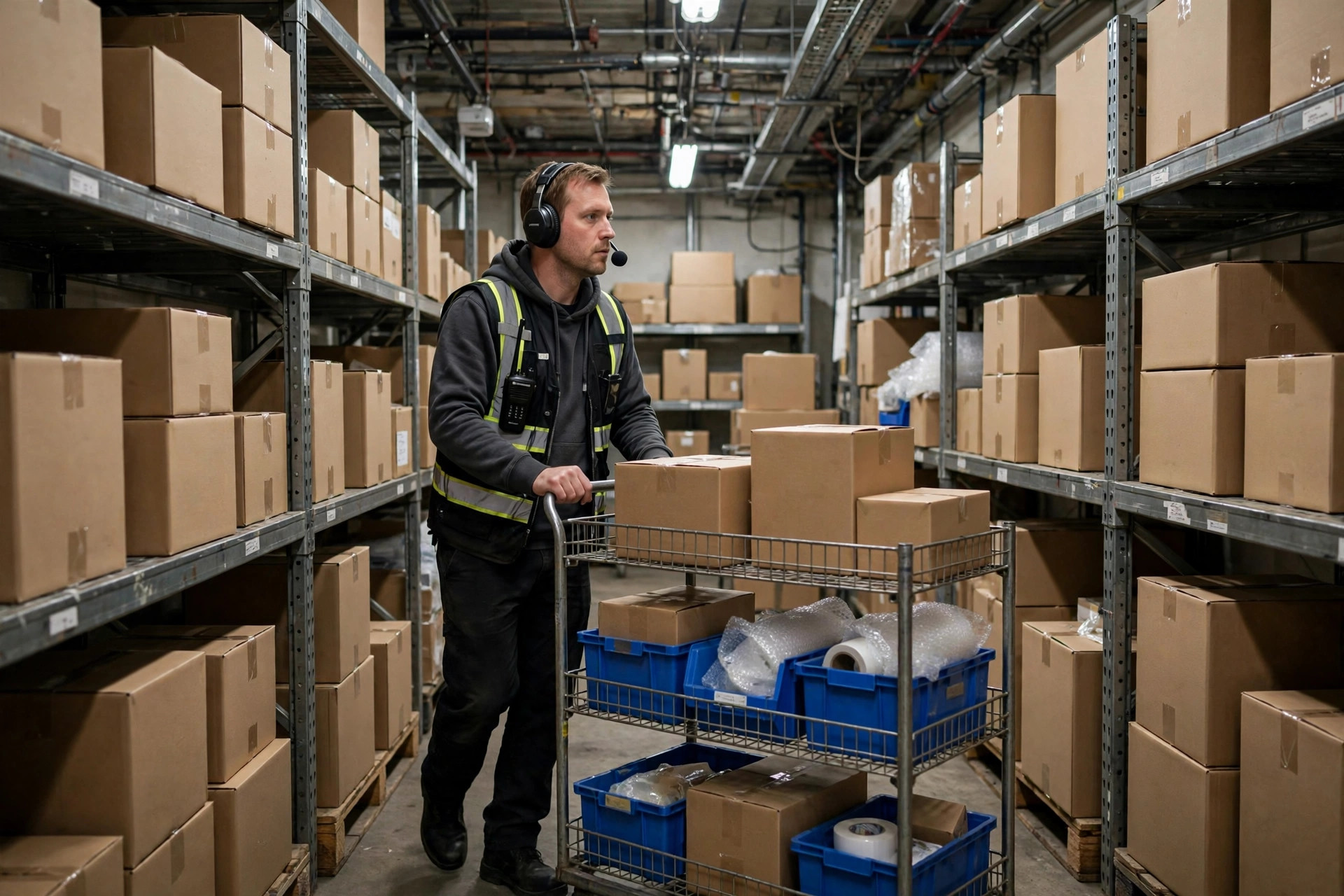
Voice picking is the mirror image. Think of it as a nagging navigator per picker: the headset calls out the location, you walk there, speak back a check digit, the system calls out the next one. Its cost logic is per head: one picker, one headset plus terminal plus software seat. SKUs can grow from 800 to 8,000 and the hardware bill barely moves — you just record more voice templates.
See the pattern? Pick-to-light money goes into the racking; voice money goes into the people. The choice comes down to which churns faster over five years: your SKUs or your staff.
Pick to Light vs Voice Picking: Where the 5-Year Money Really Goes
Here is the uncomfortable truth: in the small-warehouse PTL projects I have seen, the hardware on the quote typically covers only a little over half of the five-year total cost. The other half hides in the lines below.
The pick-to-light five-year ledger: year one is hardware (light modules, controllers, power supplies), wiring and installation (cable runs, drilling, downtime), and WMS integration. Years two through five, you pay an annual "re-lamping tax": every time SKUs are added or locations change, modules must be moved and rewired — a small rewiring job can shut a line down for half a day.
The voice picking five-year ledger: year one is headsets, terminals, per-seat software licenses, and Wi-Fi gap-filling (voice is far less forgiving of wireless dead spots than barcode scanning — one dead zone and the connection drops). Years two through five, you pay the "headcount tax": headsets are consumables — ear cushions, headbands, cables, plus the ones temp workers smash during peak season. Replacing a batch every year is no exaggeration. Every new hire burns half a day to a full day on voice-template enrollment — a scary line item in a high-turnover warehouse. And every new SKU needs a voice template and check-digit logic; if your assortment explodes, template maintenance becomes a permanent chore.
Here is a sandbox model for a typical small warehouse (all figures are illustrative assumptions — swap in your actual quotes; the logic does not change):
| Cost item | Pick-to-light setup (800 SKUs) | Voice setup (10 pickers) |
|---|---|---|
| Year 1 outlay | Hardware + wiring + integration, one big hit | Headsets, terminals, seats, Wi-Fi fill-in, relatively light |
| Annual fixed spend | Module replacement, controller maintenance | Seat renewals, headset consumables |
| Variable cost driver | SKU adds / location changes | Staff turnover, new-SKU template volume |
| One-off change cost | Moving lights + rewiring, often half a day of downtime | Adding a picker = one more headset, usable same day |
| 5-year cost inflection | Annual SKU churn above 30% sends costs vertical | Annual picker turnover above 50% sends costs vertical |
Notice what this really says: it is never "which is cheaper." It is "which side of your operation churns." PTL fears SKU movement. Voice fears people movement.
Two Numbers That Draw the Line Between Pick to Light and Voice Picking
Back in my systems-integrator days, I settled this for clients with two numbers. First: annual SKU churn — (SKUs added plus SKUs discontinued in a year) divided by total SKUs. Second: annual picker turnover — (departures in a year) divided by average headcount.
Two real dividing lines from my own jobs. In 2023, a small-appliance e-commerce warehouse in Foshan — 4,000 square meters, 800 SKUs, 10 pickers — went with pick to light. But before the next peak season, SKUs jumped from 800 to 1,400. Adding light modules on short notice meant a two-week wait for the wiring crew, and the team shut the line down for half a day to rush it. That half day of lost throughput cost more than the entire year's light-module maintenance budget. Their SKU churn was over 70% — from year two on, the PTL setup kept collecting a rewiring tax every year.
The mirror case: a 2024 auto-parts 3PL outside Chicago — 5,000 square meters, nearly 6,000 long-tail SKUs, 8 pickers on the roster. They chose voice picking, and the logic was right: with that many SKUs, a per-location hardware bill would have been brutal. But their picker turnover ran near 80% a year. Every new hire needed voice-template enrollment plus supervised training that pulled a veteran off the floor for the better part of a day. Over a year, the labor cost of training and template maintenance quietly exceeded the headset hardware itself.
So the dividing line looks like this: SKU churn above 30% with a relatively stable crew — voice picking's five-year TCO usually wins, because adding a SKU is just software work. Stable SKUs with high turnover and a pick zone under 1,500 SKUs — pick to light wins, because once the lights are in, a new hire is productive with zero training. If both numbers are high — SKUs exploding and people churning — take my advice and buy neither yet. Fix your slotting and ABC classification first. Under 300 pick lines a day, walking eats 60% of pick time; neither lights nor headsets can save you from that.
Time to shoot at a fake requirement: plenty of small warehouses buy PTL because they toured a big facility and thought "they have it, so we need it." Big warehouses buy pick to light because with 20,000 SKUs and 200 pickers, voice's per-head tax is astronomical while the per-location cost gets diluted across massive volume. Copying a 20,000-SKU solution with an 800-SKU budget is buying a cruise-ship engine for a rowboat.
The Maintenance Traps Nobody Puts in the Quote
Principles and selection lines are settled. Now the traps that never appear on a quote — the part of my old job as engineering lead that customers asked about most and I least enjoyed answering.
On the pick-to-light side, trap one is wiring. PTL modules need power: cable trays across the racking, drilling, dust, downtime, dodging fire sprinklers. Low ceilings and odd racking in small warehouses can double the wiring cost. Trap two is the scheduled death of the lights: LED life is rated at 50,000 hours, but warehouse lamps live in high-frequency flashing duty, so read the MTBF at half face value — and every ABC re-slotting drags the wiring along with it.
On the voice side, trap one is Wi-Fi. Voice is real-time interaction: packet loss during AP roaming turns the headset into a stuttering telegraph. Small warehouses assume a small footprint needs few access points — then the racking goes up, and steel racking is a wall of signal shadows. Gap-filling APs and their cabling often run to 20–30% of year-one spend. Trap two is the human voice itself: noisy floors, accents, a cold — recognition dips five points and pickers start repeating confirmations, and the pick rate falls off a cliff. Trap three is the sneakiest: voice templates follow SKUs, and when SKU descriptions are sloppy ("screw M6x20 zinc" versus "screw M6x20 nickel"), the spoken prompt is useless and the check digit has to rescue every pick.
Whether the Money Is Worth It Comes Down to One Number
After all that, the pick to light vs voice picking debate for small warehouses lands on a single number: divide your annual pick lines by your SKU count. If the result is above 200, every light is flashing all day and the hardware investment is diluted by heavy use — worth it. If below 50, most lights barely blink all year — you paid to lamp dead SKUs. Not worth it. Voice charges per head, so dead SKUs cost you nothing extra.
One last engineer's conscience note: pick to light and voice are not enemies. The cheapest five-year TCO is often a hybrid — pick to light in the high-frequency A zone (20% of SKUs driving 80% of picks), voice in the long tail. Run the numbers before you sign. That is the whole advice.
By Da Liu, Automation Engineer