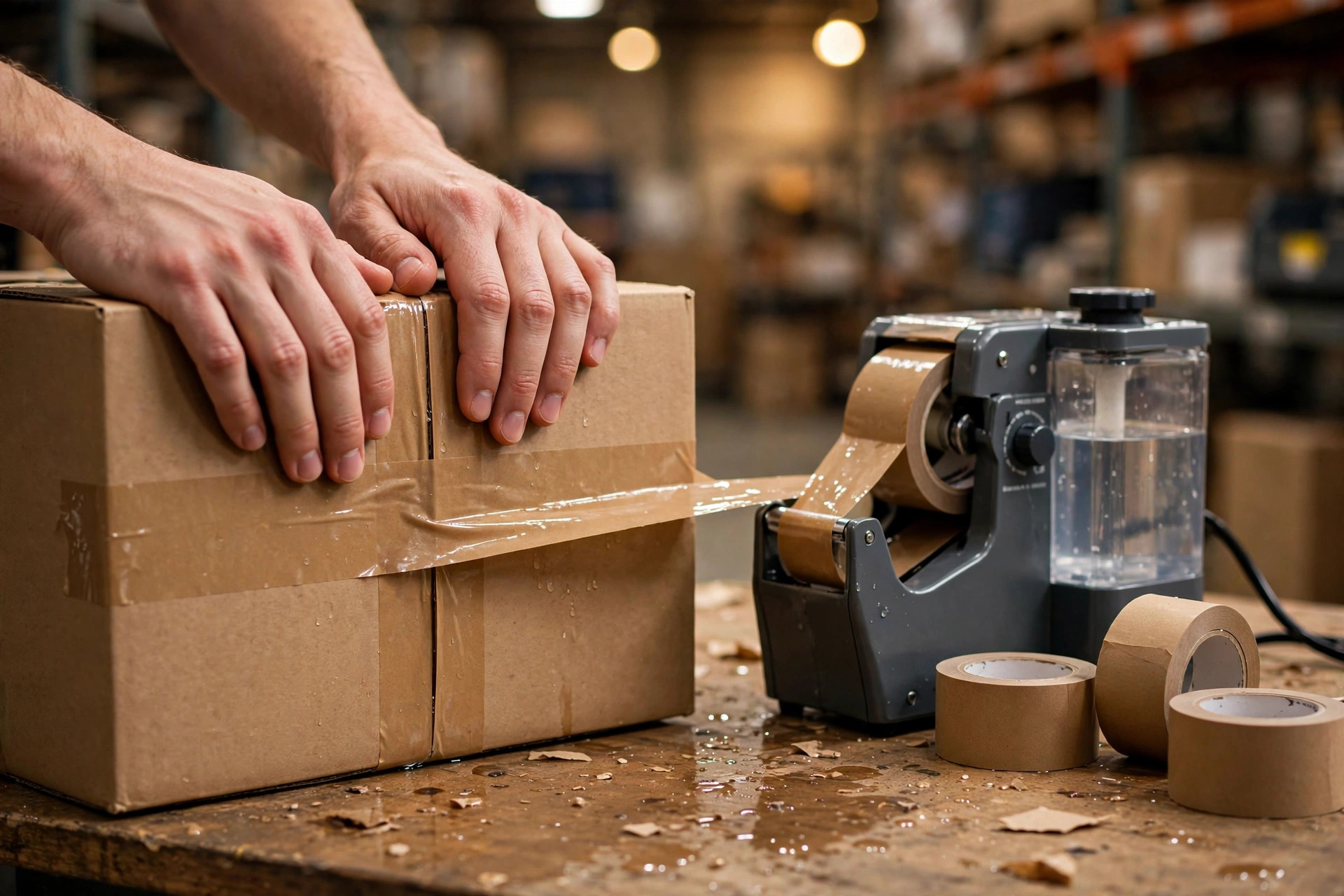
Let me open with the numbers, because that is the whole point of this article. In the water-activated tape (WAT) vs plastic packing tape debate, a case-priced roll of standard 2-inch plastic packing tape runs about $2.60. A roll of reinforced water-activated tape starts around $11. That is more than a 4x gap per roll, and it stops most warehouse managers cold. Per-roll price is the wrong denominator, and it is the single most misleading number in this entire comparison.
Carton-sealing tape is a classic of the genre: cheap enough that nobody models it properly, and precisely because nobody models it, warehouses bleed money through it at a scale that dwarfs the tape itself.
Per-Roll Price Is a Smokescreen: Where Water-Activated Tape Actually Costs More
Put both products on the same table. Plastic packing tape: 2 inches wide, 110 yards (330 feet) per roll, about $2.60 a roll at case quantities of 72 from major packaging suppliers, occasionally $1.79 on promotion. Reinforced water-activated tape (fiberglass-reinforced): 2.75 inches wide, 450 feet per roll, roughly $13 retail, about $11 at volume tiers of 15 rolls and up.
But a roll is not the unit of cost. The unit of cost is feet of tape per sealed box.
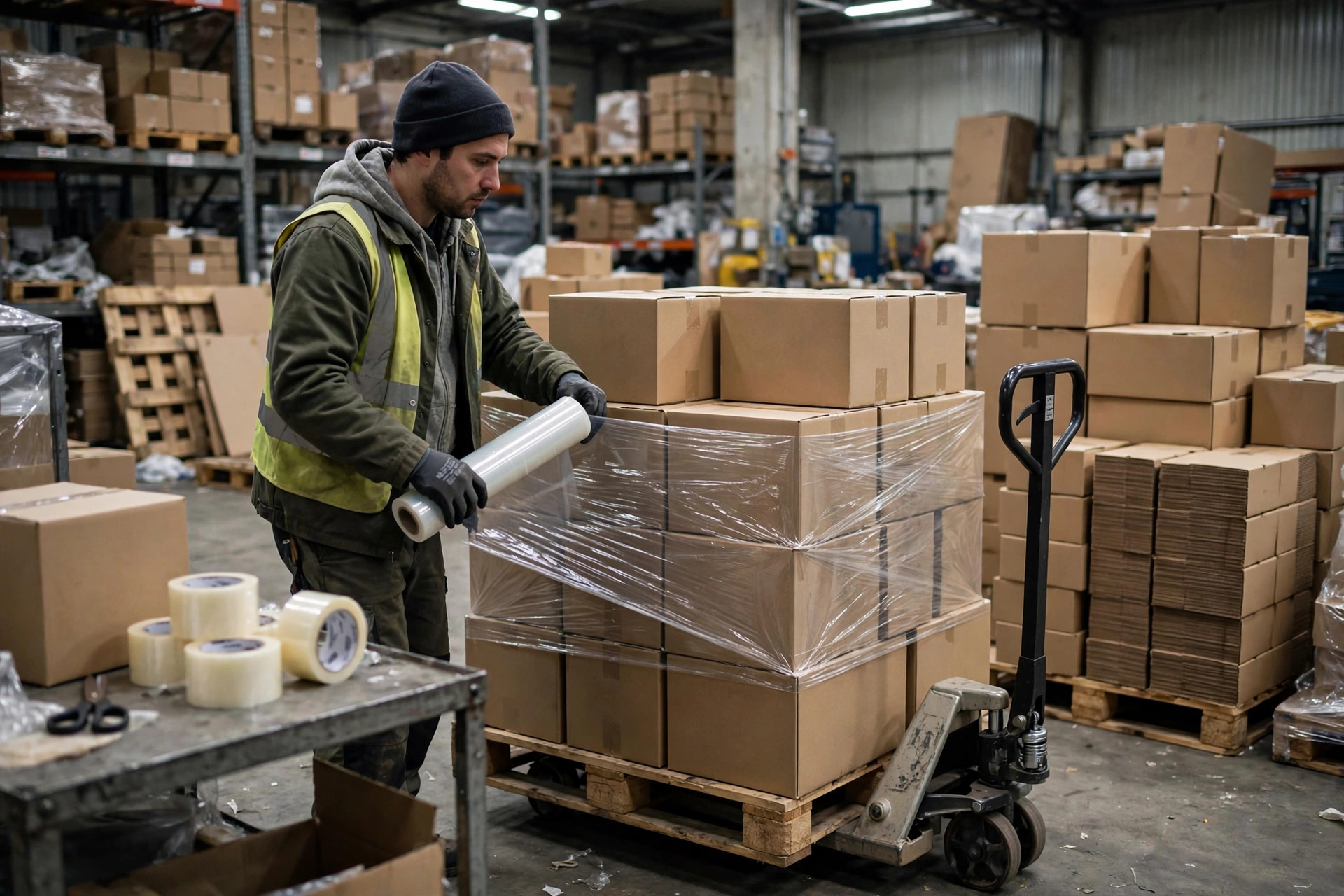
Plastic tape seals in the H-pattern: one strip down the center seam, one along each edge. For a common 20x16x12-inch carton, that is roughly 24 inches for the center plus 18 inches per edge, 60 inches total, or 5 feet. A 330-foot roll seals about 66 boxes. At $2.60 a roll, that is about 4 cents of tape per box.
WAT seals in a single strip: the starch adhesive bonds directly with the corrugated fibers, so one 30-inch strip does the job. A 450-foot roll seals about 180 boxes. At $11 a roll, that is about 6 cents of tape per box.
| Plastic tape | Reinforced WAT | |
|---|---|---|
| Roll spec | 2" x 330 ft | 2.75" x 450 ft |
| Case-quantity price | $2.60/roll | $11/roll |
| Tape per box | 5 ft (H-pattern, 3 strips) | 2.5 ft (single strip) |
| Boxes per roll | 66 | 180 |
| Tape cost per box | $0.04 | $0.06 |
A 4x gap per roll collapses to a 2-cent gap per box. That is the first counterintuitive finding: you thought you were comparing tape prices; you were actually comparing two cents. And two cents is not even a rounding error in the total cost of sealing a box.
Tape Is the Smallest Line Item: Plastic Packing Tape's H-Pattern Taxes Labor, Not Materials
Sealing a box has four cost components: tape, labor, equipment depreciation, and damage or pilferage. Tape is the cheapest of the four. The expensive part of the plastic-tape H-pattern is the labor it consumes.
Watch a packer with a tape gun: pull, tear, rotate, pull, tear, rotate, third strip. Even a fast packer needs well over ten seconds. WAT on an electric dispenser is a different motion: press a preset button, the strip feeds out, press it onto the seam, done in seconds. The gap between one strip and three is not just tape consumption. It is pack-station takt time.
Last year I reviewed pack-station costs for a 3PL warehouse in Ontario running about 800 boxes a day across six stations, all on tape guns with the H-pattern. We timed it for a week and took a conservative number: switching saved roughly 10 seconds per box. That is 8,000 seconds a day, 2.2 hours. At a $20 packer wage, that is $44 a day, or $1,144 a month over 26 working days. The tape cost increase? Two cents a box times 800 boxes times 26 days: $416 a month. Net savings: over $700 a month.
There is a hidden line item nobody books: roll-change downtime. A plastic roll lasts 66 boxes, so 800 boxes a day means 12 roll changes; a water-activated roll lasts 180, so barely four and a half. Swapping rolls, reseating the gun, re-pulling a torn strip, these two- and three-minute interruptions never appear in any report, and every pack supervisor knows they are what kills throughput during peak.
The Equipment Math: Manual vs Electric Dispensers Differ by an Order of Magnitude
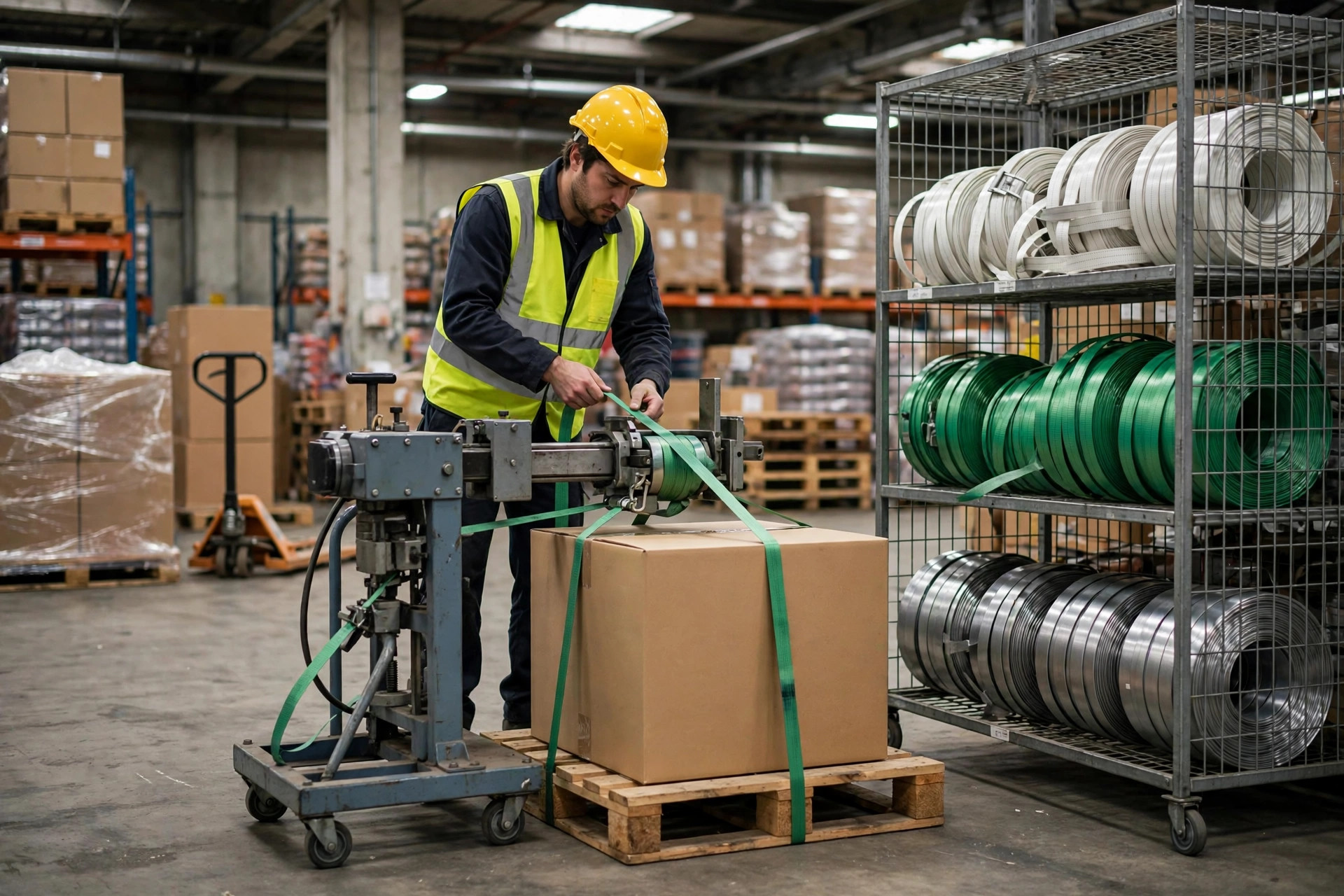
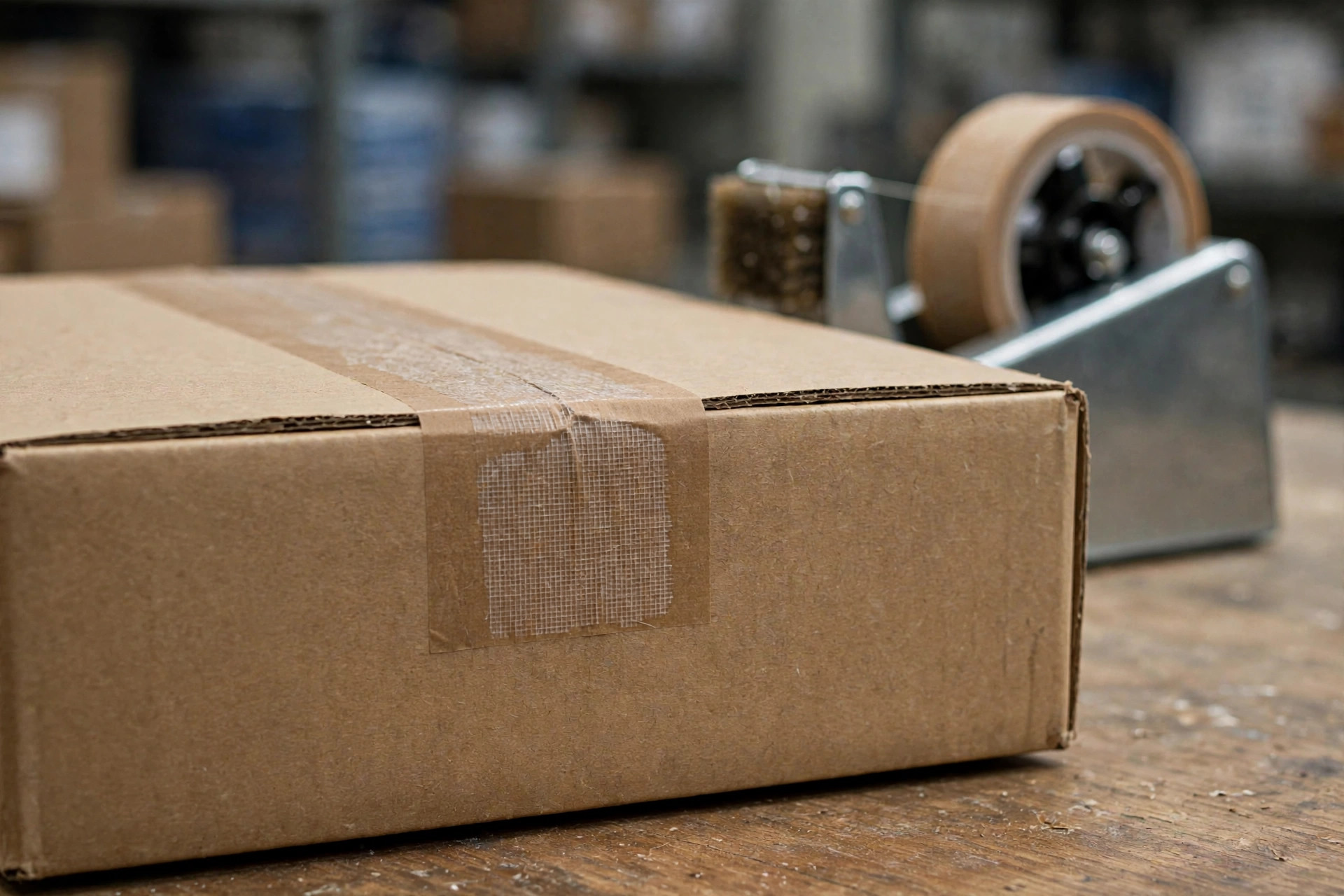
WAT requires a dispenser. That is its biggest structural difference from plastic tape, where a $10 to $20 tape gun, often thrown in free with a case purchase, is the entire capital outlay. Dispensers come in two tiers.
Manual dispensers cost tens of dollars: a sponge wets the adhesive as you pull the tape by hand. Fine for low volume or a trial. The catch is that strip length is pure muscle memory, and you give back about half the labor savings.
Electric dispensers are the real deal. The industry-standard Better Pack 555eS lists new at $1,699, with decent used units at $400 to $700. It feeds tape at 45 inches per second, offers 14 preset lengths at the touch of a button, and holds 1,000-foot rolls for fewer changeovers. The manufacturer positions it plainly: operations sealing more than 100 cartons per shift.
The payback formula is yours to run: dispenser price ÷ (boxes per day × seconds saved per box ÷ 3,600 × hourly wage) = payback in days. For the Ontario warehouse: $1,699 ÷ $44 ≈ 39 days. Even if you haircut the 10-second saving in half, payback lands around 78 days. These machines run for years. As warehouse equipment investments go, that return is exceptional.
One precondition: daily box count in that formula is non-negotiable. Below 100 boxes a day, an electric dispenser will not pay back in three years. Use a manual dispenser for a trial, or do not switch at all. The classic equipment mistake is buying for volume you do not have yet. Until the volume arrives, a $1,699 dispenser is furniture.
Who Should Switch: A Decision Table by Volume and Cargo
Tape and labor are only half the decision. The other half is pilferage and returns.
Pilferage first, because it is WAT's most underrated value. Plastic tape can be lifted cleanly with a heat gun or solvent: open the box, take an item, reseal, and the recipient never knows. WAT's starch adhesive fuses with the box fibers; it cannot be removed without visible damage, so tamper evidence is built in. I worked with a DTC brand averaging over $80 per order that was losing several thousand dollars a month in peak season to "box intact, item missing" claims nobody could resolve. Two months after switching, that claim category went to near zero. For high-value goods, the pilferage savings alone can cover a full year of the tape price difference in a single month.
Returns are the trade-off, and it cuts the other way. A water-activated seal is irreversible. Apparel and footwear operations running 20 to 30 percent return rates have to cut those boxes open, which usually destroys the carton. Plastic tape at least peels off cleanly enough to reuse the box. High-return warehouses that switch are volunteering for higher carton consumption. Run that math in reverse before deciding.
The sustainability angle deserves a correction too. Yes, the fiberglass filaments in reinforced WAT are not themselves recyclable. But they do not contaminate the pulp; recyclers screen them out during repulping, and the carton goes straight into the recycling stream with the tape still on. Plastic tape is the recycler's problem: it has to be torn off by hand, or it contaminates the batch. The correct metric is not "is the tape material green" but "how much labor does the recycling step save."
The decision table:
| Your situation | Recommendation |
|---|---|
| Under 100 boxes/day | Do not switch. Case-priced plastic tape at 4 cents a box is already the floor |
| 100–500 boxes/day | Pilot one pack station: manual dispenser plus WAT, measure takt for two weeks |
| Over 500 boxes/day | Go electric. Run the payback formula above; expect 2–3 months |
| High-value goods, frequent pilferage claims | Switch first. Tamper evidence dwarfs the 2-cent tape gap |
| High return rates, cartons must be reused | Do not switch. Irreversible seals will eat your carton budget |
| Customers with ESG or packaging compliance requirements | Switch. This is customer-acquisition cost, not consumables cost |
One calculable conclusion. Do not ask "is water-activated tape better." Ask three numbers: boxes per day, seconds per seal, packer hourly wage. Then: boxes per day × (H-pattern seconds − single-strip seconds) ÷ 3,600 × wage − boxes per day × $0.02 = net daily savings. Divide the dispenser price by that number for payback days. Under 90 days, switch. Over 180, do not. In between, pilot one station for two weeks and let the stopwatch decide. Cost analysis has no opinions, only formulas.
By Lao Zhou, Logistics Cost Analyst